The 2026 Whitney Biennial, a highly anticipated exhibition at the Whitney Museum of American Art in New York City, is currently showcasing a powerful and thought-provoking collection of works by contemporary artists. Among them, a select group of Indigenous women artists—Raven Halfmoon (Caddo Nation), Anna Tsouhlarakis (Navajo), Nani Chacon (Navajo and Cree), and Teresa Baker (Mandan/Hidatsa)—are making significant contributions, challenging conventional notions of "rationality" and exploring the complex relationships between humanity, their environments, and evolving technologies across generations. This year’s exhibition, curated with a focus on interconnectedness and critical dialogue, presents these artists’ diverse expressions, media, and disciplines, each deeply rooted in their unique heritages while offering profound global perspectives.
A Thematic Core: Interrogating Rationality and Our Surroundings
The overarching theme of the 2026 Whitney Biennial is the artists’ engagement with what is often termed "rationality" as it pertains to human interactions with their surroundings. This includes examining intergenerational dialogues, the impact of ecological systems, the integration of new and evolving technologies, and the dual nature of infrastructures that can either support or destroy daily life. These Indigenous women artists, through their distinct artistic practices, traverse these complex themes, weaving together ancestral knowledge with contemporary concerns.
Raven Halfmoon, a Caddo Nation artist, contributes striking figurative sculptures. Her work often utilizes ancestral coil techniques, reflecting a deep connection to her heritage. Anna Tsouhlarakis, of Navajo heritage, presents a monumental sculpture that directly confronts historical representations of Native Americans. Nani Chacon, whose lineage is Navajo and Cree, employs large-scale iron and steel sculptures to draw parallels between traditional Indigenous art forms and the industrial landscapes of the Navajo Nation. Teresa Baker, a Mandan/Hidatsa artist, creates intricate works that blur the lines between painting and weaving, using materials that speak to the intersection of the natural and artificial.
Spotlight on Key Works and Artistic Statements
Anna Tsouhlarakis’s "She Must Be A Matriarch" (2023)
Anna Tsouhlarakis’s formidable sculpture, "She Must Be A Matriarch," has become a focal point of discussion and admiration within mainstream art publications and among visitors. Its imposing scale and prominent placement on the sixth floor of the Whitney Museum command immediate attention, often eliciting a sense of awe from viewers. The artwork is a complex assemblage, meticulously crafted from a diverse array of materials including fiberglass, paint, adhesive, resin, plaster, wood, foam, metal, remnants from IKEA furniture, leather, deer hair, menstrual cups, prophylactics, and various found objects.
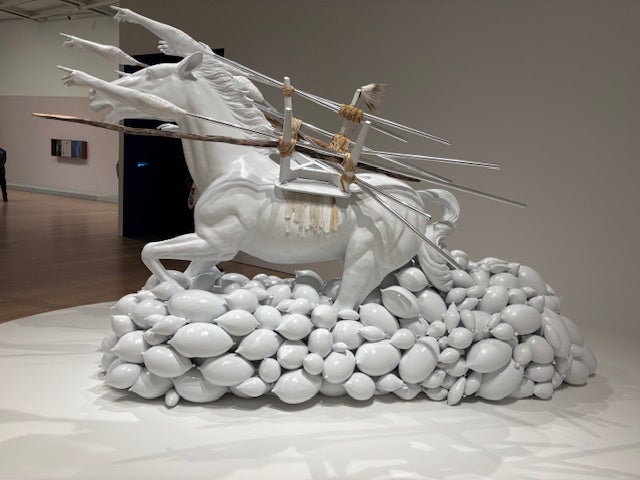
Through this work, Tsouhlarakis employs a sharp feminist satire to critique James Earle Fraser’s iconic 1919 sculpture, "End of the Trail." Fraser’s piece depicts a Native American man slumped over a horse, embodying a narrative of exhaustion and defeat. Tsouhlarakis reinterprets this narrative by substituting the male figure with a powerful female Indigenous warrior. This matriarchal figure is armed not only with realistic weaponry but also with an array of domestic items, including IKEA furnishings, and objects that directly address themes of sexuality and reproduction. The juxtaposition of these elements serves as a potent commentary on resilience, agency, and the multifaceted roles of Indigenous women, subverting historical portrayals and asserting a contemporary, empowered identity.
Nani Chacon’s "Our Gods Are Above Us," "Our Gods Walk Among Us," and "Our Gods Are Below Us" (2026)
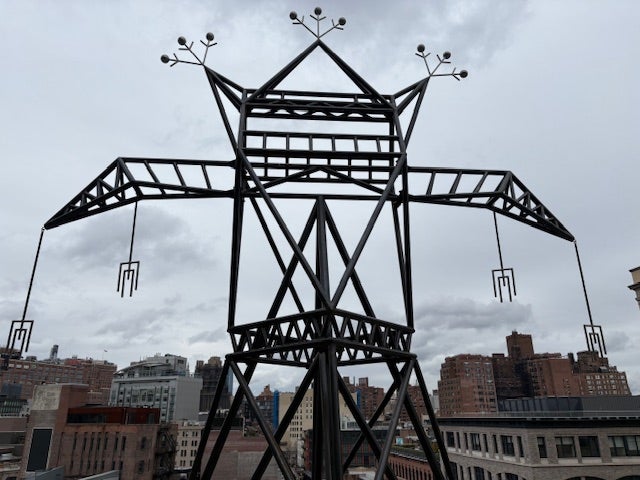
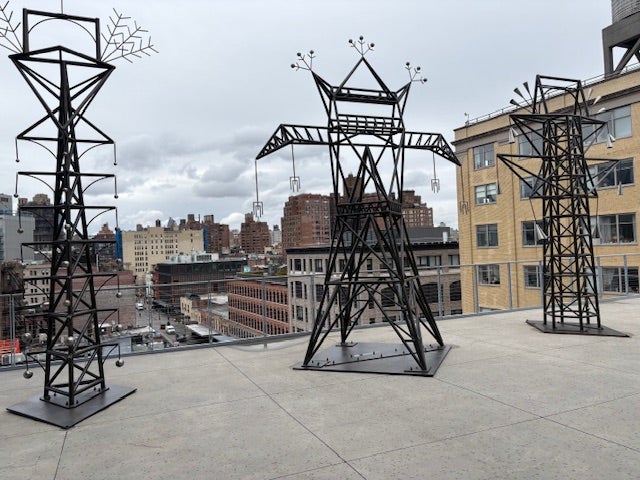
Nani Chacon’s commanding iron and steel sculptures are strategically positioned on the museum’s sixth-floor outdoor terrace, offering a dramatic visual dialogue with the sprawling cityscape of New York as their backdrop. Titled "Our Gods Are Above Us," "Our Gods Are Below Us," and "Our Gods Walk Among Us," these three monumental works, all created in 2026, establish a profound connection between traditional Navajo cosmology and the realities of contemporary industrial impact.
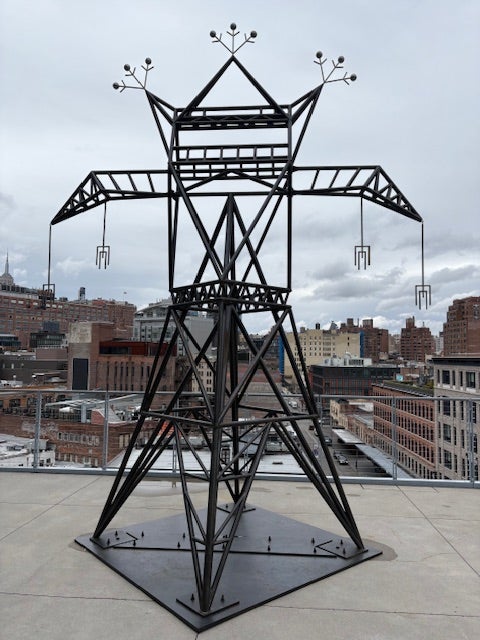
Chacon’s artistic endeavor is rooted in revealing striking visual congruences between the intricate sand paintings that represent Dine/Navajo deities and the ubiquitous electrical towers that characterize the industrial infrastructure, particularly coal refineries, operating on the Navajo Nation. This juxtaposition serves as a powerful visual metaphor, highlighting the ways in which modern development can both obscure and echo ancient spiritual landscapes.
The significance of Chacon’s work extends beyond its aesthetic and conceptual merit. Following the conclusion of the Biennial, one of these impactful sculptures is slated for permanent installation on the land of the Navajo Nation. This decision underscores Chacon’s overarching artistic mission: to transform landscapes marred by environmental degradation into sites of renewed narrative and cultural reclamation. Her practice actively seeks to transmute blight into beauty, and to foster a dialogue that acknowledges the historical and ongoing impacts of industrialization on Indigenous territories.
Teresa Baker’s "Voluminous Day" (2025) and "The Harvest Melting On Our Tongue" (2025)
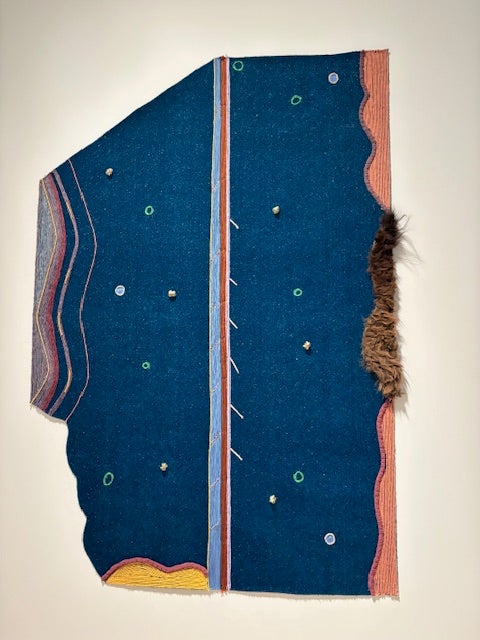
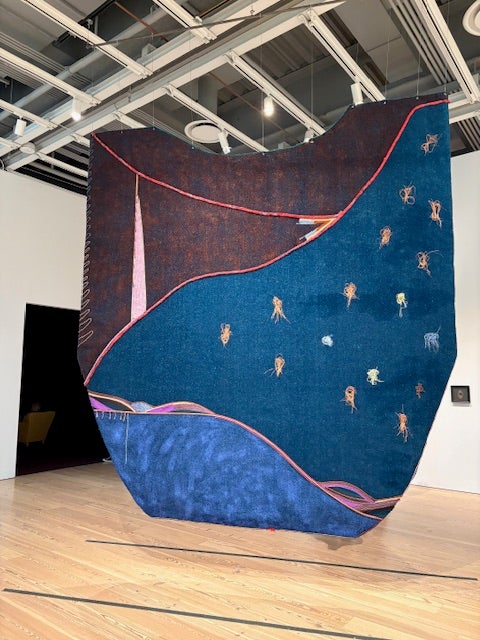
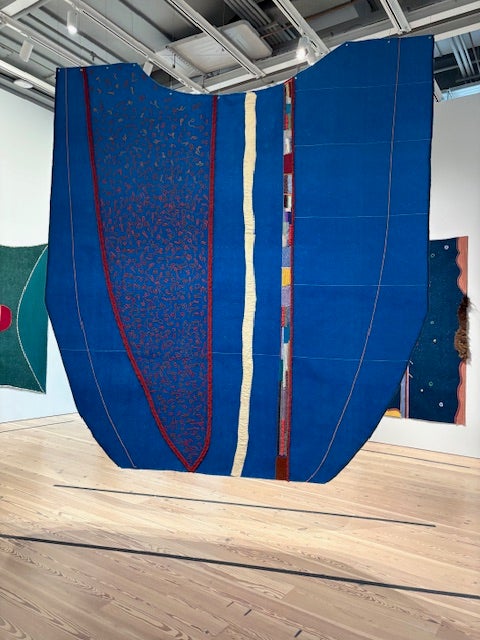
Teresa Baker’s artistic contributions to the Biennial transcend conventional artistic boundaries, skillfully merging the disciplines of painting and weaving. Her pieces, "Voluminous Day" and "The Harvest Melting On Our Tongue," both completed in 2025, are constructed from an eclectic combination of materials including yarn, parfleche, buffalo hide, and artificial sinew, all presented on a base of synthetic turf.
Baker’s unique approach to painting involves the strategic layering of yarn, buckskin, and other chosen materials atop this synthetic surface. She explains her deliberate choice of material, stating, "I was drawn to the material because it suggests the land and the space between natural and artificial." This statement encapsulates the core of her artistic inquiry, probing the nuanced relationship between the organic and the manufactured.
The use of bold shades of blue in her works can be interpreted as evocative representations of skies or waterways, essential elements of the natural world. The delicate fragments of yarn interspersed within these expanses suggest a vibrant ecosystem of sea life, soaring birds, or fluttering insects. These intricate details invite viewers to contemplate the interconnectedness of life and the subtle manifestations of nature, even within contexts that evoke artificiality. The textural richness and material choices in Baker’s work encourage a tactile and visual engagement, prompting reflection on ecological balance and the persistent presence of life.
Raven Halfmoon’s "Sun Twins" (2023)
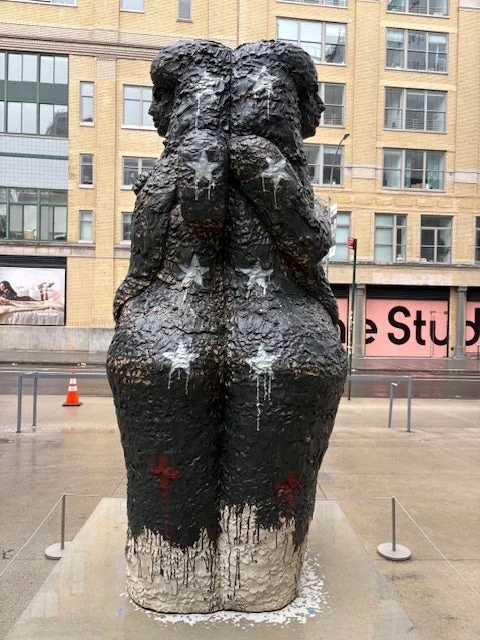
Raven Halfmoon’s sculptures bring a powerful ancestral presence to the Whitney Biennial, with works positioned both within the museum’s interior and in an accessible outdoor space on the street, inviting casual passersby into a dialogue with her art. Her stoneware and glaze sculpture, "Sun Twins" (2023), is prominently displayed inside the museum, situated near an entrance to the sixth-floor outdoor terrace, a space also occupied by Nani Chacon’s sculptures.
Halfmoon meticulously crafts her sculptures employing a Caddo ancestral coil technique, a method deeply embedded in her cultural heritage. A recurring motif in her oeuvre is the creation of twinned figures, a practice she attributes to a preference for collaborative artistic creation, often involving her family, over solitary studio work. This emphasis on familial connection and shared creative energy imbues her sculptures with a palpable sense of warmth and communal spirit.
The "Sun Twins" displayed outdoors are visually arresting, rendered in stark black and white with accents of black and blue stars and crosses. Their design allows viewers to engage with the figures from multiple perspectives—front, back, and in profile—encouraging a comprehensive appreciation of their form. These curvaceous, full-figured female forms exude an undeniable sensuality and a potent sense of power, challenging conventional aesthetic norms and celebrating a diverse representation of feminine strength.
Broader Context and Significance of the 2026 Whitney Biennial
The 2026 Whitney Biennial stands out for its notable commitment to diversity, presenting a roster of artists that, according to the exhibition’s contributing arts editor, Phoebe Farris (Powhatan-Pamunkey descent), represents the most inclusive group seen in years. The exhibition actively showcases American artists from a wide spectrum of backgrounds, including those born in the United States and immigrants who now call the U.S., Canada, or Turtle Island home. Furthermore, the exhibition reportedly achieves near-equal representation of female, male, and 2SLGBTQ+ artists, reflecting a conscious effort to broaden the scope of artistic voices and perspectives.
The Whitney Museum’s own brochure articulates the Biennial’s ambitious goals, stating, "The Whitney Biennial showcases the most relevant art and ideas of our time and is often at the center of dynamic conversations that spark cultural shifts." A core objective of this year’s iteration is to utilize various artistic mediums—painting, photography, film, sculpture, and the written word—to capture the intricate complexities of the present moment. Simultaneously, the exhibition aims to propose novel creative pathways for fostering coexistence and mutual understanding.
The inclusion of these four Indigenous women artists and their impactful works within such a prominent exhibition signals a critical moment in the art world. Their contributions challenge dominant narratives, reclaim historical representations, and offer vital perspectives on environmental justice, cultural resilience, and the ongoing negotiation of identity in a rapidly changing world. The Biennial’s focus on interrogating "rationality" through the lens of these artists’ diverse experiences and ancestral knowledge provides a potent framework for re-evaluating established societal structures and envisioning more equitable futures.
The exhibition, which runs until August 23, 2026, invites the public to engage with these powerful artistic statements and to consider whether this year’s Whitney Biennial has indeed lived up to its stated purposes and ambitious goals of sparking cultural shifts and suggesting new ways to coexist. The presence and prominence of artists like Halfmoon, Tsouhlarakis, Chacon, and Baker are indicative of a broader movement within the art world towards greater recognition and amplification of Indigenous voices and their profound contributions to contemporary discourse.