Millions of Latin Americans will head to the polls this year, with presidential elections planned in Peru in April, Colombia in May, and Brazil in October. These electoral contests are taking place against a backdrop where religion continues to play a significant role in the public and private lives of citizens across the region. According to comprehensive surveys conducted by the Pew Research Center in the spring of 2024, clear majorities in these three nations, as well as in others across Latin America, believe religion should have a defined role in key aspects of public life, including national leadership, identity, and legal frameworks.
The research, which surveyed over 6,200 adults across Brazil, Mexico, Colombia, Argentina, Peru, and Chile, highlights a persistent connection between faith and civic life in a region historically shaped by Catholicism but increasingly experiencing religious diversity. Notably, Protestant communities, while representing a smaller demographic share in most of these countries, consistently emerge as particularly fervent in their advocacy for Christianity’s influence on national leadership, identity, and laws.
The Evolving Landscape of Faith in Latin America
Latin America, long considered a bastion of Catholicism, has witnessed a notable shift in its religious demographics over the past decade. While Catholicism remains the dominant faith, its adherents have declined as a proportion of the overall population. Concurrently, Protestantism, particularly Evangelical and Pentecostal branches, has seen significant growth, alongside a rise in individuals identifying as religiously unaffiliated (often termed "nones"). This dynamic religious landscape forms the backdrop against which these upcoming elections will unfold, influencing voter priorities and the discourse around governance and national values.
The Pew Research Center’s analysis, part of the Pew-Templeton Global Religious Futures project funded by The Pew Charitable Trusts and the John Templeton Foundation, delves into these complex interplays. The research methodology involved extensive opinion surveys, aiming to understand the multifaceted role of religion in contemporary Latin American societies. The findings underscore that while secularism is gaining ground, deeply held religious beliefs continue to shape expectations for political representation and national identity.
Religion and the Quest for Representative Leadership
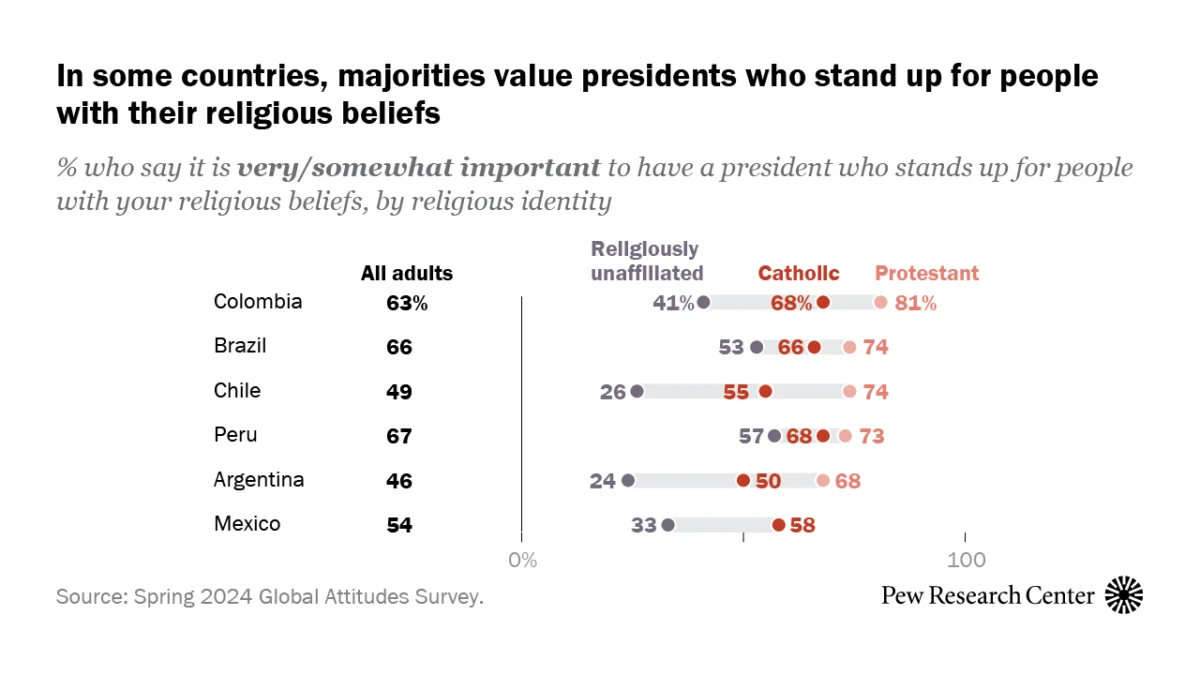
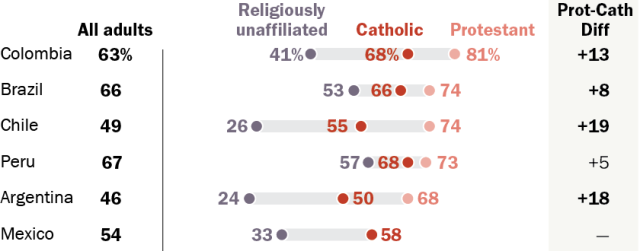
A significant finding from the 2024 surveys is the widespread desire for national leaders who actively champion the religious beliefs of their constituents. In Brazil, Colombia, and Peru, approximately two-thirds of adults surveyed expressed that having a president who stands up for people with their religious beliefs is either "somewhat important" or "very important." This sentiment suggests a strong expectation that political leaders should not only govern but also embody and defend the values and faith traditions of a substantial portion of the electorate.
In Argentina, Chile, and Mexico, roughly half of all adults hold a similar view, indicating a robust, albeit slightly less pronounced, desire for religiously aligned leadership. This data suggests that religious affiliation is not merely a private matter but a significant factor influencing how citizens perceive effective and representative governance.
Protestants Lead the Charge for Religious Advocacy in Leadership:
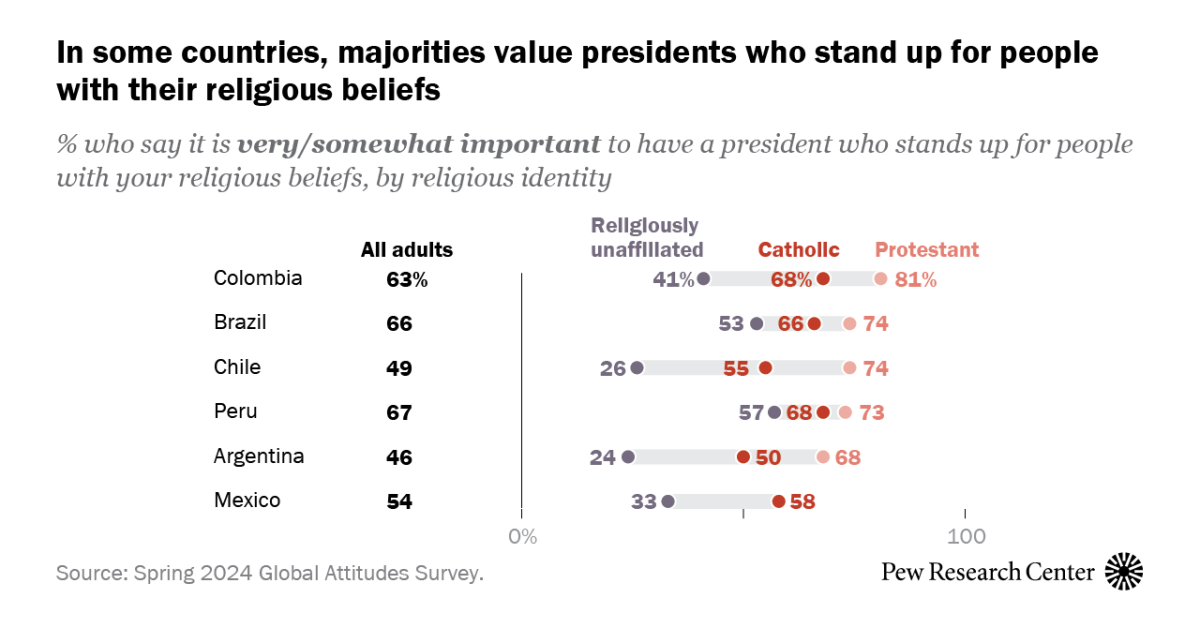
Digging deeper into the data reveals distinct patterns across religious demographics. Protestants, in particular, consistently demonstrate a higher inclination to prioritize leaders who align with their faith. For instance, in Chile, a striking 74% of Protestants stated that it is important for a president to stand up for their religious beliefs. This contrasts sharply with 55% of Catholics and a mere 26% of religiously unaffiliated individuals who share the same sentiment.
Similar trends are observed across other surveyed nations. In Colombia, 81% of Protestants emphasized the importance of such leadership, compared to 68% of Catholics and 41% of the unaffiliated. Brazil and Peru also show Protestants being more likely to hold this view than Catholics or the unaffiliated. This consistent pattern suggests that for many Protestants in Latin America, religious identity is intrinsically linked to political representation, and they actively seek leaders who reflect and defend this identity.
The Unaffiliated: A Nuanced Perspective:
While the religiously unaffiliated ("nones") generally place less emphasis on a president championing their specific religious views, the data reveals a surprising level of engagement in some countries. In Brazil, 53% of unaffiliated adults consider it important for a president to stand up for their religious beliefs, a figure matched by 57% in Peru. This suggests that even among those who do not identify with a particular religion, there can be an expectation for leaders to be sensitive to the role of faith in society or to represent a broader spectrum of societal values that may be influenced by religion.
Ideological Divides and Religious Affiliation:
The research also points to a correlation between political ideology and attitudes toward religion in leadership. In Latin America, both Catholic and Protestant communities often lean towards the political right. The surveys indicate that individuals identifying with the right of the ideological spectrum are generally more likely than those on the left to desire national leaders with specific religious characteristics, whether it be strong religious beliefs in general or the same religious beliefs as their own. This finding suggests that the intersection of religious identity and political orientation plays a crucial role in shaping public opinion on the ideal profile of a national leader.
Religion as a Cornerstone of National Identity
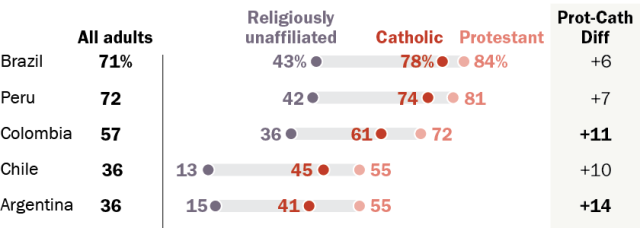
Beyond leadership, a significant segment of the Latin American population views Christianity as an integral component of national identity. Majorities in Brazil (71%), Peru (72%), and Colombia (57%) believe that being Christian is important to being a true national citizen. This sentiment reflects a historical and cultural legacy where Christian traditions have deeply influenced the fabric of society, language, and social norms.
In Brazil and Peru, similar proportions of both Protestants and Catholics subscribe to the idea that Christian identity is central to national belonging. However, in Colombia, Protestants exhibit a stronger association, with 72% linking Christianity to their national identity compared to 61% of Catholics. This divergence might be influenced by varying historical trajectories and the role of different Christian denominations in shaping national narratives.
In contrast, adults in Argentina and Chile appear less inclined to draw a strong connection between Christian identity and national belonging, suggesting a more secularized or pluralistic understanding of national identity in these countries.
The Bible’s Influence on Lawmaking
The survey data also reveals a substantial segment of the population that desires religious texts to inform national legislation. In Brazil, Colombia, and Peru, approximately two-thirds of adults believe the Bible should have a "fair amount" or "great deal" of influence on their country’s laws. This desire for biblical principles to shape legal frameworks underscores a belief held by many that religious teachings offer moral guidance and a foundation for justice.
Protestants Advocate Most Strongly for Biblical Law:
As observed in other aspects of public life, Protestants are significantly more likely than Catholics to advocate for the Bible’s influence on laws. In Argentina, for instance, a striking 81% of Protestants expressed this view, compared to 46% of Catholics. This pronounced difference highlights a key characteristic of many Protestant communities in the region: a strong emphasis on scriptural authority in all spheres of life, including the public and political.
A Surprising Consensus Among the Unaffiliated:
Perhaps one of the most unexpected findings relates to the religiously unaffiliated. In Brazil, 51% of "nones" believe the Bible should influence their country’s laws, and in Colombia, 49% hold this view. Peru also shows a notable 46% of unaffiliated individuals expressing this sentiment. While these figures are lower than those for Catholics and Protestants, they indicate a significant minority within the unaffiliated population who see value in religious texts informing the legal system. This could reflect a cultural osmosis, where even those not actively practicing a religion are influenced by the dominant religious heritage of their society, or a broader appreciation for moral frameworks. In other surveyed countries, however, less than a quarter of "nones" expressed this opinion, suggesting regional variations in the perception of religious texts’ role in law.
Constitutional Frameworks and Religious Freedom
The extent to which religious texts or institutions officially influence law varies across Latin America, reflecting diverse constitutional approaches to the relationship between church and state.
- Chile and Peru: Their constitutions uphold the separation of church and state. However, Peru’s constitution acknowledges Catholicism as an "important element in the historical, cultural and moral foundation" of the nation.
- Argentina: The constitution grants the Catholic Church a preferential legal status, though it does not establish a state religion.
- Colombia: Its constitution guarantees equal freedom for all religious faiths and churches, asserting neutrality in religious matters.
- Brazil and Mexico: The constitutions in both nations explicitly prohibit the government from endorsing or restricting any religion, reinforcing a strict separation.
These constitutional provisions provide the legal scaffolding within which public attitudes toward religion’s role in governance and law operate. While popular sentiment may favor religious influence, the legal and constitutional frameworks set the boundaries for its expression.
Implications for Upcoming Elections and Beyond
The findings from the Pew Research Center’s 2024 surveys carry significant implications for the upcoming presidential elections in Peru, Colombia, and Brazil. They suggest that religious identity and beliefs will likely be salient factors for voters. Candidates who can effectively connect with religious constituencies, particularly Protestant communities, may find an advantage. Furthermore, the data indicates a desire among a substantial portion of the electorate for leaders who not only govern but also reflect and uphold specific religious values.
The strong desire for the Bible to influence laws, especially among Protestants and a notable segment of the unaffiliated in certain countries, could also shape policy debates on social issues, family law, and public morality. Political parties and candidates will need to navigate these deeply held beliefs carefully, balancing the secular principles of governance with the religious aspirations of their electorates.
As Latin America continues its journey through evolving religious demographics and political landscapes, understanding the persistent and often pronounced role of religion in public life remains crucial for comprehending the region’s societal dynamics and electoral outcomes. The upcoming elections will undoubtedly be a test of how these deeply ingrained religious sentiments translate into political mandates and shape the future direction of these nations.