The Gordon Parks Foundation marks its two-decade milestone with a profound and timely exhibition, Gordon Parks: We Shall Not Be Moved, curated by the eminent civil rights attorney and advocate Bryan Stevenson. Presented in collaboration with Alison Jacques, this solo exhibition serves as a potent reminder of photography’s enduring capacity to illuminate injustice and galvanize movements for social change. Unveiled as a central feature of the Foundation’s 20th-anniversary celebrations, the collection of works underscores Parks’ unparalleled legacy and its acute resonance in today’s sociopolitical landscape.
The Visionary Curator: Bryan Stevenson’s Deep Connection to Parks’ Legacy
Bryan Stevenson, founder and executive director of the Equal Justice Initiative (EJI), author of the critically acclaimed Just Mercy, and a tireless advocate for racial justice and reform, brings a deeply personal and intellectually rigorous perspective to his role as curator. Stevenson’s life work mirrors Parks’ artistic mission: to expose systemic inequalities and champion the dignity of marginalized communities. His selection of photographs, spanning a crucial 25-year period from 1942 to 1967, meticulously traces the arc of Black American experience—a journey marked by profound struggle, unwavering resilience, and an unyielding pursuit of equality.
Stevenson articulated the exhibition’s core philosophy, stating, "The scope of the images from Parks represents the struggle, resilience, and constant striving of Black Americans." As an individual who has confronted and navigated racial injustice throughout his own life and career, Stevenson possesses a unique insight into the lived realities that shaped Parks’ vision. He noted, "As an African American survivor of racial injustice, Parks was keenly aware of race and class in America, and this palpably informed his work." This understanding allowed Stevenson to craft a narrative that not only showcases Parks’ artistic mastery but also amplifies the urgent message embedded within each frame. His curation emphasizes Parks’ unwavering commitment to social justice, drawing direct parallels between the historical injustices documented and the contemporary challenges faced by Black Americans.
A Legacy Honored: The Gordon Parks Foundation at 20 Years
The Gordon Parks Foundation, established to preserve and promote the legacy of the multifaceted artist, celebrates its 20th anniversary with this significant exhibition. Over the past two decades, the Foundation has diligently worked to ensure that Parks’ pioneering spirit, his dedication to human rights, and his groundbreaking contributions to photography, film, and literature continue to inspire new generations. Through archival preservation, educational programs, and partnerships with leading cultural institutions, the Foundation has cemented Parks’ place as one of the most important artistic and journalistic voices of the 20th century. The We Shall Not Be Moved exhibition is a testament to this enduring mission, showcasing how Parks’ art remains a vital tool for understanding history and advocating for a more equitable future. The anniversary serves not merely as a reflection on past achievements but as a renewed commitment to the ongoing relevance of Parks’ work in a world still grappling with issues of race, class, and justice.
Gordon Parks: The Camera as a Weapon for Change
Born in Fort Scott, Kansas, in 1912, Gordon Parks emerged from poverty and racial segregation to become a self-taught photographic genius, a groundbreaking filmmaker, and a prolific writer. His journey into photography began in the late 1930s when, inspired by images of migrant workers, he purchased his first camera from a pawn shop. Parks’ early experiences with racial discrimination in the segregated Midwest profoundly shaped his worldview, instilling in him a deep empathy for the marginalized and a fierce determination to use his art as a tool for social change.
His career took off in the early 1940s when he joined the Farm Security Administration (FSA) and later the Office of War Information, documenting American life during the Great Depression and World War II. It was during this period that he created one of his most iconic works, American Gothic, Washington, D.C. (1942). This powerful portrait of Ella Watson, a Black cleaning woman standing rigidly with a broom and mop in front of an American flag, intentionally echoed Grant Wood’s famous painting, but infused it with a biting commentary on racial inequality and the unfulfilled promise of American ideals. Parks deliberately chose to subvert the idyllic image of American life, exposing the harsh realities faced by Black citizens even as the nation championed democracy abroad.
Parks’ tenure as the first African American staff photographer for Life magazine, beginning in 1948 and lasting for over two decades, provided him with an unparalleled platform. Life, at its peak, reached millions of American households weekly, making Parks’ images instrumental in shaping public perception and sparking national conversations about race. He used this powerful medium to humanize the struggle for civil rights, moving beyond abstract statistics to present compelling, intimate narratives of individuals and families enduring racial injustice. His ability to write his own articles for the magazine was crucial, allowing him "to inject his personal perspective and challenge stereotypes," as highlighted by The Gordon Parks Foundation. This integrated approach meant that his visual stories were always accompanied by his authentic voice, reinforcing the emotional and intellectual impact of his work.
Exhibition Highlights: Iconic Images and Their Context
The exhibition features several of Parks’ most renowned series and individual photographs, each a testament to his unique ability to blend documentary rigor with artistic sensibility.
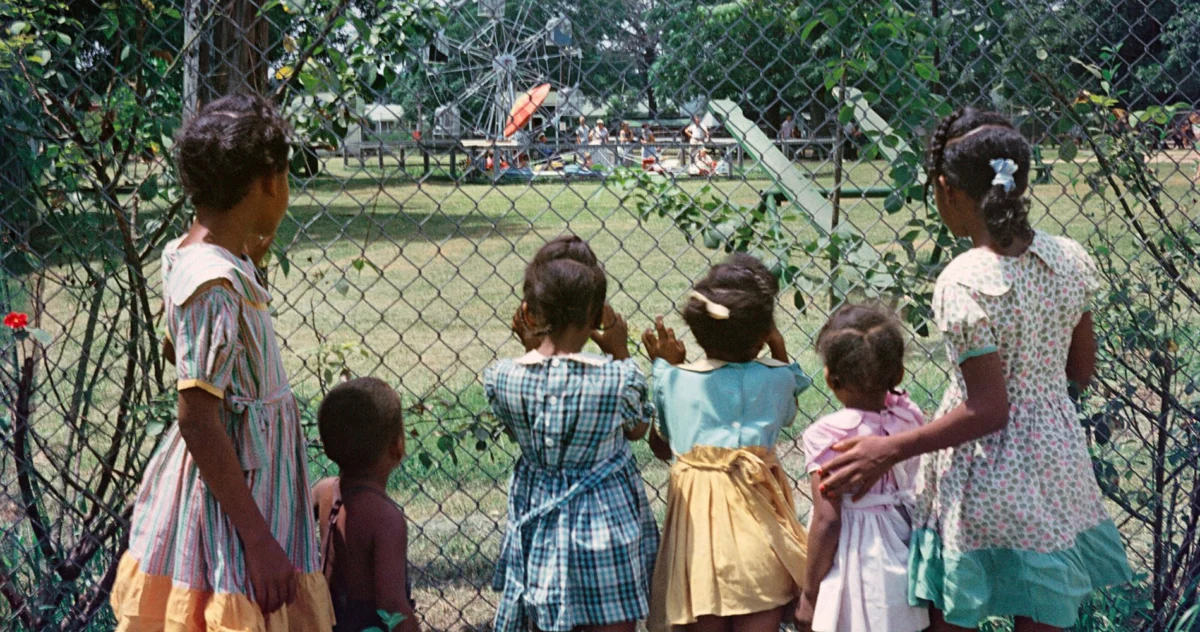
The "Segregation Story" series, commissioned by Life magazine in 1956 and published under the title "The Restraints: Open and Hidden," is a powerful centerpiece. This series intimately chronicled the daily lives of Black families in Mobile, Alabama, during the height of Jim Crow segregation. Works such as Outside Looking In, Department Store, and Mr. and Mrs. Albert Thornton offer poignant glimpses into the indignities and resilience experienced under a system designed to enforce racial hierarchy. Parks’ photographs depicted segregated facilities—water fountains, waiting rooms, schools—but, more importantly, they captured the quiet strength and enduring dignity of those living under these oppressive conditions. By focusing on ordinary moments, Parks challenged prevailing stereotypes and presented Black Americans not as victims but as complex individuals navigating an unjust world with grace and fortitude. This humanization was revolutionary in a mainstream publication at a time when caricatures and dehumanizing portrayals were common. The Foundation explained that this series "humanised the effects of Jim Crow segregation by following the daily lives of Black families in Alabama, creating narratives that consistently expressed the dignity and complex humanity of his subjects, starkly contrasting with mainstream representations."
The exhibition also includes Parks’ indelible photographs from the 1963 March on Washington for Jobs and Freedom, including his iconic portrait of Dr. Martin Luther King Jr. delivering his "I Have a Dream" speech. This moment, a watershed in the Civil Rights Movement, saw an estimated 250,000 people converge on the National Mall, demanding equality and justice. Parks’ ability to capture both the monumental scale of the event and the profound emotional weight of King’s oration speaks volumes about his photographic prowess and his deep understanding of the historical significance unfolding before his lens. These images serve as visual anchors to a pivotal period of activism and hope.
"We Shall Not Be Moved": A Timeless Message of Resistance
The exhibition’s title, We Shall Not Be Moved, resonates deeply with the spirit of resilience that permeates Parks’ work and Stevenson’s curatorial vision. The phrase itself is rooted in a traditional spiritual and became a powerful anthem of the Civil Rights Movement, symbolizing unwavering determination in the face of oppression. Stevenson’s accompanying essay for the exhibition provides critical historical context and articulates precisely why Parks’ courageous, innovative, and challenging work compels contemporary audiences to resist ongoing efforts to distort and erase American history.
Stevenson argues that Parks was born into a nation where the profound commitment of formerly enslaved Black people to building America—a choice for citizenship over retribution after 246 years of brutal enslavement—was systematically undermined. Following the Civil War, despite the promise of Reconstruction, protections for African Americans were withdrawn. The rise of Jim Crow laws across the South and beyond codified racial segregation, denying Black Americans basic rights, terrorizing them with mob violence and lynching, and effectively disenfranchising millions. Parks, having witnessed and endured this "stress and degradation of racial hierarchy," understood both the immense pain and the "strength, resilience, artistry, resolve, and beauty that animated Black life."
In this context, Parks picked up his camera as a "weapon of choice," documenting not just the pain of segregation and poverty but also the vibrant "resistance to oppression and creativity within the Black community." His work captured the burgeoning Civil Rights Movement, the emergence of "Black Power," and the triumphs of Black athletes, musicians, and artists, presenting counter-narratives to the prevailing racial discrimination. Through his art, Parks actively challenged the legitimacy of the racial caste system, helping to pave the way for a new generation of leaders to dismantle Jim Crow. He imagined a more hopeful future, echoing Langston Hughes’s call for "America be America."
Stevenson draws a stark parallel between Parks’ era and the present day, noting "a moment when there is an intense and active effort of erasure, retreat from civil rights and silencing of Black voices and history in the United States." He warns that Parks’ images "provide insight and relevance to our current discourse. His work absolutely suggests resistance to bigotry and oppression." This contemporary "retreat from a full commitment to equality and justice for all" manifests in various forms: legislative efforts to restrict voting rights, challenges to educational curricula that accurately portray American history (such as debates surrounding critical race theory and the 1619 Project), and a renewed demonization of people of color. The current political climate, with discussions around censorship, the "whitewashing" of history, and even attacks on artistic freedom, makes Parks’ rejection of silence and retreat more pertinent than ever.
The Enduring Struggle for Justice: Data and Implications
The themes explored in Gordon Parks: We Shall Not Be Moved are not confined to the historical past but resonate with persistent racial disparities and ongoing challenges to civil rights in the United States. While Jim Crow laws were dismantled, systemic inequalities endure. For instance, data from the Equal Justice Initiative indicates that Black Americans are still disproportionately represented in the criminal justice system, facing higher rates of arrest, conviction, and harsher sentencing compared to white counterparts. Voter suppression tactics, such as strict voter ID laws and purges of voter rolls, continue to disproportionately affect minority communities, echoing the disenfranchisement tactics of the post-Reconstruction era. Educational disparities, wealth gaps, and housing segregation also persist, underscoring the unfinished work of achieving true equality.
Stevenson’s observation that "many Black Americans are recognizing that their struggle is still unfinished" is borne out by these statistics and the ongoing activism surrounding racial justice. The exhibition, therefore, serves not just as a historical retrospective but as a contemporary call to action. It asserts that art can function as "history, education, and protest," inspiring individuals to confront discomforting truths and resist complacency. By presenting Parks’ work, the exhibition aims to equip viewers with a visual vocabulary and historical understanding necessary to engage in current debates about justice and equality.
Partnership for Impact: Alison Jacques Gallery and The Foundation
The partnership between Alison Jacques, a gallery renowned for its commitment to showcasing significant contemporary and modern art, and The Gordon Parks Foundation amplifies the exhibition’s reach and impact. This collaboration demonstrates how commercial galleries can play a crucial role in promoting socially conscious art and fostering dialogue on critical issues. The gallery’s platform ensures that Parks’ powerful images reach a diverse audience, facilitating a broader engagement with the exhibition’s urgent message.
Conclusion: A Call to Action
Gordon Parks: We Shall Not Be Moved is more than just a photographic exhibition; it is a profound historical document and an urgent contemporary statement. As Bryan Stevenson eloquently concludes, "The art of Gordon Parks makes clear that we cannot turn back, we cannot remain silent and we cannot retreat from advancing true justice." In 2026, Parks’ art takes on renewed significance, serving as a powerful retort to those who seek to erase history and revert to an era defined by hierarchy and injustice. The exhibition compels visitors to confront uncomfortable truths, celebrate the resilience of the human spirit, and embrace their role in the ongoing struggle for a more just and equitable society. It is a powerful affirmation that, in the face of persistent challenges, the spirit of resistance, articulated through art, truly "shall not be moved."