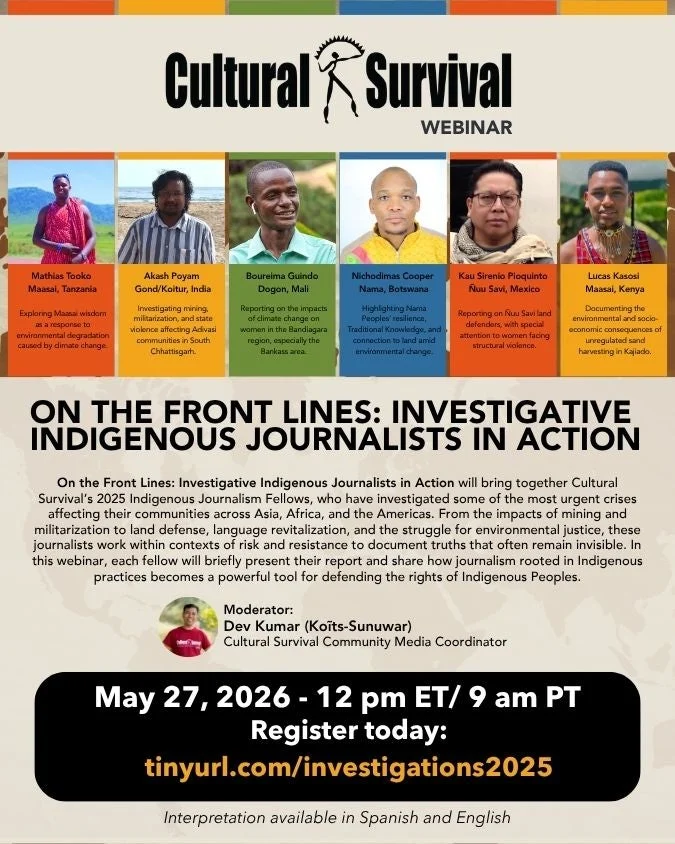
A significant webinar, aimed at equipping journalists with the skills and knowledge to effectively cover Indigenous Peoples’ rights and issues, is slated to take place on Wednesday, May 27, 2026. The event, titled "Fellowship Journalist Webinar," will commence at 1:48 PM Eastern Time, offering a crucial platform for media professionals to deepen their understanding and reporting on critical global concerns impacting Indigenous communities. While specific details regarding the webinar’s agenda and speakers are not yet fully elaborated, its timing suggests a proactive approach by the organizing body to address ongoing and emerging challenges faced by Indigenous populations worldwide.
Background and Context: The Evolving Landscape of Indigenous Rights Reporting
The scheduling of this webinar underscores a growing recognition within journalistic circles of the vital importance of accurate, nuanced, and ethical reporting on Indigenous Peoples. For decades, Indigenous communities have grappled with issues ranging from land rights and environmental justice to cultural preservation and self-determination. However, media coverage has often been characterized by a lack of depth, perpetuating stereotypes, or failing to adequately represent the voices and perspectives of Indigenous peoples themselves.
Cultural Survival, an organization dedicated to advocating for Indigenous Peoples’ rights and supporting their self-determination, cultures, and political resilience since 1972, is likely a key facilitator or organizer of such an initiative. Their mission, deeply rooted in empowering Indigenous communities, naturally extends to fostering an informed global public through responsible media. The organization’s vision of a future that respects and honors Indigenous Peoples’ inherent rights, dynamic cultures, and self-governance further highlights the critical role of effective communication and media engagement.
The webinar’s timing in May 2026 places it within a contemporary context where Indigenous activism and advocacy are gaining unprecedented international traction. The United Nations Declaration on the Rights of Indigenous Peoples (UNDRIP), adopted by the UN General Assembly in 2007, continues to serve as a foundational framework for international law and policy concerning Indigenous rights. However, its full implementation remains a significant challenge, with many nations still working to align their domestic legislation and practices with its principles. Furthermore, the escalating climate crisis disproportionately affects Indigenous territories, making their role as environmental stewards and their ancestral knowledge increasingly relevant to global sustainability efforts. Journalists equipped with specialized knowledge are essential in bridging the gap between these complex realities and public understanding.
Chronology of Need and Emerging Trends
The need for specialized journalism training in Indigenous affairs is not a recent phenomenon. Historically, media portrayals of Indigenous peoples have often been marginalized, sensationalized, or framed through a colonial lens. This has contributed to a widespread lack of public understanding and, in some cases, fueled prejudice and discrimination.
- Pre-2000s: Limited mainstream media coverage of Indigenous issues, often focusing on historical narratives or isolated incidents. Indigenous voices were rarely central to these stories.
- 2000s: Growing awareness of Indigenous rights movements, spurred by international forums and the advocacy of Indigenous organizations. The adoption of UNDRIP in 2007 marked a significant milestone, prompting calls for greater media engagement.
- 2010s: Increased focus on Indigenous land rights, environmental activism, and the impacts of development projects on Indigenous communities. Social media platforms began to offer new avenues for Indigenous voices to share their stories directly.
- 2020s (leading up to 2026): The climate crisis has brought Indigenous environmental stewardship to the forefront. Movements like Black Lives Matter and increased global discourse on decolonization have also highlighted the ongoing struggles for justice and self-determination faced by Indigenous peoples worldwide. This era has seen a surge in Indigenous-led media initiatives and a demand for journalists to report with greater cultural competency and ethical awareness.
The "Fellowship Journalist Webinar" can be seen as a response to these evolving trends, aiming to equip journalists with the necessary tools to navigate this complex landscape responsibly and effectively. The chosen date, May 27, 2026, suggests a deliberate planning phase, allowing for the integration of the latest developments and best practices in Indigenous rights reporting.
Supporting Data and the Importance of Accurate Reporting
The impact of media representation on public perception and policy can be profound. Studies have consistently shown that well-researched and ethically produced journalism can foster empathy, promote understanding, and drive positive change. Conversely, inaccurate or biased reporting can perpetuate harm and undermine the efforts of Indigenous communities to assert their rights.

Consider the following:
- Land Rights: According to data from the UN Permanent Forum on Indigenous Issues, Indigenous Peoples collectively own or manage approximately 20% of the world’s land surface. This vast territory is crucial for biodiversity conservation and climate regulation. Accurate reporting on land disputes, territorial claims, and the role of Indigenous peoples in conservation is vital for informed policy-making and global environmental efforts. Misinformation or lack of coverage can lead to continued dispossession and environmental degradation.
- Environmental Justice: Indigenous communities are often on the front lines of environmental degradation caused by resource extraction, pollution, and climate change. Reports by organizations like the Intergovernmental Panel on Climate Change (IPCC) highlight the disproportionate vulnerability of Indigenous populations to climate impacts. Journalists who can accurately convey these stories, including the traditional ecological knowledge that Indigenous peoples possess, can significantly influence public support for climate action and environmental protection.
- Cultural Preservation: The loss of Indigenous languages and cultural practices is a critical concern. UNESCO estimates that a language dies every two weeks, and many of these are Indigenous languages. Media coverage that celebrates and documents Indigenous languages, traditions, and cultural expressions can play a crucial role in their revitalization and in fostering intergenerational knowledge transfer.
- Self-Determination: The principle of self-determination is central to Indigenous rights. Reporting that explores the diverse forms of Indigenous governance, legal systems, and economic development initiatives can challenge simplistic narratives and showcase the resilience and agency of Indigenous peoples.
The "Fellowship Journalist Webinar" aims to equip journalists to engage with these complex issues using verifiable data, diverse sources, and a deep respect for Indigenous perspectives, thereby contributing to more informed and constructive public discourse.
Potential Participants and Expected Outcomes
While the specific list of participants is not provided, it is reasonable to infer that the webinar will attract a diverse range of journalists, from investigative reporters and feature writers to editors and news producers. The organizers will likely target individuals who have shown an interest in covering social justice, environmental issues, human rights, and international affairs.
The expected outcomes of such a webinar are multifaceted:
- Enhanced Understanding: Participants will gain a deeper appreciation for the historical context, legal frameworks, and contemporary challenges faced by Indigenous Peoples globally.
- Improved Reporting Skills: Journalists will learn about ethical considerations, cultural sensitivity, and effective interviewing techniques when reporting on Indigenous communities. This includes understanding the importance of obtaining Free, Prior, and Informed Consent (FPIC) when reporting on sensitive issues or communities.
- Access to Resources and Networks: The webinar may provide journalists with access to reliable sources, Indigenous organizations, and networks of experts who can support their future reporting.
- Promotion of Indigenous Voices: By equipping journalists with the right tools, the webinar aims to ensure that Indigenous voices are more prominently and accurately featured in mainstream media.
- Contribution to Policy and Advocacy: More informed media coverage can, in turn, influence public opinion and create a more supportive environment for policy changes that benefit Indigenous Peoples.
The inclusion of a "Fellowship" component in the title also suggests that this may be part of a broader program designed to support journalists committed to this beat, potentially offering ongoing mentorship or funding opportunities.
Official Responses and Broader Impact
The initiative, likely supported or organized by an entity like Cultural Survival, reflects a growing global trend of recognizing and supporting Indigenous rights. Such webinars are often part of larger strategies to build bridges between Indigenous communities and broader society, with the media playing a pivotal role.
The impact of this webinar, even before it takes place, is the signal it sends to the journalistic community and Indigenous peoples alike: that there is a dedicated effort to improve the quality and impact of reporting on Indigenous issues. This can lead to:
- Increased Visibility: More nuanced and accurate reporting will bring greater visibility to the struggles and achievements of Indigenous communities, potentially leading to increased international attention and support.
- Policy Advocacy: Informed public discourse, driven by responsible journalism, can exert pressure on governments and international bodies to uphold Indigenous rights and implement policies that support self-determination and cultural preservation.
- Strengthening of Indigenous Movements: By amplifying Indigenous voices and stories, the webinar can indirectly strengthen Indigenous-led movements for justice, land rights, and cultural revitalization.
- Global Understanding: In an increasingly interconnected world, fostering a better understanding of Indigenous cultures and challenges contributes to a more inclusive and equitable global society.
The "Fellowship Journalist Webinar" on May 27, 2026, represents a forward-looking investment in the critical field of Indigenous rights reporting. It signifies a commitment to fostering a more informed, empathetic, and just world by empowering those who shape public narratives. As the date approaches, further details about its specific content and featured speakers will undoubtedly be of significant interest to journalists, Indigenous advocates, and the global community.