The North Atlantic Treaty Organization (NATO) has been a consistent presence in global headlines throughout 2026, underscoring its enduring significance in international security. As public discourse intensifies around the alliance’s role and future, a recent comprehensive survey by the Pew Research Center offers a crucial snapshot of how well the U.S. public understands this pivotal geopolitical entity. The findings reveal a mixed picture, with a majority of Americans demonstrating a grasp of fundamental NATO concepts, yet significant knowledge gaps persist on more nuanced aspects of the alliance’s operations and membership.
This in-depth analysis, based on a March 2026 survey of 3,507 U.S. adults, aims to illuminate the current state of American knowledge about NATO and explore how this understanding correlates with demographic factors and overall attitudes towards the alliance. The research builds upon previous Pew Research Center work examining American opinions and knowledge of NATO, providing valuable context for understanding evolving public perceptions.
Key Findings: A Mixed Understanding of NATO
The Pew Research Center survey posed five factual questions designed to gauge public knowledge on various facets of NATO. The results indicate that while Americans generally understand core aspects of the alliance, specific details remain less widely known.
A majority of respondents successfully answered three key questions:
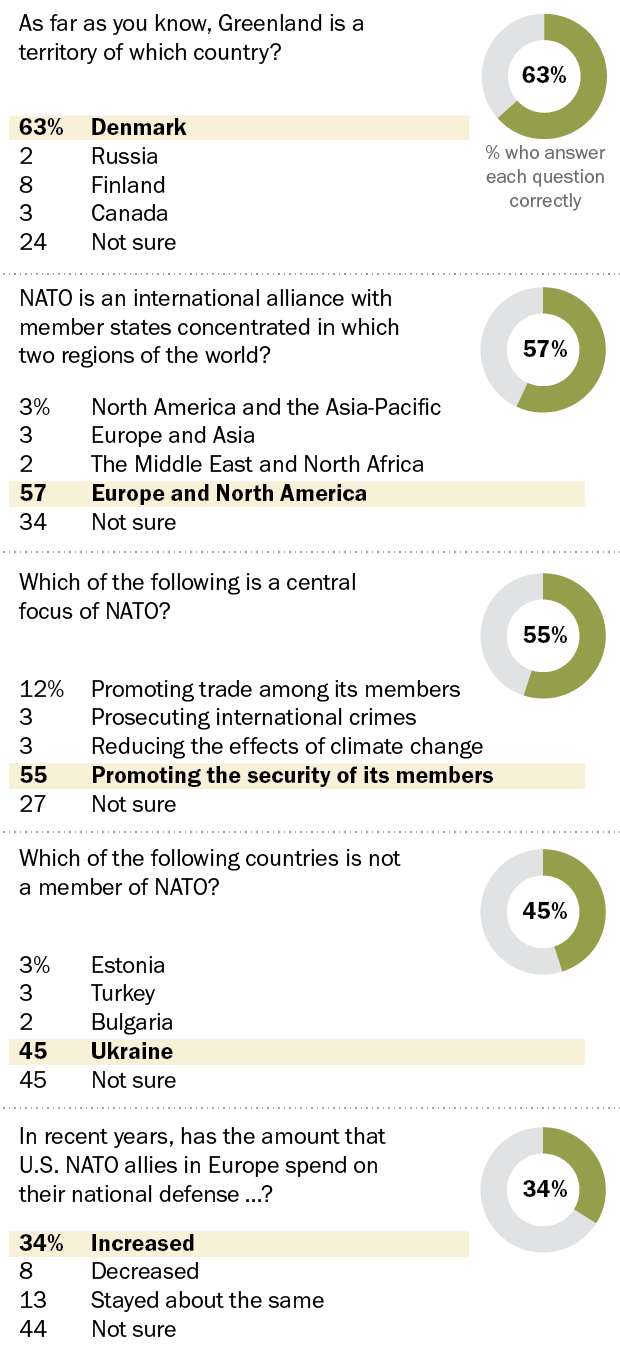
- Greenland’s Territorial Status: A significant 63% of Americans correctly identified Denmark as the country to which Greenland belongs, a question indirectly touching upon geopolitical affiliations and territorial dependencies within the broader North Atlantic region. This suggests a reasonable awareness of geographic and political relationships in a strategically important area.
- Geographic Concentration of NATO Members: Fifty-seven percent of U.S. adults correctly identified Europe and North America as the primary regions where NATO member states are concentrated. This demonstrates a foundational understanding of the alliance’s geographical scope.
- Central Focus of NATO: More than half of Americans (55%) accurately stated that promoting the security of its members is a central focus of NATO. This highlights a general comprehension of the alliance’s core defensive mandate.
However, the survey also revealed areas where knowledge is less robust:
- NATO Membership Exclusions: A considerable number of Americans (45%) correctly identified Ukraine as a country that is not a member of NATO. This is a critical distinction, particularly given the ongoing geopolitical tensions in Eastern Europe. Yet, the fact that nearly half of respondents were unsure or incorrect underscores the complexity of tracking the ever-evolving landscape of international alliances.
- European Defense Spending Trends: Only 34% of U.S. adults correctly indicated that the amount U.S. NATO allies in Europe spend on their national defense has increased in recent years. This question probes awareness of burden-sharing within the alliance, a topic frequently discussed in policy circles but apparently less understood by the general public. The substantial "Not sure" responses (44%) suggest a significant information deficit in this area.
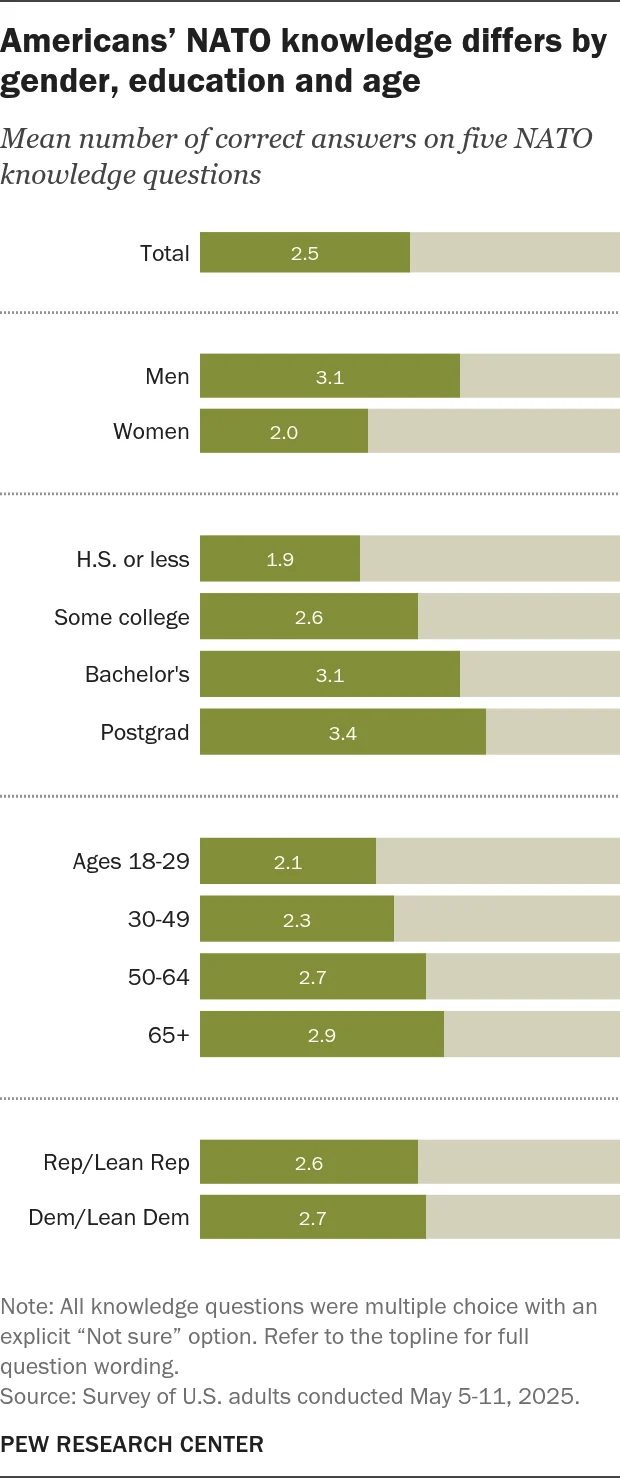
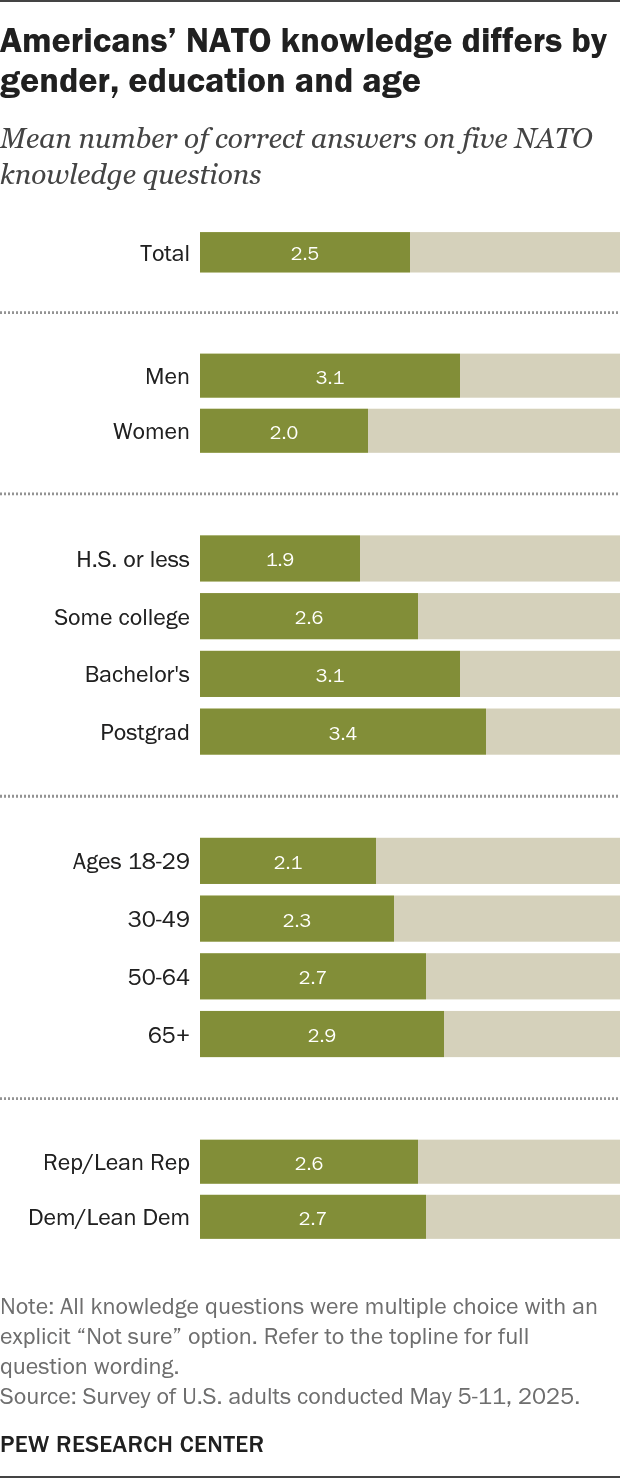
Overall, the average American answered approximately half of the NATO knowledge questions correctly, with a mean score of 2.5 out of five. The median score was 3, indicating that while many respondents achieved a moderate level of understanding, there is considerable variation in knowledge across the population.
Demographics and NATO Knowledge: A Tale of Education and Age
The survey data further reveals that an individual’s level of education and age tend to correlate with their knowledge of NATO. On average, Americans with higher educational attainment demonstrated a greater understanding of the alliance. Those with postgraduate degrees answered an average of 3.4 questions correctly, significantly higher than individuals with a high school education or less, who answered an average of 1.9 questions correctly. Individuals with bachelor’s degrees scored an average of 3.1 correct answers, while those with some college experience averaged 2.6 correct responses.
Age also appears to play a role, with older Americans generally exhibiting more knowledge about NATO. Those aged 65 and older correctly answered an average of 2.9 questions, compared to younger demographics. Adults aged 50-64 averaged 2.7 correct answers, while those aged 30-49 averaged 2.3, and the youngest group surveyed (18-29) averaged 2.1 correct answers.
Interestingly, the study found no significant difference in NATO knowledge based on political party affiliation. Republicans and Republican-leaning independents answered an average of 2.6 questions correctly, while Democrats and Democratic-leaning independents answered an average of 2.7 questions correctly. This suggests that understanding of NATO is not a strictly partisan issue among the U.S. electorate.
Men also demonstrated a higher average score (3.1 correct answers) than women (2.0 correct answers), indicating a notable gender gap in NATO knowledge.
The Interplay Between Knowledge and Opinion
A particularly salient finding of the Pew Research Center study is the direct correlation between an individual’s knowledge of NATO and their overall opinion of the alliance. Adults who answered four or five of the knowledge questions correctly were more likely to hold a favorable view of NATO (63%) than those who answered none or only one question correctly (47%).
Furthermore, Americans with a greater understanding of NATO were more inclined to believe that U.S. membership in the alliance is beneficial. This suggests that a more informed public may be more likely to appreciate the strategic value and contributions of NATO to American security interests. This insight is critical for policymakers and communicators seeking to build and maintain public support for the alliance.
Historical Perspective: A Slow but Steady Evolution of Awareness
To understand how American knowledge of NATO has evolved, the Pew Research Center revisited three of the five questions posed in its 2024 survey. The findings indicate a modest but discernible shift in public awareness over this relatively short period.
The proportion of U.S. adults who correctly identified Europe and North America as the primary regions of NATO membership remained relatively stable, with 57% providing the correct answer in 2026, compared to 56% in 2024. This suggests that the fundamental understanding of NATO’s geographic footprint has solidified.
However, there have been slight but significant increases in awareness regarding specific aspects of NATO. The share of Americans who correctly stated that Ukraine is not a member of NATO rose from 41% in 2024 to 45% in 2026. This increase, while modest, is noteworthy given the ongoing conflict and heightened international attention on Ukraine’s relationship with Western alliances.
Similarly, awareness of NATO’s core mission has seen a slight uptick. The percentage of respondents who correctly identified the promotion of its members’ security as NATO’s central focus increased from 51% in 2024 to 55% in 2026. These shifts, though incremental, suggest that ongoing public discourse and media coverage are gradually contributing to a better-informed populace.
Contextualizing NATO’s Enduring Relevance
The North Atlantic Treaty Organization, established in 1949, was conceived in the shadow of World War II and the burgeoning Cold War. Its foundational purpose was to provide collective security against the perceived threat of Soviet expansionism. The core principle, enshrined in Article 5 of the North Atlantic Treaty, is that an attack against one member is considered an attack against all. This principle of collective defense has been invoked only once in NATO’s history, following the September 11, 2001, terrorist attacks on the United States.
Over the decades, NATO has evolved significantly, adapting to new security challenges. Its expansion to include former Warsaw Pact nations in the post-Cold War era dramatically reshaped the European security landscape. More recently, the alliance has engaged in out-of-area operations, focusing on issues such as counter-terrorism, cyber warfare, and maritime security. The full-scale Russian invasion of Ukraine in 2022 marked a pivotal moment, reinvigorating NATO’s original defensive mission and prompting significant adjustments in defense spending and strategic posture among member states.
The Pew Research Center’s survey in March 2026 occurs within this dynamic geopolitical context. The heightened visibility of NATO due to the ongoing conflict in Eastern Europe and the alliance’s response has undoubtedly influenced public awareness. However, the data suggests that translating this increased visibility into deep, nuanced understanding remains a challenge.
Implications and Future Directions
The findings from the Pew Research Center’s survey carry significant implications for how NATO is perceived and supported within the United States. The clear link between knowledge and positive opinion suggests that efforts to enhance public understanding of NATO’s role, objectives, and complexities could bolster support for the alliance.
The demographic variations in knowledge, particularly the pronounced gender gap and the correlation with educational attainment, highlight specific areas where outreach and educational initiatives could be most effective. Targeting these demographics with clear, accessible information about NATO’s functions and strategic importance may help to bridge these knowledge gaps.
Furthermore, the relatively stagnant knowledge regarding European defense spending underscores a need for greater transparency and communication about burden-sharing within the alliance. As NATO members commit to increased defense investments, effectively conveying these efforts and their significance to the American public is crucial for maintaining domestic support.
The fact that political affiliation does not appear to be a significant determinant of NATO knowledge suggests that the alliance’s perceived value transcends partisan divides. This presents an opportunity for bipartisan consensus-building around NATO’s strategic importance to U.S. national security.

As the global security environment continues to evolve, the strength of alliances like NATO relies not only on the commitment of its member states but also on the informed understanding and support of their publics. The Pew Research Center’s analysis provides valuable insights for navigating this complex terrain, emphasizing the ongoing need for education and transparent communication to ensure a well-informed citizenry capable of appreciating the vital role of international cooperation in maintaining global stability.
The Pew Research Center analysis is based on a survey of 3,507 U.S. adults conducted from March 23 to 29, 2026. The survey was administered to members of the Center’s American Trends Panel. The survey questions, detailed responses, and methodology are publicly available.