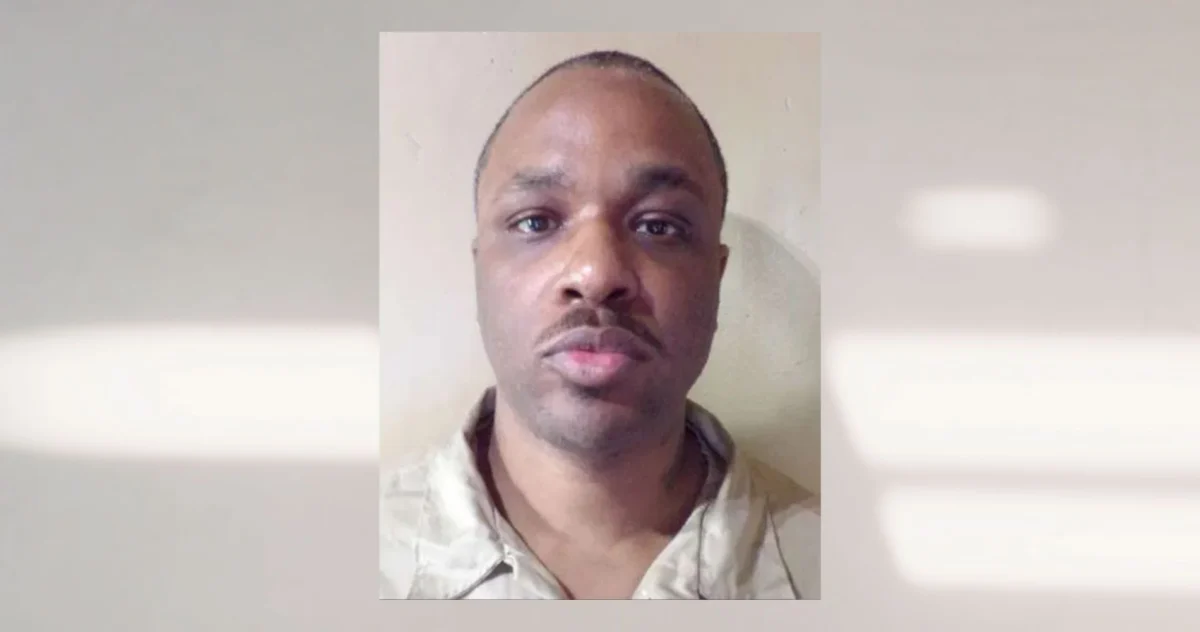
In a pivotal decision addressing long-standing concerns about equity and proportionality in capital punishment, Alabama Governor Kay Ivey today commuted the death sentence of Charles "Sonny" Burton to life imprisonment without the possibility of parole. The commutation intervenes in a case that has drawn national attention and fierce criticism, as Burton, 75, had been on Alabama’s death row since 1992 despite never having killed anyone, and notably, after the actual shooter in the underlying crime was resentenced to life without parole. This move corrects what many, including a majority of the original jurors and the victim’s own daughter, decried as a profound injustice and a stark example of the arbitrariness inherent in Alabama’s death penalty system.
A Decades-Long Battle for Justice
Charles "Sonny" Burton’s nearly 32-year tenure on death row stemmed from his involvement in a 1991 robbery at an auto parts store in Talladega, Alabama. The crime tragically resulted in the death of customer Doug Battle. However, the undisputed facts of the case have always painted a picture of Burton as a participant in the robbery, but not the individual responsible for Battle’s death. Testimony and evidence consistently showed that Derrick DeBruce was the one who fired the fatal shot after Burton had already exited the store. Burton’s legal team, led by attorney Matt Schulz, emphasized this critical distinction, stating, "Not only did he not kill anyone, but he didn’t order anyone to kill anyone. He didn’t hire anyone to kill anyone. He didn’t tell anyone to kill anyone. He literally did not even see anyone kill anyone."
All six men involved in the robbery were initially charged with capital murder. However, through plea agreements and legal maneuvers, four of the individuals managed to avoid the death penalty. Derrick DeBruce, the admitted shooter, was also sentenced to death. Yet, a federal court intervened in 2014, overturning DeBruce’s death sentence due to constitutional rights violations during his trial. Subsequently, the State of Alabama agreed to resentence DeBruce to life without parole, creating a profound and unsettling disparity: the triggerman was spared execution, while Burton, a non-shooter, remained on death row and faced an impending execution date. This singular circumstance transformed Burton’s case into what his clemency application described as "an extreme outlier" within the landscape of capital punishment.
The Clemency Petition: A Chorus of Dissent
The decision by Governor Ivey comes after an impassioned and broad-based clemency petition that underscored the fundamental unfairness of Burton’s situation. Central to this petition were the unprecedented appeals from the very jurors who had originally voted to sentence Burton to death. Priscilla Townsend, one of three jurors who explicitly urged Governor Ivey to grant clemency, articulated her distress to The Associated Press, stating, "It’s absolutely not fair. You don’t execute someone who did not pull the trigger." While Townsend affirmed her continued belief in the death penalty "for the worst of the worst," she unequivocally stated that Burton did not fit that description. In a powerful op-ed, Townsend expressed deep disappointment, writing, "I am deeply disappointed in how this case has slipped through the cracks, and am concerned about Alabama’s system of justice if it allows Mr. Burton’s execution."
Her sentiments were echoed by other jurors. Six of the eight living jurors from the 1992 trial expressed no opposition to the commutation of Burton’s sentence. Juror James Cottongim conveyed to the governor that while the crime was terrible, it would be "very unjust" for Burton to be the one executed. He specifically highlighted the discrepancy: "Since Mr. Burton was not the man who pulled the trigger, it just seems wrong that he should be put to death when the shooter was resentenced to life. Our original sentence of death is just no longer appropriate given the circumstances." These collective statements from those who originally condemned Burton to death provided a compelling moral and ethical foundation for the clemency request, suggesting a widespread recognition that justice, in this instance, had veered off course.
The Victim’s Family Advocates for Grace
Perhaps even more poignantly, Tori Battle, the daughter of the slain customer Doug Battle, also urged Governor Ivey to grant clemency to Burton. Her plea transcended the desire for retribution, focusing instead on healing and her father’s values. "I do not see how this execution will contribute to my healing," she wrote to the governor. "My father, Doug Battle, was many things. He was strong, but he valued peace. He did not believe in revenge. And in that way, I am very much his daughter… I hope you will consider extending grace to Mr. Burton and granting him clemency." Her statement, read aloud at a recent gathering of Burton’s loved ones and supporters in Montgomery, underscored a profound human element, demonstrating that the pursuit of justice does not always equate to the pursuit of the ultimate penalty, particularly when proportionality is in question.
Burton’s Deteriorating Health and Impending Execution
Adding to the urgency of the clemency appeal were details about Charles Burton’s advanced age and severe health issues. At 75, Burton is described as frail and in failing health. His sister, Eddie Mae Ellison, told The Associated Press that he suffers from debilitating rheumatoid arthritis and struggles with immense pain, primarily relying on a wheelchair. His attorney further noted that Burton has to wear a state-issued helmet due to frequent falls, indicative of his severely compromised physical state. Despite these conditions, the State of Alabama had moved forward, with the Alabama Supreme Court authorizing his execution in January, setting the date for March 12 by nitrogen suffocation, a controversial method recently implemented in the state. The grim prospect of executing a physically broken, elderly man who did not commit the murder, while the actual killer was spared, amplified the calls for intervention.
Governor Ivey’s Record and the Broader Context
Governor Kay Ivey’s decision to commute Burton’s sentence is particularly noteworthy given her record on capital punishment. During her nine years as governor, Ivey has presided over the executions of 25 people, a higher number than any other state executive since the death penalty was reinstated in 1976. This historical context makes her intervention in Burton’s case stand out. Last year, she also commuted the death sentence of Robin "Rocky" Myers to life without parole, citing "considerable questions about his guilt," demonstrating a willingness to use her clemency power when presented with compelling evidence of injustice or doubt.
The legal arguments presented by Burton’s lawyers, stating "This outlier case is a quintessential case for the exercise of executive clemency. It is one which, similarly to a handful of cases from other states, slipped through the cracks," resonate with a growing national discussion about the application of the death penalty. Other Republican governors, such as Oklahoma’s Kevin Stitt, have similarly granted clemency in cases raising significant doubts or concerns about proportionality, signaling a potential shift in conservative perspectives on capital punishment in specific circumstances.
Implications for Alabama’s Death Penalty System
The commutation of Charles Burton’s death sentence casts a critical light on the persistent concerns regarding the "arbitrariness" of Alabama’s capital punishment system, a point highlighted by organizations like the Equal Justice Initiative (EJI). Alabama has historically faced scrutiny for several aspects of its death penalty practices, including the use of judicial override (where a judge could impose a death sentence even if a jury recommended life imprisonment, a practice since ended but impacting past cases), and the state’s high execution rate. The fact that Burton was the only one of six co-defendants, and the only non-shooter, facing execution underscored these concerns.
This case forces a re-evaluation of the "worst of the worst" standard often invoked to justify capital punishment. When the individual who pulled the trigger is resentenced to life, and a co-defendant, whose role was significantly less direct in the ultimate fatality, remains slated for execution, it directly challenges the notion of proportionality and culpability that is supposed to underpin the death penalty. Legal scholars and human rights advocates argue that such disparities erode public trust in the justice system and highlight systemic flaws that can lead to arbitrary and unjust outcomes.
While this commutation spares Charles Burton from execution, it also serves as a potent reminder of the fragility and fallibility of judicial processes, particularly in capital cases. It prompts further questions about how many other individuals on death row, both in Alabama and across the United States, might be similarly situated, having received sentences that no longer align with contemporary standards of justice or proportionality, or even with the initial intent of their sentencing jurors. The long, arduous journey of Charles Burton, from conviction to near-execution and ultimately to commutation, stands as a testament to the ongoing struggles for equitable justice within the complex and often controversial realm of capital punishment. It is a moment of relief for Burton and his family, and a significant, albeit rare, acknowledgment of a profound systemic imbalance by the state’s highest executive office.