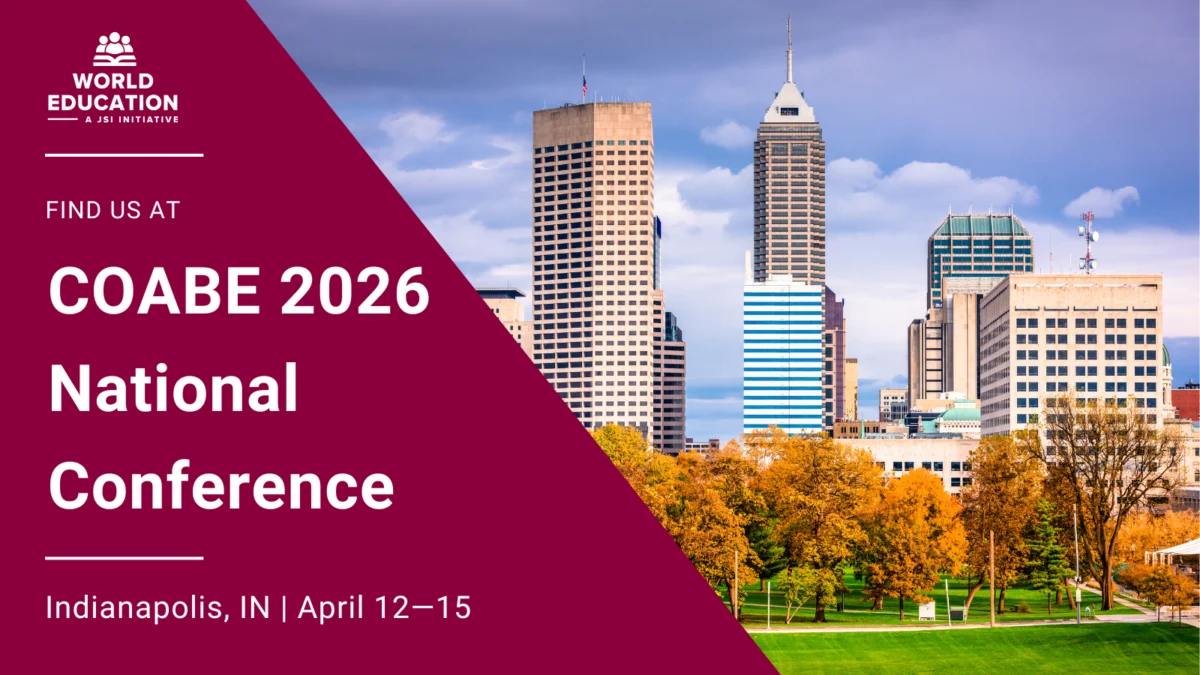
World Education, a leading initiative under the JSI Research & Training Institute, Inc. (JSI), has finalized its extensive programming schedule for the Commission on Adult Basic Education (COABE) 2026 National Conference. Scheduled to take place from April 12 to April 15, 2026, in Indianapolis, Indiana, the conference serves as the premier gathering for adult education practitioners, administrators, and researchers in the United States. World Education’s delegation will present a series of workshops and seminars focused on the intersection of digital literacy, generative artificial intelligence (AI), and professional development, aiming to address the persistent digital divide affecting millions of adult learners nationwide.
The COABE National Conference is historically a pivotal event for the adult education sector, which serves a population of approximately 43 million U.S. adults who possess low literacy skills. As the workforce increasingly demands high-level digital competency, the sessions hosted by World Education experts are designed to provide scalable, research-backed solutions for educators operating in diverse environments, from community-based organizations to correctional facilities and vocational training centers.
Contextualizing the Digital Divide in 2026
The backdrop for the 2026 conference is a landscape where digital equity has become synonymous with economic mobility. According to recent data from the Program for the International Assessment of Adult Competencies (PIAAC), a significant portion of the American workforce lacks the digital problem-solving skills required for middle-skill jobs. World Education’s participation at COABE 2026 represents a strategic effort to bridge this gap by integrating advanced technologies like Generative AI into foundational literacy programs.
In Indianapolis, the JW Marriott and surrounding facilities will host thousands of attendees seeking to modernize their instructional approaches. World Education’s focus on "Maximum Impact Professional Development" and "AI Literacy" reflects a broader shift in the industry toward technology-mediated learning that does not sacrifice pedagogical integrity.
Detailed Chronology of Presentations and Initiatives
The four-day event features a structured rollout of World Education’s latest findings and tools. Each session is tailored to specific challenges currently facing the adult education workforce.
Monday, April 13: Frameworks for Digital Skill Development
The conference’s first full day of programming begins with a focus on practical frameworks. At 8:00 AM, Jeff Goumas will lead a session in the JW Grand Ballroom 2 titled "Using BRIDGES Skills Checklists to Drive Digital Skills Development in Any Context." This session introduces a standardized approach to assessing and tracking digital competencies, a critical need for programs that struggle with inconsistent student intake levels.
Later that morning, the focus shifts to urban policy and implementation. Sandy Goodman and Catalina González will present "From Policy to Practice: Implementation Lessons from Boston’s Digital Literacy Initiative." This session is expected to provide a roadmap for municipal leaders and program directors on how to translate high-level funding and policy mandates into classroom-level success. By analyzing the Boston model, presenters will highlight how cross-sector partnerships between city government and education providers can create sustainable digital equity ecosystems.
The afternoon of April 13 features a deep dive into the CREATE Network’s latest research. Jen Vanek and Jeff Goumas, joined by representatives from the American Institutes for Research (AIR), will present "Practical Solutions from Research: Digital Tools to Support Teaching and Learning." This in-person-only session at Room 205 will showcase how empirical data is being used to refine digital tools, ensuring they are accessible to learners with varying degrees of English proficiency and formal schooling.
Tuesday, April 14: The Integration of Artificial Intelligence
Tuesday’s agenda is heavily weighted toward the transformative potential of artificial intelligence. Rachel Riggs will open the day at 8:00 AM with "Aligning AI Literacy with Learning and Work Goals in Adult Ed." As AI becomes a standard fixture in the workplace, Riggs will argue that adult learners must not only learn how to use these tools but also understand the ethical implications and the underlying logic of AI systems to remain competitive in the labor market.
Mid-day sessions will address the availability of resources. Jen Vanek and Jeff Goumas, along with Stephen Sireci from UMass Amherst, will present "Free and Open Online Literacy Curriculum: Leveraging SkillBlox and ASAP for Adult Readers." SkillBlox has emerged as a critical aggregator for Open Educational Resources (OER), allowing teachers to build customized learning playlists that meet the specific needs of their students without the high cost of traditional textbooks.
The 2:00 PM hour offers a choice between two highly technical sessions. In Room 206, Vanek and Goumas will join forces with Stephanie Cronen and Neha Nanda of AIR to discuss "Practitioner-Friendly Findings." Simultaneously, in the JW Grand Ballroom 3, Rachel Riggs will host "Generative AI and the EdTech Maker Space." This session focuses on a "Maker Space" philosophy, where educators use GenAI to rapidly prototype and create learning materials that fill specific curriculum gaps, such as culturally relevant reading passages or specialized vocabulary drills for vocational training.
Wednesday, April 15: Professional Development and Online Strategy
The final day of the conference centers on the sustainability of these initiatives through robust professional development. Dani Scherer will present "Maximum Impact Professional Development: A Three-Pronged Approach" at 11:50 AM. This session addresses the "one-and-done" workshop fatigue often felt by educators, proposing instead a continuous, multifaceted model of growth that includes peer coaching, asynchronous learning, and hands-on application.
The afternoon concludes with two sessions by Eliana Stanislawski. The first, "EdTech in Action," provides a blueprint for organizations to structure their own digital literacy series. The final session, "Engaging Strategies for Online Instruction of Literacy-Level Adults," addresses one of the most difficult challenges in the field: how to maintain engagement and provide effective instruction to students who are both learning to read and learning to navigate a computer simultaneously.
Supporting Data and Research Foundations
World Education’s presentations are built upon years of applied research. The "EdTech Center" at World Education has consistently advocated for the "Digital Resilience" framework, which posits that learners need the agility to adapt to new technologies as they emerge, rather than just learning specific software.
Supporting data for these initiatives includes:
- The Reach of OER: Programs utilizing SkillBlox have reported a significant reduction in curriculum costs, allowing funds to be reallocated toward student support services.
- AI Efficiency: Preliminary internal studies suggest that teachers using Generative AI for lesson planning can reduce prep time by up to 30%, allowing for more one-on-one student interaction.
- Retention Rates: Adult education programs that integrate digital literacy into core instruction—rather than teaching it as a standalone subject—see higher persistence rates among learners.
Official Responses and Strategic Implications
While the conference is a forward-looking event, the implications for the present are clear. World Education leadership has emphasized that the goal of their participation at COABE 2026 is to move the field beyond "emergency remote teaching" and toward a permanent, high-quality digital infrastructure.
"The sessions we are bringing to Indianapolis represent the culmination of years of field-testing and collaboration," an organizational spokesperson noted in an internal brief regarding the conference. "Our focus is on ensuring that the adult education system is not just reacting to technological change, but leading it."
The involvement of partners like the American Institutes for Research and UMass Amherst underscores the collaborative nature of this work. These partnerships ensure that the tools developed by World Education are not only innovative but also psychometrically sound and educationally effective.
Broader Impact on Education Systems
The strategies presented at COABE 2026 have the potential to influence state and federal education policy. By demonstrating that "literacy-level adults" can successfully engage with AI and complex digital tools, World Education is challenging the "deficit model" of adult education. This shift encourages a "strengths-based" approach where the prior work experience and resilience of adult learners are leveraged in the digital classroom.
Furthermore, the emphasis on "System Strengthening" mentioned in World Education’s partnership goals suggests a move toward more integrated service delivery. By aligning adult education with workforce development and digital equity mandates (such as those funded by the Digital Equity Act), World Education is helping to create a more cohesive support structure for the nation’s most vulnerable workers.
As Indianapolis prepares to welcome the COABE 2026 National Conference, the work of World Education stands as a testament to the evolving role of the educator in the age of automation. The focus remains steadfastly on the learner, ensuring that as the world becomes increasingly digital, no one is left behind in the pursuit of literacy, employment, and civic participation.