The human cognitive system, constantly operating under pressure to process vast amounts of information rapidly, frequently deviates from our conscious intentions to maintain open-mindedness, respect, and inclusion. This often occurs because the vast majority of our thinking, categorized as System 1 by psychologists Daniel Kahneman and Amos Tversky, operates on an automatic, intuitive, and largely unconscious level. This rapid processing mechanism, while efficient, can lead to faulty judgments rooted in immediate feelings, superficial observations, past experiences, ingrained stereotypes, prevailing societal norms, and deeply held beliefs acquired during upbringing. The strategic application of reframing — a technique involving a conscious alteration of what we perceive and articulate — offers a powerful pathway to reshape these inherent mental shortcuts, enhancing their accuracy and aligning them more closely with our desired conduct towards ourselves and others. This approach is central to the field of inclusion nudges, which seeks to design environments and prompts that steer individuals towards more equitable and inclusive behaviors.
The Cognitive Architecture of Bias: System 1 vs. System 2
The dual-process theory of cognition, a cornerstone of behavioral economics and psychology, delineates two primary modes of thought. System 1 is fast, intuitive, emotional, and largely automatic, responsible for split-second decisions and routine tasks. It’s the system that allows us to recognize faces, understand simple sentences, and react to sudden noises without conscious effort. However, its efficiency comes at a cost: it is prone to biases and heuristics, mental shortcuts that can lead to systematic errors in judgment. System 2, in contrast, is slow, deliberate, analytical, and requires conscious effort. It’s engaged when we solve complex math problems, critically evaluate arguments, or make major life decisions. While System 2 can override System 1, it is resource-intensive and often fatigued, leaving System 1 to dominate most daily interactions and perceptions. The challenge lies in the fact that our intentions for open-mindedness and inclusion typically reside in our conscious, System 2 thinking, yet our initial reactions and judgments are often driven by the automatic, biased operations of System 1. Research consistently shows that even individuals with strong egalitarian beliefs can exhibit unconscious biases, demonstrating the pervasive influence of System 1.
Normative Patterns: Shaping Perceptions and Fueling Exclusion
Throughout an individual’s life, there is a constant, often unwitting, internalization of messages about themselves and others. These messages are powerful reflections of normative patterns, dictating who is ostensibly deemed ‘good,’ ‘attractive,’ ‘smart,’ ‘trustworthy,’ ‘a leader,’ ‘friendly,’ ‘caring,’ ‘strong,’ ‘talented,’ and countless other attributes. These instantaneous mental associations are not innate; they are profoundly reinforced through a myriad of social agents, including family units, peer groups, social media influencers, traditional media outlets, educational institutions, reward systems, organizational cultures, and society at large.
The relentless exposure to these culturally constructed perceptions profoundly shapes our views and interactions, influencing not only individual behaviors but also the very systems and structures we create and utilize. The insidious nature of these normative patterns can lead to significant discriminatory impacts across society, resulting in the systemic exclusion of numerous individuals who do not conform to the dominant, often narrowly defined, pattern. This pervasive societal challenge is a core motivator for ongoing efforts in diversity, equity, and inclusion (DEI), aiming to dismantle these exclusionary frameworks and foster environments where all individuals are valued and can thrive.
The Personal Toll: Internalized Negative Associations and "Zoom Dysmorphia"
The influence of normative patterns extends beyond societal discrimination, deeply impacting individuals on a personal level. Many people internalize negative associations about themselves, viewing their own characteristics through the lens of these often unattainable or exclusionary societal norms. This self-critical internal monologue can be incredibly damaging, fostering self-doubt and undermining self-esteem.
A contemporary manifestation of this phenomenon is the emergence of what has been termed "Zoom dysmorphia." Catalyzed by nearly two years of widespread video-based online work and social interaction during the COVID-19 pandemic, this condition describes a negative fixation on one’s own appearance, often exacerbated by the constant self-view in virtual meetings. Studies have indicated a significant increase in cosmetic surgery consultations driven by dissatisfaction with one’s appearance on video calls. Dermatologists and plastic surgeons reported a surge in patients seeking procedures to alter features they scrutinized during video conferencing, with one survey noting a 33% increase in virtual consultations for aesthetic treatments. This reflects a deeper psychological trend where individuals unconsciously apply harsh, often unrealistic, judgments against their own rationally held positive self-beliefs, highlighting the powerful, often detrimental, influence of external and internalized normative pressures on self-perception.
Behavioral Interventions: The "That’s a Human…" Experiment
As designers specializing in behavioral change, a foundational practice involves experimenting with interventions on ourselves to effectively interrupt and reshape internalized negative messages, biases, and exclusionary behaviors. This self-application provides invaluable insights into the efficacy and practical challenges of such designs.
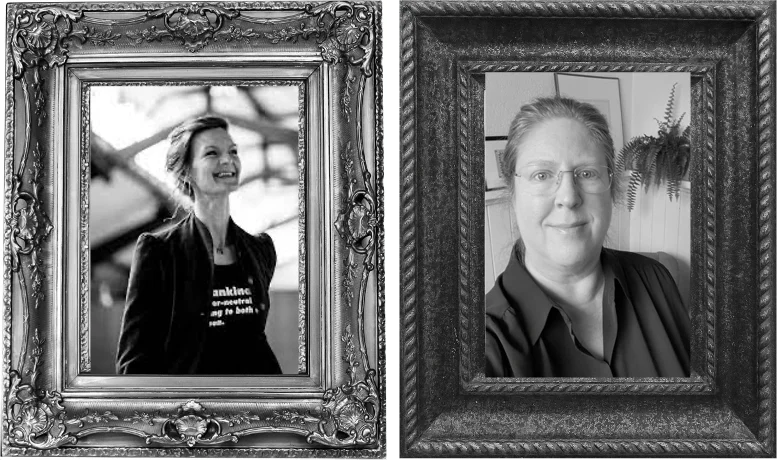
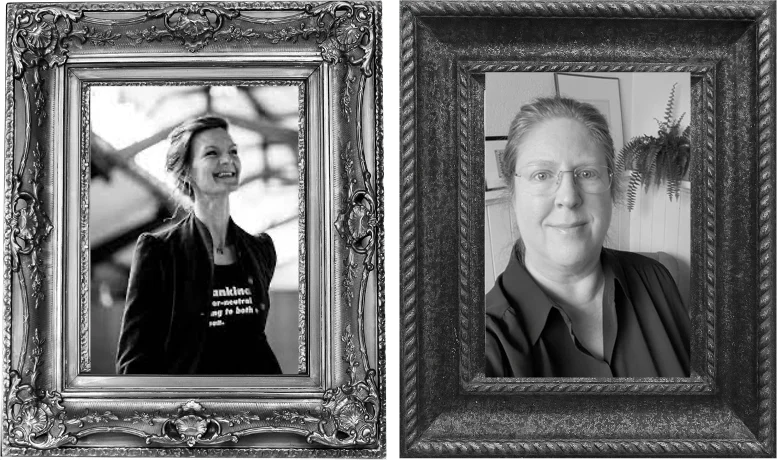
One such design, developed and rigorously experimented with by practitioners Lisa Kepinski and Tinna C. Nielsen, is titled “That’s a human…” This simple yet profound reframing technique aims to shift perception from superficial judgments to a fundamental recognition of shared humanity.
Lisa’s Journey: Countering Appearance-Based Self-Criticism
Lisa recounts her personal journey during 18 months of lockdown, using the extended period of self-isolation to actively counter negative thoughts about her appearance. Historically, her mirror interactions were fleeting, quick glances focused on superficial checks: brushed hair, clean teeth, neat clothes. However, any moment prolonged beyond a swift assessment would invariably invite a cascade of negative internal headlines and an immediate, draining argument between her critical and confident inner voices. Recognizing this immense waste of mental energy, Lisa sought to redirect it, intentionally resetting her internal dialogue and perceptions when encountering her own reflection.
Her inspiration stemmed from a powerful Inclusion Nudge example detailed in The Inclusion Nudges Guidebook, titled "Re-Frame ‘Migrant’ to ‘Human.’" This design highlights the work of members from the South African non-profit organization PASSOP (People Against Suffering, Suppression, Oppression and Poverty). PASSOP activists actively engage with social media postings that use dehumanizing terms like ‘refugee’ or ‘migrant,’ commenting with the single word ‘human.’ For instance, a post referring to a ‘refugee crisis’ would be met with a comment clarifying it as a ‘human crisis.’ This strategic linguistic intervention aims to re-focus perspectives on the inherent humanity of individuals, emphasizing the desired outcome: to see and treat all people as humans. The underlying principle is that shifting perceptions often necessitates a foundational change in the language we employ.
Armed with this insight, Lisa embarked on her personal reframing experiment. Her steps, though not explicitly listed in the original text, can be inferred as a structured practice:
- Conscious Observation: Intentionally looking in the mirror for a slightly longer duration than usual.
- Bias Interruption: Recognizing the initial surge of critical thoughts about specific physical attributes.
- Reframing Statement: Immediately interjecting the thought, “That’s a human face,” or “That’s a human body,” consciously shifting focus from perceived flaws to fundamental existence.
- Sustained Practice: Consistently applying this reframing technique over time to build a new mental habit.
Remarkably, this practice quickly evolved into a regular habit for Lisa. The technique extended beyond self-perception to her interactions with others, a transition she found surprisingly easier, perhaps due to the well-documented phenomenon that individuals are often their harshest critics. She now frequently catches herself thinking, “That’s a human face” or “That’s a human body” when observing others. This internal statement serves as a powerful prompt for introspection. Upon hearing it in her mind, she consciously reviews her preceding thoughts about the person. While the automaticity of mental associations sometimes precludes full conscious recall, in many instances, she is able to retrieve her initial, often biased, judgment. This dissonance—the clash between her inclusive intentions and her actual unconscious thoughts—serves as a potent motivator, reinforcing her commitment to continue practicing this reframing technique, both personally and in her interactions with others. The understanding that bias cannot be simply wished away underscores the necessity of designing deliberate interventions to interrupt automatic processes, create space for more considered thought, and fundamentally alter what we perceive.
Tinna’s Inspiration: Expanding Humanity in Public Spaces
Tinna C. Nielsen was profoundly inspired by Lisa’s "That’s a human…" experiment and swiftly adopted a similar practice. Her adaptation involved internally declaring, “There’s a human being” whenever she observed people in public spaces. Tinna candidly admits that her mind often gravitated towards judgmental observations about others’ appearances, such as “she is skinny,” “she is tall,” “he is overweight,” or “ugly shoes.” This tendency caused her considerable discomfort and shame, yet she struggled to alter it. The introduction of the default statement, “there is a human being,” provided an effective interruption. She noticed an immediate shift towards a more positive internal energy, and the judgmental thoughts, once recognized, dissipated rapidly. This practice not only reduced her critical gaze towards others but also fostered a sense of self-acceptance. As a woman who is 185 cm tall, Tinna often felt like an outlier due to her height. The realization that she, too, is simply "a human being among others" helped diminish her own feelings of being different, reinforcing the universal applicability and profound simplicity of the reframing technique.
Framing Perceptions Inclusion Nudges: A Deeper Dive
The power of reframing, as demonstrated by Lisa and Tinna’s experiences, lies in its ability to address a pervasive psychological challenge: the dominance of superficial judgments. It is an absurd reality that judgments of body shape, appearance, and voice can overshadow an individual’s strong sense of self, significant accomplishments, and inherent value. This internal conflict, where conscious self-belief battles unconscious self-negation, highlights the complex nature of bias. It cannot simply be willed away; it requires strategic, behaviorally informed interventions.
Framing Perceptions Inclusion Nudges are precisely this type of intervention. They are meticulously designed applications of behavioral insights aimed at reshaping harmful mental messages and fostering more inclusive thought processes. As defined in The Inclusion Nudges Guidebook by Kepinski & Nielsen, “Framing Perceptions Inclusion Nudges are designs that alter perceptions to help the brain perceive issues related to inclusion, diversity, equality in a resource discourse. The designs also prime specific associations and counter stereotypes. Altering the framing of an issue or message and changing the anchor of a thought process helps to promote inclusive behaviour because it influences the reactions in the automatic, stereotyped, and unconscious mind.”
These nudges operate by subtly influencing System 1 thinking, bypassing the need for conscious effort or rational persuasion. By changing the context, language, or visual cues associated with a concept, they can shift automatic reactions, prime more positive associations, and effectively counteract deeply ingrained stereotypes. This approach recognizes that while conscious education is vital, behavioral interventions are necessary to address the unconscious drivers of bias.
Broader Implications: Societal and Organizational Impact
The implications of reframing extend far beyond individual self-perception. On a societal level, initiatives like PASSOP’s "Re-Frame ‘Migrant’ to ‘Human’" directly challenge the dehumanizing narratives that often accompany discussions of migration and displacement. By consistently re-centering the discourse on human dignity, these efforts work to foster empathy, reduce xenophobia, and promote more humane policies. This is crucial in a world grappling with complex humanitarian crises, where language can either build bridges of understanding or walls of prejudice.
In organizational settings, Framing Perceptions Inclusion Nudges can be deployed to mitigate biases in various processes, from hiring and promotions to team dynamics and customer interactions. For example, ensuring job descriptions use inclusive language, presenting diverse candidate pools, or using objective criteria to evaluate performance are all forms of nudges that reframe perceptions and promote equitable outcomes. The principle of "Ask Flip Questions to Change Your Perceptions in the Moment," another impactful Inclusion Nudge design, encourages individuals to challenge their initial assumptions by actively seeking alternative perspectives. This design, detailed across The Inclusion Nudges Guidebook and Action Guide books, has been widely lauded for its effectiveness in expanding critical thinking, enhancing information gathering, and fostering more inclusive decision-making in both professional and personal contexts.
Expert Perspectives and Supporting Data
Behavioral scientists and DEI practitioners universally acknowledge the profound impact of framing on perception and behavior. Research by figures like Cass Sunstein and Richard Thaler, pioneers of nudge theory, demonstrates how subtle changes in choice architecture can significantly influence decisions without restricting freedom. The application of these principles to inclusion is a natural extension, recognizing that biases are often structural and psychological, not merely attitudinal.
Data supporting the efficacy of reframing and nudge-based interventions is growing. Studies on implicit bias, for instance, consistently show that exposure to diverse imagery and inclusive language can reduce automatic prejudiced associations. For example, experiments have shown that using images framing immigrants as "one of us" rather than "the other" can significantly increase positive attitudes and willingness to support integration policies. Similarly, interrupting gender caregiver stereotypes with diverse images in corporate communications can challenge traditional gender roles and promote more equitable perceptions of parental leave and work-life balance. These are practical examples of Framing Perceptions Inclusion Nudges, such as "Images Framing Immigrants as One of Us" and "Interrupt Gender Caregiver Stereotypes with Images," both found in The Inclusion Nudges Guidebook.
The challenge of bias is not one that can be "cured" or eradicated entirely, given its deeply embedded nature in our cognitive architecture. However, through intentional design and consistent practice, individuals and organizations can significantly lessen its detrimental influence. The shared experiences of Lisa and Tinna serve as compelling evidence that even simple, self-applied reframing techniques can yield profound personal and societal benefits, fostering a greater sense of humanity, self-acceptance, and inclusive interaction.
Cultivating a More Conscious and Inclusive Future
The journey towards conscious inclusion is ongoing and requires continuous effort. The insights from behavioral science and the practical application of Inclusion Nudges offer powerful tools for this endeavor. By understanding how our automatic cognitive processes can lead us astray, and by deliberately designing interventions to reframe our perceptions, we can cultivate environments and internal landscapes that are more aligned with our deepest intentions for open-mindedness, respect, and inclusion.
These principles are not merely theoretical; they are actionable strategies for daily life. Whether it is consciously reframing self-critical thoughts, challenging societal stereotypes, or advocating for inclusive language, each small act of reframing contributes to a larger cultural shift. The call to action is clear: engage with these designs, experiment with them, and contribute to a growing body of knowledge on how to effectively lessen the influence of negative biases and stereotypes. The conversation around reframing for inclusivity is dynamic and evolving, inviting individuals and organizations alike to explore and share their experiences.
For those eager to delve deeper into the transformative potential of reframing designs, additional resources and insights are readily available. These include articles such as "Reframe Language on How We Work Today," "Diversity Is About People, Not Flowers, Candy, or Pencils," and "Don’t Set Targets for Women – But for Max 70% of the Same Gender," all of which provide further examples and analyses of how reframing can drive positive change in various contexts. The ongoing dialogue and practical application of these strategies are crucial steps in fostering a world where empathy and inclusion are not just aspirations, but lived realities.