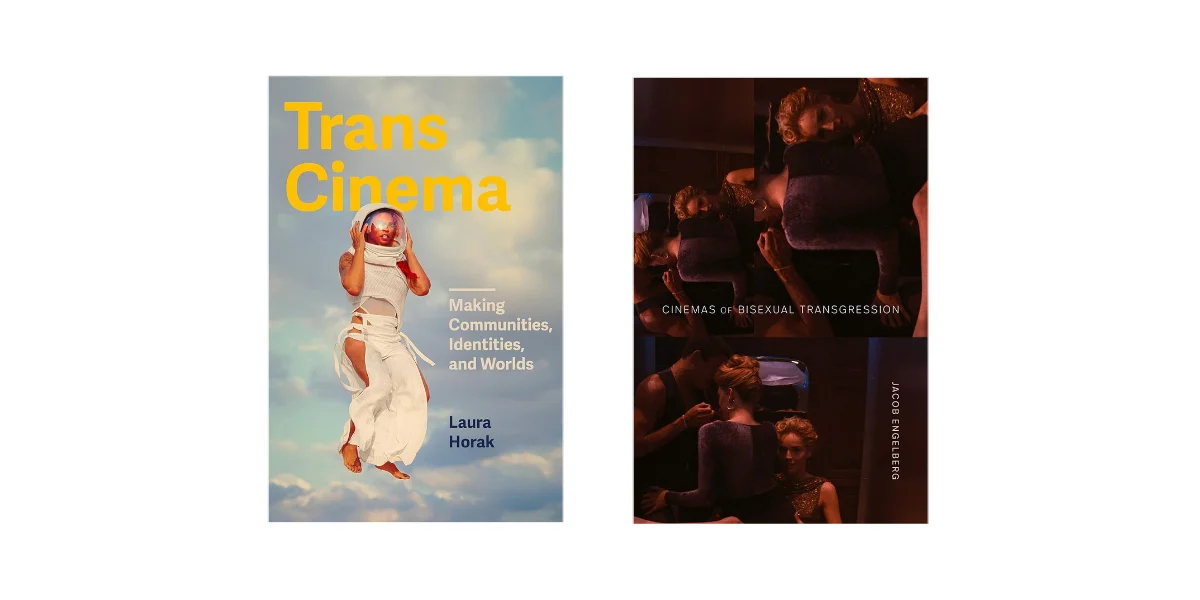
The 2024 publication of two major academic texts, Trans Cinema: Remaking Communities, Identities, and Worlds by Laura Horak and Cinemas of Bisexual Transgression by Jacob Engelberg, marks a significant turning point in the evolution of LGBTQ+ media studies. While previous scholarship in this field often focused on general queer visibility or the "New Queer Cinema" movement of the early 1990s, these new works provide a more granular and specialized interrogation of trans-made media and bisexual representation. By moving beyond the binary of "positive" versus "negative" depictions, Horak and Engelberg utilize advanced film theory to explore how these cinematic works construct, dismantle, and reimagine social and sexual realities.
The Transgender Media Portal and the Institutional Framework of Trans Cinema
Laura Horak, a Professor of Film Studies at Carleton University, brings a robust institutional background to her analysis. As the director of the Transgender Media Lab and the Transgender Media Portal, Horak has spent years building a digital infrastructure that functions as a comprehensive database for films and videos created by transgender, nonbinary, and two-spirit individuals. This project, which mirrors the functionality of the Internet Movie Database (IMDb), serves as the empirical foundation for her book, Trans Cinema.
Horak’s work is grounded in the necessity of documenting a history that has often been erased or sidelined by mainstream media. The Transgender Media Portal addresses a critical gap in film history; while mainstream platforms often prioritize high-budget productions featuring cisgender actors in trans roles, Horak’s research emphasizes the prolific output of trans creators themselves. This focus shifts the analytical lens from how trans people are viewed by outsiders to how trans artists utilize the medium of film to articulate their own existence and demand fulfillment.
Methodological Ethics and the Accountability Audit
A distinctive feature of Trans Cinema is its commitment to ethical research practices. Horak, identifying as a white cisgender scholar, acknowledges the historical precedent of extractive and often harmful research conducted by cisgender academics on trans communities. To mitigate these power imbalances, Horak implemented a rigorous framework for accountability. This included the employment of trans and BIPOC (Black, Indigenous, and People of Color) student researchers and a dedicated effort to cite the work of trans and BIPOC scholars.
The book includes an "accountability audit" in its appendix, authored by Kit Chokly, a research assistant at the Transgender Media Lab. This document provides a transparent evaluation of Horak’s adherence to her stated ethical goals. Such self-reflexivity is increasingly seen as a standard for justice-oriented scholarship, ensuring that the research process itself aligns with the political aims of the subject matter.
Historical Chronology and the Three Pillars of Trans Representation
Horak structures the first half of her book, "Foundations," through a chronological and thematic history of trans media. She identifies three key areas that have shaped the current landscape: mainstream media representation, independent trans filmmaking, and the development of trans film festivals.
The rise of trans film festivals in the late 1990s and early 2000s—such as the San Francisco Transgender Film Festival (founded in 1997)—provided a vital alternative to the mainstream festival circuit. Horak argues that these festivals were instrumental in fostering "chosen family" and community networks, allowing trans filmmakers to experiment with form and content away from the commercial pressures of the Hollywood "monogaze." This historical context provides a necessary backdrop to the "Key Themes" explored in the second half of the book, which include sex and desire, violence, embodiment, and the relationship to the past.
The Politics of Transgender Youth and Parental Representation
One of the most pressing chapters in Trans Cinema addresses the representation of trans children and their parents. This analysis arrives at a critical juncture in U.S. and international politics. According to data from the American Civil Liberties Union (ACLU), over 500 anti-LGBTQ+ bills were introduced in state legislatures in 2023 alone, many specifically targeting gender-affirming care for minors and trans participation in sports.
Horak analyzes how documentaries and fictional works about trans families serve as a counter-narrative to the "political football" rhetoric used by legislators. By examining how trans creators establish the "complex personhood" of children, Horak illustrates how film can be a tool for radical advocacy. These works portray trans youth not as passive victims but as "canny advocates" of their own identities, and parents as human figures navigating complex social terrains rather than one-dimensional archetypes.
Theorizing Bisexual Transgression and the Critique of Monosexism
Jacob Engelberg, an Assistant Professor at the University of Amsterdam, offers a parallel intervention in his book, Cinemas of Bisexual Transgression. Engelberg’s primary objective is to challenge "monosexism"—the cultural and social system that privileges attraction to a single gender (either heterosexuality or homosexuality) and renders bisexuality invisible or problematic.
Engelberg introduces the concept of "bisexual capacity," which he defines as an open receptivity to desire that transcends gendered binaries. He argues that queer film studies has historically been "impoverished" by a lack of bisexual theory, often subsuming bisexual characters into broader "gay" or "lesbian" categories. By applying a "critical bisexual eye," Engelberg seeks to contest the monosexist hermeneutics that have dominated film analysis since the late 19th century.
Case Studies in Cinematic Transgression: From Vampires to Basic Instinct
Unlike Horak’s broad survey of trans-made media, Engelberg focuses on specific figures of "bisexual transgression." These are characters who intentionally or unintentionally violate social, moral, and cinematic norms. His case studies range from the 1970s "les(bi)an vampire" exploitation films to the controversial 1992 erotic thriller Basic Instinct.
In his analysis of Basic Instinct, Engelberg re-evaluates the character of Catherine Tramell. While the film was famously protested by activists upon its release for its depiction of a "bisexual killer," Engelberg suggests that the character’s transgression lies in her refusal to be categorized by the monosexist systems of the law and psychiatry. He argues that such figures, though "badly behaved," offer glimpses of "bisexual possibility" by destabilizing the binary structures of sexuality.
Addressing Bi-Exclusionary Ethics within Queer Spaces
A significant portion of Engelberg’s work is dedicated to what he terms "bi-exclusionary lesbian ethics." This concept identifies a historical suspicion of bisexuality within certain iterations of lesbian feminist culture from the 1970s through the 1990s. He specifically analyzes the 1987 film She Must Be Seeing Things to demonstrate how bisexuality was often framed as a threat to the stability of lesbian political identity.
This theoretical framework has implications beyond film studies, touching on contemporary social dynamics within the LGBTQ+ community. By identifying the "internalized bi-exclusionary ethics" that can lead to feelings of guilt or shame among bisexual individuals in queer spaces, Engelberg provides a vocabulary for understanding the ongoing tensions between monosexual queer identities and bisexual fluidity.
Implications for the Future of the Audiovisual Ecosystem
The collective impact of Trans Cinema and Cinemas of Bisexual Transgression suggests a need for a fundamental restructuring of the "audiovisual media ecosystem." Horak concludes her work by calling for increased funding, mentorship, and preservation efforts for trans-led projects. She posits that the preservation of trans media is a matter of historical urgency, ensuring that future generations have access to the "new worlds of possibility" created by today’s artists.
From a scholarly perspective, these books indicate that the field of LGBTQ+ media studies is moving toward a more intersectional and specialized phase. The move away from the "positive/negative" dichotomy allows for a more sophisticated understanding of how media functions as a site of political and social negotiation. As both authors demonstrate, the study of cinema is not merely about analyzing images on a screen; it is about understanding how those images participate in the making and unmaking of the world.
The broader implications of these works are clear: to understand contemporary culture, one must look at the margins where trans and bisexual creators are working. By centering these figures, Horak and Engelberg not only enrich the academic discourse but also provide a roadmap for a more inclusive and representative media future. Their research suggests that the first step in this transformation is the active engagement with the media that already exists—watching, sharing, and theorizing the works that challenge the status quo.