A pivotal federal advisory panel, significantly reconstituted by U.S. Secretary of Health and Human Services Robert F. Kennedy Jr., has put forth a recommendation for the federal government to adopt a new classification: "profound autism." However, the manner in which this recommendation was advanced, along with the specific definition proposed, is generating considerable scrutiny and raising significant concerns among various stakeholders within the autism community and in federal advisory processes. The Interagency Autism Coordinating Committee (IACC), tasked with advising the Secretary and coordinating federal efforts related to autism spectrum disorder (ASD), convened last week for its first meeting in over a year. This gathering was marked by swift decisions on several key proposals, most notably the designation of "profound autism."
Reshaping the IACC: A New Leadership Mandate
The current IACC landscape is a direct result of a sweeping overhaul initiated by Secretary Kennedy Jr. earlier this year. In a move that departed from precedent, no existing members eligible for a second term were reappointed. Instead, the committee saw the appointment of several new members whose public profiles have been associated with promoting scientifically unsupported theories, including the disproven link between vaccines and autism, and advocating for treatments lacking robust evidence. This shift in membership has undeniably influenced the committee’s recent trajectory and its recommendations. The IACC, established by the Combating Autism Act of 2006 and reauthorized by subsequent legislation, is designed to bring together a diverse group of federal agency representatives and individuals from the autism community, including researchers, self-advocates, and family members, to ensure a comprehensive approach to federal autism policy and research. The committee’s mandate is to provide advice and recommendations to the Secretary of Health and Human Services on autism spectrum disorder research, services, and support.
The "Profound Autism" Proposal: A Push for Specificity
At its recent meeting, the IACC moved with considerable speed to approve a proposal advocating for the federal government to establish a "standardized functional research and policy designation" for profound autism. The intended uses for this designation are broad, encompassing research, federal policy development, data reporting, training initiatives, technical assistance, and program planning. The concept of a distinct label to identify individuals with autism who exhibit the most significant support needs has been gaining momentum in autism research and advocacy circles.
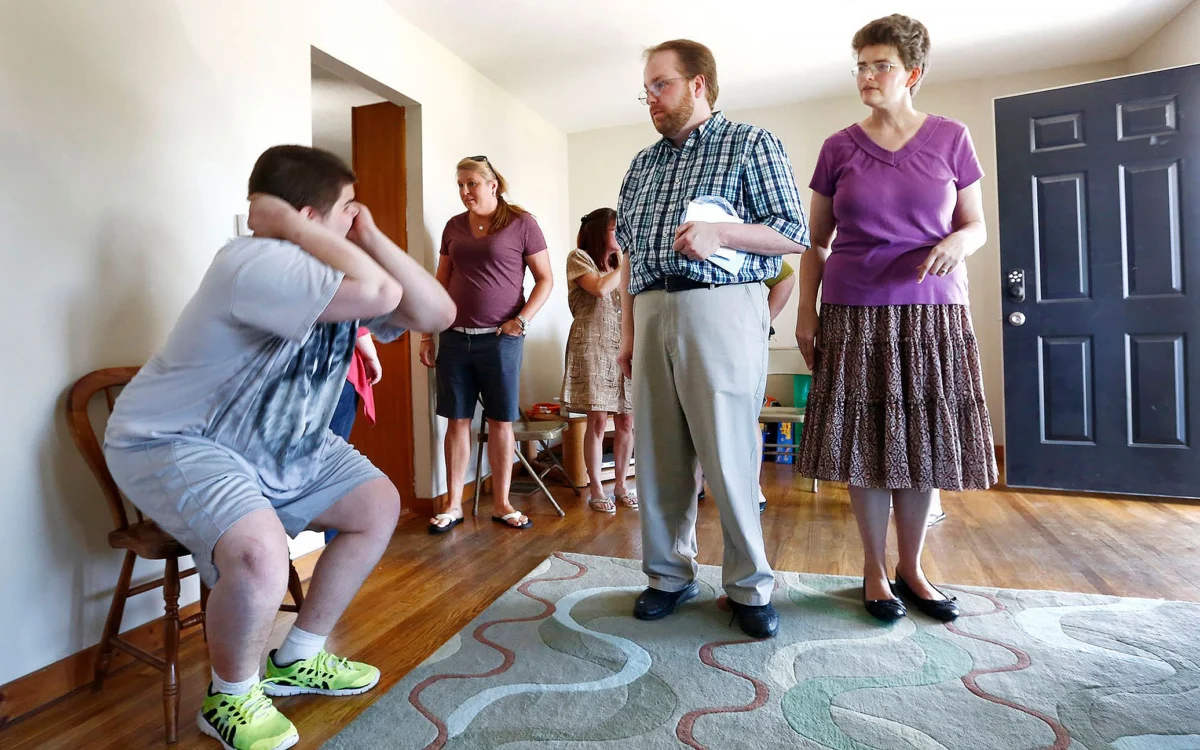
In 2021, a significant report published in The Lancet by an international commission of leading autism researchers, clinicians, self-advocates, and parents called for the recognition of "profound autism" as a separate diagnostic category. This proposal specifically targeted individuals with severe intellectual disability and minimal verbal communication skills who require constant, round-the-clock care. More recently, in 2023, a report from the Centers for Disease Control and Prevention (CDC) indicated that over a quarter of children diagnosed with autism could be classified as having profound autism. The CDC’s definition in that report characterized profound autism by nonverbal or minimally verbal communication and an intelligence quotient (IQ) below 50.
The IACC’s proposed definition, however, deviates from these previous frameworks in critical ways. It defines profound autism as applying to individuals aged 8 and older with an autism diagnosis who exhibit minimal or no functional speech and require "continuous or near-continuous supervision to ensure safety and substantial assistance with activities of daily living." Notably, this definition does not explicitly require an intellectual disability diagnosis or adherence to a specific IQ score threshold. The committee’s rationale, as articulated in its recommendation document, states that "requiring an intellectual disability diagnosis as part of the definition of ‘profound autism’ risks excluding individuals who meet criteria based on functional and communication needs but do not have an intellectual disability diagnosis; misclassifying individuals due to known limitations in cognitive and adaptive assessment; and reinforcing systematic underestimation of cognitive capacity."
Mounting Concerns from Advocacy Groups
Despite the growing recognition of the need to better serve individuals with the highest support needs, the IACC’s latest recommendation is encountering resistance, even from proponents of a distinct "profound autism" category. Jill Escher, president of the National Council on Severe Autism, an organization that has actively advocated for the IACC to prioritize profound autism, expressed significant reservations. "Having federal agencies increase the specificity of their autism-related undertakings would be enormously helpful to ensure federal activities better reflect the realities of autism, especially those who are most severely affected," Escher stated. "I am concerned, however, with the proposal that profound autism need not entail intellectual disability."
Escher further highlighted that the committee provided no cited studies to support the exclusion of intellectual disability as a criterion. She suggested that this omission might be influenced by proponents of facilitated communication, a controversial method where a facilitator assists a non-speaking individual in communication. "In the view of facilitated communication proponents, profound autism doesn’t necessarily come with these severe cognitive impairments," Escher commented. "It’s not based on any evidence." This sentiment underscores a broader concern that the proposed definition might inadvertently validate unsubstantiated communication methods or misrepresent the cognitive profiles of individuals with profound support needs.
Procedural Irregularities Spark Outrage
Beyond the definitional debate, the process by which the IACC approved the "profound autism" recommendation, alongside two other proposals concerning wandering prevention and Medicaid guidance on autism, has ignited substantial controversy. Materials marked as "final" for these three topics were disseminated publicly only days before the committee meeting. This occurred after the established public comment period had closed, and without any clear indication of their origin or development process. The IACC was then presented with a draft letter to Secretary Kennedy, summarizing these recommendations, and was expected to vote on them with minimal to no opportunity for substantive discussion or amendment.
This procedural approach has drawn sharp criticism, with several federal agency representatives on the committee voicing concerns that it may violate the Federal Advisory Committee Act. This federal law outlines the responsibilities and operating procedures for advisory panels. These concerned members abstained from voting on the proposals.
Alison Singer, president of the Autism Science Foundation, underscored the gravity of these procedural issues. "This undercuts the very purpose of having an advisory committee," Singer remarked. "In my 12 years as a member of the IACC, we never received final documents; we received materials for discussion developed by working groups, which were usually amended after broader discussion and deliberation. We voted at subsequent meetings, not at the meetings where materials were first presented." This critique points to a departure from established IACC operating norms, which historically emphasized collaborative discussion and iterative development of recommendations.
Broader Implications for Policy and Practice
The operational integrity and output of the IACC carry significant weight in shaping federal autism policy. Colin Killick, executive director of the Autistic Self Advocacy Network, an organization that opposes the creation of a separate diagnostic classification for profound autism, emphasized the far-reaching consequences of the IACC’s recommendations. "A recommendation like this matters because, despite what the IACC chair said, they are making policy when they issue recommendations to the secretary," Killick stated. "These recommendations carry weight and as the federal members pointed out, federal agencies face expectations that their own work align with the IACC."
The implications of this recommendation, particularly if adopted by the Department of Health and Human Services, could extend to how federal funding is allocated, how research priorities are set, and how services are developed and delivered. A poorly defined or procedurally flawed designation could lead to misallocation of resources, impact the development of effective interventions, and potentially marginalize certain segments of the autism community. The debate over "profound autism" itself highlights the ongoing challenge of accurately characterizing and supporting the diverse needs within the autism spectrum. While a more specific classification could theoretically lead to targeted support, the concerns raised by Escher and others about the potential for misdefinition and the exclusion of critical factors like intellectual disability, or conversely, the inclusion of unvalidated practices, underscore the need for rigorous, evidence-based approaches.
The lack of clear guidelines on intellectual or cognitive capacity within the proposed definition, coupled with the assertion that it excludes the need for such a diagnosis, raises questions about how individuals would be assessed and categorized. This could lead to inconsistencies in data collection and potentially hinder the development of interventions tailored to specific cognitive profiles and support requirements. Furthermore, the association of some IACC members with scientifically discredited theories adds another layer of concern regarding the scientific integrity of the committee’s recommendations.
Next Steps and Official Silence
As of the latest reporting, the Department of Health and Human Services (HHS) has not responded to inquiries regarding whether the IACC’s recommendations have been formally transmitted to Secretary Kennedy or what the subsequent procedural steps might entail. This silence leaves stakeholders in a state of uncertainty regarding the immediate future of these proposals and their potential impact on federal autism initiatives. The situation underscores the critical importance of transparency, scientific rigor, and adherence to established procedural guidelines in the functioning of federal advisory committees, particularly those dealing with sensitive and impactful public health issues like autism. The IACC’s recent actions have undeniably set the stage for continued debate and scrutiny regarding the future direction of federal autism policy and research.
For those seeking to stay informed about developments in the field of developmental disabilities, subscribing to newsletters from reputable organizations can provide valuable updates and analysis on such critical issues.