In an era characterized by unprecedented global challenges, from pandemics and economic volatility to rapid technological shifts and complex geopolitical landscapes, the composition of organizational teams has come under renewed scrutiny. While discussions around diversity, equity, and inclusion (DEI) have largely centered on demographic factors such as gender, race, and ethnicity, a growing body of research highlights the overlooked yet critical role of cognitive diversity in fostering resilience, driving innovation, and enhancing decision-making in volatile environments. This specific form of diversity, focusing on how individuals process information, approach problems, and engage with new ideas, is emerging as a crucial differentiator for organizations seeking to thrive in an increasingly unpredictable world.
The Evolving Landscape of Diversity and Inclusion
The corporate world’s understanding and implementation of diversity have evolved significantly over recent decades. Initially, the focus was primarily on affirmative action and ensuring fair representation, addressing historical inequities in the workforce. By the late 20th and early 21st centuries, the concept broadened to include the "business case for diversity," demonstrating how demographic diversity could lead to improved financial performance, better market understanding, and enhanced corporate reputation. Reports from consultancies like McKinsey, Deloitte, and Boston Consulting Group have consistently shown correlations between diverse leadership teams and superior financial returns, often citing benefits such as increased innovation revenue and stronger employee engagement.
However, many DEI initiatives, despite their good intentions, have remained anchored in achieving demographic parity. While these efforts are undeniably vital for social justice and creating equitable opportunities, they often fall short of fully harnessing the multifaceted potential that human differences offer. The emphasis on visible diversity, while foundational, sometimes overshadows the deeper, less apparent forms of diversity that contribute profoundly to a team’s collective intelligence and adaptability. The global pandemic, in particular, served as a stark reminder that organizations facing novel, complex, and uncertain situations require more than just representation; they need a diversity of thought that can unlock creative solutions and mitigate unforeseen risks.
Defining Cognitive Diversity: Beyond Surface-Level Differences
Cognitive diversity refers to differences in how people think, solve problems, perceive situations, and approach work. It encompasses varied perspectives, mental models, information processing styles, and expertise. Unlike demographic diversity, which is often readily apparent, cognitive diversity is an underlying characteristic that can be more challenging to identify and cultivate, yet its impact on team performance is profound.
Researchers Alison Reynolds and David Lewis have dedicated decades to studying the dynamics of high-performing teams, particularly those grappling with novel, uncertain, and complex scenarios. Their extensive work, highlighted in publications such as the Harvard Business Review, consistently reveals that the most effective teams are not only psychologically safe but also deeply cognitively diverse. These teams are characterized by a culture of curiosity and experimentation, where members are encouraged to explore new ideas and challenge existing assumptions constructively. Conversely, teams lacking in these cognitive distinctions often succumb to groupthink or unproductive conflict, hindering their ability to innovate and adapt.
Reynolds and Lewis’s research further refines cognitive diversity into two primary dimensions, derived from an assessment tool developed by psychiatrist Peter Robertson:
-
Knowledge and Information Processing: This dimension assesses an individual’s preference for either consolidating and implementing existing knowledge or generating entirely new knowledge when confronted with novel, uncertain, or complex issues. Some individuals excel at leveraging established best practices and optimizing current systems, while others thrive on exploring uncharted territories and conceptualizing innovative approaches. A team with a balance of both styles can efficiently execute known solutions while simultaneously pioneering new ones.
-
Perspective and Expertise Facilitation: This aspect examines whether individuals prefer to apply their own specialized expertise or to actively orchestrate and synthesize the ideas and expertise of others in complex situations. Teams benefit immensely from members who can offer deep, specialized knowledge, as well as those who possess the meta-skill of drawing out and integrating diverse viewpoints from the collective. This ensures that no single perspective dominates and that a holistic understanding of a problem is achieved.
Beyond these two core dimensions, cognitive diversity also encompasses a spectrum of personality styles—such as introversion and extroversion—and varying mental frameworks related to risk assessment, process orientation, comfort with ambiguity, and strategic thinking. An optimal team composition, therefore, involves complementary members whose diverse cognitive strengths coalesce to form a robust problem-solving unit. This is particularly crucial when addressing unprecedented challenges, where relying solely on familiar paradigms can lead to stagnation or misjudgment. The ability to both leverage existing knowledge and fearlessly explore the unknown is paramount, a balance that is exceedingly difficult to strike without deliberate attention to cognitive diversity in team formation.
The Research Imperative: Data Supporting Cognitive Diversity
Numerous studies corroborate the findings of Reynolds and Lewis. Research published in the Academy of Management Journal, for instance, has demonstrated that teams with higher cognitive diversity tend to generate a wider range of solutions to complex problems and achieve superior outcomes. A 2017 analysis by Deloitte Australia, "The Diversity and Inclusion Revolution," highlighted that inclusive leadership can drive up to a 70 percentage point difference in feelings of inclusion among employees. While this research primarily focused on demographic diversity, its principles extend to cognitive diversity, as leaders who actively solicit and value diverse thinking styles contribute to a more inclusive environment where cognitive differences can flourish.
Moreover, a meta-analysis of studies on team performance conducted by the Harvard Business Review found that cognitive diversity was a stronger predictor of team success in complex tasks than demographic diversity. Teams that actively embraced and leveraged their cognitive differences were quicker to solve problems, more innovative in their solutions, and more adept at adapting to changing circumstances. The underlying mechanism is often attributed to the "information elaboration" theory, which posits that diverse teams process information more thoroughly and consider a broader array of alternatives, leading to higher-quality decisions.
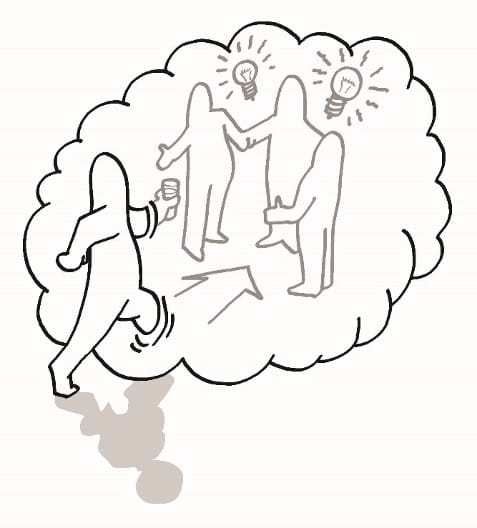
In the context of innovation, a study by the Center for Talent Innovation revealed that companies with diverse leadership teams are 45% more likely to report market share growth and 70% more likely to capture new markets. While this often refers to demographic diversity, the foundational element is the cognitive variety that these different backgrounds bring. When people from varied experiences and thought patterns come together, they challenge assumptions, identify blind spots, and stimulate creative breakthroughs that homogeneous teams might miss.
Psychological Safety: The Catalyst for Unlocking Cognitive Potential
The mere presence of cognitive diversity is insufficient; it must be coupled with a culture of psychological safety. As Amy Edmondson of Harvard Business School famously defined it, psychological safety is a shared belief held by members of a team that the team is safe for interpersonal risk-taking. In a psychologically safe environment, individuals feel comfortable expressing dissenting opinions, asking questions, admitting mistakes, and proposing unconventional ideas without fear of embarrassment, rejection, or punishment.
Without psychological safety, cognitively diverse teams can devolve into conflict or conformity. If team members are hesitant to voice their unique perspectives or challenge the status quo, the potential benefits of their varied thinking styles remain untapped. This is why Reynolds and Lewis’s research consistently links high performance in complex situations to both cognitive diversity and psychological safety. When team members feel valued, respected, and empowered to speak up, the constructive friction generated by diverse viewpoints transforms into a powerful engine for innovation and problem-solving. Leaders play an indispensable role in cultivating this environment by actively listening, encouraging open dialogue, modeling vulnerability, and responding constructively to dissent.
Challenges in Implementation and the Imperative for Inclusive Leadership
Despite the compelling evidence, many organizations struggle to move beyond demographic quotas to actively foster cognitive diversity. The focus on visible diversity, while essential, can overshadow the nuanced work required to identify, integrate, and leverage diverse thinking styles. This often stems from a lack of awareness, insufficient tools for assessment, or simply not knowing how to build and lead such teams.
A significant hurdle lies in equipping leaders with the skills and confidence to champion cognitive diversity. Deloitte’s research indicated that leaders’ behaviors can account for a substantial difference in employee feelings of inclusion. Yet, many leaders report feeling "ill-equipped" to navigate complex conversations about exclusion, discrimination, or how to effectively facilitate dialogue that draws out diverse perspectives. This gap in leadership capability often manifests as a reluctance to address these issues head-on, perpetuating environments where valuable cognitive differences might be stifled rather than celebrated.
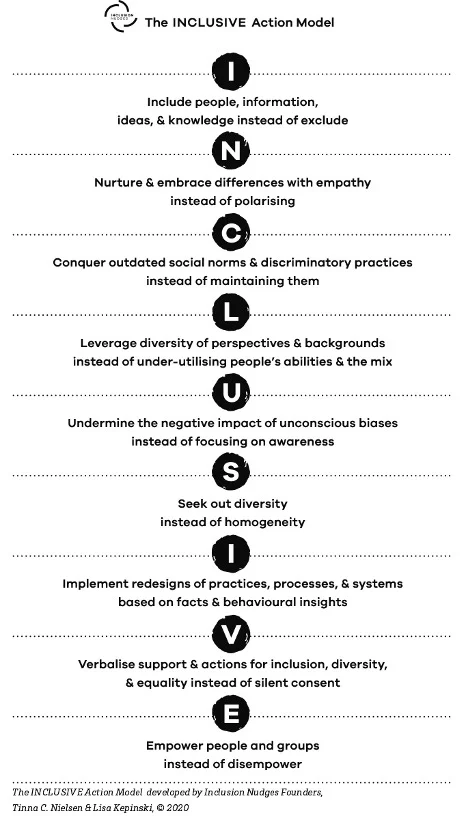
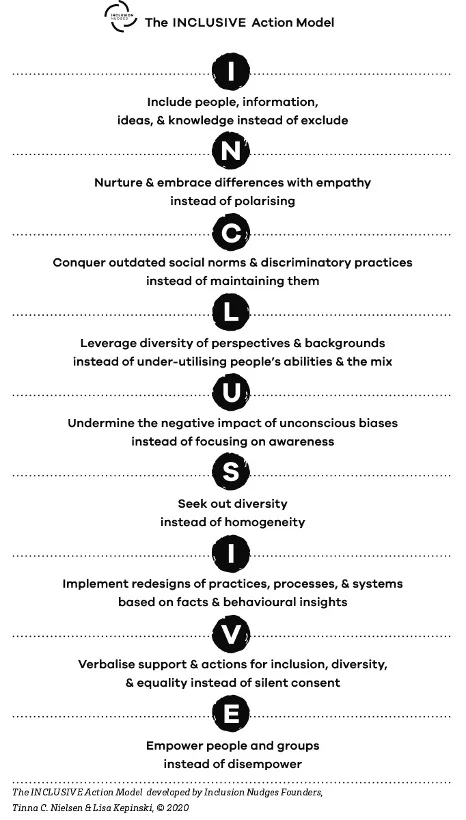
Bridging this gap requires a deliberate and systemic approach to leadership development. It necessitates moving beyond theoretical understanding to providing practical, actionable strategies for fostering inclusive cultures and behaviors. For instance, models like the Inclusion Nudges Inclusive Action Model, developed by Tinna C. Nielsen and Lisa H. Rasmussen, offer holistic frameworks for embedding inclusion into organizational structures, processes, and daily interactions. These models aim to simplify complex DEI principles into tangible actions that leaders and team members can implement immediately.
Practical Frameworks and the Path Forward
To truly harvest the potential of cognitive diversity, organizations must:
-
Prioritize Identification: Develop methods to assess and understand the cognitive profiles of individuals during recruitment and team formation. This goes beyond traditional psychometric tests to include behavioral interviews and simulations that reveal problem-solving approaches and information processing preferences.
-
Educate and Train Leaders: Equip leaders at all levels with the knowledge and practical tools to recognize, value, and integrate cognitive diversity. Training should focus on fostering psychological safety, facilitating constructive conflict, active listening, and inclusive decision-making processes. Resources like the Inclusion Nudges for Leaders Action Guide, which offers 30 easy-to-apply inclusive actions, can empower leaders to take concrete steps and build confidence in their inclusive leadership capabilities.
-
Design Inclusive Processes: Embed inclusive practices into daily operations, from meeting facilitation to project management. This includes ensuring that all voices are heard, diverse perspectives are actively solicited before decisions are made, and feedback mechanisms are robust and equitable.
-
Cultivate an Inclusive Culture: Foster an organizational culture where curiosity, experimentation, and respectful challenge are the norm. This involves celebrating intellectual differences and recognizing that varying thought patterns are assets, not liabilities.
The shift in focus from purely demographic representation to a more holistic understanding of diversity, encompassing cognitive differences, is not merely an academic exercise. It is a strategic imperative for organizations aiming to navigate the complexities of the 21st century. As CEOs and world leaders increasingly advocate for comprehensive DEI, the challenge now lies in cascading this executive-level support into actionable change across all management tiers. By empowering leaders with the tools and confidence to champion cognitive diversity and foster psychological safety, organizations can unlock unprecedented levels of innovation, problem-solving prowess, and resilience, ensuring they are not just surviving but thriving amidst continuous uncertainty. The future of organizational success hinges on the ability to embrace and leverage the full spectrum of human intellect and perspective.