The performing arts landscape in Los Angeles and New York is witnessing a significant convergence of political activism and experimental theater through E. Zalaan’s latest production, Syrian Soap. Directed by Natasha Mercado, the show represents a sophisticated evolution of the "clown" archetype, utilizing the medium of a 2,000-year-old intergalactic bathhouse to explore the Syrian Revolution, ancestral trauma, and the persistence of joy. Zalaan, a Los Angeles-based comedian and conflict mediator, has developed a narrative that functions as both a cultural archive and a contemporary critique of power structures.
The Narrative Architecture of Syrian Soap
The performance begins with a deliberate juxtaposition of cultural influences. As Najat Al Saghira’s classic Arabic ballad "Bahlam Maak" plays, a figure sways behind a translucent curtain, only to shift abruptly into a rendition of Tal Bachman’s 1999 pop hit "She’s So High." This opening sequence establishes the show’s primary setting: an intergalactic bathhouse where time and geography are fluid.
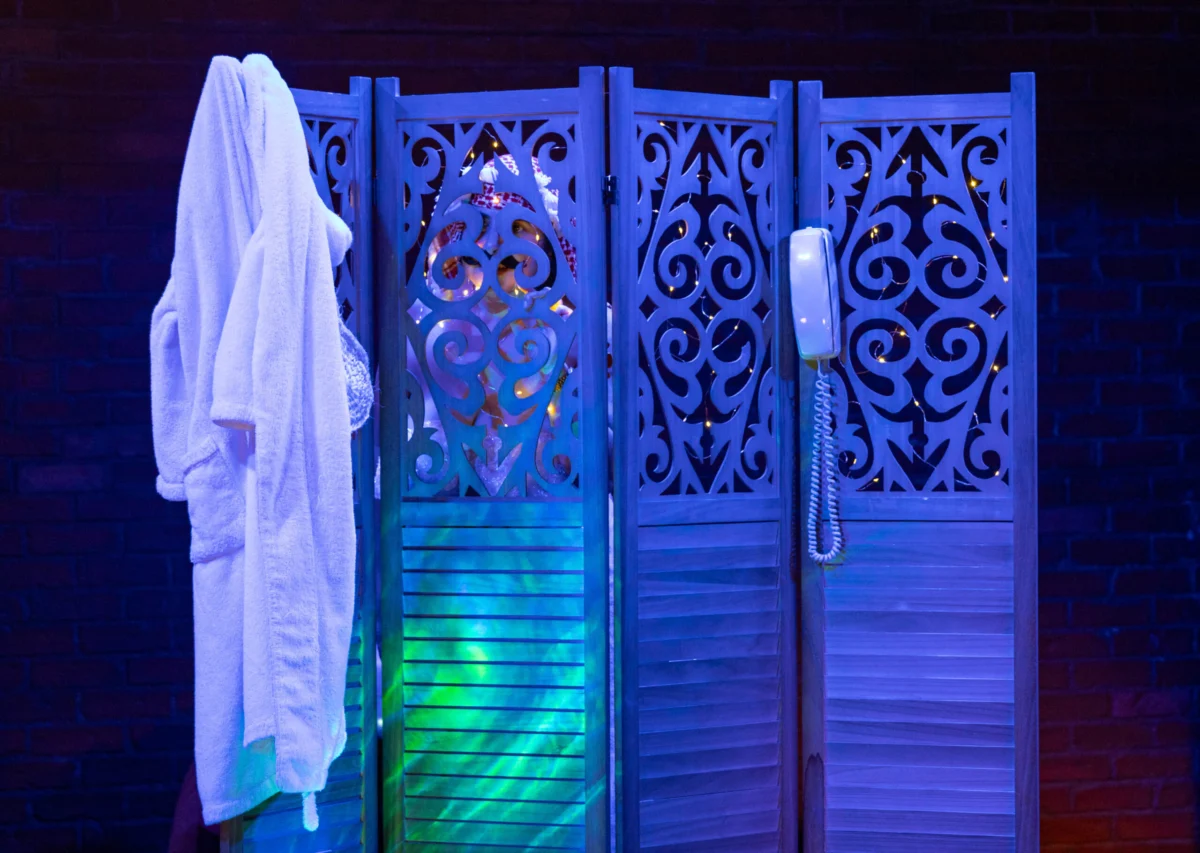
The central character, known as The Ancestor, is a 2,000-year-old personification of Southwest Asian and North African (SWANA) masculinity. Clad in a towel and a keffiyeh, and wearing traditional wooden sandals known as ub-ab, The Ancestor navigates the stage while engaging in a meticulous self-care routine. The production utilizes bubble wrap to simulate water and a dalla al qahwah (traditional coffee pot) as a washing vessel. This character serves as a bridge between the ancient past and the modern day, communicating with a "Descendant" character via a corded telephone attached to the shower wall.
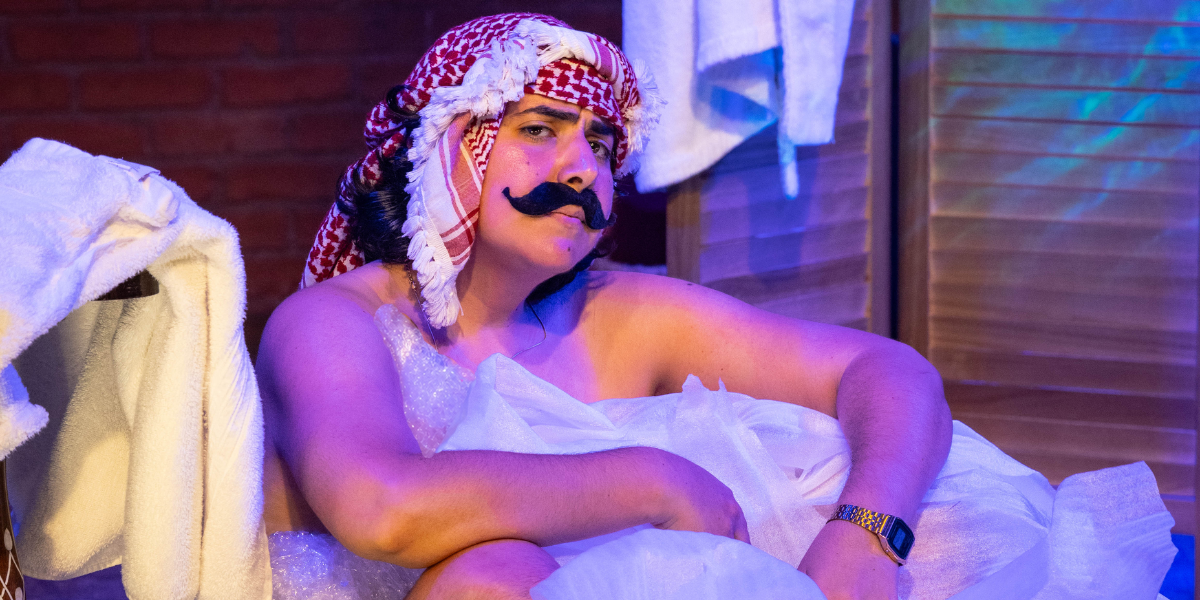
The Descendant represents a dramatized version of Zalaan—a modern individual grappling with existential crises, failed relationships, and the moral weight of pursuing comedy while the world faces ongoing atrocities. Through this dialogue, the play explores the "living ancestor" concept, suggesting that historical figures and modern descendants are in a constant state of mutual influence and negotiation.
Artistic Development and Cultural Lineage
The creation of Syrian Soap involved an extensive synthesis of traditional performance styles and modern training. Zalaan credits the "Idiot Workshop," a specialized form of clowning instruction, with providing the framework for the show’s honesty. In this tradition, the clown’s role is to reflect human failure and the futility of certain social constructs back to the audience, thereby creating a collective sense of unity through shared vulnerability.
Furthermore, the show draws deep inspiration from the history of Syrian comedy and television. Zalaan specifically cites two icons of the 20th-century Levant:
- Duriad Lahham: Famous for his character Ghawwar El Toshe, a "wise fool" archetype who often found himself at odds with authority. Zalaan channels this archetype for the Descendant character, noting the bittersweet nature of Lahham’s legacy following his political stance during the Syrian Revolution.
- Naji Jaber: Known for the hyper-masculine character Abu Antar. Zalaan utilizes Jaber’s "macho with a heart of gold" persona to ground the Ancestor character in a recognizable cultural framework.
The title itself, Syrian Soap, operates as a double entendre. It references the world-renowned laurel soap (sabun ghar) of Aleppo, a city central to Syrian identity and one of the oldest continuously inhabited cities in the world. Simultaneously, it nods to the "Musalsalat" (Syrian soap operas) that dominated Arab airwaves for decades, serving as a primary cultural export and a vehicle for social commentary.

Political Context and the Syrian Revolution
A pivotal moment in the show’s development was the 2018 assassination of Raed Fares, a prominent Syrian activist and journalist from Kafranbel. Fares was known for his creative and humorous protest banners, which garnered international attention for the Syrian uprising. Zalaan recounts a commemorative ceremony for Fares as the catalyst for their commitment to using comedy as a tool for "telling the truth."
The political subtext becomes overt through the introduction of a third character: a large, personified ub-ab (wooden shoe). This character delivers a narrative that mirrors the trajectory of the Syrian Revolution. The story describes a household forced into silence under a strict regime, the subsequent protests, the "pulverization" of dissenters, and the eventual cycle of exile and return. By utilizing footwear as a metaphor for the working class, Zalaan bypasses traditional didactic storytelling, instead offering a visceral representation of displacement and resistance.
The Syrian conflict, which began in 2011, has resulted in one of the largest displacement crises of the 21st century, with over 13 million people forced from their homes. Syrian Soap addresses this reality not by diluting the horror, but by "alchemizing" it. Zalaan’s background as a conflict mediator informs this process, allowing the performance to hold space for both grief and laughter without one negating the other.
Production Timeline and Performance Schedule
Syrian Soap has followed a strategic rollout across major coastal theater hubs. The production’s chronology reflects its growing status within the independent and queer theater circuits:

- March 31 – April 12: Featured at "The Joy Who Lived" performing arts festival at The Hudson Theater in Los Angeles.
- June 13 – June 20: Scheduled for the Hollywood Fringe Festival in Los Angeles, an event known for showcasing experimental and solo performances.
- June 24 – June 27: Selected for the National Queer Theater’s Criminal Queerness Festival in New York City. This festival specifically highlights international LGBTQ+ artists whose work addresses social justice and human rights.
The involvement of director Natasha Mercado and collaborator Zahra Noorbakhsh was instrumental in refining the show’s "world-building." Mercado focused on the interactive elements, encouraging Zalaan to treat the audience as active participants in the bathhouse environment. Noorbakhsh assisted in fleshing out the Ancestor’s personality, particularly his tendency to offer unsolicited, ancient advice on modern "situationships" and anxiety.
Analytical Perspective: The Power of Intimate Theater
From a journalistic and analytical standpoint, Syrian Soap represents a broader trend in contemporary theater where personal identity and geopolitical history are inextricably linked. By utilizing "drag" elements—such as the Ancestor revealing pasties with mustaches beneath layers of towels—Zalaan employs the subversive power of the medium to challenge rigid gender norms within SWANA cultures.
The use of audience interaction—where attendees are invited to answer the ringing phone or discuss their own struggles with taxes and parenting—serves to "break the fourth wall" and ground the intergalactic themes in mundane reality. This technique transforms the theater from a place of passive observation into a communal space of reflection.
The show’s success lies in its ability to navigate what Zalaan calls the "full spectrum of the human experience." In a period marked by "compassion fatigue" regarding Middle Eastern conflicts, Syrian Soap re-humanizes the narrative by focusing on the universal desire for rest and the preservation of culture. The Ancestor’s dialogue—"I do believe that one day, we will be returned to our lands… and the prison walls will fall"—serves as a poignant reminder of the enduring hope that characterizes much of the Syrian diaspora.

Broader Impact and Implications
As Syrian Soap moves to New York City for the Criminal Queerness Festival, it stands as a testament to the vital role of queer SWANA voices in the American arts. The production challenges the "victim narrative" often assigned to refugees and survivors of war, replacing it with a narrative of agency, humor, and ancestral wisdom.
The show’s emphasis on self-care within the bathhouse setting also offers a critique of modern capitalism’s approach to wellness. By framing bathing as a communal, ancestral, and even revolutionary act, Zalaan suggests that "rest" is a necessary component of resistance.
For the theater industry, the production demonstrates the efficacy of "devising"—a collaborative process where the script is developed through improvisation and experimentation rather than a traditional playwright-first model. This approach has allowed Syrian Soap to remain a living document, capable of evolving with each new audience and political development.
In conclusion, E. Zalaan’s Syrian Soap is more than a comedic solo show; it is a complex exploration of how individuals maintain their humanity in the face of systemic violence. By blending the ridiculous with the sublime, the production provides a blueprint for how art can speak truth to power while still allowing its audience the grace to laugh. As it continues its run in Los Angeles and New York, the show is poised to remain a critical touchstone for those interested in the intersection of performance, politics, and the enduring power of the human spirit.