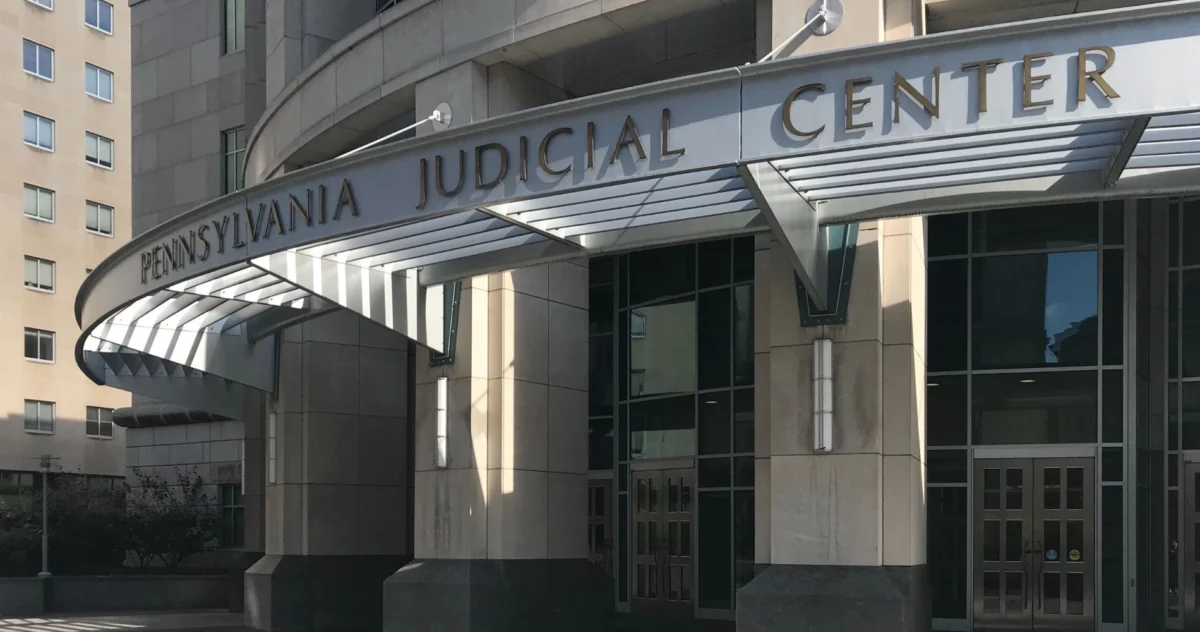
In a landmark decision poised to reshape Pennsylvania’s criminal justice landscape, the state’s Supreme Court has ruled that mandatory life-without-parole sentences for individuals convicted of felony murder violate the "cruel punishments" clause of the Pennsylvania Constitution. The unanimous ruling, issued on [Insert Date of Ruling if available, otherwise omit specific date and use "recently issued"], asserts that such blanket sentencing, absent an individualized assessment of culpability, is inconsistent with the fundamental protections afforded to the Commonwealth’s citizens. This pivotal judgment immediately impacts future cases and sets the stage for potential legislative action concerning more than a thousand individuals currently serving life sentences under the controversial statute.
Understanding Pennsylvania’s Felony Murder Rule and its Implications
At the heart of the Supreme Court’s decision lies Pennsylvania’s interpretation of "felony murder," specifically codified as second-degree murder. Under state law, a person can be found guilty of second-degree murder if a death occurs during the commission of certain enumerated felonies, such as robbery, rape, kidnapping, or arson. Crucially, conviction under this statute does not require the defendant to have intended to kill, or even to have directly caused the death. Rather, mere participation in the underlying felony during which a death occurred is sufficient for a second-degree murder conviction.
The most contentious aspect of this law, prior to the recent ruling, was the mandatory sentencing requirement. Every person convicted of second-degree murder, regardless of their specific role or level of involvement in the fatal act, was automatically sentenced to life imprisonment without the possibility of parole. This meant that an individual acting as a lookout or a getaway driver, who might have been miles away when the fatal blow was struck, faced the same ultimate punishment as the person who directly caused the victim’s death. Critics have long argued that this rigid application of the law failed to distinguish between varying degrees of moral culpability, leading to disproportionate sentences that defied conventional notions of justice.
Indeed, the Pennsylvania Supreme Court’s majority opinion, penned by Chief Justice Debra Todd, underscored this precise concern. "We determine that a mandatory life without parole sentence for all felony murder convictions, absent an assessment of culpability, is inconsistent with the protections bestowed upon our citizens under the ‘cruel punishments’ clause of our Commonwealth’s organic charter," Chief Justice Todd wrote. This statement highlights a significant divergence from the previous legal framework, which prioritized a strict liability approach over individualized justice in these specific circumstances.
A Rare Stance Among States
The court’s decision also noted Pennsylvania’s unique position among U.S. states regarding the severity and inflexibility of its felony murder sentencing. While felony murder laws are common across the nation, Pennsylvania was one of only five states—alongside Iowa, Louisiana, Mississippi, and North Carolina—that imposed mandatory life-without-parole sentences without any exceptions or avenues for judicial discretion based on individual culpability. This comparative analysis further bolstered the argument that Pennsylvania’s previous statute represented an extreme outlier, potentially leading to punishments that were not only harsh but also disproportionate when viewed against national standards of justice. The ruling thus brings Pennsylvania more in line with the broader trend among states to consider individual circumstances in sentencing, particularly for the most severe penalties.
The Case of Derek Lee: The Catalyst for Change
The legal challenge that ultimately led to this monumental ruling originated from the case of Derek Lee. In 2014, Lee was involved in an armed robbery in Allegheny County. During the commission of the crime, while Lee was reportedly upstairs, his accomplice shot and killed the victim during a scuffle in the basement. Both men were subsequently convicted of second-degree murder and sentenced to mandatory life imprisonment without parole, in accordance with the then-existing statute.
Mr. Lee challenged his sentence, arguing that it violated both the state and federal constitutions due to its mandatory nature and the lack of consideration for his individual role and culpability in the fatal outcome. His appeal presented the Pennsylvania Supreme Court with a critical opportunity to re-evaluate the state’s sentencing framework for felony murder.
In its deliberation, the court reached a groundbreaking conclusion: the state constitution provides greater protections to its citizens against disproportionate punishments than those recognized under the Eighth Amendment of the U.S. Constitution, which prohibits cruel and unusual punishment. This assertion marks a significant development in Pennsylvania jurisprudence, establishing a higher bar for justice within the Commonwealth’s borders. The court explicitly invoked the principle that "punishment for [a] crime should be graduated and proportioned to both the offender and the offense," a concept rooted in a "longstanding notion of justice."
The majority opinion meticulously detailed why Pennsylvania’s mandatory life-without-parole scheme for second-degree murder failed this crucial test. It explained that the statute made no distinction between "the lookout and the killer who pulls the trigger," imposing the same "harshest imprisonment sanction permitted under the law" on all convicted individuals, irrespective of their specific involvement, intent, or culpability. Such a system, the court concluded, "runs afoul of notions of individualized sentencing for defendants facing the second most severe punishment after death." This profound legal reasoning ultimately led to the declaration that the statute posed "too great a risk of disproportionate punishment," thereby violating the state constitutional prohibition against cruel punishments.
Historical Context and the Evolution of Cruel and Unusual Punishment Jurisprudence
The concept of "cruel punishments" has a rich history in legal thought, tracing back to the English Bill of Rights of 1689 and later enshrined in the Eighth Amendment of the U.S. Constitution. Historically, interpretations focused on barbaric methods of punishment. However, over time, judicial understanding evolved to encompass punishments that are disproportionate to the crime committed or that fail to consider the individual characteristics of the offender, particularly in capital and life-sentencing cases.
The U.S. Supreme Court, in cases like Roper v. Simmons (2005) and Graham v. Florida (2010), has progressively limited the application of extreme sentences, such as the death penalty and life without parole, for juvenile offenders, especially in non-homicide cases. These federal rulings often hinged on the evolving standards of decency and the recognition of diminished culpability in certain populations. While Commonwealth v. Lee did not directly cite these federal precedents, its reasoning aligns with this broader judicial trend towards individualized sentencing, particularly when state constitutions offer avenues for more expansive protections. The Pennsylvania Supreme Court’s decision underscores the principle of "new federalism," where state courts can interpret their own constitutions to provide greater rights than those guaranteed by the federal constitution. This allows states to serve as "laboratories of democracy," advancing legal protections in ways that may eventually influence federal jurisprudence or set standards for other states.
Implications and Unanswered Questions: The Road Ahead
The immediate consequence of the ruling is that Derek Lee’s case has been remanded back to the sentencing court. This means the lower court must now conduct an individualized assessment of his culpability before resentencing him, with the options now including either life without parole or life with the possibility of parole. This shift from mandatory to discretionary sentencing represents a significant victory for proponents of criminal justice reform.
However, the ruling also leaves a substantial question unanswered: its retroactivity. The court did not explicitly decide whether its decision applies retroactively to the more than 1,000 people currently serving mandatory life-without-parole sentences for second-degree murder in Pennsylvania. This uncertainty creates a complex legal and logistical challenge. If the ruling is eventually deemed retroactive, it could trigger a massive wave of resentencing hearings, placing a significant burden on the state’s judicial system and potentially leading to the eventual release of individuals who have served decades in prison. The process for determining retroactivity often involves separate legal challenges, considering factors such as the finality of convictions and the impact of the new rule on the accuracy of past judgments.
Official Reactions and Legislative Initiatives
The Supreme Court’s decision has been met with significant reactions from key political figures and legislative bodies. Pennsylvania Governor Josh Shapiro, who has publicly advocated for striking down mandatory life without parole for felony murder, welcomed the ruling. He promptly called upon state lawmakers to "come up with a thoughtful, just process to address those who are serving life sentences for second-degree murder." This statement signals the executive branch’s willingness to collaborate with the legislature to navigate the complex aftermath of the court’s decision, particularly concerning the incarcerated population.
In anticipation of such a ruling, or perhaps in parallel with the ongoing legal challenges, legislative efforts to reform felony murder sentencing were already underway. State Senator Sharif Street (D., Philadelphia) has sponsored a bipartisan bill, SB 387, which aims to allow parole consideration for individuals convicted of felony murder after serving 25 years. The bill is currently pending in the state Senate and its prospects may now be significantly boosted by the Supreme Court’s decision.
Senator Street articulated the core injustice that his bill, and now the court’s ruling, seeks to address. He told Spotlight PA, "I’ve been advocating that we do this because the result of our legal system is there are people who were not the actual shooter who end up serving life in prison when the actual shooter did not." He added, "It’s inconsistent with people’s understanding of how justice should work." This sentiment reflects a growing societal consensus that justice should be nuanced, acknowledging individual responsibility rather than imposing uniform, inflexible penalties that fail to differentiate between varying levels of culpability.
Broader Societal Impact and Future Outlook
The Pennsylvania Supreme Court’s ruling extends beyond the immediate legal implications; it carries significant broader societal impact. For victims’ families, the decision may evoke a range of emotions, from a sense of betrayal by the justice system to a recognition of evolving legal standards. The balance between holding all participants in a crime accountable and ensuring proportionate punishment remains a delicate and emotionally charged issue. Any legislative response or retroactive application of the ruling will need to carefully consider the profound impact on those who have suffered loss.
For the criminal justice system, the ruling represents a profound shift. It will necessitate a re-evaluation of sentencing guidelines, potentially leading to the development of more nuanced criteria for judges to consider when imposing sentences for second-degree murder. This could involve factors such as the defendant’s intent, their proximity to the fatal act, their role in planning the felony, and their prior criminal history. The decision also adds momentum to the broader national conversation about criminal justice reform, individualized sentencing, and the purpose of incarceration—whether it primarily serves retribution, deterrence, rehabilitation, or a combination thereof.
The ruling might also inspire similar challenges in the four other states—Iowa, Louisiana, Mississippi, and North Carolina—that still maintain mandatory life-without-parole sentences for felony murder without exceptions. As legal arguments concerning proportionality and individual culpability gain traction, these states may face increased pressure to reconsider their own statutes.
In conclusion, the Pennsylvania Supreme Court’s decision in Commonwealth v. Lee is a watershed moment for criminal justice in the Commonwealth. By affirming that the state constitution demands an individualized assessment of culpability for those facing the most severe penalties, the court has ushered in an era of greater judicial discretion and a renewed focus on proportionate justice. While the path forward regarding retroactivity and legislative amendments remains to be fully charted, the ruling unequivocally signals a significant move away from rigid, mandatory sentencing towards a more thoughtful and just process within Pennsylvania’s legal system.