The past two years have marked a tumultuous and unprecedented era, characterized by rapid-paced experimentation with new ways of working, fundamentally reshaping our understanding of employment and its future. As the global community continues to navigate the pandemic’s lingering effects, a profound shift in how we conceptualize work, its location, and its underlying policies has emerged, bringing critical questions of Diversity, Equity, and Inclusion (DEI) to the forefront. This period has served as a crucible, exposing the vulnerabilities of traditional workplace norms and catalyzing a necessary re-evaluation of the social contract between employees and employers. This article delves into the significant trends in "Process & Policy" that have materialized, examining their implications for fostering more inclusive and equitable work environments. These shifts are part of a broader discourse encompassing "Purpose," "People," and "Polarisation & Activism," all of which contribute to a holistic understanding of the post-pandemic professional landscape.
The Unprecedented Shift: A Chronology of Pandemic Work and Policy Evolution
The onset of the COVID-19 pandemic in early 2020 triggered an abrupt and largely unplanned transition to remote work for millions globally. What began as an emergency measure to ensure business continuity quickly evolved into an extended experiment in distributed work models. Initially, organizations scrambled to provide the necessary technological infrastructure, address immediate logistical challenges, and support employee well-being in an entirely new context. Policies, where they existed for remote work, were often ad-hoc or designed for a small minority of employees.
As 2020 progressed, and it became clear that the pandemic would be a prolonged crisis, companies began to move beyond crisis management towards more strategic planning for hybrid or fully remote futures. This phase, extending into 2021, saw a proliferation of surveys and studies attempting to gauge employee sentiment, productivity, and the efficacy of various work models. The "Great Resignation" or "Great Reshuffle" phenomenon, which gained momentum in late 2021 and continued into 2022, underscored a dramatic power shift towards employees, who increasingly prioritized flexibility, well-being, and alignment with personal values. This period compelled organizations to not only adapt their operations but also to fundamentally reassess their processes and policies, moving from reactive adjustments to proactive, strategic redesign. The current phase, spanning late 2022 into 2024, is characterized by ongoing refinement of hybrid and flexible work policies, a focus on sustainable models, and a deeper integration of DEI principles into every facet of organizational design.
Re-evaluating the Social Contract: Outdated Norms Under Scrutiny
The rapid upheaval brought by the pandemic provided an invaluable opportunity to critically assess the status quo and identify where established norms no longer served the needs of a modern workforce. Long-held workplace expectations, once taken for granted, have been challenged and, in many cases, outright rejected by employees. This re-evaluation has highlighted systemic issues and ingrained practices that contributed to unhealthy work environments and inequitable outcomes.
Among the most significant shifts is the diminished acceptance of workplace ‘presenteeism’. For decades, a culture that valued physical presence over actual output often led to employees feeling compelled to be in the office, even when ill or unproductive. The pandemic demonstrated that effective work could be performed remotely, rendering the notion of "face time" largely obsolete for many roles. This shift challenges traditional management philosophies that conflated visibility with productivity, pushing organizations towards trust-based, results-oriented evaluation.
The daily long office commutes, once an unavoidable burden for millions, have also come under intense scrutiny. Employees have rediscovered the value of reclaimed time, reduced stress, and the environmental benefits of fewer cars on the road. Similarly, formal clothing codes, often remnants of historical corporate hierarchies, are giving way to more comfortable and inclusive dress policies, reflecting a broader movement towards authenticity and individual expression in the workplace.
More critically, the pandemic amplified existing concerns about poor working conditions, unfair compensation, abuse, discrimination, and a false belief in meritocracy. The intense pressures of the pandemic, coupled with heightened awareness of social justice issues, led to a greater intolerance for exploitative practices and a demand for transparency and equity. Employees are now more vocal about inadequate pay, lack of benefits, and environments lacking psychological safety, where fear of repercussions stifles open communication and innovation. The myth of pure meritocracy, which often masks systemic biases in hiring, promotion, and reward systems, has been further debunked as organizations grapple with the realities of unequal opportunities.
The expectation of ‘always-on’ availability and the blurring of work-life boundaries also reached a breaking point during the pandemic. The transition to remote work, for many, meant an extension of the workday, leading to increased burnout and mental health challenges. This has spurred a demand for policies that protect personal time, encourage disconnection, and promote overall well-being. Furthermore, the necessity of business travel has been critically re-evaluated, with many organizations discovering that virtual meetings can often suffice, leading to cost savings, reduced carbon footprint, and less disruption to employees’ personal lives.
Finally, the pandemic starkly illuminated the persistent challenges in achieving gender equality for family care. With schools and childcare facilities closed, the disproportionate burden of caregiving fell heavily on women, highlighting the inadequacy of existing policies to support working parents and caregivers. This has intensified calls for more robust and equitable family leave, flexible work arrangements, and a cultural shift that normalizes shared caregiving responsibilities.
In essence, the pandemic acted as a magnifying glass, revealing that many workplaces were operating on outdated models that no longer aligned with contemporary realities or employee expectations. This realization presents a pivotal moment for organizations to reset their fundamental policies regarding where and how work is done, moving towards more humane, equitable, and sustainable frameworks.
The Central Debate: Location, Flexibility, and Equity
One of the most significant policy shifts revolves around work location and the broader concept of flexibility. While data on who desires remote work remains varied and occasionally conflicting, a consistent finding across numerous studies is the strong preference among certain demographic groups to continue working outside traditional office settings.
In the U.S., for instance, remote work is projected to continue at least one day a week for a significant portion of the workforce. Crucially, research from sources like the Future Forum Pulse Report indicates that the desire for flexible work is strongest among women, working parents, and employees of color. These groups have, in many instances, reported gains in employee experience scores while working remotely, suggesting that flexible arrangements can mitigate some of the systemic challenges they face in traditional office environments. For women and working parents, remote work often offers greater autonomy in managing childcare and household responsibilities, reducing the daily logistical strain and mental load. For employees of color, remote work can potentially reduce exposure to microaggressions, unconscious biases, and the emotional labor often required in predominantly white office spaces, thereby creating a more psychologically safe and inclusive environment.
These trends carry profound social ramifications, including the potential for greater employee diversity by broadening talent pools beyond geographical constraints. Organizations can now recruit from a global or national talent market, rather than being limited to local candidates, which inherently increases the potential for diverse hires. This can also lead to a better work-life balance for a wider segment of the population and contribute to regional economic development by allowing employees to live and work in areas outside major metropolitan hubs.
However, the demand for flexibility extends far beyond one day a week. Estimates from McKinsey suggest that as many as two-thirds of workers expect much more than occasional remote work and are willing to quit their jobs if significant flexibility isn’t the norm. This indicates a profound shift in employee expectations, transforming flexibility from a perk into a fundamental expectation.
Prior to the pandemic, many organizations adopted an inconsistent and often biased approach to remote work requests. This ad-hoc system typically placed a heavy decision-making burden on individual managers, creating opportunities for unconscious biases to influence outcomes. Research conducted by Lisa and Veronika Hucke in 2019 highlighted this disparity: remote work was predominantly granted to more senior males, while working mothers often felt stigmatized for even asking, and junior staff feared that requesting flexibility would be perceived as a lack of commitment. This historical context underscores the urgent need to standardize and formalize flexible work policies to ensure fairness and equity across the organization. The collective experience of global remote work during the pandemic now provides an unparalleled opportunity to rectify these long-standing inequalities and establish truly inclusive work location policies.
Crafting the New Social Contract: The Imperative of Inclusive Policy Design
While the need for updated policies is clear, how these policies are created is as critical, if not more so, than the policies themselves. An approach to policy design that occurs in isolation, without robust input from the workforce it aims to serve, carries significant risks. Such policies are likely to be ill-fitting, experience low acceptance and usage, and inadvertently exacerbate existing inequalities or create new ones.
Alarmingly, a multi-country survey of knowledge workers revealed a significant disconnect: 66% of executives reported designing post-pandemic workforce policies with little to no direct input from their employees. This top-down approach is not only undemocratic but also demonstrably leads to a profound trust deficit. The same survey indicated that while 66% of executives believed they were being "very transparent" about policy changes, only 42% of employees agreed. This gap in perception is a recipe for discontent, mistrust, and ultimately, policy failure. Such an approach represents a missed opportunity to leverage the collective intelligence and lived experiences of the very people who will be most impacted by these decisions.
The pandemic-era offers a crucial call to action: organizations must rigorously assess if their existing policies align with current realities and future aspirations. The development of new solutions demands a multi-faceted approach that integrates data-driven insights with inclusive co-creation processes. This means moving beyond anecdotal evidence and leveraging internal data (employee surveys, focus groups, sentiment analysis) alongside external research to inform decisions. Crucially, it requires actively engaging employees from all levels and diverse backgrounds in the design process. Co-creation ensures that policies are not only fit for purpose but also perceived as fair, transparent, and responsive to the varied needs of the workforce.
Furthermore, integrating behavioral insights into policy design can help anticipate and mitigate unintended consequences, ensuring that policies genuinely encourage desired behaviors and outcomes. Finally, implementation should embrace agile experimentation, allowing for policies to be piloted, evaluated, and iteratively refined based on real-world feedback. This adaptive approach acknowledges the dynamic nature of the current work environment and ensures that policies can evolve alongside changing circumstances.
Broader Implications for Diversity, Equity, and Inclusion
The transformation of workplace processes and policies represents a monumental opportunity to advance DEI initiatives. By dismantling outdated norms and embracing flexibility, organizations can unlock a host of benefits that directly contribute to more equitable and inclusive environments.
- Expanded Talent Pools: Flexible work models enable organizations to tap into a wider, more diverse talent pool, including individuals with disabilities, caregivers, and those living in different geographies, who might otherwise be excluded from traditional office-centric roles.
- Mitigating Bias: Thoughtfully designed remote and hybrid policies can help mitigate certain forms of unconscious bias that thrive in traditional office settings, such as proximity bias (favoring those physically present) or affinity bias.
- Enhanced Psychological Safety: Policies that explicitly prioritize well-being, provide robust support for mental health, and clearly define acceptable conduct can significantly enhance psychological safety for all employees, particularly for underrepresented groups who may face higher risks of discrimination or marginalization.
- Equitable Career Progression: A critical challenge in flexible models is ensuring that remote or hybrid employees are not disadvantaged in terms of career progression, mentorship, or access to opportunities. New policies must actively safeguard against "out of sight, out of mind" biases by establishing clear, equitable pathways for development and promotion irrespective of work location.
- Inclusive Leadership: Leaders must develop new competencies to manage diverse, distributed teams effectively. Policies should support training for inclusive leadership, focusing on communication, empathy, performance management based on output, and fostering a sense of belonging across different work arrangements.
- Data-Driven Accountability: The shifts in process and policy necessitate a re-evaluation of how DEI progress is measured. KPIs must be updated to reflect the new realities of work, ensuring that metrics on representation, experience, and equity account for flexible work arrangements and their impact on different employee groups.
However, these opportunities are not without their risks. Without deliberate and inclusive policy design, new forms of inequality can emerge, such as a two-tiered system where office-based employees receive preferential treatment over remote workers. It is incumbent upon leaders to actively counter such tendencies and ensure that flexibility serves as a tool for equity, not a new source of disparity.
Tools and Frameworks for Sustainable Change: Inclusion Nudges
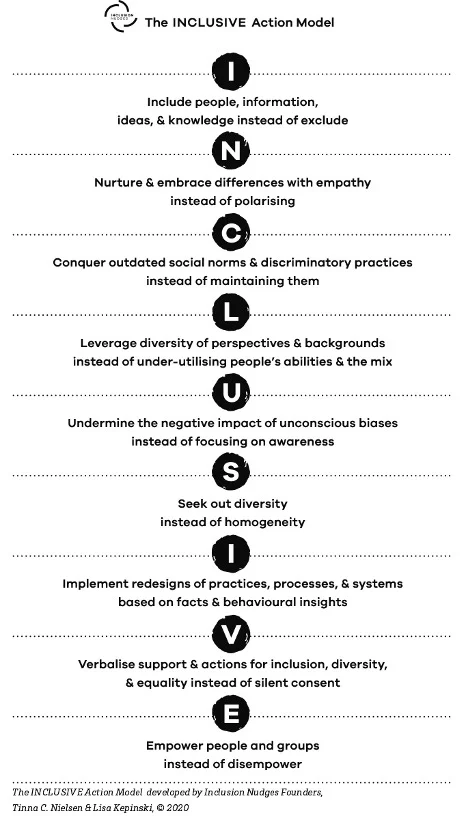
To navigate these complex shifts, organizations can leverage frameworks and tools designed to embed inclusion into everyday practices. The concept of "Inclusion Nudges," for instance, offers practical, behavioral science-based interventions to counter unconscious biases and foster more equitable outcomes. Specific examples relevant to process and policy shifts include:
- Reveal Gaps in Flexible Working to Increase Use by All: This nudge encourages organizations to analyze who is currently using flexible work options and identify demographic gaps, prompting targeted interventions to ensure equitable access and uptake.
- Flexible Working as the Default & Norm: By shifting the default assumption from office-based work to flexible arrangements, organizations can normalize flexibility, reduce the stigma associated with requesting it, and ensure it is considered for all roles where feasible.
- Default as ‘All Jobs Are 80% Jobs’: This radical approach challenges the norm of full-time, 100% roles by making reduced hours the default, fostering greater work-life balance and potentially opening up opportunities for diverse talent who might require more flexibility.
These examples illustrate how subtle changes in processes and policies, informed by behavioral insights, can drive significant cultural shifts towards greater inclusion.
Conclusion
The pandemic has irrevocably altered the landscape of work, serving as a powerful catalyst for re-evaluating long-standing processes and policies. The imperative now for organizations is to move beyond mere adaptation to deliberate, inclusive redesign. By embracing flexibility, prioritizing well-being, challenging outdated norms, and co-creating policies with their diverse workforces, leaders have an unprecedented opportunity to forge a new social contract that is not only more efficient but also profoundly more equitable and inclusive. This moment demands thoughtful reflection, courageous experimentation, and an unwavering commitment to embedding Diversity, Equity, and Inclusion into the very fabric of how work gets done. The future of work is flexible, and its success hinges on its fairness.