The critically acclaimed Max original series Hacks has utilized its latest season to engage with one of the most pressing issues currently facing the entertainment industry: the integration of generative artificial intelligence (AI) in the creative process. In the sixth episode of the third season, titled “QuikScribbl,” the show explores the tension between technological optimization and the intrinsic value of human struggle in art. The episode marks a significant milestone for the series as co-creator Jen Statsky makes her directorial debut, delivering a narrative that serves as both a character study and a sharp critique of the Silicon Valley ethos currently permeating Hollywood.
Directorial Debut and the Creative Philosophy of Jen Statsky
Jen Statsky, who co-created Hacks alongside Lucia Aniello and Paul W. Downs, stepped behind the camera for “QuikScribbl,” an episode written by Carolyn Lipka and Joe Mande. Statsky’s transition to directing mirrors the episode’s themes of growth through discomfort. Following the episode’s release, Statsky articulated her perspective on the creative process, emphasizing that the "illogical feelings" of nervousness and self-doubt are foundational to producing meaningful work.
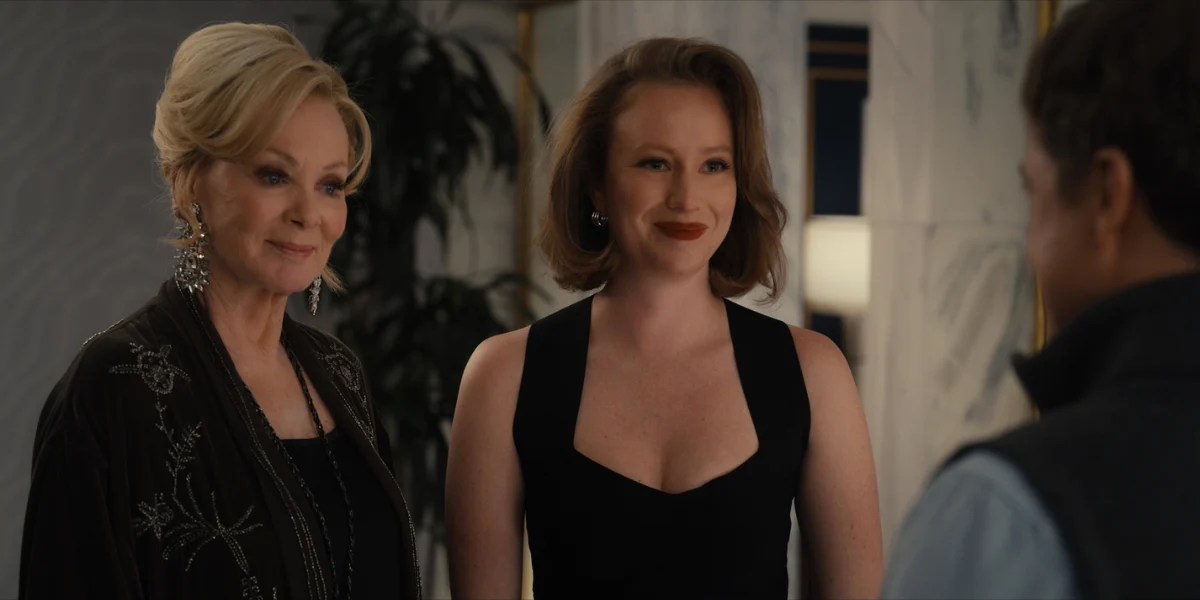
Statsky argues that the push toward automation in creative fields robs artists of the "joy of finding the answers within ourselves." This philosophy serves as the episode’s moral compass, contrasting the efficiency of AI with the messy, often painful process of human creation. Her directorial approach focuses on the interpersonal friction between the show’s protagonists, Deborah Vance (Jean Smart) and Ava Daniels (Hannah Einbinder), as they navigate a lucrative but ethically dubious tech partnership.
The QuikScribbl Pitch: Automation of the Comedic Voice
The central plot of the episode involves a meeting between the protagonists and Graham Sweeney, a young tech developer introduced by Marcus (Carl Clemons-Hopkins). Sweeney pitches "QuikScribbl," a generative AI tool designed to assist non-writers in crafting speeches and scripts. The developer’s ultimate goal is to license Deborah Vance’s extensive body of work to train a Large Language Model (LLM), allowing the software to mimic her specific comedic timing and voice. In exchange for these rights, Sweeney offers a significant investment in "The Diva," the new casino venture Deborah is launching.
The episode accurately mirrors real-world "Big Tech" rhetoric. Sweeney employs the common industry talking point that AI is an "inevitability," suggesting that artists must either adopt the technology or risk obsolescence. This reflects the current climate in the entertainment industry, where AI integration has become a primary point of contention in labor negotiations and contract disputes.
The Rhetorical Divide: Capitalism vs. Ethics
The conflict within the episode highlights a generational and ideological rift between Deborah and Ava. Deborah, a seasoned entertainer with a history of savvy (and sometimes ruthless) business ventures, initially views the AI deal through a capitalist lens. Her character has long been established as a pragmatist who prioritizes brand expansion and financial security. She dismisses Ava’s concerns about job displacement, arguing that if a writer is talented enough, they cannot be replaced by a machine—a sentiment often echoed by industry proponents of AI.
Ava, representing a younger, more socially conscious demographic, attempts to dissuade Deborah by citing the broader implications of the technology. These arguments include:
- Environmental Impact: The massive energy and water consumption required to train and maintain LLMs.
- Economic Displacement: The potential for AI to eliminate entry-level writing positions, thereby destroying the "pipeline" for future talent.
- Artistic Devaluation: The idea that "optimizing" the creative process removes the soul from the work.
The episode illustrates the difficulty of these conversations, as Ava’s ethical appeals initially fail to resonate with Deborah’s bottom-line perspective. This impasse leads to a significant professional rift, with Ava threatening legal action to protect her own contributions to Deborah’s material.
Chronology of the AI Debate in Hollywood
The themes explored in “QuikScribbl” are deeply rooted in the recent history of the American film and television industry. The episode serves as a fictionalized reflection of the 2023 Writers Guild of America (WGA) and SAG-AFTRA strikes.
- May 2023: The WGA begins a strike, with the regulation of AI in scriptwriting as a key demand.
- July 2023: SAG-AFTRA joins the strike, seeking protections against the unauthorized use of actors’ digital likenesses.
- September 2023: The WGA reaches an agreement that prohibits studios from using AI to write or rewrite literary material and prevents AI-generated content from being considered "source material."
- 2024: Shows like The Morning Show, Black Mirror, and Hacks begin airing episodes specifically addressing the ethical fallout of generative AI.
Hacks distinguishes itself by focusing not just on the legality of AI, but on the psychological and developmental impact of "shortcuts" in the creative arts.
The Mirage of the Shortcut and Cognitive Atrophy
The turning point of the episode occurs when Graham Sweeney inadvertently reveals the fundamental flaw in his vision. He suggests that Deborah herself would eventually use the tool to write her own material during moments of writer’s block. Deborah’s rejection of this idea—stating "there is no shortcut"—identifies the core of her identity as an artist. She argues that the process of failure and the struggle to find a punchline are what define her craft.
Scientific research supports the episode’s cautionary stance. Experts in cognitive science have warned about "cognitive atrophy," a phenomenon where over-reliance on automated tools can lead to the degradation of human critical thinking and creative problem-solving skills. By outsourcing the "struggle" to an algorithm, the artist risks losing the very faculties that allowed them to create original work in the first place.
Broader Implications and Industry Reactions
The stance taken by Hacks is notably firm compared to other contemporary media. While some public figures, such as Reese Witherspoon, have suggested that the industry must "embrace" AI as a tool for empowerment, Hacks aligns more closely with the skepticism of the creative labor force. The episode posits that AI is not merely a tool for efficiency but a threat to the fundamental nature of art, which relies on human experience and imperfection.
The subplot involving Jimmy (Paul W. Downs) and Kayla (Meg Stalter) provides a satirical counterpoint, involving a residency deal that mirrors the absurdity of modern true-crime content. This secondary narrative reinforces the episode’s critique of a media landscape that increasingly prioritizes "content" over "craft."
Fact-Based Analysis of AI in the Creative Economy
As of 2024, the integration of AI in Hollywood remains a volatile issue. Data from industry surveys indicate that while 75% of production companies have experimented with AI tools for administrative or post-production tasks, the use of generative AI in storytelling remains highly controversial.
- Environmental Data: Training a single large-scale AI model can emit as much carbon as five cars over their entire lifetimes.
- Economic Impact: A 2024 report on the entertainment economy suggested that up to 200,000 jobs in the industry could be "significantly disrupted" by AI over the next three years, particularly in animation, voice acting, and entry-level screenwriting.
By addressing these issues through the lens of Deborah Vance’s career, Hacks provides a humanizing perspective on a technical debate. The episode concludes that while technology can mimic the "output" of a voice, it cannot replicate the "process" of a life lived.
Conclusion: The Necessity of Failure
"QuikScribbl" ultimately serves as a defense of human fallibility. Through Deborah’s eventual rejection of the QuikScribbl deal, the series asserts that the value of art is found in the effort required to produce it. The episode suggests that the "optimization" sought by the tech industry is antithetical to the "discovery" required by the arts.
As the television industry continues to grapple with the role of automation, Hacks has positioned itself as a vocal advocate for the traditional, often difficult path of human creativity. The episode reinforces the idea that in the world of comedy—and by extension, all storytelling—there are no shortcuts to authenticity. The struggle is not a bug in the system; it is the system itself.