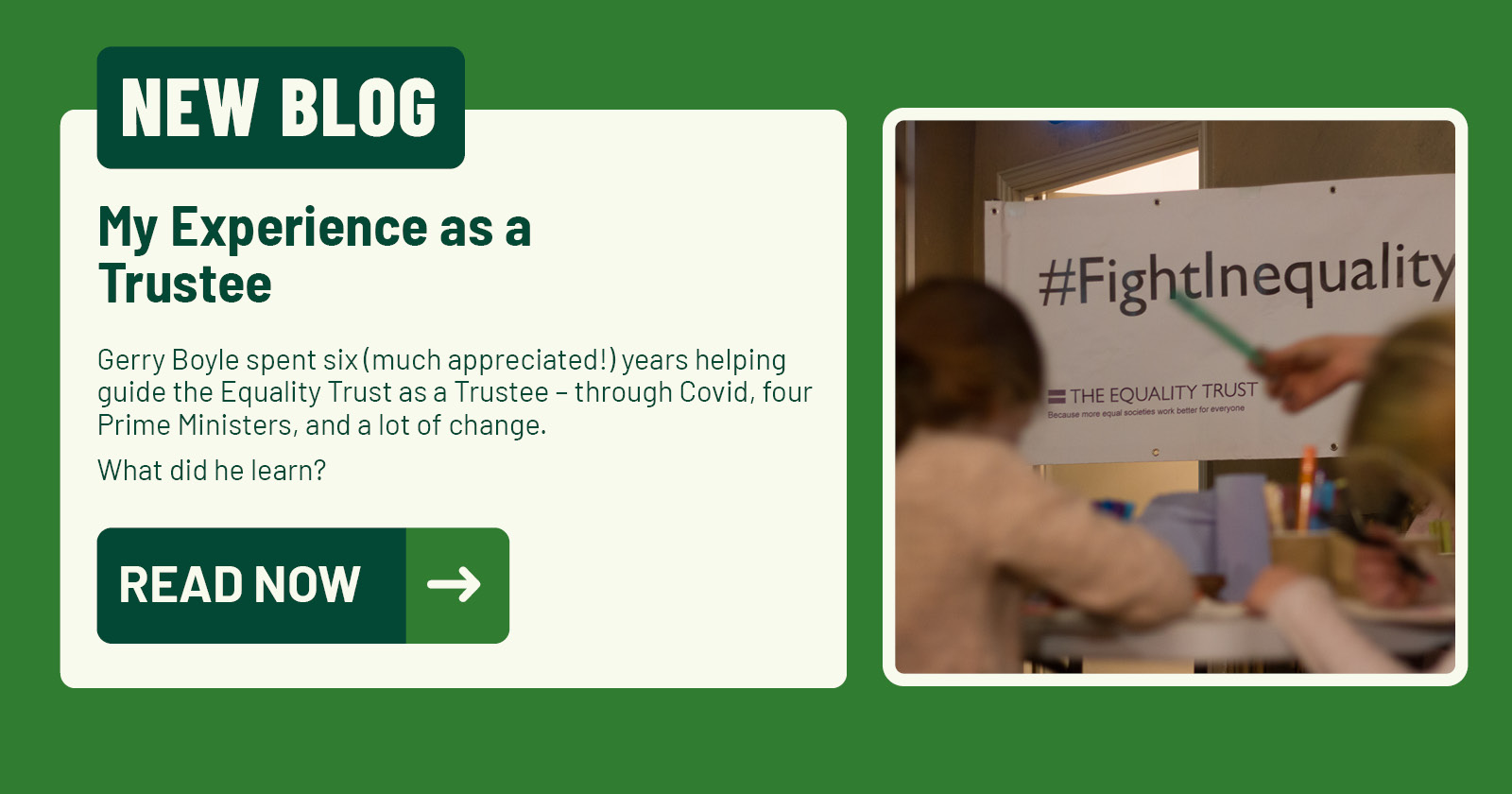
The Equality Trust has announced the departure of Gerry Boyle from its Board of Trustees following the completion of his second three-year term, marking the end of a pivotal six-year period of service defined by significant organizational growth and external economic challenges. Boyle, whose tenure concluded on March 23, 2026, reached the maximum service limit permitted under the charity’s constitution, leaving behind a legacy centered on financial stabilization and the promotion of the Socio-Economic Duty within UK governance. His departure comes at a critical juncture for the third sector, as advocacy groups grapple with a volatile funding environment and the long-term societal impacts of prolonged economic austerity.
A Tenure Defined by Strategic Oversight and Advocacy
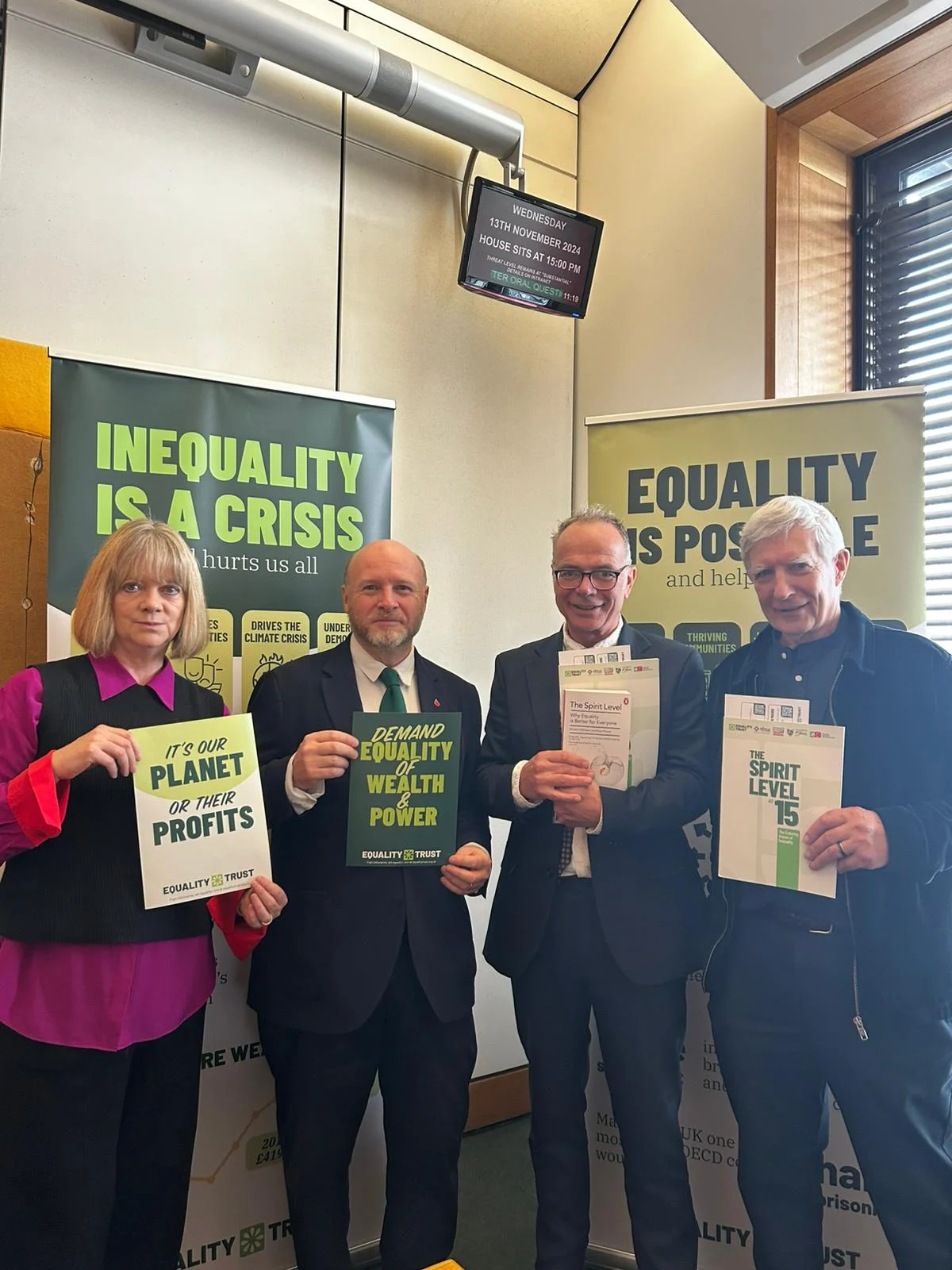
Gerry Boyle joined the Equality Trust board six years ago, motivated by the empirical evidence presented in "The Spirit Level: Why More Equal Societies Almost Always Do Better," the seminal work by Richard Wilkinson and Kate Pickett that serves as the intellectual foundation for the Trust. Bringing a unique blend of private sector business acumen and international development experience, Boyle provided a bridge between traditional corporate governance and the nuanced requirements of social justice campaigning.
During his two terms, Boyle was instrumental in steering the organization through the complexities of the early 2020s, a period characterized by global health crises and subsequent economic instability. His background in project management and finance proved vital as the Trust navigated the "lumpy" nature of grant-based funding, a common hurdle for medium-sized NGOs. By serving on the board’s finance committee, Boyle focused on diversifying the organization’s revenue streams to ensure that its campaigning remained independent of the fluctuating priorities of large-scale institutional donors.
The Evolution of the Equality Trust: 2020–2026
The timeline of Boyle’s service mirrors a transformative era for UK social policy. When his first term began in 2020, the nation was beginning to confront the widening wealth gap exacerbated by the COVID-19 pandemic. By the midpoint of his tenure in 2023, the UK was entrenched in a cost-of-living crisis that pushed inequality to the forefront of the national discourse.
Under the guidance of the board during this period, the Equality Trust achieved several key milestones:
- Implementation of the Socio-Economic Duty: The Trust led a sustained campaign to encourage local authorities and devolved nations to adopt Section 1 of the Equality Act 2010. This duty requires public bodies to consider how their decisions can reduce the inequalities of outcome which result from socio-economic disadvantage.
- Youth-Led Advocacy: The organization successfully launched initiatives to amplify the voices of young people living at the "sharp end" of inequality, ensuring that those most affected by policy decisions have a platform to influence them.
- Data-Driven Campaigning: The Trust continued to produce influential reports on executive pay ratios and wealth concentration, providing the statistical backbone for parliamentary debates on fair wages and taxation.
Analyzing the Funding Crisis in the Third Sector
One of the most significant themes of Boyle’s reflections upon his departure is the increasingly hostile funding environment for UK charities. The Equality Trust, like many advocacy-focused organizations, has historically relied on a small number of substantial grants from philanthropic foundations. However, Boyle noted that this model creates a precarious "comfortable position" that can rapidly shift toward financial instability if a single grant fails to renew.
The broader context of this shift includes:
- The Impact of Austerity: Continued constraints on public spending have forced local governments to cut funding for community services, increasing the demand on charities while simultaneously reducing the pool of available public grants.
- International Aid Cuts: The UK government’s decision to reduce its Official Development Assistance (ODA) budget from 0.7% to 0.5% of GNI had a "trickle-down" effect on the domestic charity sector. As international NGOs lost funding, they began competing more aggressively for the same private philanthropic pots previously reserved for domestic causes.
- The Cost-of-Living Squeeze: With inflation impacting household budgets, individual giving—which the Trust has sought to increase—has faced stiff competition from essential spending, making the transition from "lumpy" grants to a "base of small contributors" a slow and arduous process.
According to data from the National Council for Voluntary Organisations (NCVO), the "scissor effect" of rising operational costs and falling income has left nearly 40% of small-to-medium charities in the UK concerned about their long-term financial viability as of 2025. Boyle’s emphasis on the importance of individual supporters underscores a strategic shift toward "community-funded advocacy," which grants the Trust the autonomy to challenge systemic issues without fear of alienating institutional donors.
The Socio-Economic Duty and Institutional Change
A hallmark of Boyle’s tenure was the Trust’s focus on the Socio-Economic Duty. While the UK government has historically declined to commence Section 1 of the Equality Act 2010 on a national level, the Equality Trust’s work alongside local councils has seen a "bottom-up" adoption of these principles. By 2026, a significant number of councils across the North of England, Scotland, and Wales have voluntarily integrated the duty into their decision-making processes.
This policy focus is backed by rigorous data. Research indicates that in regions where the Socio-Economic Duty is active, there is greater transparency in how budget cuts are distributed, often protecting the most vulnerable demographics from the harshest impacts of fiscal consolidation. Boyle’s departure marks a transition point where the Trust must now look toward national-level enforcement of these standards.
Sector Reactions and Future Implications
Colleagues and fellow trustees have expressed their gratitude for Boyle’s "smart and motivated" approach to governance. While Boyle himself noted the challenge of the "hands-off" nature of board membership compared to direct project management, his ability to merge business logic with social justice goals has been cited as a model for effective charity leadership.
Dr. Ritu Mahendru, Co-Director of the Equality Trust, has previously emphasized that the strength of the organization lies in its diverse board composition. "Having trustees who understand the financial mechanics of the private sector, but who are deeply committed to the moral imperative of equality, is what allows us to remain resilient in such a difficult political climate," a spokesperson for the Trust noted in a statement regarding the board transition.
The departure of a long-term trustee like Boyle also highlights the importance of constitutional term limits in the charity sector. By capping service at six years, the Equality Trust ensures a constant infusion of "fresh blood" and new perspectives, preventing institutional stagnation while maintaining a core of "lived experience" and academic expertise.
Conclusion: The Road Ahead for the Equality Trust
As Gerry Boyle steps down, the Equality Trust faces a UK landscape where wealth inequality remains at historic highs. Recent figures from the Office for National Statistics (ONS) suggest that the wealthiest 10% of households hold approximately 43% of all wealth, while the bottom 50% hold less than 5%. This disparity continues to fuel the issues the Trust campaigns against: poorer health outcomes, lower social mobility, and increased social fragmentation.
The organization’s future strategy will likely continue the work Boyle helped oversee: transitioning to a sustainable, supporter-led funding model and pushing for systemic legislative changes. Boyle’s parting message serves as both a reflection on past successes and a call to action for the public to support independent advocacy.
His tenure demonstrates that even in a "very part-time role," the contribution of professional expertise to the third sector is vital for navigating the "intellectual and economic headwinds" of the mid-2020s. As the Equality Trust moves into its next chapter, the foundations laid during these "eventful six years" will be essential for the continued struggle against the systemic unfairness that Boyle and his colleagues have sought to dismantle.