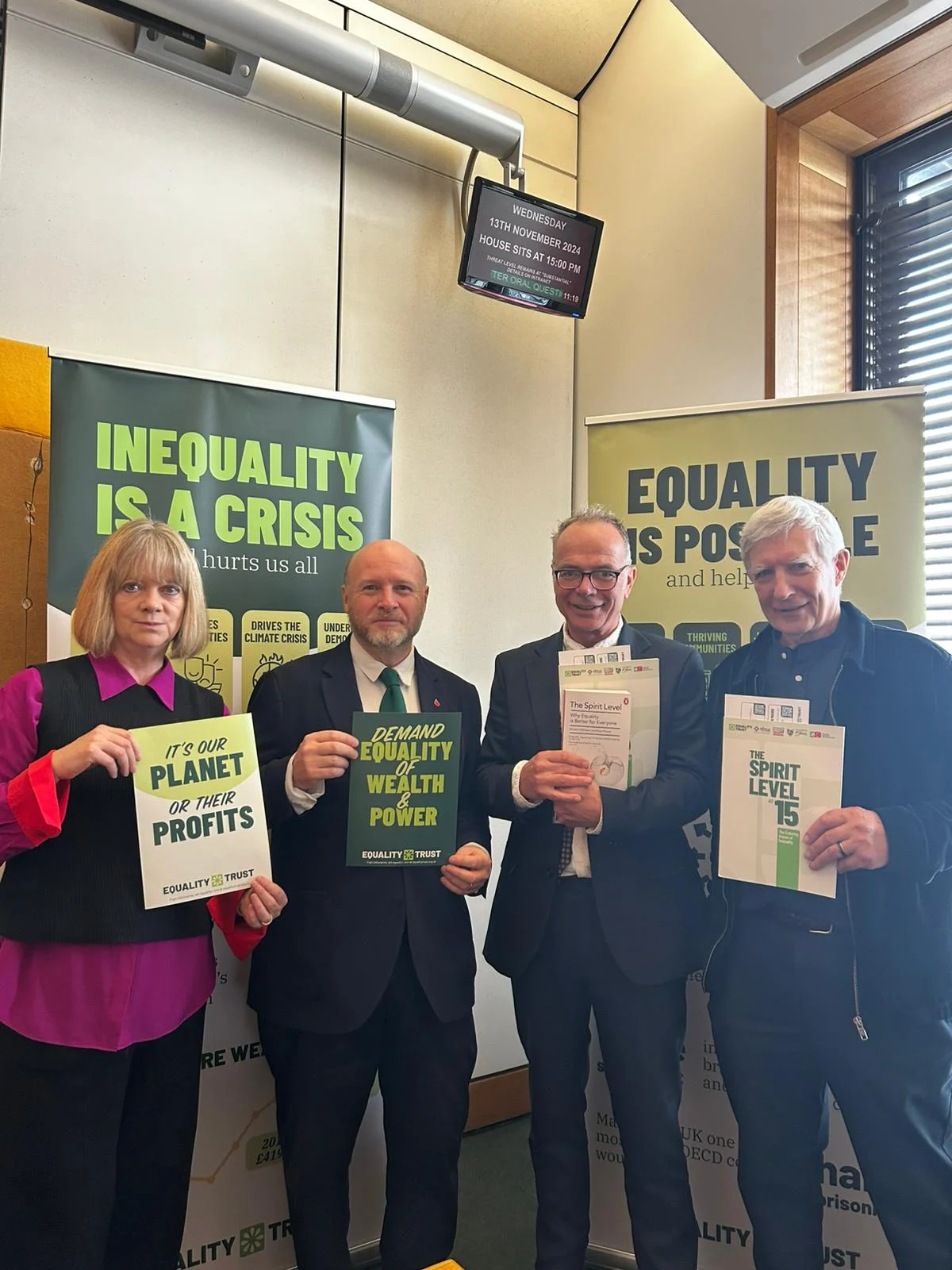
The Equality Trust has released a comprehensive analysis in May 2026 detailing a profound shift in the distribution of United Kingdom wealth, revealing that 157 billionaires now control assets equivalent to 22% of the nation’s Gross Domestic Product (GDP). This figure represents a nearly sixfold increase from 1990, when the billionaire class held wealth amounting to just 4% of GDP. The report, titled "Billionaire Britain 2026," suggests that while national economic indicators may show technical growth, the domestic economy has become increasingly "hollowed out," a phenomenon researchers are now labeling as "Ghost GDP."
This economic divergence comes at a time when the Sunday Times Rich List highlights record-breaking accumulation at the top of the socio-economic ladder, contrasted against the longest period of wage stagnation in modern British history. The Equality Trust’s findings indicate that the wealthiest 50 families in the UK now possess more combined wealth than the poorest 34 million citizens. This concentration of resources has prompted calls from economists and international bodies to move beyond traditional GDP as the primary measure of national success.
The Evolution of the Hollow Economy: A 35-Year Chronology
The trajectory toward the current state of wealth concentration began in the late 1970s and early 1980s. Following a period in the mid-1970s when the UK reached its historical peak of income equality, a series of systemic policy changes began the dismantling of post-war social protections. By the time the Sunday Times published its inaugural Rich List in 1989, the ideological shift toward wealth accumulation as a primary driver of economic health was firmly established.
In 1990, the UK recorded 15 billionaires with a collective wealth of £27 billion. At that time, this represented approximately 4p of every pound of national GDP. Over the subsequent three and a half decades, through multiple economic cycles including the 2008 financial crisis and the COVID-19 pandemic, this accumulation accelerated. By 2025, despite a global cost-of-living crisis and regional conflicts, billionaire wealth surged to just under £670 billion.
The current 2026 data confirms that this trend has not only continued but intensified. The entry requirement for the Sunday Times Rich List has climbed to £350 million, and the list itself has been narrowed from the top 1,000 individuals to the top 350, reflecting the extreme concentration of wealth even within the upper echelons of the affluent.
Ghost GDP and the Irish Warning
The term "Ghost GDP" was popularized in early 2026 by Citrini Research to describe economies that appear robust on paper due to artificial intelligence valuations and multinational accounting but lack a foundation in the tangible prosperity of the general population. The Equality Trust argues that the UK has already transitioned into this state, citing the Irish economic model as a precursor.
In 2025, Ireland reported a GDP growth of 12%. However, analysts noted that this growth was largely the result of multinational corporations routing intellectual property and profits through Dublin for tax optimization. This "on-paper" growth did not translate into significant job creation, higher median wages, or improved public infrastructure. The distortion became so extreme that Irish authorities were forced to adopt "Modified Domestic Demand" as a secondary metric to understand the actual health of the domestic economy.
The UK is currently facing a similar disconnect. While billionaire wealth continues to grow at rates far outpacing the national economy, the underlying reality for many citizens is characterized by a "hollowed out" infrastructure. Property prices, driven upward by institutional and ultra-high-net-worth investors, have priced a generation out of homeownership, while the "rentier" nature of modern wealth ensures that capital is extracted from communities rather than reinvested in them.
The Shift to Rentier Capitalism
A critical finding in the 2026 report is the changing source of billionaire wealth. In 1990, the majority of the UK’s wealthiest individuals derived their fortunes from manufacturing, retail, and industry—sectors that typically involve high levels of employment and value creation. Today, the landscape is dominated by finance, property, and inheritance.
In 1990, only three UK billionaires drew their primary wealth from these sectors. By 2025, that number rose to 42. Currently, the finance sector alone accounts for 30% of all billionaire wealth, representing a fourfold increase in its share of the total. This shift characterizes "rentier capitalism," a system where wealth is generated by sitting on appreciating assets, collecting rents, and charging fees for the movement of money.
Economists argue that this model is inherently extractive. Every national crisis over the last twenty years—the banking collapse, the pandemic, and the energy crisis—has seen billionaire wealth grow as they leverage their assets to absorb market volatility, while the general public absorbs the resulting debt and inflation. Furthermore, the report highlights the role of discretionary trusts and legal structures that allow dynastic wealth to pass between generations virtually tax-free, further insulating this capital from the broader economy.
Institutional Capture and Political Influence
The Equality Trust warns that Ghost GDP is maintained through a process of "structural corruption" or "elite capture." As the wealth of the top 0.1% has grown, so too has their influence over the mechanisms of governance and public discourse.
Key indicators of this influence include:
- Political Donations: Large-scale political donations increased sixfold between 2002 and 2019, creating a system where wealth buys direct access to policymakers.
- Media Concentration: Three major media conglomerates now control 90% of the UK’s national newspaper circulation, shaping the narrative around economic policy and wealth accumulation.
- Legislative Influence: The House of Lords has expanded to over 750 members, making it the second-largest legislative chamber in the world. Research has documented a significant correlation between substantial financial donations and appointments to the chamber.
Professor Kate Pickett, a patron of The Equality Trust and member of the International Panel on Inequality, notes that extreme inequality creates a "dual-track" society where different rules apply to the elite. This environment, she argues, leads to systemic instability and a breakdown in social cohesion.
The Human and Environmental Cost
The 2026 data highlights a stark correlation between wealth concentration and declining public health outcomes. A recent Health Foundation study found that healthy life expectancy in Britain has fallen by two years over the last decade, now sitting below 61 years. Despite being the world’s sixth-largest economy, the UK ranks second to last among comparable wealthy nations for the duration of time citizens live in good health, trailing only the United States—the most unequal nation in the developed world.
The disparity is also geographic and class-based. Individuals in the most affluent areas of the UK can expect approximately 20 more years of healthy life than those in the poorest regions. This health gap is mirrored in child wellbeing; UNICEF’s 2026 Report Card 20 ranked the UK 24th for child wellbeing and 35th for income inequality among the world’s wealthiest nations.
The environmental impact of this wealth concentration is equally significant. Oxfam’s "Climate Plunder" report, cited in the Equality Trust analysis, reveals that the world’s richest billionaires produce more carbon through their investments and lifestyle choices in three hours than the average British citizen produces in a lifetime. In the UK, the richest 0.1% are 56 times more polluting than those on the lowest incomes. Since 1990, while the bottom 90% of the population has successfully reduced their carbon emissions by 26%, the emissions of the ultra-wealthy have risen by 53%.
Global Policy Shifts and the "Beyond GDP" Movement
In response to these trends, international organizations are beginning to propose fundamental changes to economic measurement. In May 2026, the UN High-Level Expert Group on Beyond GDP launched its final report, advocating for the replacement of GDP with 31 distinct indicators covering wellbeing, equity, and sustainability.
Simultaneously, the outgoing UN Special Rapporteur on Extreme Poverty, Olivier De Schutter, published a "Roadmap for Eradicating Poverty Beyond Growth." De Schutter’s report argues that the pursuit of GDP growth has become a barrier to solving poverty and inequality, as the benefits of such growth are increasingly captured by the top 1% rather than trickling down to the vulnerable.
Analysis of Future Implications
The Equality Trust’s analysis suggests that the UK is at a critical juncture. The "Hollow Economy" model is described as unsustainable, with experts such as Professor Luke Kemp warning that extreme inequality and institutional capture are reliable predictors of systemic collapse.
Proposed solutions from within the report and its supporting economists include:
- Structural Wealth Limits: Implementing a progressive wealth tax to prevent the further concentration of power and resources.
- Democratic Reform: Capping political donations and breaking up media monopolies to restore balance to the public square.
- New Economic Metrics: Transitioning from GDP to wellbeing-based indicators to ensure policy decisions prioritize the health and stability of the majority.
As the 2026 local election results suggested, there is a growing public appetite for a shift in how the economy is managed. The Equality Trust concludes that the current system is not "broken" but is functioning exactly as designed—to extract and concentrate wealth. The report argues that only a fundamental replacement of this design will allow for a society where all citizens can flourish within planetary limits.