The critically acclaimed television series Hacks continues to dissect the intricate power dynamics of the entertainment industry, moving beyond the central relationship of legendary comedian Deborah Vance and her writer Ava Daniels to explore the precarious nature of talent representation. In the latest episode, written by Genevieve Aniello and Jess Dweck and directed by Lucia Aniello, the narrative presents a stark contrast between artistic triumph and corporate defeat. While Deborah Vance celebrates a monumental career milestone—selling out Madison Square Garden in ten minutes—her manager, Jimmy LuSaque Jr., faces a professional regression that highlights the systemic challenges facing independent operators in the modern media landscape. This shift in fortune serves as a poignant commentary on the conglomeratization of Hollywood and the personal cost of maintaining integrity within a profit-driven ecosystem.
The Narrative Conflict: Professional Triumph Versus Corporate Subjugation
The episode centers on a pivotal moment in Deborah Vance’s late-career resurgence. The logistical feat of selling out a premier venue like Madison Square Garden is framed not just as a victory for Vance, but as a validation of the unconventional path she and Ava have forged. However, this success is juxtaposed with the collapse of Jimmy LuSaque Jr.’s independent venture, Schaefer & Lusaque. Despite his instrumental role in engineering Vance’s comeback, Jimmy finds himself outmaneuvered by the corporate machinery of Latitude, his former employer.
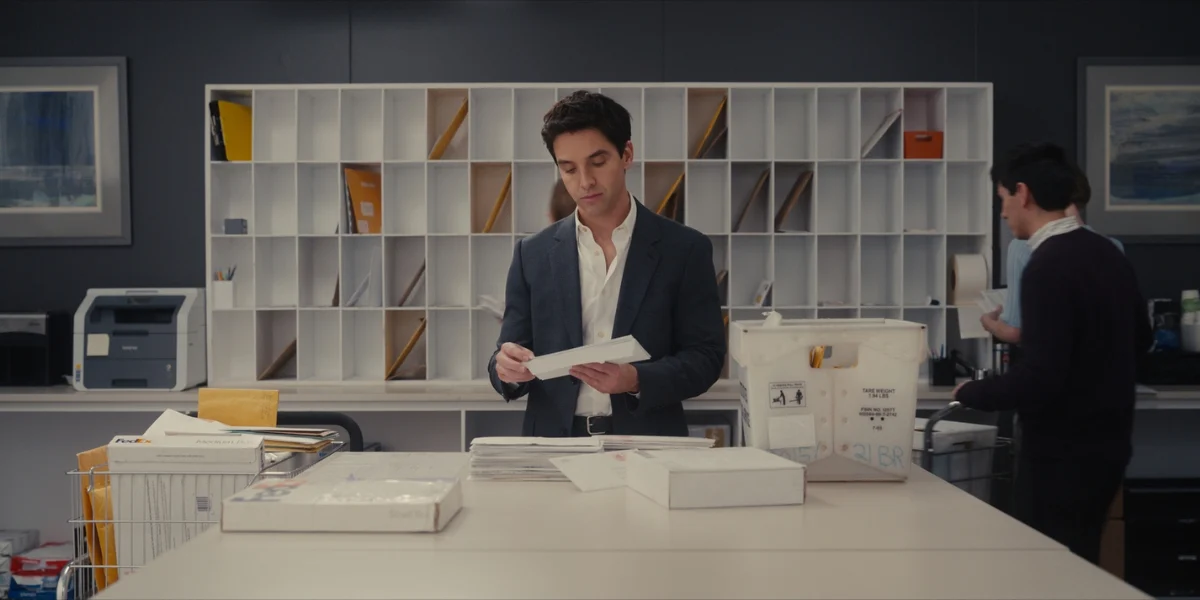
The conflict reaches its zenith in a confrontation with the father of his business partner, Kayla. As a powerful executive at Latitude, Kayla’s father utilizes the threat of litigation and the sheer scale of corporate resources to force Jimmy and Kayla back into the fold. The resolution of this arc sees Jimmy relegated to the mailroom of Latitude, a position that signifies a total loss of autonomy. This narrative choice underscores a recurring theme in the series: the reality that talent and merit are often insufficient defenses against the overwhelming influence of established corporate hierarchies.
Chronology of the LuSaque-Vance Professional Relationship
To understand the weight of Jimmy’s current predicament, it is necessary to trace the trajectory of his career throughout the series. Jimmy LuSaque Jr. began the series as a junior agent at a major firm, struggling to manage the volatile temperaments of both the aging Deborah Vance and the disgraced young writer Ava Daniels.
- The Initial Pairing: In the series pilot, Jimmy facilitates the first meeting between Deborah and Ava, a move initially born of desperation to keep both clients on his roster.
- The Break from Latitude: Recognizing that the traditional agency model prioritized short-term commissions over long-term artist development, Jimmy eventually resigned from Latitude. He opted to start his own management firm, Schaefer & Lusaque, alongside Kayla, the daughter of his former boss.
- The Independent Era: Throughout the second and third seasons, Jimmy operates as a "boutique" manager. His role expands beyond contract negotiation into emotional labor, brand rehabilitation, and strategic risk-taking, such as the self-funded tour and the eventual Madison Square Garden stunt.
- The Forced Re-Absorption: The current episode marks the end of this independent streak. Faced with a lawsuit that his small firm lacks the capital to fight, Jimmy is forced to surrender his company and return to a subordinate role within the very institution he sought to escape.
Data and Industry Context: The Decline of the Boutique Agency
The plight of Jimmy LuSaque Jr. reflects broader trends within the real-world entertainment industry. Over the past decade, the landscape of talent representation has been defined by massive consolidation. The 2022 merger between Creative Artists Agency (CAA) and ICM Partners serves as a primary example of how the "Big Four" agencies have expanded their dominance, leaving little room for mid-sized or boutique firms to survive.
According to industry reports, the "Big Three" agencies—CAA, WME, and UTA—now control a significant majority of top-tier talent. For small firms like Schaefer & Lusaque, the barriers to entry are not merely about finding talent, but about surviving the legal and financial pressures exerted by these giants. In the show, the threat of a lawsuit is used as a tactical weapon; in reality, many small managers are forced into "tuck-in" acquisitions where they are absorbed by larger entities to avoid bankruptcy or to gain access to the packaging power of a conglomerate.
The series accurately depicts talent management as a distinct discipline from agenting. While agents focus on securing employment and negotiating contracts (regulated by state laws), managers like Jimmy focus on the "big picture" of a client’s career. The show suggests that this personalized, holistic approach is increasingly incompatible with the quarterly-profit demands of corporate-owned agencies.
The Role of Character Actors as Structural Support
The thematic depth of Hacks is further enhanced by its strategic use of character actors, who provide the necessary "scaffolding" for the leads. This episode features the return of Alanna Ubach as a high-level executive at Madison Square Garden. Ubach’s performance exemplifies the "character actor" philosophy—the idea that supporting roles are the essential "side dishes" that complete a production.
Furthermore, the appearance of Lauren Weedman as Mayor Jo illustrates the show’s commitment to fleshing out its universe with distinct, recurring personalities. These actors do more than provide comic relief; they represent the various archetypes of the industry—the pragmatic executive, the eccentric local official, and the jaded veteran. By utilizing a consistent roster of talented character actors, Hacks builds a believable world where the stakes of Jimmy’s career feels tangible. The casting of Katya Zamolodchikova as a 1990s-era Deborah Vance further bridges the gap between the show’s historical context and its contemporary narrative.
Inferred Reactions and Thematic Implications
While the show is a work of fiction, the reactions of the characters suggest a deeper critique of modern capitalism. Jimmy’s dedication to his clients—often at the expense of his own well-being—is presented as both a noble trait and a professional liability. His attachment to cultural touchstones (such as his obsession with Xena: Warrior Princess and his meticulous coffee habits) humanizes him as a person whose identity is inextricably linked to the media he consumes and the work he performs.
The "heartbreaking" nature of the mailroom scene, as noted by critics, stems from the realization that Jimmy’s "reward" for success is a loss of status. This mirrors the experiences of many professionals in the media and journalism sectors, where corporate acquisitions often lead to layoffs or the demotion of talented individuals into roles that stifle their creativity. The narrative implies that in a consolidated industry, loyalty and skill are secondary to ownership and control.
Broader Impact: The Artist Under Capitalism
The trajectory of Jimmy LuSaque Jr. serves as a microcosm for the struggle of the "artist-adjacent" professional. Hacks has frequently explored what it means to be a creative worker under a capitalist system that prioritizes output and profit over process and exploration. Jimmy represents the intermediary who attempts to shield the artist from these pressures, only to be crushed by them himself.
The implications of Jimmy’s return to Latitude are significant for the future of the series. It raises questions about the sustainability of independent voices in Hollywood. If the person responsible for the most successful comeback in modern comedy cannot remain independent, the show suggests that the "system" is designed to ensure that all roads eventually lead back to the conglomerate.
In conclusion, the latest development in Hacks provides a sobering look at the reality of the entertainment business. By focusing on Jimmy’s professional defeat amidst Deborah’s victory, the series highlights the precariousness of the middle class in Hollywood. Jimmy LuSaque Jr. emerges not just as a comedic foil, but as a tragic figure representing the thousands of managers, agents, and support staff whose labor sustains the industry, yet who remain vulnerable to the whims of those at the top of the corporate ladder. The episode reinforces the idea that in the modern economy, "making it" is often just the beginning of a much harder fight to stay free.