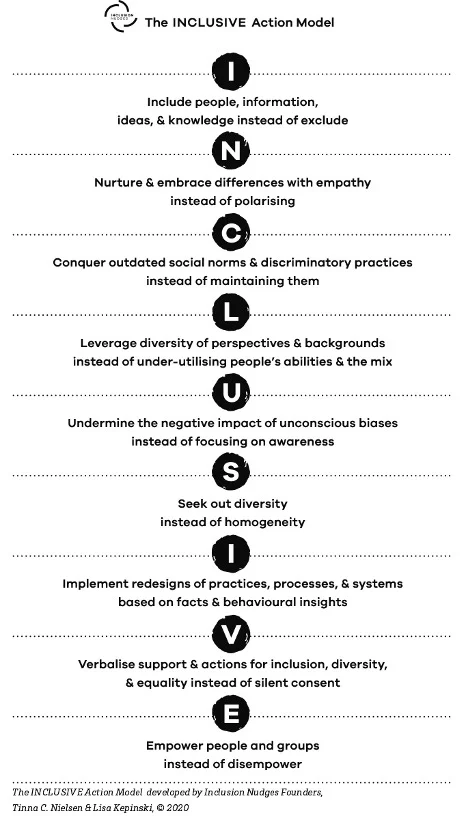
The global initiative known as Inclusion Nudges is rapidly gaining traction as a transformative approach to fostering true diversity, equity, and inclusion (DEI) within organizations, communities, and broader society. Moving beyond traditional training and awareness campaigns, Inclusion Nudges leverage insights from behavioral and social sciences to subtly yet powerfully steer human behavior towards more inclusive outcomes. This methodology addresses a critical gap observed in many DEI efforts: the disconnect between intention and action, where individuals and systems often revert to default, non-inclusive behaviors despite conscious commitments.
The Persistent Challenge of DEI: A Global Perspective
For decades, organizations worldwide have invested significant resources into diversity, equality, gender parity, human rights, and anti-discrimination initiatives. Yet, the pace of change often falls short of expectations. Internal change-makers in multinational corporations, alongside their peers across vast global networks, frequently report a frustrating cycle of incremental progress followed by setbacks. The challenge lies not necessarily in a lack of awareness or good intentions, but in the ingrained patterns of human thought and decision-making that perpetuate exclusion.
Traditional approaches, often relying on rational arguments, policy mandates, or explicit training, have proven insufficient in overcoming deeply rooted unconscious biases and systemic defaults. Despite knowing the proven benefits of diverse and inclusive teams – including enhanced innovation, improved decision-making, and stronger financial performance – many collective behaviors and outcomes remain stubbornly homogeneous. This persistent struggle underscores the urgent need for a new paradigm, one that acknowledges the complexities of the human mind and designs environments that make inclusion the automatic choice.
Unmasking the Absurd Reality: The Unconscious Mind at Play
To comprehend the necessity of Inclusion Nudges, one must first confront the pervasive influence of the unconscious mind. Consider a hypothetical scenario: a group of senior leaders deliberates over qualified candidates for a top management role. One leader confidently asserts, "The best qualified candidate is definitely the tallest of them. Tall leaders excel at strategy, possess greater presence, and demonstrate resilience. They are simply the best." While such a statement would be consciously deemed absurd and irrational by any reasonable individual, the underlying mechanism it represents is a stark, albeit unconscious, reality in many decision-making processes.
No rational leader would consciously argue that height dictates leadership capability. Yet, extensive global research consistently demonstrates that physical height disproportionately influences perceptions of leadership ability and status. Studies reveal that a significant majority—approximately 60%—of top leaders in many contexts are 185 cm (6 ft 1 in) or taller, despite this demographic representing only about 14% of the general population. This "height-leadership effect" is not confined to hiring; it correlates with greater high-status opportunities, more promotions, and higher incomes for taller individuals, establishing tall leaders as a normative, albeit irrational, pattern unaffected by local cultural nuances.
This phenomenon occurs because the unconscious mind forms instinctive associations. Traits like "tall" become linked with qualities such as "strong," "presence," "powerful," and "capable." Once this unconscious belief is activated, the reflective, rational mind often seeks evidence to confirm it, effectively becoming blind to contradictory facts or the merits of other candidates. This cognitive bias leads to flawed judgments and conclusions, often without conscious awareness.
The Dual Systems of Thought: Bridging the Intention-Action Gap
The human mind operates through two interdependent modes of thinking, as illuminated by behavioral sciences. The automatic system is characterized by its unconscious, fast, instinctive, effortless, associative, and uncontrolled nature. It functions like an autopilot, governing the vast majority (estimated 90-99%) of our thoughts, behaviors, and choices. Conversely, the reflective system is conscious, slow, effortful, rational, logical, self-aware, rule-following, and controlled. Both systems are universal across all human beings and are constantly interacting.
The critical insight for DEI efforts is the "gap" between these two systems. While our reflective system may intellectually grasp the importance of inclusion and aspire to fairness, our automatic system often defaults to mental shortcuts—associations and biases—that can lead to discriminatory outcomes. These shortcuts, while generally efficient for processing complex information and ensuring survival, can also produce errors in judgment when applied to social interactions, hiring decisions, or team dynamics. For instance, the automatic association of "tall" with "strong leader" is a cognitive shortcut that overrides rational knowledge.
When faced with ambiguity, complexity, or time pressure, the reliance on these mental shortcuts intensifies. This cognitive overload, exacerbated by the demands of modern life, the prevalence of social media echo chambers, and increasing stress, actually strengthens the power of the unconscious mind. Consequently, homogeneity and exclusion can inadvertently increase, undermining collective needs for diversity and inclusion. This inherent gap means that knowledge and willpower alone are often insufficient to change entrenched behaviors. Knowing what is inclusive is not enough; the environment and processes must be designed to make inclusion the default.
The Genesis of Inclusion Nudges: A Scientific Foundation
The founders of the Inclusion Nudges initiative, experienced change-makers themselves, recognized the limitations of conventional DEI strategies. Their frustration with slow progress led them to experiment with an interdisciplinary approach, drawing from behavioral economics, nudging theory, psychology, anthropology, linguistics, neuroscience, and complex system and microeconomic theory. This scientific synthesis proved to make a crucial difference in impact, providing the bedrock for the Inclusion Nudges methodology.
Nudge theory, pioneered by behavioral economists Richard Thaler and Cass Sunstein, challenges the classical economic assumption that individuals always act rationally in their own best interest. Instead, it posits that by carefully designing the "choice architecture"—the environment in which decisions are made—people can be subtly steered towards making better choices, without removing their freedom to choose otherwise. This "nudge" influences the unconscious mind in a non-intrusive way.

Applying this principle to DEI, Inclusion Nudges aim to combat discrimination, reduce bias, alter stereotypes, increase belonging, give voice, and foster allyship by redesigning processes and environments. This approach acknowledges that human evolution has not inherently made us "smarter" in overcoming unconscious biases; rather, modern life’s complexities often intensify their influence. Therefore, proactively designing for inclusion by targeting the unconscious mind is not merely beneficial but essential.
Defining Inclusion Nudges: A Behavioral Design Approach
An Inclusion Nudge is specifically defined as a design, rooted in behavioral and social sciences, that steers the unconscious mind to change behavior towards inclusiveness. It achieves this by targeting behavioral drivers, judgment and choice processes, and perceptions. Essentially, Inclusion Nudges make inclusive actions the easy, automatic, and normative choice, bypassing the need for conscious rationalization, threats, or strenuous effort. They address implicit norms embedded within cultures and systems, effectively closing the intention-action gap.
Crucially, Inclusion Nudges are not about manipulation but about empowerment. They help individuals and groups align their actions with their stated values and intentions, creating systems where inclusivity is the default, not an arduous conscious effort. For a precise understanding of the terms driving this movement, such as diversity, equity, inclusion, and belonging, the initiative provides clear definitions that underpin its approach.
Three Pillars of Action: Making Inclusion the Norm
The Inclusion Nudges change approach manifests through three distinct yet interconnected types of designed interventions, each serving a specific purpose in behavioral change:
-
Show the Hidden Issue and Make People FEEL THE NEED to Engage:
The human mind is more responsive to visceral experience than abstract knowledge. Simply telling people they are biased or that change is necessary rarely leads to sustained behavioral shifts. Instead, Inclusion Nudges emphasize showing the implications of non-inclusive patterns, allowing people to feel the need for change. These "Feel the Need" Nudges make invisible patterns visible, motivating the unconscious mind without explicitly discussing bias.- Example: Seeing Those Not Seen and Sponsoring Them. In one instance, an intervention aimed to highlight gender inequality in senior executive networks. By visually mapping informal networks and formal recognition, and calling out numerous men’s names versus only a few women’s names for a specific achievement, leaders were prompted to feel the disparity. This visualization, without direct accusation, effectively reduced resistance to a women’s sponsorship program and increased buy-in by making the limited gender equality in their own networks undeniable. The purpose is to nudge everyone to be inclusive by creating an emotional imperative for change.
-
PROCESS DESIGNS to Make Inclusion the Norm Without Talking About Inclusion and Diversity:
Beyond motivating engagement, sustained inclusion requires making inclusive actions automatic. This involves designing processes, IT systems, physical environments, or facilitation methods to be inherently inclusive. These "Process Design" Inclusion Nudges enable individuals to act inclusively by default, mitigating bias and fostering diverse perspectives without conscious effort or explicit discussion of DEI. They are powerful tools for embedding an inclusive culture.- Example: Share with a Peer to Access Diversity in Groups. Many group settings suffer from conformity, self-silencing, and power dynamics, hindering the access to diverse perspectives essential for robust decision-making. A "Share with a Peer" nudge addresses this by structuring interaction. Before a group discussion, individuals are asked to share their initial thoughts or ideas with one peer. This simple act can ensure psychological safety, allow all voices to be heard, prevent individuals from conforming to majority views, and clarify misunderstandings before a broader discussion. It empowers and enables automatic inclusiveness, making it easier for diverse perspectives to emerge.
-
FRAME PERCEPTIONS of Issues in Ways that Alter Understanding and Support Action:
Perceptions, narratives, and stereotypes significantly influence how individuals interpret information, evaluate others, and subsequently behave. "Framing Perceptions" Inclusion Nudges strategically alter these cognitive frames through language, communication style, problem presentation, or environmental setup. By flipping numbers, priming specific associations, appealing to identity, or changing anchors, these designs can shift how people perceive issues, data, and individuals, thereby influencing behavior towards greater inclusion.- Example: Show the Hidden People by Reversing the Numbers. Often, statistics about underrepresentation focus on the minority, inadvertently reinforcing their marginalization. A "Reverse the Numbers" nudge flips this perspective. Instead of stating, "Only 10% of our senior leaders are women," it might frame it as, "90% of our senior leaders are men." This re-framing changes the unconscious mind’s perception, making the majority’s dominance visible and prompting a different understanding of the "hidden people" and the consequences of the status quo. It shifts the perception of diversity from a burden to an opportunity, encouraging action.
A Global Movement for Systemic Change
The efficacy of Inclusion Nudges has been demonstrated across diverse communities, organizations, and leadership contexts worldwide. This approach transforms change agents into more impactful catalysts, sustained by its inherent ease of application and collaborative nature. By empowering individuals to co-create changes with "the people it’s about," Inclusion Nudges foster impactful and sticky transformations. The vision is to integrate behavioral insights into the design of systems, processes, cultures, technologies, policies, environments, and even cities, making inclusive behavior the default.
The need for a fundamental shift in how inclusive changes are pursued has never been more pressing. Inclusion Nudges offers a tangible, actionable framework for making inclusion the norm, not a perpetual struggle. This is achieved through an emphasis on everyday experimentation, seamlessly integrating inclusive actions into daily work, interactions, and decisions without feeling like an added burden. Further guidance on specific actions and models is provided through resources like The Inclusion Nudges Guidebook and Action Guides, developed from decades of practical experience.
Beyond being a mere change approach, Inclusion Nudges is a vibrant global initiative and community founded on the principles of sharing, reciprocity, and open source. The founders, Lisa and Tinna, were driven by a widespread frustration: the lack of practical "how-to" guidance in the social change landscape. Unlike many initiatives that highlight what works without revealing how, Inclusion Nudges explicitly shares detailed, step-by-step descriptions of effective change designs, enriched with behavioral insights explaining their efficacy.
- Sharing: This collaborative model encourages change-makers to contribute their own successful designs and experiences. These are then documented, analyzed, and disseminated through guidebooks, action guides, and other publications, fostering a collective intelligence that accelerates progress and scales impact. Sharing knowledge and experience is framed as a fundamental inclusive action.
- Reciprocity: The movement thrives on mutual exchange. Receiving and giving examples, offering support, and spreading awareness of these resources are vital for sustaining momentum. This joining of forces through reciprocal experience sharing is an inclusive action that strengthens the collective capacity for change.
- Open Source: Embodying a commitment to universal access, the Inclusion Nudges initiative operates under a Creative Commons License. This ensures that knowledge, concepts, and how-to designs are freely available to all, regardless of their background or resources. This open access to ideas and proven methodologies is seen as a crucial inclusive action, enabling broad social change rather than hoarding knowledge for a select few.
The Inclusion Nudges movement extends a powerful invitation to individuals and organizations globally: become part of this transformative initiative. By applying this behavioral design approach and joining forces, the ambitious mission of making inclusion the norm—everywhere, for everyone—moves closer to realization.
NOTE: All sources and references in this article are listed in The Inclusion Nudges Guidebook and Action Guides.