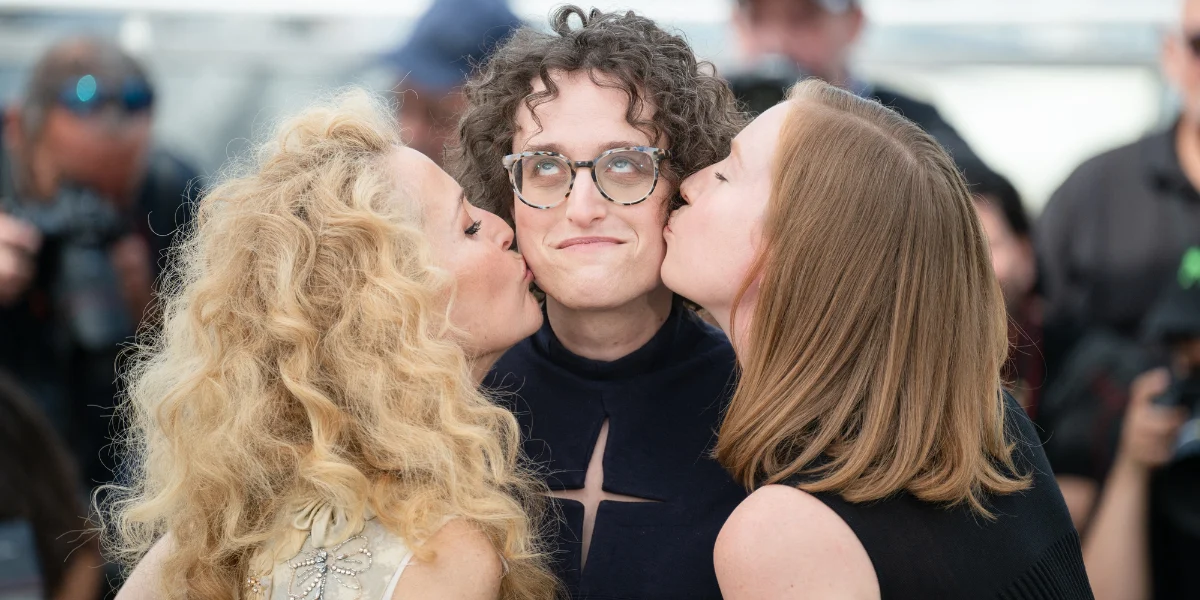
The 2026 Cannes Film Festival served as the premiere stage for director Jane Schoenbrun’s third feature film, Teenage Sex and Death at Camp Miasma, a production that has quickly become a focal point of discussion within the international film community. Following the success of their previous works, We’re All Going to the World’s Fair and I Saw the TV Glow, Schoenbrun’s latest project marks a significant evolution in their exploration of queer identity, body horror, and the subversion of cinematic tropes. The film, which features a high-profile ensemble cast, debuted to a perfect 100% score on the review aggregator Rotten Tomatoes, signaling a robust critical reception for what has been described as a "trans sapphic ode to marginalized communities."
Narrative Structure and Directorial Vision
Teenage Sex and Death at Camp Miasma operates as a meta-narrative horror-comedy. The plot centers on a contemporary director’s attempt to remake a fictional 1980s slasher franchise titled Camp Miasma. The protagonist of the film seeks to reunite with the original "final girl" of the franchise to produce a modern installment that intentionally deconstructs and rectifies the transphobic elements prevalent in the original 80s series.
Schoenbrun, who wrote and directed the film, has publicly stated that the script is deeply personal, drawing inspiration from their own experiences with intimacy and identity following their gender transition. This thematic depth is a hallmark of Schoenbrun’s filmography, which often utilizes the horror and thriller genres to examine the complexities of the trans experience and digital-age isolation. By focusing on the "remake" culture of Hollywood, the film provides a critical lens through which to view the history of the slasher genre, which has historically utilized marginalized identities as plot devices or sources of antagonism.
Cast and Production Background
The film’s cast represents a significant intersection of established talent and rising stars within queer cinema. Gillian Anderson, widely recognized for her role in The X-Files, joins Hannah Einbinder, the breakout star of the HBO series Hacks. The ensemble is rounded out by Jasmin Savoy Brown (Yellowjackets, Scream), Quintessa Swindell (Black Adam), and Jack Haven.
During press circuits at Cannes, Anderson characterized the production as "a wild ride," emphasizing the intensity of the filming process and the visceral nature of the horror sequences. Einbinder has been vocal regarding the film’s importance as a piece of representation, highlighting its focus on community and the reclamation of horror spaces for those who have historically been excluded or vilified within them.
Schoenbrun’s directorial style in this third feature continues to draw from a diverse array of influences, including 1990s and early 2000s cult classics such as Buffy the Vampire Slayer and A Nightmare on Elm Street. This stylistic blend of nostalgia and progressive storytelling has positioned Schoenbrun as a leading voice in the "New Queer Cinema" movement, a term originally coined in the 1990s to describe a wave of independent queer-themed films.
Critical Reception and Industry Implications
The five-star reviews emerging from the Cannes premiere suggest that Teenage Sex and Death at Camp Miasma is poised for a successful domestic and international rollout. Critics have praised the film’s ability to balance gore and humor with a sophisticated critique of gender politics. The 100% Rotten Tomatoes rating, while subject to change as more reviews are logged, places the film among the highest-rated horror entries of the year.
The success of the film also reflects a broader industry trend where queer-led horror and "elevated" genre films are finding both critical and commercial success. Production houses such as A24 and Neon have previously demonstrated that niche, identity-focused narratives can command significant cultural attention. Schoenbrun’s trajectory from micro-budget independent filmmaking to a major festival contender with a star-studded cast illustrates the growing viability of trans-centric stories in the mainstream market.
Expanding Horizons in Queer Entertainment
The debut of Schoenbrun’s film arrives amidst a flurry of developments across the entertainment sector that highlight the increasing visibility of LGBTQ+ professionals. As the film industry grapples with questions of representation, several other high-profile projects and transitions are currently underway.
Television and Music Milestones
In the television sector, Queen Latifah has been confirmed as a judge for the 30th season of NBC’s The Voice. Latifah’s inclusion marks a milestone for the long-running reality competition, bringing a veteran perspective from the worlds of hip-hop, R&B, and film. This move is seen as part of NBC’s strategy to maintain the show’s relevance by diversifying its panel of experts.
Simultaneously, the music industry is watching the potential EGOT (Emmy, Grammy, Oscar, Tony) trajectory of Lady Gaga. The artist is currently a frontrunner for an Emmy Award in the Outstanding Music and Lyrics category for her original song "The Dead Dance," featured in the Netflix series Wednesday. Winning this award would bring Gaga significantly closer to achieving the rare EGOT status, a feat accomplished by only 19 individuals in history.
In the live performance circuit, singer Lola Young has announced her return to the All Things Go festival. Following a health-related incident in 2025 where she collapsed on stage, Young’s upcoming performance is being framed as a "redemption" set, highlighting the physical and mental pressures faced by touring artists in the modern industry.
Horror and Supernatural Genre Developments
Beyond Schoenbrun’s work, the horror genre continues to expand its boundaries. Cara Delevingne is set to star in The Punishing, a supernatural horror film rooted in Scandinavian folklore. First-look images released in May 2026 suggest a dark, atmospheric production that leans heavily into regional mythology.
Furthermore, Valorie Curry, known for her role in the Amazon Prime series The Boys, recently shared insights into the challenges of playing characters that conflict with her personal beliefs. Curry, an out lesbian actress, portrayed a character whose ideologies were diametrically opposed to her own, sparking discussions about the emotional labor involved in character acting and the professional boundaries of queer performers in Hollywood.
International and Independent Cinema
The global reach of queer cinema is further evidenced by the release of Agon, the debut feature from Italian director Giulio Bertelli. The film stars Alice Bellandi, a real-life Olympic gold medalist and queer athlete. Agon blends elements of experimental sports cinema with a narrative focused on the rigors of professional competition and personal identity, offering a unique perspective on the intersection of athletics and queer life.
Cultural Backlash and Artistic Resilience
Despite the advancements in representation, the industry continues to face friction from various demographic segments. The casting of Elliot Page and Lupita Nyong’o in a new adaptation of The Odyssey has sparked significant discourse on social media and among conservative commentators. Critics of the casting choices have characterized the decision as part of a "woke" agenda, while proponents argue that the timeless nature of Homer’s epic allows for diverse interpretations that reflect contemporary society.
This backlash highlights the ongoing tension between traditionalist views of classic literature and the modern industry’s push for inclusivity. Actors like Page, who has become a prominent figure in trans advocacy, continue to navigate a landscape where their professional opportunities are often met with both immense support and targeted online hostility.
Aesthetic Shifts on the Red Carpet
The intersection of fashion and identity was also on display at the Cannes Film Festival. Kristen Stewart drew media attention for her deliberate use of both masculine and feminine aesthetics during her appearances. This "gender-fluid" approach to red-carpet fashion is increasingly common among high-profile stars, including Cara Delevingne and Hannah Einbinder, who use their public platforms to challenge traditional gender norms in formal wear. These stylistic choices serve as a visual extension of the themes explored in films like Teenage Sex and Death at Camp Miasma, reinforcing the idea that identity is a performance both on and off the screen.
Conclusion and Future Outlook
The arrival of Teenage Sex and Death at Camp Miasma signifies a pivotal moment for Jane Schoenbrun and the broader landscape of queer cinema. By utilizing the framework of the 80s slasher to address contemporary issues of transphobia and sexual identity, Schoenbrun has created a work that is both a tribute to and a critique of film history.
As the film prepares for its wider release, its critical success at Cannes suggests that audiences are increasingly receptive to complex, identity-driven genre films. When viewed alongside the success of figures like Queen Latifah, Lady Gaga, and Elliot Page, it becomes clear that the entertainment industry is undergoing a structural shift. While challenges and backlash remain, the convergence of high-level talent, critical acclaim, and diverse storytelling continues to redefine the boundaries of mainstream media in 2026 and beyond.