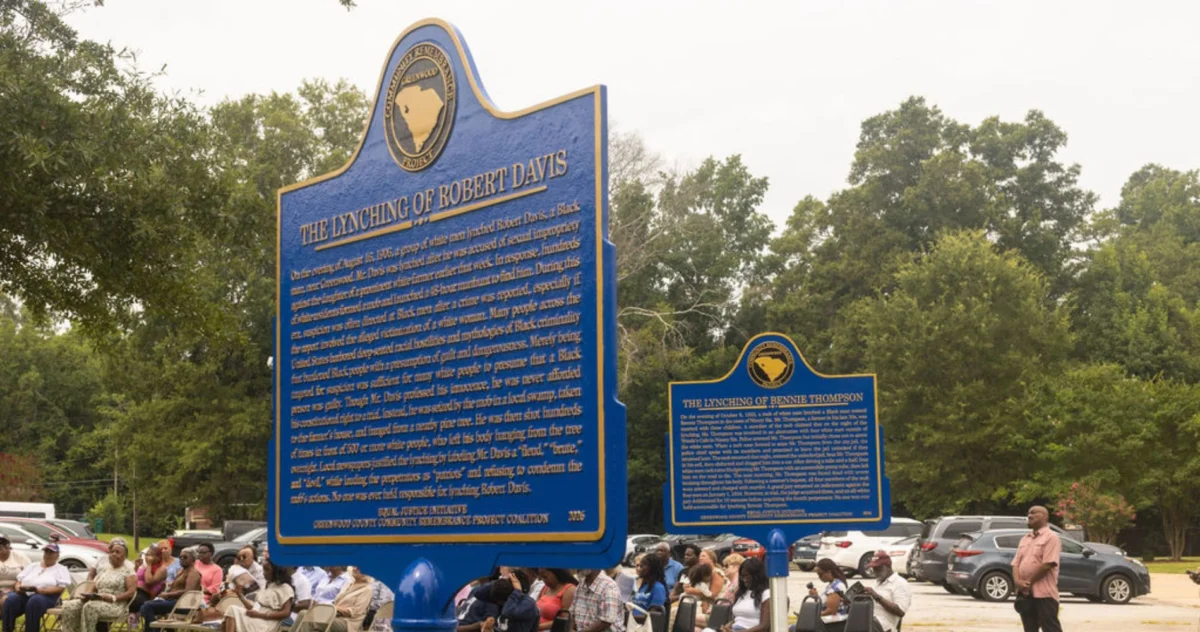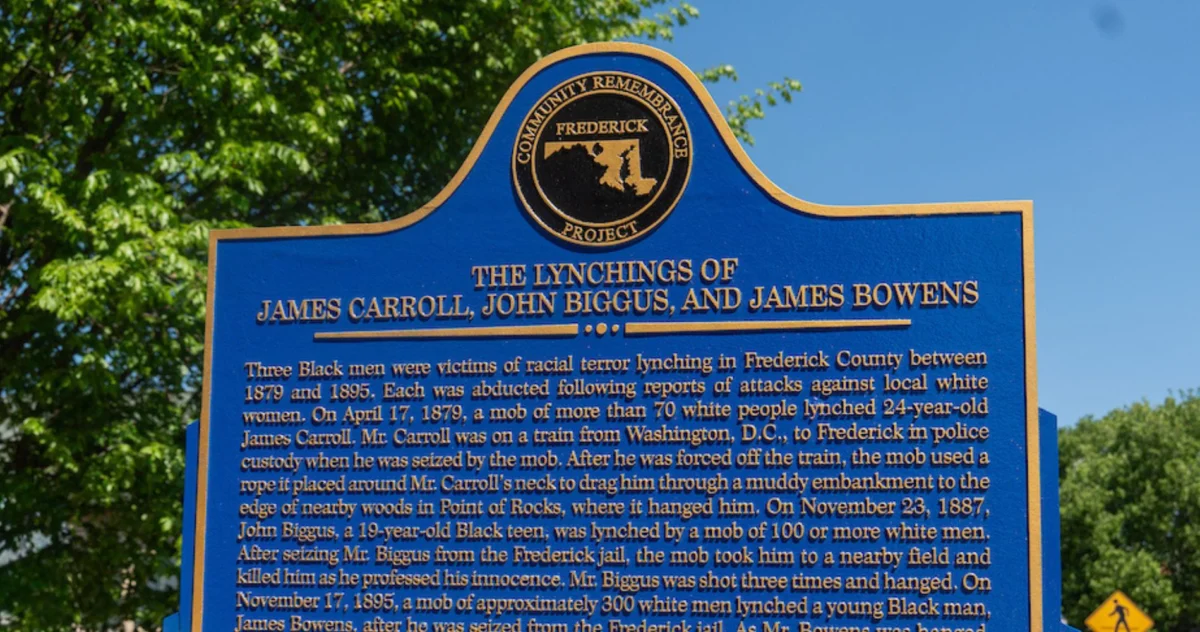
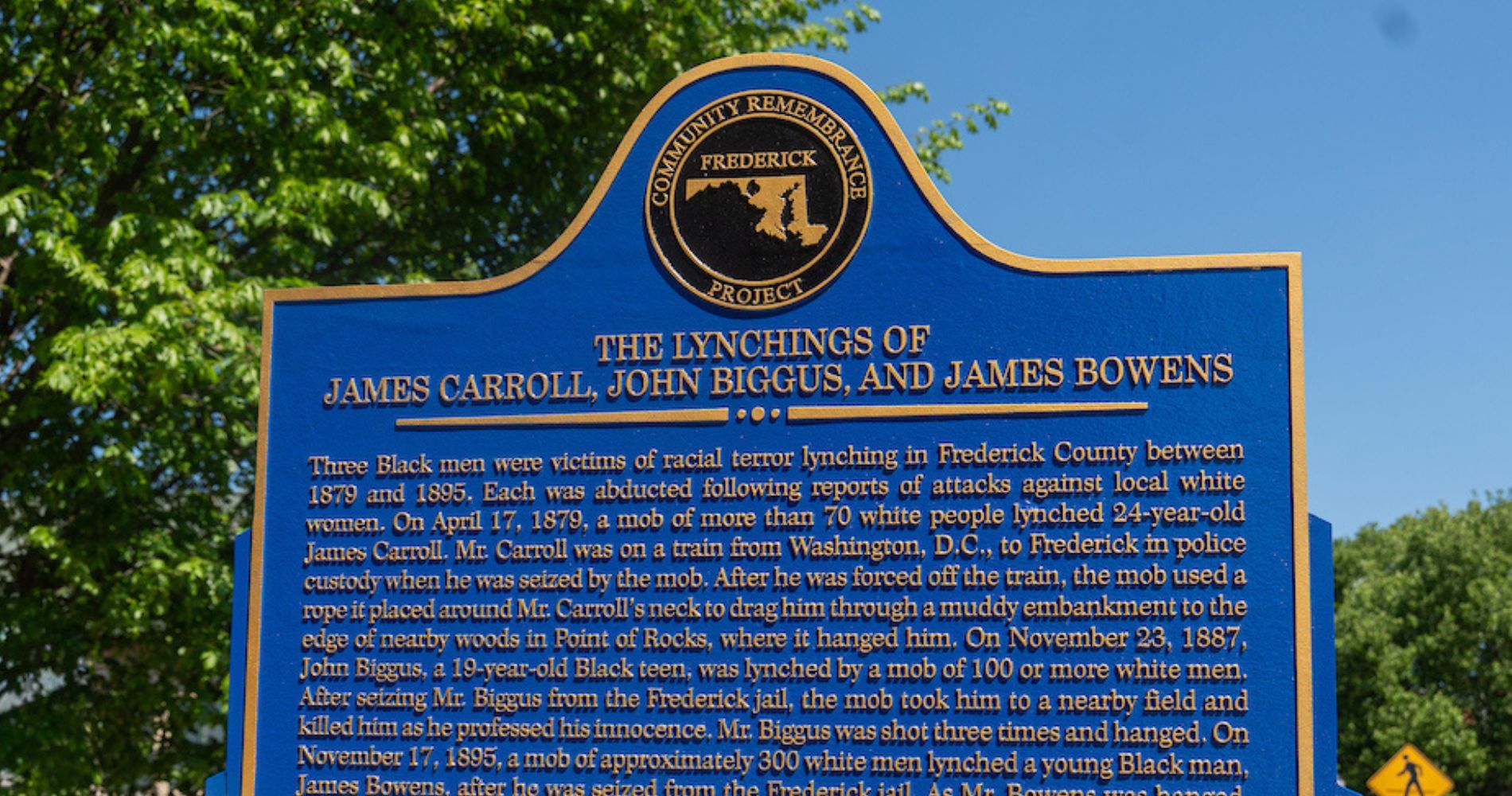
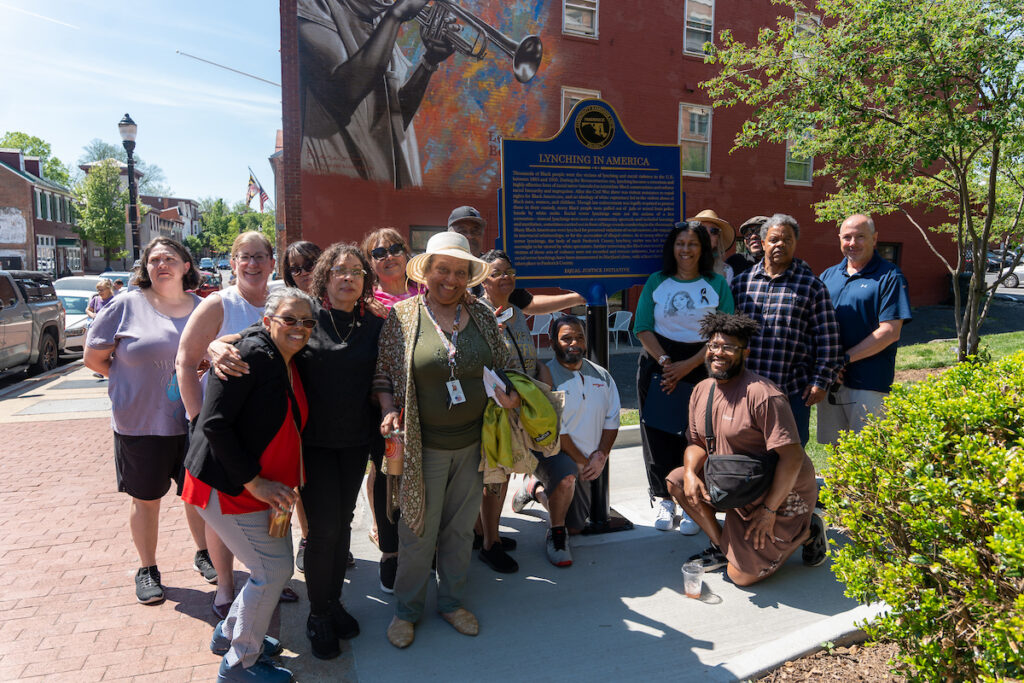
In a powerful act of remembrance and a significant step towards racial reconciliation, community leaders and descendants, in collaboration with the Equal Justice Initiative (EJI), dedicated a historical marker in Frederick County, Maryland, on April 18, 2026, to memorialize lynching victims James Carroll, John Biggus, and James Bowens. This solemn ceremony, facilitated by the Frederick Remembrance Memorial Coalition, unfolded on historic South Market Street, adjacent to Carroll Creek in downtown Frederick, drawing together local officials, families of the victims, and concerned citizens determined to confront the enduring legacy of racial terror. The event served as a poignant reminder of a brutal chapter in American history, acknowledging the systemic violence against Black Americans and fostering a public commitment to truth and justice.
A Day of Remembrance and Reckoning in Frederick
The dedication ceremony commenced with a clear and resolute purpose, articulated by organizer Tina Allen, who underscored the profound importance of memorializing these victims and actively confronting the dark shadow of racial terror. "Today, we are here to honor the lynching victims James Carroll, John Biggus, and James Bowens," Allen declared, setting the tone for an event imbued with both sorrow and resolve. The gathering was a testament to the growing national movement, spearheaded by EJI’s Community Remembrance Project, to place historical narrative markers at sites of racial terror lynchings, thereby ensuring that these histories are neither forgotten nor suppressed. Across Maryland, numerous counties have partnered with EJI, engaging in similar initiatives to bring these often-silenced stories into the public consciousness.
The Rev. Ernest Thomas led an opening prayer, invoking strength for the county "to confront the legacy of this violence, to speak truth, and to walk humbly towards true racial reconciliation and justice." His words resonated with the core mission of the ceremony: to "honor the lives of all the victims by ensuring this history is not forgotten, and by building a community where all are safe, protected, and treated with dignity." This sentiment echoed throughout the proceedings, highlighting the dual objectives of historical acknowledgement and contemporary societal improvement.
Frederick County Executive Jessica Fitzwater presented the Frederick Remembrance Memorial Coalition with a certificate of recognition, simultaneously issuing a proclamation that officially designated April 18th as Frederick Remembrance Memorial Day in Frederick County. Her remarks emphasized the unique character of Frederick County, observing its modern diversity while acknowledging its painful past. "It is essential that all residents become aware of the painful legacy of racism and discrimination faced by African Americans through openly commemorating, reflecting on, and grieving past injustices," Ms. Fitzwater stated, affirming the county’s commitment to "promote healing and advanced reconciliation for all." This official recognition signifies a crucial shift from historical silence to public acknowledgement, a vital step in the long and complex process of societal healing.
Unveiling the Truth: The Stories of Carroll, Biggus, and Bowens
The heart of the dedication lay in the stories of the men being honored. Jane Weir, a diligent local family history researcher, meticulously recounted the harrowing details of the three lynchings, emphasizing the imperative that their narratives "not be forgotten." "It’s important for the truth to come out and to be taught," she asserted, "not silenced." Her research illuminated the grim realities of racial violence in Frederick County during the late 19th century, a period marked by pervasive white supremacy and the systematic dehumanization of Black individuals.
James Carroll (April 17, 1879): The first of the three men to be memorialized, 24-year-old James Carroll, met his horrific end at the hands of a white mob exceeding 70 individuals. Carroll was in police custody, being transported by train from Washington, D.C., to Frederick, when the mob intercepted the train. He was forcibly removed, a rope tied around his neck, and dragged through a muddy embankment to the edge of the woods in Point of Rocks. There, he was brutally hanged. In a chilling display of barbarity, members of the mob took "souvenirs" from the tree and even a tip of Mr. Carroll’s finger. His lifeless body was left on public display until the following afternoon when the Frederick County coroner and a constable finally cut him down. Despite numerous witnesses to the lynching, a coroner’s jury failed to identify, much less prosecute, any individuals for Mr. Carroll’s murder, a stark illustration of the complicity and impunity that defined this era of racial terror.
John Biggus (November 23, 1887): Eight years later, 19-year-old John Biggus became another victim of mob violence. A mob of 100 or more white people, armed with axes and a rope commandeered from a nearby fire station, stormed the Frederick jail. Ms. Weir detailed how the perpetrators dragged Mr. Biggus from his cell, a rope around his neck, down South Street to a nearby field. Throughout this ordeal, he steadfastly proclaimed his innocence. The mob then hoisted him from the ground using a tree limb, and as he slowly suffocated, he was shot three times. Like Carroll, no one was ever held accountable for Biggus’s murder, further cementing the atmosphere of lawlessness and racial oppression.
James Bowens (November 17, 1895): The cycle of violence continued with James Bowens, a young Black man lynched by a mob of approximately 300 white people. Seized from the Frederick jail, Mr. Bowens was dragged to the very same field where John Biggus had been murdered eight years prior. As Mr. Bowens was hanged, one of his tormentors fired a gunshot into his head. Following the murder, a member of the mob chillingly announced their motive: to "teach men of his class that they must let the white women of Frederick county alone or suffer the consequences." This statement underscores the prevailing narrative of protecting white womanhood as a pretext for racial violence, often based on false accusations. Disturbingly, some individuals photographed Mr. Bowens’s corpse as mementos, and after the coroner cut him down, the rope used to hang him was divided among the mob as "souvenirs," illustrating the depraved celebratory nature of these acts.
The Broader Context of Lynching in America
These three brutal killings in Frederick County are not isolated incidents but rather represent a grim facet of a widespread campaign of racial terror across the United States. Between 1865 and 1950, over 6,500 Black men, women, and children were victims of racial terror lynchings. Following the Civil War and the abolition of slavery, many white Americans, particularly in the South and border states like Maryland, fiercely resisted the prospect of equal rights for Black people. Lynching emerged as the most public, notorious, and effective form of racial terrorism used to enforce a rigid racial hierarchy and suppress Black aspirations for freedom and equality.
A significant portion—nearly 25%—of documented lynchings were ignited by charges of inappropriate behavior between a Black man and a white woman. These accusations, often baseless and characterized simply as "assault," served as a potent catalyst for fatal mob violence, regardless of any actual evidence or due process. The mere insinuation of impropriety was enough to condemn a Black man to a brutal death.
During this era, it was disturbingly common for lynch mobs to seize their victims directly from jails, prisons, courtrooms, or even out of police custody. Despite being armed and officially charged with protecting those in custody, law enforcement almost invariably failed to use force to resist white lynch mobs intent on killing Black people. In many cases, police officials were found to be either complicit or active participants in these lynchings, highlighting the systemic breakdown of justice and the deep-seated racial bias within institutions. The lynching of African Americans was, fundamentally, an act of terrorism—a widely supported campaign designed to enforce racial subordination and segregation. Lynch mobs often subjected victims to extreme violence, mutilating bodies and then leaving them hanging for hours, preventing families from claiming their loved ones. This macabre display served to terrorize the entire Black community, maintaining racial order through the omnipresent threat of violence. James Carroll, John Biggus, and James Bowens are three of at least 34 documented Black victims of racial terror lynching killed in Maryland between 1865 and 1950, underscoring Maryland’s role as a border state grappling with the pervasive racial injustices of the post-Reconstruction era.
EJI’s Community Remembrance Project: A Path to Healing and Reconciliation
The historical marker dedication in Frederick County is an integral component of EJI’s broader Community Remembrance Project, a comprehensive initiative aimed at recognizing the victims of lynching. This project involves collecting soil from lynching sites, erecting historical markers like the one unveiled in Frederick, and developing the Legacy Sites in Montgomery, Alabama, including the National Memorial for Peace and Justice and the Legacy Museum. EJI operates on the fundamental belief that by confronting and reckoning with the truth of racial violence, communities can initiate the necessary conversations that lead to genuine healing and reconciliation. This process, while difficult, is seen as essential for societies to recover from a history of racial injustice and build a more equitable future.
Mia Taylor, a Project Manager at EJI, spoke eloquently about the profound significance of the community uniting to address and confront the devastating damage inflicted by this history. "You are embracing the process of truth, justice, and reconciliation with difficult histories that is essential for us to recover from a history of racial injustice," Taylor told the assembled crowd, affirming the bravery and commitment of the Frederick community.
Official Apologies and the Voices of Descendants
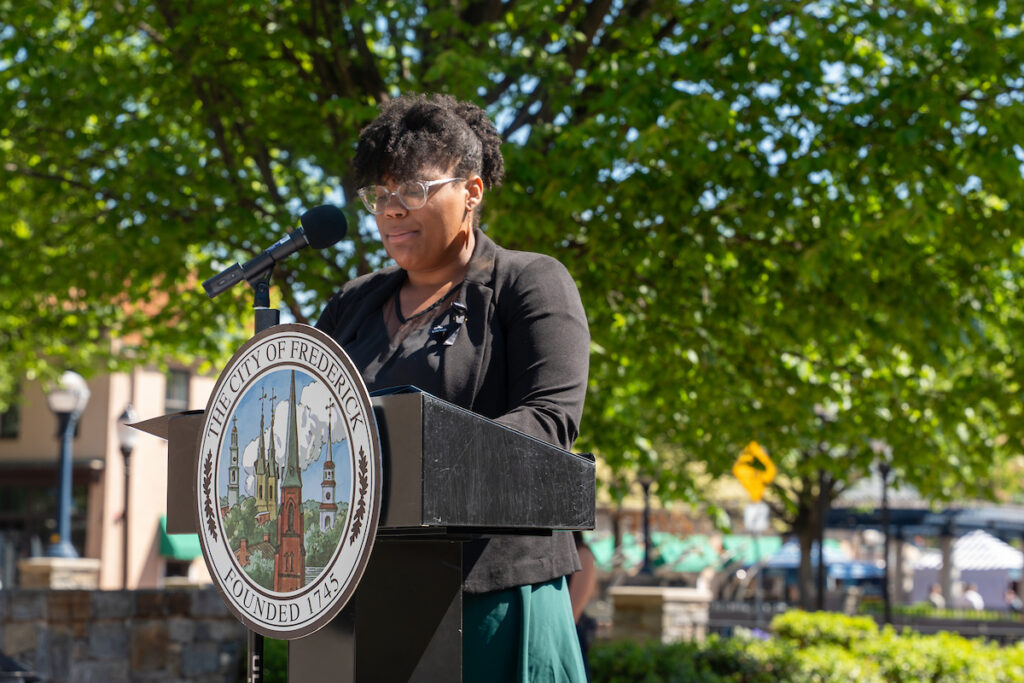
The ceremony reached a deeply emotional peak following Terrence Boyd’s moving rendition of "Total Praise." Mayor Michael O’Connor delivered a heartfelt apology on behalf of the city, acknowledging the "acts and omissions of government officials that contributed to the three racial terror lynchings." This official apology is a rare and significant moment, representing a profound institutional acknowledgment of past wrongdoing and a rejection of historical complicity. "I ask each of us to let this moment guide us, let it deepen our commitment to being a community where truth is not feared, where justice is not delayed, and where every person’s story is honored," Mayor O’Connor urged. "May this place serve as a place of reflection, a place where we remember James Carroll, John Biggus, and James Bowens." Such an apology is not merely symbolic; it lays a foundation for future restorative justice efforts and signals a commitment to ensure such atrocities never recur.
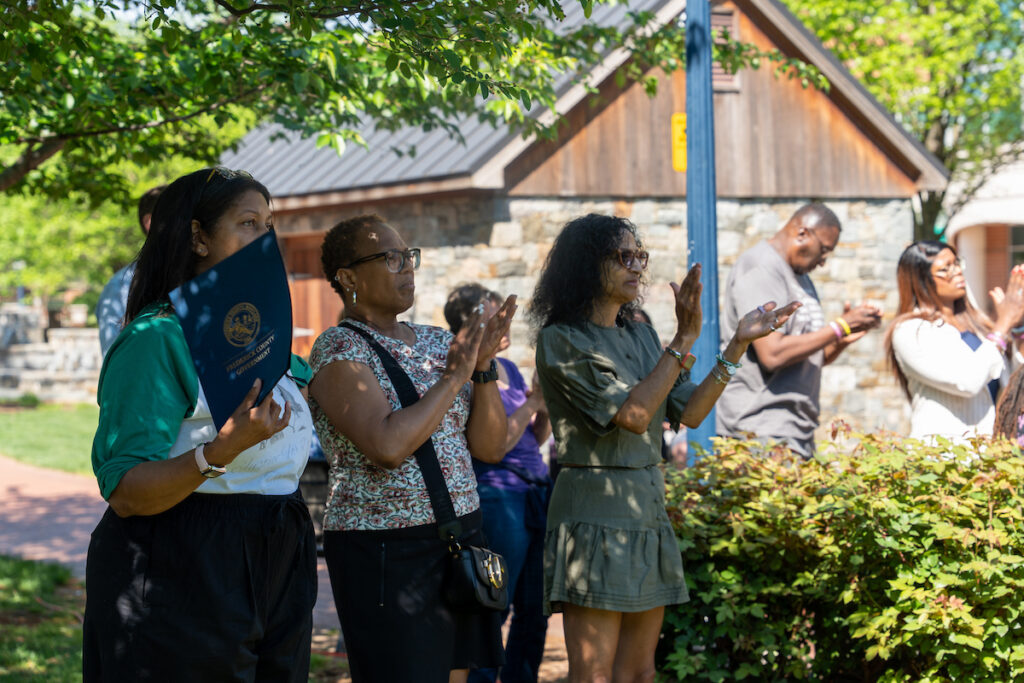
The voices of the descendants provided a crucial human connection to the historical tragedy. Robin Dorsey-Cosley, the grand-niece of victim John Biggus, shared her family’s painful journey of discovering this hidden history and their determined efforts to uncover and share the truth. "We should be able to talk about it," she implored participants, expressing profound gratitude for the community support that made possible "this commemorative moment in honor of the ones whose lives were taken without true justice being served." Her words underscored the generational trauma inflicted by these acts and the enduring need for recognition and validation for the families affected. The act of publicly honoring their ancestors provides a measure of dignity that was denied in life and death.
Looking Forward: The Ongoing Journey
Before the marker was formally unveiled, organizer Tina Allen announced that the historical marker would be formally handed over to the city, signifying a collective ownership of this history and its preservation. However, she emphasized that this event was far from a conclusion. "The Frederick Remembrance Memorial Coalition will continue its work," Allen declared. "This is just the beginning." Her statement serves as a powerful reminder that historical remembrance is not a singular event but an ongoing process—a continuous commitment to education, advocacy, and the pursuit of a more just society.
The dedication of the historical marker in Frederick County is more than just the placement of a plaque; it is a public declaration of truth, a profound act of civic courage, and a tangible step in the arduous journey toward racial healing and reconciliation. It compels the community to confront its past, learn from its injustices, and commit to building a future where dignity, safety, and justice are guaranteed for all its residents, ensuring that the lives of James Carroll, John Biggus, and James Bowens are remembered not just for their tragic end, but for the powerful lessons they impart.