Gerry Boyle, a seasoned professional with a background in international development and business, has officially concluded his six-year tenure as a Trustee for the Equality Trust, marking the end of a pivotal era for the organization. Having served two consecutive three-year terms—the maximum duration permitted under the Trust’s constitution—Boyle’s departure comes at a time when the United Kingdom faces profound socio-economic challenges. His tenure, spanning from 2020 to 2026, coincided with some of the most volatile periods in modern British history, including the aftermath of the global pandemic, a persistent cost-of-living crisis, and significant shifts in the international aid landscape.
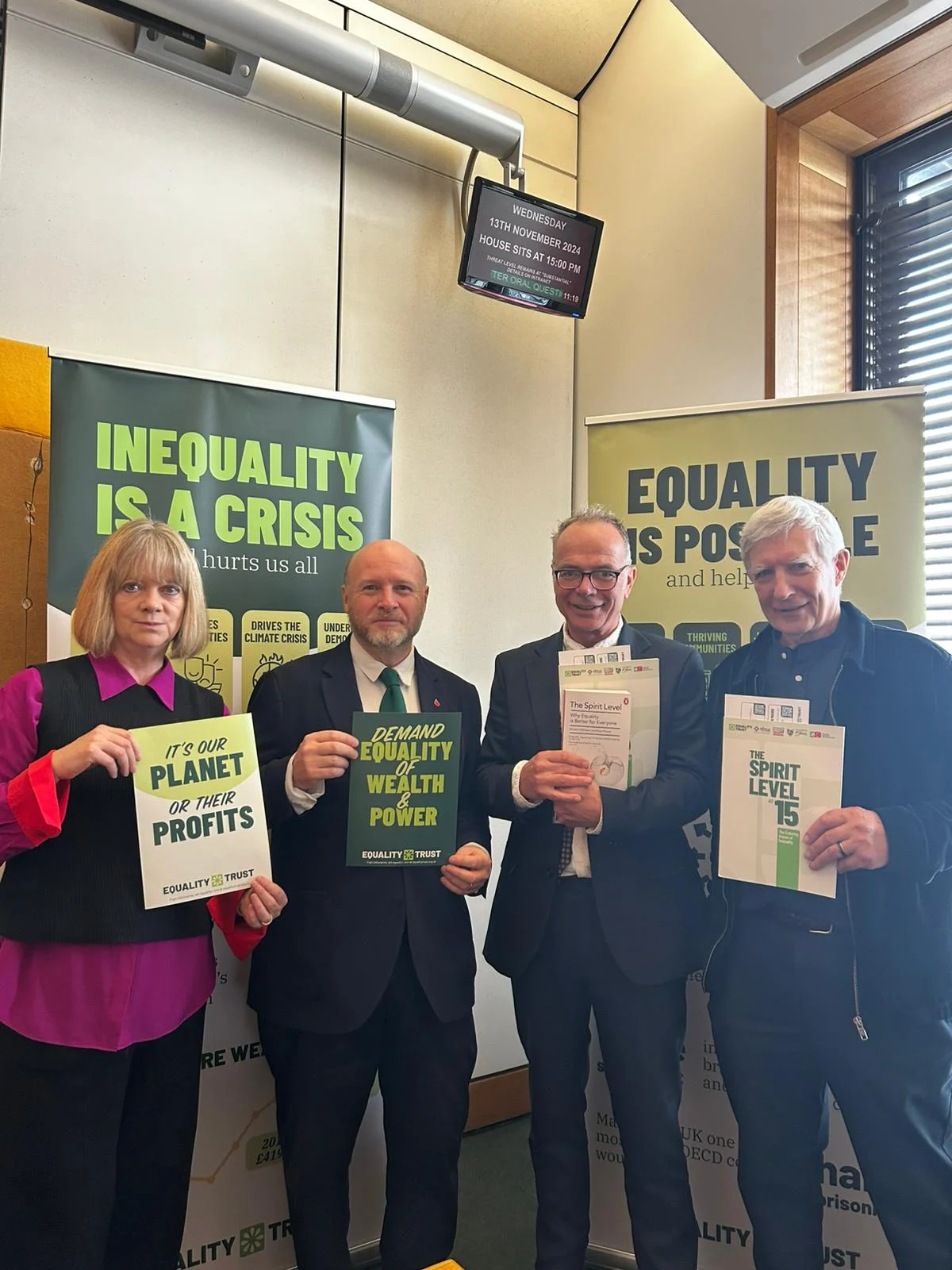
Boyle was originally recruited to the board due to his extensive experience in project management and international development, providing a strategic counterweight to the academic and grassroots campaigning expertise of other board members. His involvement was deeply rooted in the philosophical framework provided by The Spirit Level, the seminal work by Richard Wilkinson and Kate Pickett. The book, which serves as the intellectual foundation for the Equality Trust, posits that societies with high levels of income inequality experience worse outcomes across a spectrum of social indicators, including physical health, mental wellbeing, education, and crime rates.
A Legacy of Governance and Advocacy
Throughout his six years on the board, Boyle was instrumental in navigating the internal and external complexities of the organization. He joined at a time when the Equality Trust was intensifying its efforts to bridge the gap between academic research and practical policy advocacy. His transition from the "hands-on" nature of project management to the "hands-off" oversight required of a charity trustee represented a significant professional evolution. Despite the challenges of governance, Boyle’s contributions to the finance committee proved vital during a period of extreme fiscal uncertainty for the non-profit sector.
The Equality Trust has long maintained a diverse board, integrating lived experience with professional expertise in law, finance, and academia. Boyle noted that this diversity was a cornerstone of the organization’s resilience. During his tenure, the Trust saw multiple rotations of staff and executive leadership, yet it maintained a consistent focus on its core mission: reducing social and economic inequality in the UK.
The Intellectual Foundation: From Theory to Practice
The core mission of the Equality Trust is predicated on the data-driven conclusion that inequality is not merely a concern for the impoverished but a systemic issue that degrades the quality of life for all citizens. Supporting data from the Office for National Statistics (ONS) and various think tanks during Boyle’s tenure highlighted a widening gap in the UK. As of the mid-2020s, wealth inequality in the UK remains stark, with the richest 1% of households holding significantly more wealth than the bottom 50% combined.
Boyle’s work supported the Trust’s efforts to translate these statistics into actionable policy. One of the primary focuses during his terms was the activation of the Socio-Economic Duty, as outlined in Section 1 of the Equality Act 2010. Although the duty was not initially commenced by the central government, the Equality Trust successfully campaigned for local authorities and devolved administrations to adopt it voluntarily. This duty requires public bodies to consider how their decisions can reduce the inequalities of outcome resulting from socio-economic disadvantage.
Navigating a Volatile Economic Chronology (2020–2026)
The timeline of Boyle’s service reflects the broader economic pressures facing the United Kingdom.
- 2020–2021: The Pandemic and Immediate Response. Boyle joined the board just as the COVID-19 pandemic began to expose the deep-seated inequalities in health and housing. The Trust focused on ensuring that the recovery process did not further marginalize low-income communities.
- 2022–2023: The Cost-of-Living Crisis. As inflation surged, the Trust pivoted to highlight how the rising costs of energy and food disproportionately affected the poorest households, advocating for systemic changes to the social security net.
- 2024–2026: Funding Shifts and Austerity 2.0. The latter half of Boyle’s tenure was defined by a tightening of the fiscal environment. Continued austerity measures in the UK led to a reduction in public funding for third-sector organizations, while international aid cuts from major global players, including the United States and the United Kingdom, created a vacuum in the funding landscape.
The decision by the UK government to reduce its Official Development Assistance (ODA) from 0.7% to 0.5% of Gross National Income had a ripple effect across the sector. While the Equality Trust focuses on domestic issues, the contraction of global aid budgets increased competition for domestic grants, making the financial sustainability of the organization a primary concern for Boyle and the finance committee.
The Funding Crisis: A Shift from Institutional to Individual Support
One of the most significant challenges identified by Boyle during his time on the finance committee was the "lumpy" nature of institutional funding. Historically, the Equality Trust, like many medium-sized advocacy groups, relied on a small number of large grants from charitable foundations. While these grants provide substantial capital, they also introduce significant risk; the failure to renew a single major grant can result in a budgetary shortfall that threatens the organization’s operational capacity.
Boyle emphasized the strategic necessity of diversifying income streams. Over the last three years, the Trust has made a concerted effort to increase contributions from individual supporters. This shift is intended to provide "maximum freedom to campaign effectively," as individual donations are often unrestricted, allowing the Trust to respond nimbly to emerging political and social issues without the constraints often attached to institutional grants. However, this transition occurred against the backdrop of a rising cost of living, which has limited the discretionary income of many potential donors.
Major Legislative and Social Milestones
Despite the difficult economic climate, the Equality Trust achieved several key milestones during Boyle’s tenure:
- Advancing the Socio-Economic Duty: The Trust played a central role in a coalition of organizations that pressured local councils to adopt the Socio-Economic Duty. By 2026, a significant number of local authorities in England and Wales had integrated this duty into their decision-making processes.
- Youth Engagement Programs: Recognizing that young people are often at the "sharp end" of inequality—facing higher rates of precarious employment and housing instability—the Trust developed new platforms to amplify the voices of the youth. These programs focused on leadership training and advocacy skills for those from disadvantaged backgrounds.
- Public Awareness Campaigns: The Trust successfully kept the issue of executive pay and wealth taxation in the public discourse. By highlighting the disparity between CEO pay and average worker wages, the organization contributed to a broader national conversation about fairness and corporate responsibility.
Broader Implications for the UK’s Third Sector
Boyle’s departure and his reflections on the funding environment highlight a broader trend within the UK’s Third Sector. Organizations are increasingly being asked to fill the gaps left by a retreating state, even as their own funding sources become more precarious. The "fragmentation of UK society," as Boyle described it, has placed an immense burden on advocacy groups to provide both a moral compass for policy and a safety net for those affected by inequality.
Analysis of the current landscape suggests that the survival of organizations like the Equality Trust will depend on their ability to build broad-based, grassroots movements. The transition from a grant-dependent model to a supporter-led model is not just a financial necessity but a strategic one, as it fosters a more direct connection between the organization and the public it serves.
Conclusion: The Future of Equality Advocacy
As Gerry Boyle steps down, the Equality Trust remains a vital voice in the fight against systemic disparity. His six-year journey from a motivated supporter to a key figure in the organization’s governance underscores the importance of diverse professional involvement in social justice movements. Boyle’s experience serves as a testament to the fact that while the fight against inequality is becoming more difficult due to economic and political headwinds, the necessity of such work has never been greater.
The Trust now faces the task of finding a successor who can build upon the financial and strategic foundations laid during Boyle’s tenure. With inequality continuing to sit at the heart of the UK’s most pressing social issues—from the housing crisis to healthcare disparities—the Equality Trust’s mission remains as relevant today as it was when The Spirit Level first ignited a global conversation nearly two decades ago. The organization continues to call for public support, emphasizing that the struggle for a more equal society is a collective endeavor that requires both intellectual rigor and sustained financial commitment from the public.