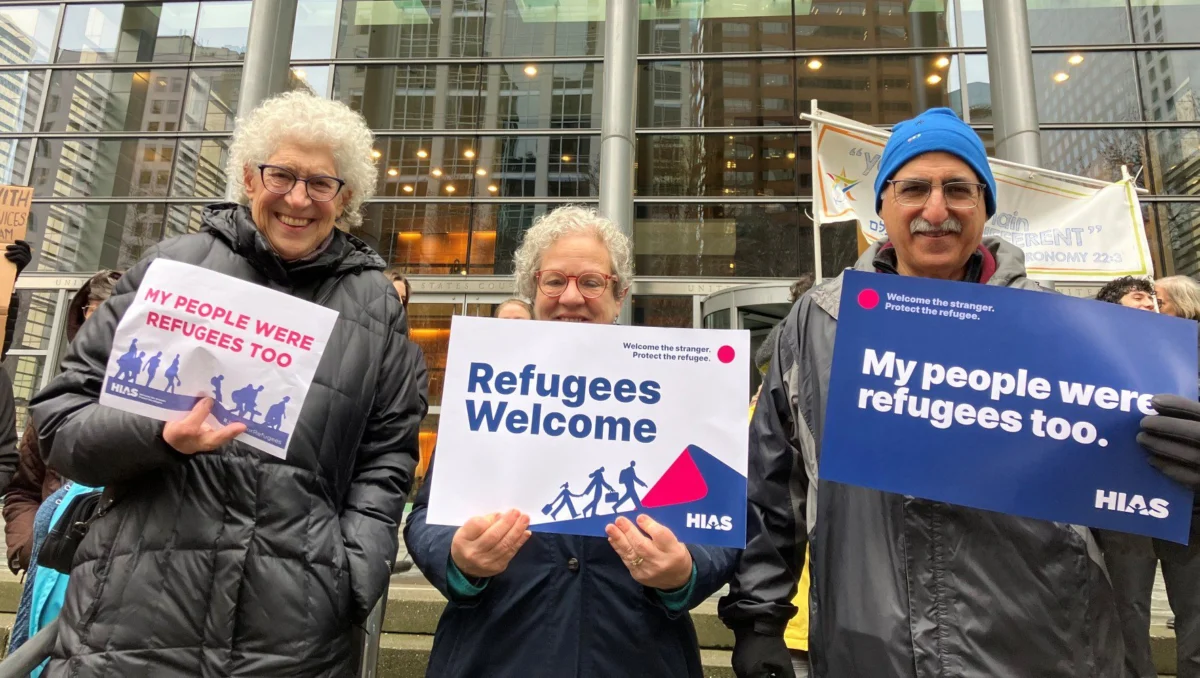
The Supreme Court of the United States is poised to hear arguments in the pivotal case of Trump v. Barbara, a legal challenge directly confronting President Trump’s executive order aimed at revoking birthright citizenship. This landmark case, scheduled for oral arguments on April 1, 2026, carries profound implications for the nation’s immigration policies, its historical identity, and the lives of countless individuals and families. HIAS, a global Jewish refugee and resettlement agency, has joined forces with 57 other faith-based organizations, representing a diverse spectrum of religious communities including Catholics, Protestants, Muslims, Hindus, and Jews, to submit an amicus brief. This collaborative effort underscores the deep moral and ethical concerns surrounding the potential dismantling of birthright citizenship, highlighting its significance to various faith traditions and immigrant communities.
Understanding Birthright Citizenship: A Foundational Principle
Birthright citizenship, recognized internationally as jus soli or "right of the soil," is the legal principle that grants citizenship to any individual born within the territorial boundaries of a nation. This contrasts with jus sanguinis, or "right of blood," where citizenship is primarily determined by the nationality of one’s parents. Globally, slightly over three dozen countries embrace the jus soli principle. Its widespread adoption serves multiple crucial functions: it provides a clear and unequivocal legal status for children born within a country, proactively prevents statelessness—a condition that can render individuals devoid of any legal protections or rights—and fosters greater social cohesion by encouraging the integration of newcomers and their descendants into the fabric of society.
The Constitutional Bedrock of Birthright Citizenship in the United States
In the United States, birthright citizenship is not merely a matter of policy but a fundamental right enshrined in the 14th Amendment of the Constitution. Ratified in the aftermath of the Civil War, this amendment was initially conceived as a vital safeguard to ensure that newly freed African Americans were recognized as full citizens, thereby guaranteeing their rights and protections under the law. Since its inception, this constitutional guarantee has been consistently applied, ensuring that virtually every child born on American soil automatically receives citizenship, irrespective of their parents’ immigration status. This enduring principle has been instrumental in shaping the American narrative as a nation of immigrants, providing a stable foundation for generations of families who have journeyed from diverse corners of the globe—from Ireland and Russia to Japan, Vietnam, and Afghanistan—to establish permanent homes, contribute to the nation’s economic and cultural dynamism, and enrich its celebrated diversity. The uninterrupted application of this principle over more than a century has cemented America’s reputation as a beacon of opportunity and a welcoming land for those seeking a better life.
The Genesis of Trump v. Barbara: A Direct Challenge to the Status Quo
The legal battle that has culminated in Trump v. Barbara was directly precipitated by an executive action taken by the Trump Administration on its inaugural day in office. This action represented a stark and, according to its opponents, unconstitutional attempt to eliminate birthright citizenship through executive order. This legal challenge stands as one of the most significant and far-reaching judicial contests against the administration’s broader immigration agenda. The swiftness with which the executive order was issued and the magnitude of its potential impact have galvanized legal experts, civil rights organizations, and faith-based communities alike, positioning the case at the forefront of national discourse on immigration and citizenship.
The Stakes in Trump v. Barbara: Reshaping America’s Identity
The Supreme Court’s deliberation in Trump v. Barbara is anticipated to occur on April 1, 2026, with the Court’s eventual decision holding immense weight. The outcome will determine whether the constitutional right to birthright citizenship is upheld or whether it undergoes a fundamental redefinition, potentially altering America’s historical commitment to welcoming immigrants and its foundational principles. A ruling in favor of the executive order could trigger immediate and significant repercussions for non-citizen families residing in the United States, creating widespread uncertainty and potentially impacting millions. The implications extend beyond legal technicalities, touching upon the very essence of American identity and its role as a global symbol of refuge and opportunity.
The Peril of Statelessness: A Global Perspective
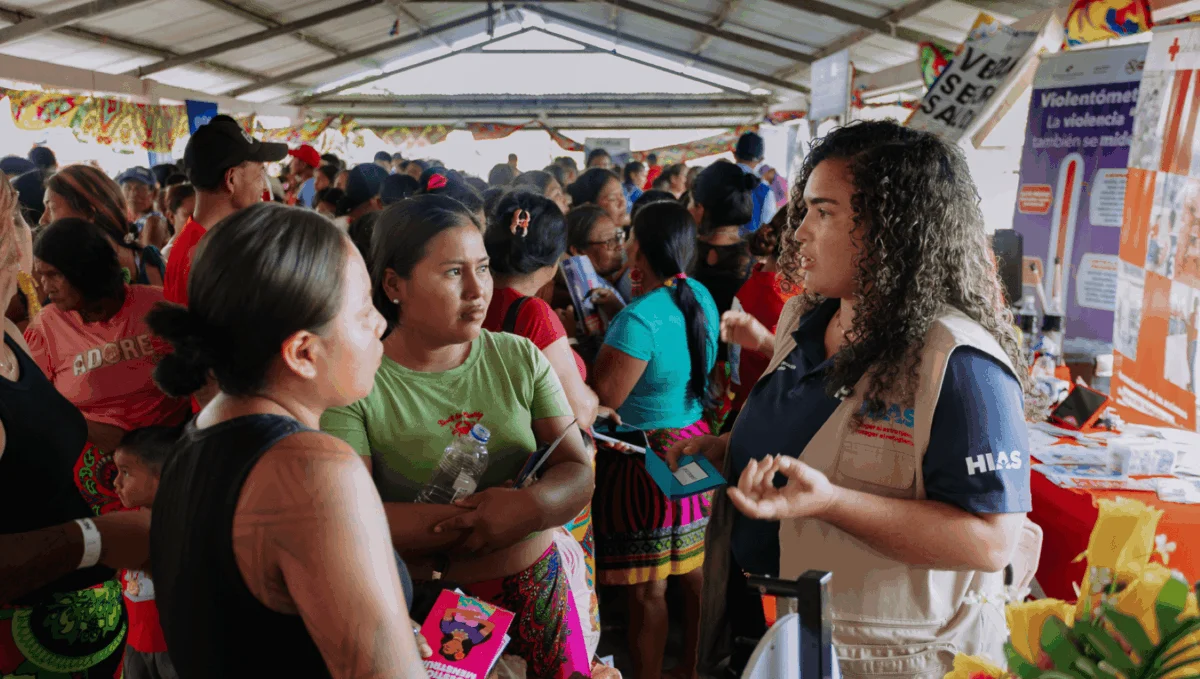
The concept of citizenship is universally determined by each nation’s sovereign laws. While some countries adhere to jus soli, others prioritize jus sanguinis. The divergence in these approaches can, in certain circumstances, create legal lacunae, leaving individuals in a precarious state of statelessness. Statelessness is a severe global challenge, affecting an estimated 4.4 million people worldwide, according to the UNHCR. Individuals who are stateless often lack any form of legal documentation, rendering them invisible to state authorities and consequently denying them access to fundamental human rights and essential services. These deprivations can include the right to education, healthcare, employment, adequate housing, and the ability to marry legally. HIAS, through its extensive global operations, has direct experience working with individuals and communities in both birthright citizenship countries and those that do not recognize this principle. This firsthand exposure provides a stark understanding of the devastating consequences of statelessness and reinforces the importance of clear legal frameworks for citizenship. HIAS’s work across the globe focuses on providing critical legal services, mental health support, and other protective measures to vulnerable populations, including refugees and stateless individuals, underscoring the organization’s commitment to ensuring legal status and dignity for all.
Mobilizing for Birthright Citizenship: A Call to Action
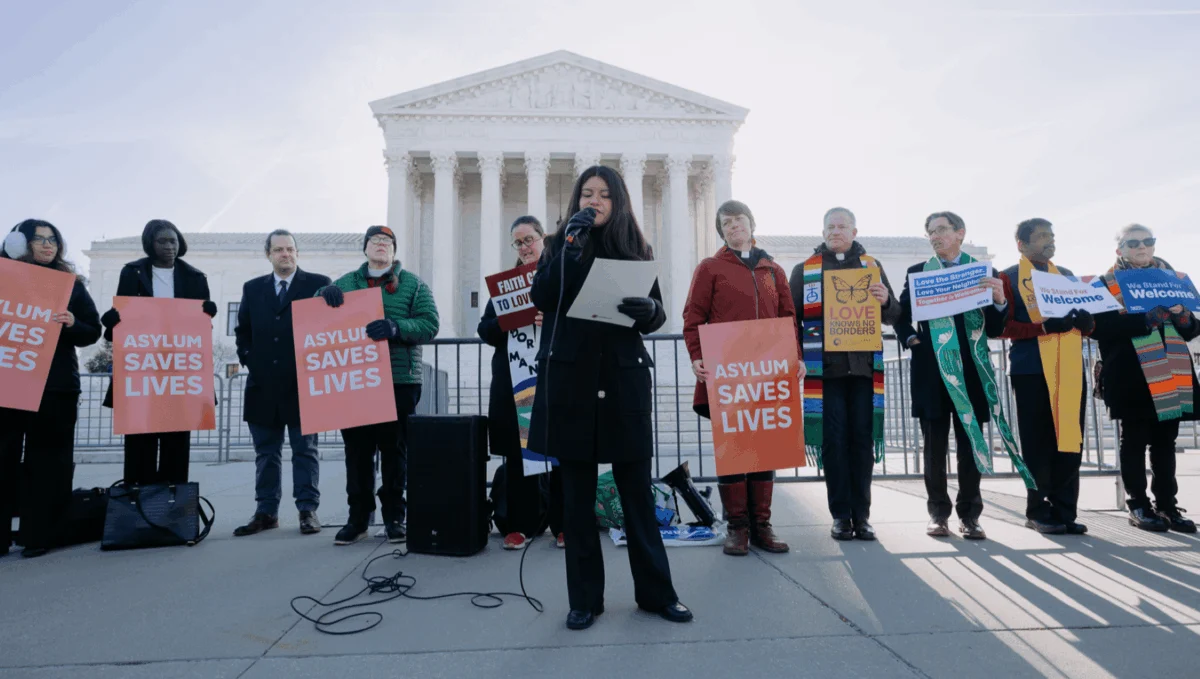
In anticipation of the Supreme Court’s proceedings, HIAS, in solidarity with the ACLU and the other 57 faith-based organizations that co-signed the amicus brief, is organizing a rally outside the Supreme Court building. This public demonstration, scheduled for 10 a.m. on April 1, aims to galvanize public support and demonstrate the broad coalition of individuals and groups who stand firmly in defense of birthright citizenship. The event serves as a crucial opportunity for citizens to voice their commitment to the principle that has long been a cornerstone of American society and a vital component of its welcoming ethos.
The Supreme Court’s decision in Trump v. Barbara is not expected for several months. During this period of deliberation, HIAS is providing resources and opportunities for individuals and communities to actively support immigrant neighbors. In a climate where refugees and immigrants frequently face heightened scrutiny and challenges, these resources offer practical pathways for engagement, empowering people to take concrete steps to protect and advocate for immigrant communities within the United States. These initiatives underscore a broader commitment to fostering a society where all individuals, regardless of their background, are treated with dignity and respect, and where the foundational principles of justice and equality are upheld. The ongoing legal proceedings serve as a critical reminder of the enduring importance of civic engagement and advocacy in shaping the future of American immigration policy and its deeply held values.