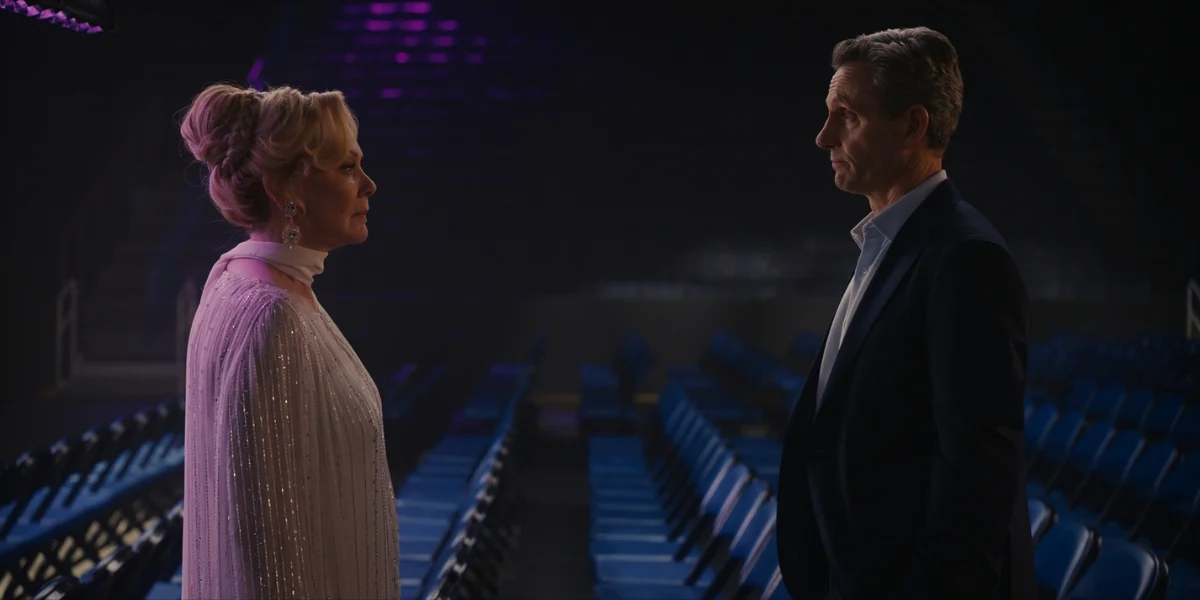
The penultimate episode of the third season of the Max original series Hacks serves as a critical juncture for protagonist Deborah Vance, framing her professional resurgence against a backdrop of corporate interference and the encroaching influence of technological automation. As the series approaches its finale, the narrative shifts focus from the internal creative struggles of Vance and her writer, Ava Daniels, to a broader external conflict involving industry power dynamics and the dehumanization of service and art. This episode, which centers on the cancellation of a high-profile Madison Square Garden (MSG) performance and a subsequent pivot to a public event in Central Park, highlights a recurring thematic tension: the value of human-centric interaction versus the efficiency of digital optimization.
The Conflict with Bob Lipka and the Madison Square Garden Cancellation
The primary narrative driver of the episode is the tactical sabotage orchestrated by Bob Lipka, a billionaire media mogul who has emerged as the season’s central antagonist. Lipka, who represents the consolidation of media power and the prioritization of profit margins over creative integrity, executes a hostile buyout of Vance’s scheduled performance at Madison Square Garden. This maneuver is not merely a financial transaction but a targeted effort to silence Vance following her disparaging public remarks regarding Lipka’s management of the late-night television landscape.
Lipka presents Vance with a coercive ultimatum: sign a restrictive non-disclosure agreement (NDA) that would permanently bar her from criticizing him or his network, or face the systematic dismantling of her career comeback. This conflict mirrors real-world entertainment industry dynamics where "reputation management" and legal gag orders are frequently used by corporate entities to mitigate brand damage. In this context, Vance’s refusal to sign the NDA is framed as a rejection of "optimization"—the process of smoothing over friction at the expense of authenticity.
Chronology of the Central Park Pivot
Following the loss of the MSG venue, Vance and her management team are forced to execute an alternative strategy within a 72-hour window. The chronology of this pivot serves to demonstrate the efficacy of traditional interpersonal networking over automated or bureaucratic systems.
- The Crisis (Day 1): Vance learns of the MSG buyout and the NDA requirement. After a brief period of deliberation, she rejects the offer, choosing professional autonomy over corporate security.
- The Alternative Strategy (Day 1-2): The team, led by Jimmy Lupert and Kayla, identifies Central Park as a viable, albeit logistically challenging, alternative. The goal is to transition from a ticketed arena show to a massive, free public event to maintain Vance’s momentum and public relevance.
- The Permitting Hurdle (Day 2): The team encounters significant bureaucratic resistance from the New York City Department of Parks and Recreation. Traditional channels of communication prove ineffective, as the department remains steadfast in its refusal to grant emergency permits for an event of such scale.
- The Resolution (Day 3): The impasse is resolved through a specific human connection. By identifying a personal interest of a key Parks and Rec official—specifically a niche rewatch podcast hosted by Renee O’Connor and produced by Jimmy—the team leverages a shared cultural affinity to bypass bureaucratic red tape.
- The Execution (Night 3): The event culminates in a "stripped-down" performance, utilizing minimal technological intervention and focusing on the fundamental relationship between the comic and the audience.
Technological Skepticism and the "QR Codification" of Service
A significant portion of the episode is dedicated to Vance’s critique of modern service technology, specifically the ubiquity of QR codes in hospitality. While the pandemic accelerated the adoption of contactless technology, with some industry reports suggesting a 750% increase in QR code usage between 2020 and 2023, the episode posits that this "optimization" often serves the interests of management rather than the consumer or the labor force.
Vance’s disdain for QR-code-based room service reflects a broader sociological concern regarding the "loneliness epidemic" and the erosion of mundane human interactions. The script suggests that replacing a phone call to a human operator with a digital interface allows corporations to reduce headcount and increase profit margins, but it simultaneously increases the anxiety associated with direct communication. Data from various public health studies indicates a rising trend in social anxiety among younger demographics, a phenomenon the episode links to the systematic removal of "low-stakes" human interfacing in daily life.
This thematic thread connects to previous episodes in the season, which have critiqued other forms of "convenience-driven" technology, including autonomous vehicles (Waymo) and generative artificial intelligence (AI). By framing these technologies as "shortcuts," Hacks argues that the creative process and the human experience are inherently "inconvenient" and that attempting to streamline them results in a "flattening" of culture.
The Return of "Weed" and the Logistics of Human Labor
The episode also features the return of Laurie Metcalf as "Weed," Vance’s former tour manager. Her reappearance serves as a narrative counterpoint to the theme of automation. Weed’s character represents the chaotic, often absurd, but ultimately essential nature of human logistics. Her monologue regarding her firing and subsequent professional evolution underscores the idea that interpersonal conflict and "human friction" are often catalysts for growth—something that an optimized, algorithmic system cannot replicate.
The successful organization of the Central Park show is depicted as a triumph of "hustle" and collective human effort. Unlike the MSG show, which was a product of high-level corporate booking, the Central Park event requires the team to navigate physical obstacles, personal favors, and manual labor. This shift from the "shiny new thing" to a "stage and a mic" approach suggests that the longevity of a creative career depends on the ability to return to foundational, analog methods when the digital or corporate infrastructure fails.
Broader Implications and Fact-Based Analysis
The narrative choices in this episode of Hacks reflect current anxieties within the global entertainment industry. The 2023 strikes by the Writers Guild of America (WGA) and SAG-AFTRA were largely predicated on the threat of AI and the "optimization" of the creative process by streaming platforms. By positioning Bob Lipka as a villain who views art through the lens of metrics and silencing, the show offers a critique of the "algorithmic era" of television.
Furthermore, the episode’s focus on the "scenic route" versus the "easy route" provides a commentary on the nature of modern success. In an era where "virality" is often engineered through technological stunts, Vance’s success in Central Park is portrayed as an earned achievement resulting from decades of craft and a refusal to be "flattened" by corporate interests.
From a logistical perspective, the episode highlights the complexities of public space usage in New York City. The NYC Department of Parks and Recreation manages over 30,000 acres of land and handles thousands of permit applications annually. The portrayal of the permit process, while dramatized, touches on the reality of how cultural events are often gatekept by administrative hurdles, and how "who you know" remains a more powerful currency than "what you click."
Conclusion of the Penultimate Arc
As Hacks moves toward its series finale, the penultimate episode establishes a clear ideological divide. On one side is the world of Bob Lipka: optimized, silent, digital, and controlled. On the other is the world of Deborah Vance: inconvenient, loud, analog, and unpredictable. The pivot to Central Park is not just a change of venue; it is a reclamation of the "old-school" ways of doing things that the show argues are essential for the survival of both art and human connection.
The episode concludes by suggesting that while technology offers shortcuts, those shortcuts often come at the cost of the very experiences that make life and art meaningful. By embracing the "inconvenience" of a free public show and the "friction" of direct human interaction, Vance positions herself not as a relic of the past, but as a necessary antidote to a hyper-optimized future. The stage is now set for a finale that will likely determine whether this human-centric approach can truly withstand the overwhelming pressure of the modern media industrial complex.