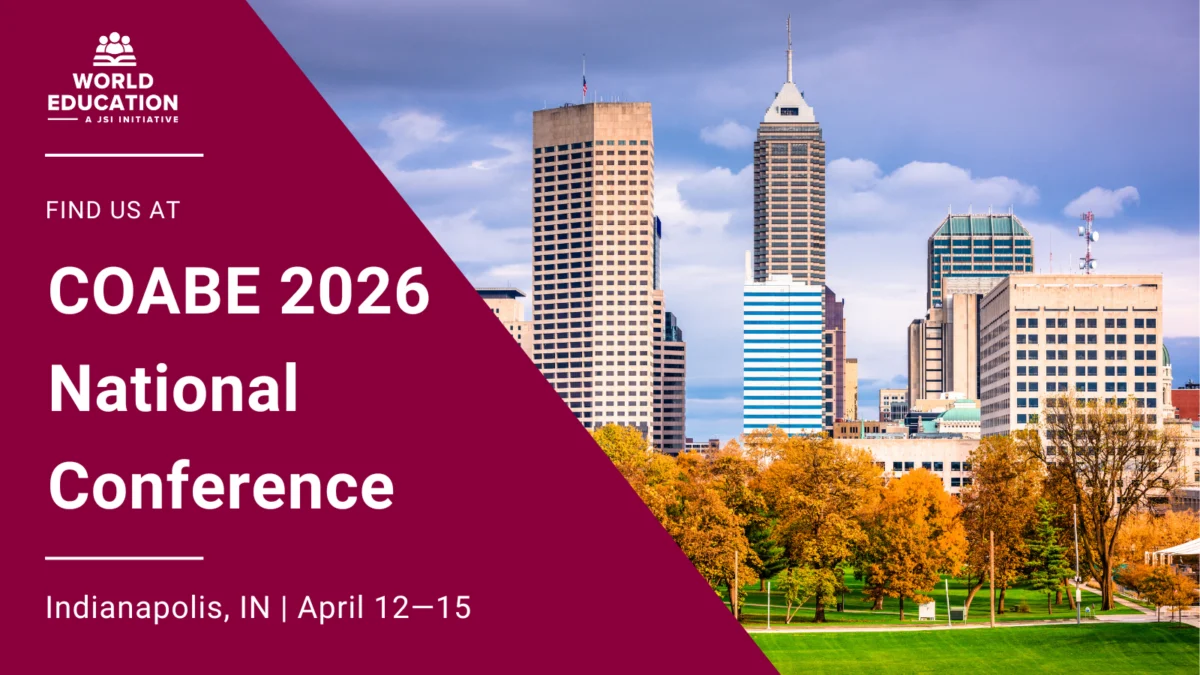
World Education, a division of the global health and education nonprofit JSI, has announced its comprehensive participation in the Commission on Adult Basic Education (COABE) 2026 National Conference. Scheduled to take place in Indianapolis, Indiana, from April 12 to April 15, 2026, the conference serves as the premier gathering for adult education practitioners, administrators, and researchers in the United States. World Education’s presence at the event underscores its ongoing commitment to bridging the digital divide and integrating cutting-edge technologies, such as Generative Artificial Intelligence (AI), into adult learning environments. Over the course of the four-day event, the organization will lead a series of workshops and presentations designed to address the evolving needs of adult learners in an increasingly digitized global economy.
The COABE National Conference is recognized as a critical nexus for the adult education sector, typically drawing thousands of attendees from across the country. As the workforce undergoes rapid transformation due to automation and digital integration, the 2026 conference aims to provide educators with the tools necessary to prepare students for the modern labor market. World Education’s contributions will focus on practical, research-backed strategies for digital literacy, professional development, and the ethical implementation of AI. By sharing insights gleaned from regional initiatives and national research networks, the organization seeks to empower educators to create more accessible and effective learning pathways for the millions of adults currently seeking to improve their literacy and vocational skills.
The Evolution of Adult Education and the Digital Imperative
The context for World Education’s participation at COABE 2026 is rooted in a significant shift within the adult basic education (ABE) landscape. According to recent data from the National Center for Education Statistics, approximately 21% of adults in the United States possess low English literacy skills, and the digital gap remains a primary barrier to economic mobility. As industries move toward "Industry 4.0" standards, the definition of literacy has expanded to include digital fluency and the ability to navigate AI-driven environments.
World Education has historically been at the forefront of this transition. Through its partnership with JSI, the organization leverages global expertise in systems strengthening to enhance domestic educational frameworks. The 2026 conference presentation schedule reflects a strategic focus on three core pillars: standardizing digital skill development, translating research into classroom practice, and leveraging emerging technologies to fill resource gaps.
Chronology of Presentations: April 13, 2026
The first full day of programming for World Education begins on Monday, April 13, with a focus on foundational digital skills and policy implementation. At 8:00 AM, Jeff Goumas will lead a session titled "Using BRIDGES Skills Checklists to Drive Digital Skills Development in Any Context." This session, available both in-person at the JW Grand Ballroom 2 and virtually, introduces a standardized framework for assessing and developing digital competencies. The BRIDGES checklists are designed to be adaptable, allowing educators in diverse settings—from rural community centers to urban vocational schools—to track student progress with precision.
Later that morning, at 11:50 AM, Sandy Goodman and Catalina González will present "From Policy to Practice: Implementation Lessons from Boston’s Digital Literacy Initiative." This session in the JW Grand Ballroom 4 will provide a case study on how municipal policy can drive educational outcomes. The Boston initiative has been widely cited as a model for city-wide digital inclusion, and the presenters will discuss the challenges and successes of scaling such programs in a metropolitan environment.
The afternoon session at 3:50 PM, "Practical Solutions from Research: Digital Tools to Support Teaching and Learning from the CREATE Network," brings together a collaborative team including Jen Vanek and Jeff Goumas, alongside representatives from the American Institutes for Research (AIR). This in-person-only session in Room 205 will highlight findings from the CREATE Network, a research-to-practice initiative funded to identify digital tools that significantly improve learning outcomes for adult students. This session is expected to draw interest from administrators looking for evidence-based justifications for technology investments.
Advancing AI Literacy and Open Resources: April 14, 2026
Tuesday, April 14, marks a pivotal shift toward the role of Artificial Intelligence in adult education. At 8:00 AM, Rachel Riggs will present "Aligning AI Literacy with Learning and Work Goals in Adult Ed" in the JW Grand Ballroom 3. As Generative AI becomes a standard tool in the workplace, Riggs will argue that AI literacy is no longer an elective skill but a fundamental requirement for workforce readiness. The session will explore how educators can integrate AI concepts into existing curricula without overwhelming learners or instructors.
The late morning session, "Free and Open Online Literacy Curriculum: Leveraging SkillBlox and ASAP for Adult Readers," features Jen Vanek, Jeff Goumas, and Stephen Sireci from UMass Amherst. Starting at 11:50 AM in the JW Grand Ballroom 4, the presentation focuses on the democratization of educational resources. SkillBlox, a platform developed by World Education’s CrowdED Learning initiative, allows educators to curate and share open educational resources (OER), reducing the financial burden on both programs and students.
The afternoon schedule includes two concurrent sessions at 2:00 PM. In Room 206, Jen Vanek and Jeff Goumas will join Stephanie Cronen and Neha Nanda from AIR for "Practitioner-Friendly Findings: How to Leverage Free Research-based Resources to Teach In-Demand Skills." Simultaneously, in the JW Grand Ballroom 3, Rachel Riggs will present "Generative AI and the EdTech Maker Space: Leveraging GenAI to Fill Learning Resource Gaps." This latter session will demonstrate how AI can be used to rapidly generate high-quality instructional materials, effectively addressing the chronic shortage of specialized content in adult education.
Professional Development and Online Strategy: April 15, 2026
The final day of the conference, Wednesday, April 15, focuses on the sustainability of educational improvements through professional development. At 11:50 AM, Dani Scherer will present "Maximum Impact Professional Development: A Three-Pronged Approach" in Room 209. This session addresses the high turnover rates and limited training budgets often found in the ABE sector, proposing a more efficient model for continuous teacher improvement.
In the afternoon, Eliana Stanislawski will lead two sessions. The first, "EdTech in Action: Structuring a Digital Literacy Learning Series for Adult Educators" at 1:30 PM, provides a blueprint for organizations to train their own staff. The second, "Engaging Strategies for Online Instruction of Literacy-Level Adults" at 3:00 PM in the JW Grand Ballroom 4, tackles one of the most difficult challenges in the field: maintaining engagement and efficacy when teaching foundational literacy skills through a digital screen.
Supporting Data and National Context
The initiatives presented by World Education at COABE 2026 are supported by a growing body of data highlighting the urgency of digital equity. According to the Pew Research Center, roughly 40% of lower-income adults do not have home broadband services or a desktop computer. In the context of adult education, this "device gap" is compounded by a "skills gap." Research from the OECD’s Survey of Adult Skills (PIAAC) indicates that adults with higher digital problem-solving skills earn significantly higher wages and are more likely to be employed in stable industries.
World Education’s focus on "Open Educational Resources" (OER) through SkillBlox is a direct response to the rising cost of traditional textbooks, which can be a prohibitive barrier for adult learners. Furthermore, the emphasis on AI literacy aligns with projections from the World Economic Forum, which estimates that by 2027, over 75% of companies will have adopted AI technologies, necessitating a massive reskilling effort across all sectors of the workforce.
Official Perspectives and Strategic Partnerships
While official statements from the COABE leadership emphasize the collaborative nature of the conference, World Education’s role as a technical leader is widely acknowledged. "Our goal is to ensure that the innovations happening in the tech sector are translated into accessible tools for the adult education classroom," a representative from World Education noted in the lead-up to the event. "By partnering with organizations like AIR and universities like UMass Amherst, we ensure that our strategies are not just innovative, but also grounded in rigorous evidence."
The partnership with JSI further expands World Education’s reach, allowing for a cross-pollination of ideas between international development and domestic education. This systemic approach is reflected in the "Partner with Us" initiative, where World Education offers services ranging from policy development to applied research.
Broader Impact and Implications for the Future
The implications of World Education’s work at COABE 2026 extend beyond the immediate sessions. By standardizing digital skills through the BRIDGES framework and promoting the use of AI in curriculum design, the organization is helping to professionalize the adult education sector. The transition from ad-hoc technology use to a structured, research-based digital pedagogy is essential for the long-term success of ABE programs.
Furthermore, the focus on "Maximum Impact Professional Development" suggests a shift toward more resilient educational systems. As federal and state funding for adult education remains subject to political and economic fluctuations, the ability of programs to leverage free tools (like SkillBlox) and efficient training models will be a key determinant of their survival.
As the 2026 National Conference concludes, the strategies shared by World Education are expected to influence state-level educational policies and classroom practices for years to come. The emphasis on AI and digital literacy serves as a call to action for the broader educational community to embrace technological change as a means of fostering social and economic equity. By providing a roadmap for the integration of technology and literacy, World Education continues to play a vital role in shaping the future of adult education in the United States and beyond.