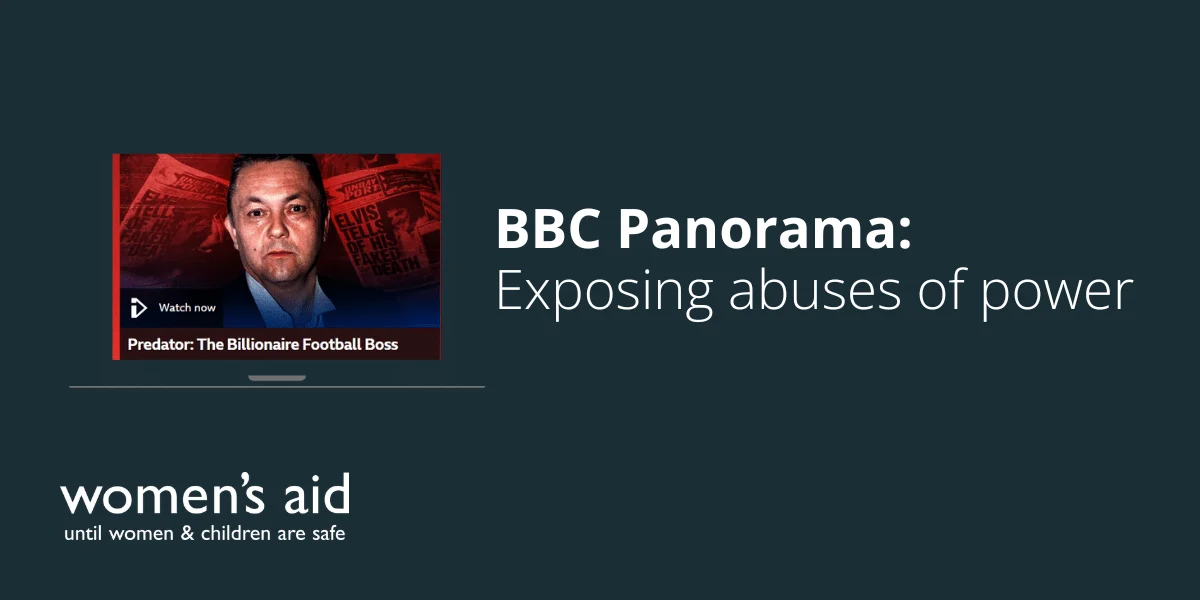
With the World Cup starting on Thursday and millions of people around the world turning their attention to football, now is a crucial moment to ask what values the sport is projecting on its biggest stage. Last night’s BBC Panorama documentary, The Billionaire Football Boss, about David Sullivan, co-chair and director of West Ham United Football Club, raised serious questions about the abuse of power by influential men and the profound barriers women can face when reporting abuse, harassment, and exploitation. The timing of the broadcast, coinciding with one of the most significant global sporting events, amplified its message, placing a spotlight on the ethical governance within football and the broader societal issues of workplace conduct and accountability.
At Women’s Aid, a leading national charity, spokespersons immediately highlighted the documentary’s resonance with the experiences of countless women they support daily. The charity articulated concerns that many victims are reluctant to come forward, often fearing they won’t be believed, will be blamed, or that the person responsible is simply too powerful to challenge. Such fears, Women’s Aid noted, are consistently reinforced when allegations involving influential men are met with denial, inaction, or a perceived lack of serious investigation. The implication is clear: such responses can send a corrosive message that power matters more than truth, and that reporting abuse is not worth the inherent risks. This dangerous narrative, Women’s Aid stressed, is one that must be challenged decisively. Allegations of abuse, sexual misconduct, coercion, or exploitation must be taken seriously, investigated thoroughly, independently, and fairly to foster environments of safety and accountability.
The Panorama Investigation: Unpacking the Allegations
The BBC Panorama documentary, The Billionaire Football Boss, delved into the professional conduct and alleged behaviour of David Sullivan, a prominent figure in English football. The programme reportedly featured testimonies from multiple individuals, raising concerns about a pattern of behaviour spanning several years. While specific details of every allegation were not extensively detailed in the initial public statements, the core thrust of the investigation centred on the alleged misuse of power inherent in Sullivan’s position as a high-ranking club official and wealthy businessman.
The documentary reportedly presented a narrative suggesting a culture where individuals, particularly women, felt vulnerable to inappropriate advances, harassment, or conditions that could be construed as exploitative. The nature of these allegations, according to reports surrounding the broadcast, ranged from verbal harassment and creating uncomfortable working environments to more serious claims of sexual misconduct and coercion. The programme aimed to dissect how Sullivan’s significant influence and financial power within the football world and beyond could allegedly create an environment where complainants felt intimidated, silenced, or unable to pursue formal redress without fear of professional or personal repercussions. The BBC, in its standard practice, would have undertaken extensive journalistic scrutiny, including verification of claims and attempts to secure responses from all parties involved, before airing such a high-profile investigation.
The Figure of David Sullivan
David Sullivan is a long-standing and highly influential figure in British media and football. His career began in publishing, particularly in the adult entertainment industry, before diversifying into property and other ventures. He acquired a significant stake in West Ham United Football Club in 2010, alongside David Gold, and has served as co-chairman and director, making him one of the most visible and powerful owners in the Premier League. His public profile is characterised by a hands-on approach to club management, often engaging directly with fans and media.
Sullivan’s business acumen and wealth have afforded him considerable power and influence, not only within West Ham but also within the broader football ecosystem. His position as a "billionaire football boss" is central to the documentary’s title and premise, highlighting the inherent power differential between him and many of those who might have worked for or interacted with him. This substantial power forms the bedrock of the allegations, as the documentary explored how such influence could potentially be leveraged in ways that cross ethical or legal boundaries, particularly when it comes to workplace conduct and interpersonal relationships. The documentary’s focus was not merely on the allegations themselves, but on the systemic issues that enable such conduct to allegedly persist unchallenged in environments where power is concentrated.
Chronology of Events
Pre-Documentary Period (Leading up to the broadcast): While the BBC’s investigation would have been conducted in secrecy for an extended period, the landscape of professional football, particularly the Premier League, has been under increasing scrutiny regarding governance, workplace culture, and safeguarding. High-profile cases of alleged misconduct in various sports have heightened public awareness and created a climate where media investigations into powerful figures are increasingly expected and supported by advocacy groups. The specific complaints against Sullivan, according to the documentary, appear to have accumulated over time, with individuals reportedly feeling emboldened to come forward as societal attitudes towards reporting abuse shift.
November 16, 2022: Documentary Broadcast: The BBC Panorama documentary, The Billionaire Football Boss, aired on BBC One and became available on BBC iPlayer. The broadcast generated immediate public discussion across social media platforms and traditional news outlets. Its timing, just hours before the commencement of the FIFA World Cup in Qatar, ensured maximum viewership and drew significant attention to the ethical standards of football leadership at a global moment for the sport. The initial reaction focused on the seriousness of the allegations and the call for accountability from influential figures within the game.
Immediate Aftermath (Days following the broadcast): In the hours and days following the broadcast, various stakeholders began to issue statements or respond to media inquiries. Women’s Aid was among the first to react, reiterating its concerns about power imbalances and the challenges faced by victims. West Ham United and representatives for David Sullivan were expected to issue formal responses addressing the claims made in the documentary. The Premier League and The FA, as governing bodies, would also face pressure to comment on the broader implications for the sport’s integrity and safeguarding policies. Media analysis and public debate intensified, focusing on how football institutions handle allegations against their most powerful members.
Statements and Official Responses
Response from David Sullivan and West Ham United: In the wake of the Panorama broadcast, representatives for David Sullivan and West Ham United issued statements addressing the allegations. While the precise wording would vary, a typical response to such serious claims from a high-profile individual and organisation often involves a strong denial of wrongdoing, a refutation of specific claims, and an assertion of commitment to ethical conduct and a safe working environment. Sullivan’s representatives likely stated that he denies the allegations of harassment, exploitation, and misconduct, perhaps characterising them as misrepresentations or unsubstantiated. West Ham United, as a club, would typically emphasize its dedication to maintaining a respectful and inclusive workplace, highlighting its existing HR policies and complaint procedures. They might also express a willingness to cooperate with any official investigations, while perhaps also expressing disappointment with the BBC’s portrayal or questioning the timing of the documentary. It is standard for organisations in such situations to underscore their commitment to safeguarding and diversity.
BBC’s Stance: The BBC, through its Panorama team, would have rigorously defended the documentary’s journalistic integrity. A statement from the BBC would typically affirm that the investigation was thorough, fair, and conducted in the public interest. They would reiterate that all allegations were carefully researched and corroborated where possible, and that all subjects of the investigation were given a right of reply. The BBC would assert its commitment to holding powerful individuals and institutions accountable, especially when allegations of abuse of power come to light. The broadcaster would stand by its reporting, emphasizing the importance of providing a platform for those who claim to have been wronged, particularly when confronting influential figures.
Women’s Aid’s Perspective and Call to Action: As noted in the initial report, Women’s Aid swiftly responded, amplifying their long-standing concerns regarding the abuse of power. Their statement underscored the profound psychological and practical barriers women face when reporting abuse, including the fear of not being believed, victim-blaming, and the perception that perpetrators are too powerful to challenge effectively. The charity called for all allegations of abuse, sexual misconduct, coercion, or exploitation to be taken seriously and to be investigated thoroughly, independently, and fairly. They stressed that the prevailing message, where power appears to trump truth, must be unequivocally challenged to ensure that reporting abuse is not perceived as a fruitless or risky endeavour. Women’s Aid advocated for systemic changes within organisations to foster cultures of accountability and support for victims.
Reactions from Football Governing Bodies: Both the Premier League and The FA, as the principal governing bodies of English football, would face pressure to respond. While they might initially issue general statements affirming their commitment to safeguarding and ethical conduct, and stressing that they expect all clubs and individuals to uphold the highest standards, they would likely also indicate that they take any allegations of misconduct seriously. Depending on the nature and severity of the allegations, they might state that they are monitoring the situation, encouraging any affected individuals to come forward through official channels, or even considering their own internal reviews or investigations if the allegations touch upon breaches of their rules or codes of conduct. The Premier League, in particular, has a vested interest in protecting the image and integrity of its brand, especially on a global stage.
The Broader Context: Power Dynamics and Abuse in Sport
The Panorama documentary casts a stark light on the pervasive issue of power dynamics and their potential for abuse within high-stakes environments like professional sports. Football, with its immense financial resources, global reach, and hierarchical structures, creates fertile ground for such issues to manifest. The allure of being associated with a successful club, the financial rewards, and the public profile can make employees, particularly those in less powerful positions, highly vulnerable to exploitation or harassment by influential figures.
Systemic Issues: Power imbalances are not merely incidental but are often deeply embedded in the structures of professional sports organisations. Owners, chairmen, and senior executives wield enormous authority over the careers, livelihoods, and public images of their employees. This inherent asymmetry can create environments where a culture of fear, deference, or silence can take root. When a "billionaire boss" is at the apex, the perceived risk of challenging their authority can be overwhelming, leading to a reluctance to report misconduct. The "old boys’ club" mentality, often criticised in various industries, can further entrench these issues, creating informal networks of protection and complicity that make independent oversight challenging.
Barriers to Reporting: Women’s Aid accurately highlights the significant barriers to reporting abuse. These include:
- Psychological Barriers: Fear of not being believed, shame, self-blame, and the emotional toll of reliving traumatic experiences.
- Practical Barriers: Lack of clear, independent reporting mechanisms, fear of professional retaliation (e.g., job loss, blacklisting within the industry), damage to reputation, or legal costs.
- Systemic Barriers: Inadequate HR support, conflicts of interest in internal investigations, lack of independent oversight, and a culture that prioritises the organisation’s image over individual welfare. Research consistently shows that a significant percentage of victims do not report sexual harassment or abuse due to these factors. For instance, studies by the TUC (Trades Union Congress) in the UK have indicated that a majority of women who experience sexual harassment at work do not report it, with fear of negative consequences being a primary reason.
Supporting Data and Statistics: The issues raised by the Panorama documentary are not isolated incidents but reflect broader societal patterns.
- Workplace Harassment: Surveys often reveal high prevalence rates of sexual harassment in the workplace. A 2017 TUC report found that more than half of all women (52%) have been sexually harassed at work, with younger women disproportionately affected. Only a small fraction (less than one in ten) reported it to a manager or employer.
- Power Dynamics: The report highlighted that perpetrators are often in positions of power, making reporting more complex. Senior colleagues, managers, or those with influence are frequently identified as harassers, reinforcing the fear of reprisal.
- Underreporting: Globally, data from organisations like the UN Women and various national studies consistently show that sexual assault and harassment are significantly underreported due to the factors mentioned above. The US Equal Employment Opportunity Commission (EEOC) estimates that roughly 70% of individuals who experience harassment never report it to their employer.
- Impact on Victims: The long-term impact on victims, including mental health issues, career disruption, and diminished trust in institutions, is well-documented. This underscores the imperative for robust and empathetic support systems. The Panorama documentary, by focusing on a high-profile case, brings these statistics to life, illustrating the human cost behind the numbers.
Implications for Football and Corporate Governance
The allegations against David Sullivan and the subsequent Panorama documentary have far-reaching implications, not just for West Ham United but for the entire ecosystem of professional football and corporate governance more broadly.
Reputational Damage: For West Ham United, the immediate impact is reputational damage. While the club’s on-field performance is often the primary focus, allegations of misconduct by senior leadership can tarnish its image, alienate fans, and potentially deter future talent or commercial partners. For the Premier League, these incidents add to an accumulating list of governance challenges that risk undermining its global brand as a beacon of ethical sport. Coming during the World Cup, it casts a shadow over the sport’s efforts to project positive values globally.
Corporate Responsibility and Safeguarding: The documentary serves as a critical reminder of the imperative for robust corporate responsibility and safeguarding policies. This includes:
- Independent HR Functions: Ensuring HR departments are truly independent and empowered to investigate complaints without undue influence from senior management or ownership.
- Clear Codes of Conduct: Establishing and rigorously enforcing comprehensive codes of conduct that define unacceptable behaviour and outline clear consequences.
- Whistleblower Protections: Implementing strong protections for whistleblowers to encourage reporting without fear of retaliation.
- Board Oversight: The board of directors, including non-executive directors, must demonstrate active oversight of ethical standards, workplace culture, and safeguarding protocols, holding senior leadership accountable. The idea that a "billionaire boss" operates above scrutiny is a challenge to modern corporate governance principles.
Impact on Victims and Advocacy: High-profile cases, while potentially harrowing for the individuals involved, can also serve as catalysts for change. They can empower other victims to come forward and strengthen the advocacy efforts of organisations like Women’s Aid. Media investigations play a crucial role in shining a light on hidden issues, creating public pressure that can sometimes succeed where internal mechanisms have failed. This public scrutiny can lead to policy changes, improved support services, and a greater commitment to justice.
Future of Governance in Sport: The broader implication is a potential for increased scrutiny from regulators, investors, and sponsors regarding ethical conduct and workplace safety in sports. There is growing pressure for greater transparency, independent oversight, and accountability mechanisms within football and other sports. Investors are increasingly looking at ESG (Environmental, Social, and Governance) factors, and allegations of misconduct can directly impact a club’s attractiveness. Sponsors, keen to protect their brand image, may also review their associations with clubs or leagues embroiled in such controversies, potentially forcing systemic improvements. The narrative that sporting success can exist independently of ethical conduct is increasingly being challenged.
Conclusion
The BBC Panorama documentary The Billionaire Football Boss has ignited a crucial conversation about power, abuse, and accountability within professional football and beyond. It starkly illustrates the profound challenges faced by individuals, particularly women, when confronting influential figures with allegations of misconduct. The unwavering message from Women’s Aid—that the perception of power outweighing truth must be challenged—resonates deeply with the core issues brought forth by the investigation.
This incident underscores the ongoing necessity for transparent, independent, and fair processes to investigate all allegations of abuse, sexual misconduct, coercion, or exploitation. It serves as a potent reminder that no individual, regardless of their wealth, status, or influence, should be immune to scrutiny or accountability. For football, a sport that prides itself on values of teamwork, fairness, and aspiration, this moment demands introspection and a renewed commitment to creating environments where every individual feels safe, respected, and empowered to speak truth to power without fear of reprisal. The integrity of the game, both on and off the pitch, depends on it.