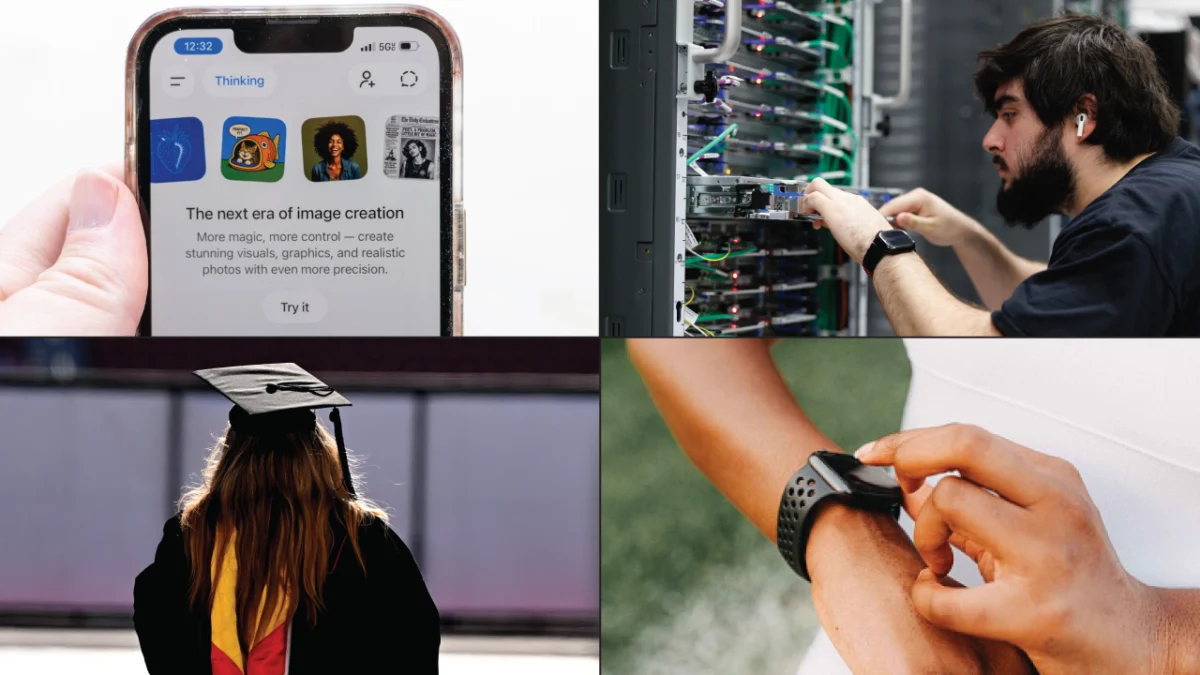
The landscape of artificial intelligence (AI) has rapidly shifted from a theoretical possibility to an undeniable presence in daily life. As AI tools become increasingly integrated into various aspects of society, understanding public perception, usage patterns, and anticipated societal impacts is crucial. A comprehensive new study by the Pew Research Center, "Americans and AI 2026: Chatbots, Smart Devices and Views on Impact," delves into these critical areas, offering a detailed snapshot of how Americans engage with and think about AI. The research aims to inform the public, journalists, and policymakers by tracking the evolving role of AI and its implications for individuals and society at large.
This extensive study, conducted from February 17-23, 2026, surveyed 5,119 U.S. adults to explore their familiarity with AI, their use of AI-powered technologies like chatbots and smart home devices, and their perspectives on the broader societal and personal effects of AI. The Pew Research Center has consistently prioritized understanding the rise of AI, recognizing its profound potential to reshape industries, economies, and human interaction. This latest effort builds upon previous research, providing valuable longitudinal data and timely insights into a rapidly developing field.
Defining Artificial Intelligence in the Public Consciousness
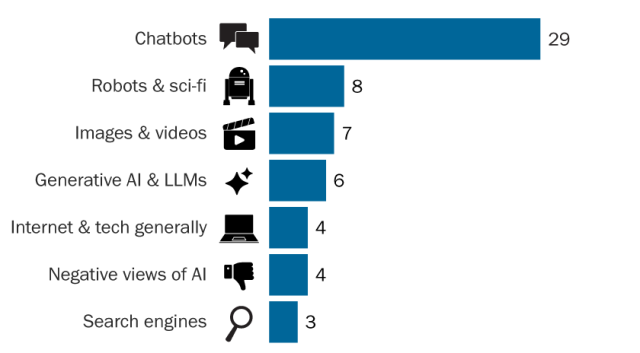
When Americans conceptualize artificial intelligence, their thoughts span a wide spectrum, from the tangible interactions with chatbots and smartwatches to the more abstract or even futuristic notions of robots and science fiction. The Pew Research Center’s study sought to pinpoint these initial associations by asking respondents what technology comes to mind when they first think of AI.

The findings reveal that chatbots have ascended to the forefront of public perception. A significant 29% of U.S. adults, when prompted, immediately associate AI with chatbots, whether generally or by naming specific brands like ChatGPT, Gemini, or Copilot. This indicates a strong and immediate connection between conversational AI interfaces and the broader concept of artificial intelligence, driven by increasing usage and media attention.
Beyond chatbots, other significant associations emerged. Approximately 8% of respondents pointed to robots and science fiction, citing popular cultural touchstones such as "The Terminator" or "2001: A Space Odyssey." This suggests that while practical applications are gaining prominence, the imaginative and sometimes cautionary narratives surrounding AI continue to shape public understanding.
Generative AI and large language models (LLMs), the underlying technologies powering many advanced AI applications, were identified as the primary association by 6% of Americans. Images and videos generated by AI also registered, with 7% of respondents highlighting this capability. These figures underscore a growing awareness of AI’s creative and content-generating potential.
A smaller but notable segment of the population (3%-4%) linked AI to more foundational aspects of the digital world, such as the internet or technology in general, and even search engines. Furthermore, some respondents expressed negative sentiments toward AI, with 4% citing these concerns as their initial thought. This diverse range of associations highlights the multifaceted nature of AI in the public imagination and the varied ways it is being encountered and understood.
The Pervasive Presence of AI in Daily Life
The study also sheds light on the frequency with which Americans believe they interact with AI. The data indicates a substantial level of daily engagement for a significant portion of the population. Nearly four-in-ten U.S. adults (36%) report interacting with AI at least several times a day, with 7% indicating almost constant interaction. This high frequency suggests that AI is no longer a niche technology but a pervasive element woven into the fabric of everyday routines.
An additional 30% of Americans stated they interact with AI about once a day or several times a week. Cumulatively, this means that over two-thirds of the adult population engages with AI on a weekly basis or more frequently. Conversely, approximately one-third of respondents indicated less frequent engagement. These statistics underscore the growing integration of AI into consumer products, services, and digital platforms, making it an almost unavoidable aspect of modern life.
Rising Awareness and Familiarity with AI

The growing prevalence of AI technologies has been mirrored by a significant increase in public awareness. The Pew Research Center’s findings show that AI literacy has become nearly universal, with 96% of U.S. adults reporting that they have heard at least a little about AI. This represents a substantial jump in awareness over recent years, indicating that the conversation around AI has successfully permeated public discourse.
More remarkably, the proportion of Americans who claim to have heard "a lot" about AI has nearly doubled since 2022. In the current survey, 48% of U.S. adults reported this high level of familiarity, a significant increase from just 26% in 2022. This surge in awareness suggests that public understanding and engagement with AI are deepening, moving beyond a superficial awareness to a more substantive grasp of its capabilities and implications. This trend is particularly evident when examining awareness of specific AI applications.
The Chatbot Phenomenon: Awareness and Confidence
The rapid proliferation and accessibility of AI chatbots have particularly captured public attention. The study reveals a dramatic increase in awareness regarding AI chatbots, such as ChatGPT, Gemini, or Copilot. In February 2026, an overwhelming 87% of U.S. adults reported having heard at least a little about these tools, with a substantial 44% indicating they have heard "a lot." This marks a significant leap from August 2024, when only 72% of Americans had heard of chatbots, and just 28% reported hearing "a lot." This rapid growth in awareness suggests that chatbots have become a prominent topic of discussion and a tangible example of AI’s capabilities for the general public.

However, awareness does not always equate to confidence in usage. The research indicates a more nuanced picture when it comes to Americans’ self-assessed ability to use AI chatbots. Only 18% of U.S. adults describe themselves as extremely or very confident in their ability to utilize these tools. A slightly larger group, 22%, expressed moderate confidence ("somewhat confident"). Conversely, 8% reported low confidence ("not too" or "not at all confident").
Crucially, a significant portion of the adult population – 51% – indicated that they do not use AI chatbots at all. This finding suggests that while awareness of chatbots is widespread, actual adoption and the development of user confidence are still in relatively early stages for a majority of Americans. The gap between awareness and confident usage may present a challenge for wider AI integration and adoption, highlighting a potential need for improved user education and more intuitive interface design.
The Growing Role of Smart Home Devices with AI Features
Beyond conversational AI, artificial intelligence is increasingly embedded in everyday household devices. The Pew Research Center’s study explored the ownership and usage of smart home devices that incorporate AI features, such as smart speakers, thermostats, and security systems. While specific data on the prevalence of AI features within these devices was not detailed in the provided excerpt, the broader study context suggests an exploration of their impact on daily life and user perception. The integration of AI into these devices promises enhanced convenience, efficiency, and personalization, but also raises questions about data privacy, security, and the extent to which consumers understand the AI at play in their homes.

Looking Ahead: Societal Impact and Personal Perceptions
A core objective of the Pew Research Center’s study was to gauge public sentiment regarding the broader societal and personal impacts of AI. While the provided text focuses on usage and awareness, the full report likely delves into these critical perceptions, addressing public hopes, fears, and expectations about AI’s future role. Understanding these perspectives is paramount for navigating the ethical, economic, and social transformations that AI is poised to bring. As AI continues to evolve at an unprecedented pace, ongoing research into public understanding and sentiment will be essential for fostering informed dialogue and responsible development. The findings from this study provide a vital baseline for tracking these evolving attitudes and the ongoing integration of artificial intelligence into the American way of life.