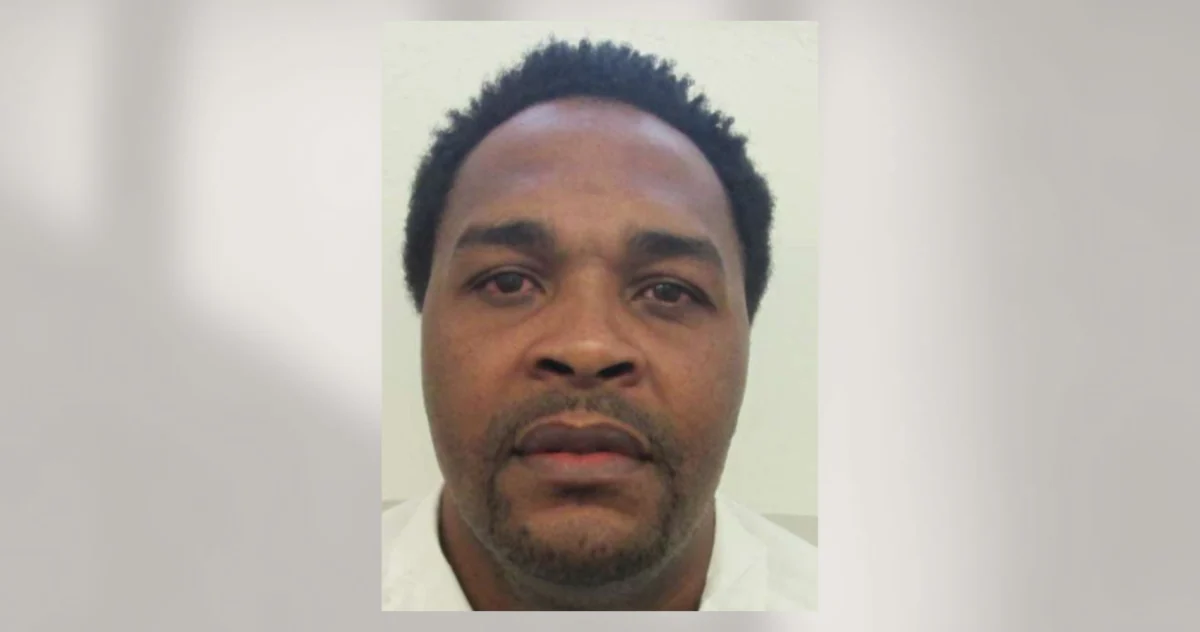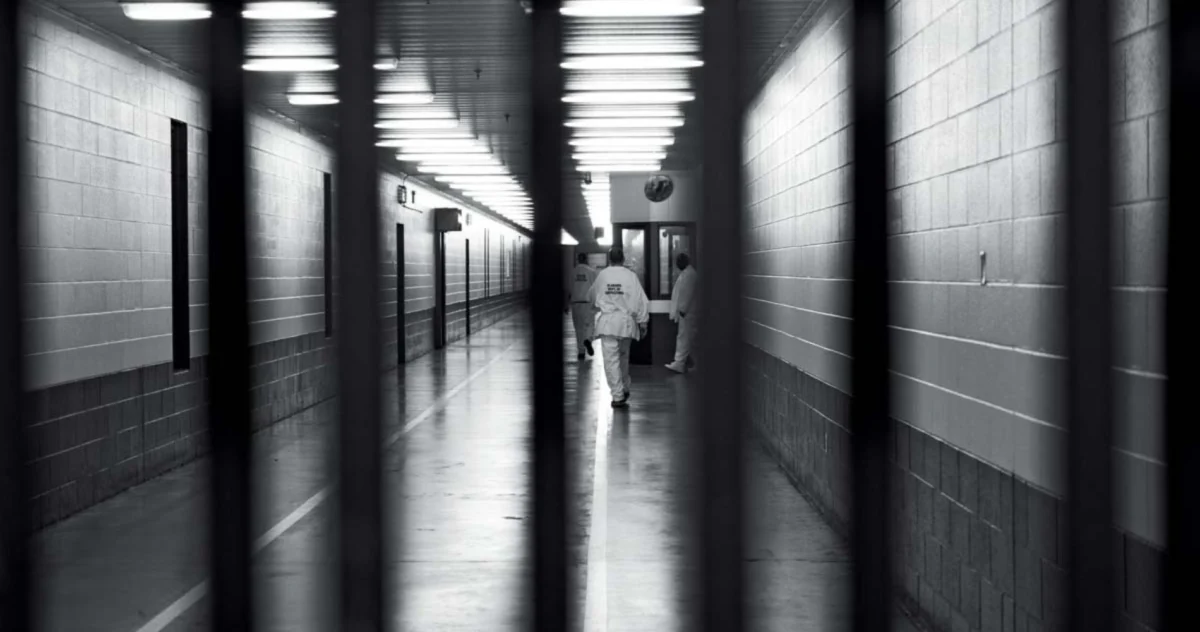
New details have emerged from a federal court opinion concerning the horrifying death of Kenneth Gilchrist, a 31-year-old man incarcerated at Donaldson Correctional Facility in Alabama. Chilling camera footage captured a group of prison staff, including a sergeant and a nurse, failing to offer assistance to Gilchrist after he had been stabbed, allowing him to die after more than 30 minutes of evident distress and suffering. This incident, brought to light by a U.S. District Court for the Northern District of Alabama ruling on April 28, 2026, casts a stark light on what critics describe as a pervasive culture of cruelty and indifference within the Alabama Department of Corrections (ADOC).
The Tragic Incident: Kenneth Gilchrist’s Last Moments
The federal court’s opinion meticulously details the events of July 2021, leading to Gilchrist’s death. According to the court, Mr. Gilchrist was stabbed during an altercation within his housing unit at Donaldson, a maximum-security prison notorious for its violent environment and systemic issues. However, his death, as the court found, occurred "only after he was not given medical care for an extended period of time." The pivotal evidence in this finding came from video footage, which documented the harrowing final moments of Mr. Gilchrist’s life and the disturbing inaction of correctional personnel.
The footage, specifically from a camera positioned at the doorway of the prison’s health care unit, shows an unnamed incarcerated man bringing a gravely injured Mr. Gilchrist in a wheelchair to the unit. Upon arrival, Gilchrist, visibly struggling, slumped out of the wheelchair and onto the floor, where he remained. Despite showing "signs of life" and being in "evident distress," the court noted that a nurse and at least three correctional officers walked past him without offering any form of assistance. Two officers were observed standing nearby, watching but taking "no action to assist." This initial neglect set the tone for the subsequent agonizing minutes.
A Detailed Chronology of Neglect
The court’s detailed account, drawn directly from the video evidence, paints a grim picture of deliberate inaction:
- Initial Abandonment (Approx. 00:26:00 – 00:28:00): For over two minutes, Mr. Gilchrist lay on the ground at the infirmary entrance. Rather than providing immediate medical attention, an officer eventually directed the unnamed incarcerated man to drag Mr. Gilchrist away from the health care unit down a hallway.
- Relocation to the Barbershop (Approx. 00:28:00): Mr. Gilchrist was taken to a windowed barbershop, where he again fell out of the wheelchair and began to writhe on the floor, clearly in severe pain and medical crisis.
- Ongoing Disregard (Approx. 00:28:00 – 00:45:00): Over the next half-hour, numerous officers repeatedly passed by the barbershop, observing Mr. Gilchrist’s deteriorating condition through the windows or by opening the door, yet did nothing to intervene.
- Specific Instances of Neglect:
- At approximately 00:29:22, an officer, identified as "Plaintiff" in the court document, passed the barbershop where three inmates and another correctional officer were observed watching Mr. Gilchrist on the floor.
- Around 00:30:45, the "Plaintiff" returned to the hallway, opened the barbershop door, and stood holding it open while Gilchrist continued to writhe. The three inmates looked on, but no assistance was rendered.
- At 00:31:29, the "Plaintiff" closed the door and continued watching Gilchrist through the window.
- At 00:32:10, the "Plaintiff" reopened the door, and one of the inmates entered the barbershop to try and get Gilchrist back into his wheelchair, while the officer stood by, "making no effort to assist."
- Unable to move Gilchrist, the inmate exited at 00:32:46, and the officer closed the door, leaving Gilchrist to continue writhing on the floor.
- Sergeant Shaun Mechalske was among "various correctional officers" who passed by the barbershop windows without intervening during this critical period.
- Cessation of Movement (Approx. 00:45:03): After approximately nineteen minutes and twenty-three seconds of lying on the barbershop floor without any meaningful assistance, Mr. Gilchrist stopped moving.
- Delayed Intervention (Approx. 00:58:43): No one entered the barbershop until over thirteen minutes later, when Sergeant Mechalske finally entered and attempted to rouse him. The video ended shortly thereafter. By this point, Mr. Gilchrist had been on the barbershop floor for over thirty-three minutes, without medical care, while staff observed his demise.
The Court’s Stinging Indictment and Implications of Video Evidence
The U.S. District Court’s opinion, which described the footage in painstaking detail, underscores the profound implications of video evidence in documenting prison conditions and officer conduct. In an environment often shielded from public view, cameras offer an undeniable record, making it difficult for correctional facilities to deny or downplay incidents of neglect. The court’s ability to meticulously reconstruct Gilchrist’s final moments allowed for a clear finding of prolonged medical neglect, directly contributing to his death.
This case highlights a critical point: while many locations within Alabama’s prisons remain without camera coverage, where footage exists, it can be instrumental in identifying and holding accountable those responsible for egregious failures of duty. In Gilchrist’s case, the officers who ignored his obvious medical needs were identified and reportedly disciplined, though the specific nature and extent of this discipline have not been widely publicized. However, the fact that such blatant disregard for human life was captured on video and still allowed to unfold for over half an hour raises serious questions about the effectiveness of existing oversight mechanisms and the deeply ingrained nature of the problems within the ADOC.
A Disturbing Pattern: Previous Deaths and Systemic Failures
Kenneth Gilchrist’s death is not an isolated incident but rather fits into a grim pattern of neglect and lack of accountability within the Alabama Department of Corrections, particularly at Donaldson Correctional Facility. The court opinion itself references other cases, signaling a systemic problem rather than individual aberrations.
Months before Gilchrist’s death, in July 2021, Jason Kirkland died at Donaldson from "mechanical asphyxia" after his head became wedged in a broken tray slot in his cell door. A federal judge found that the officer assigned to monitor the unit had gone on a break and then joined another officer in a central control room "while Kirkland was in medical distress." It took several minutes for another incarcerated man to discover Kirkland and alert staff, a delay that proved fatal. The parallels to Gilchrist’s case – an incarcerated person in visible distress, ignored by staff, leading to preventable death – are stark and deeply troubling.
In December 2020, Tommy Rutledge died of hyperthermia at Donaldson, with a body temperature of 109 degrees. A federal district court found in a subsequent lawsuit that Mr. Rutledge died after officers falsified temperature log readings, allowing his cell to reach dangerous temperatures of 101 to 104 degrees. Then-Commissioner of Health Services for ADOC, Ruth Naglich, even testified that a similar incident had occurred at the prison previously, suggesting a known and unaddressed vulnerability within the system.
Beyond Donaldson, the systemic issues plague the entire ADOC. Families of incarcerated individuals in Alabama have reported horrific accounts: loved ones dying after being denied medical attention for injuries sustained during beatings, ADOC allegedly removing life support without their knowledge or consent, and even returning bodies with missing organs. Many families were not notified of their loved ones’ deaths, and one parent recounted the warden telling her that her child had died "like she was telling me to pick up my dry clean[ing]," highlighting a profound lack of empathy and respect for human life and dignity.
The Justice Department’s Intervention and Ongoing Challenges
The pervasive nature of these issues led the U.S. Department of Justice (DOJ) to intervene. In 2019, the Justice Department formally notified the State of Alabama that the conditions in its prisons were unconstitutional, citing widespread violence, sexual abuse, and inadequate medical and mental health care. The DOJ’s findings initiated a period of intense scrutiny and ongoing legal battles aimed at compelling Alabama to reform its correctional system.
Research by the Equal Justice Initiative (EJI), a prominent legal advocacy organization based in Montgomery, Alabama, has revealed the grim statistics underpinning these unconstitutional conditions. In the seven years since the Justice Department’s initial notification, EJI reports that at least 100 people have been killed inside state prisons. Hundreds more have lost their lives to suicide and fatal drug overdoses, painting a picture of a system in crisis, where basic human rights and safety are routinely violated.
Despite the DOJ’s intervention and ongoing litigation, progress has been slow and often met with resistance. Former Commissioner John Hamm acknowledged to the Alabama Legislature that ADOC has a culture that enables and encourages excessive force and civil rights abuses. This acknowledgment, while significant, has not translated into comprehensive, swift reform. Instead, ADOC continues to spend millions of dollars on lawyers to defend against unconstitutional practices in court, often at the expense of investing in the necessary infrastructure, staffing, and training that could prevent tragedies like Gilchrist’s.
Accountability and Its Limits: A Broader Analysis
The case of Kenneth Gilchrist, due to the unequivocal video evidence, allowed for the identification and discipline of some officers involved. However, this level of accountability remains an exception rather than the rule. The absence of camera coverage in many areas of Alabama’s prisons means that numerous other officers involved in prisoner deaths may never be criminally charged or even identified, continuing to work within the facilities. This disparity creates a system where accountability is arbitrary and dependent on the presence of recording devices, rather than a universal standard of care and conduct.
The repeated incidents of neglect and death point to deep-seated systemic failures within the ADOC, extending beyond individual misconduct to institutional policies, training deficiencies, and a culture that devalues the lives of incarcerated individuals. Understaffing, a chronic issue in many correctional systems, often exacerbates these problems, leading to overworked and desensitized staff, and inadequate oversight. However, the deliberate inaction observed in Gilchrist’s case suggests more than just understaffing; it points to a profound breakdown in professional ethics and a disregard for basic human dignity.
Call for Comprehensive Reform and Human Rights
The tragic death of Kenneth Gilchrist serves as a stark reminder of the urgent need for comprehensive reform within Alabama’s correctional system. The continued legal battles, the consistent findings of unconstitutional conditions, and the repeated incidents of preventable deaths underscore a moral and legal imperative for change.
Advocacy groups like EJI continue to push for transparency, accountability, and systemic improvements, including adequate staffing, improved medical and mental healthcare, and a fundamental shift in the culture of the ADOC. The millions of dollars currently spent on legal defense could, arguably, be redirected towards implementing the necessary reforms that would not only improve conditions for incarcerated individuals but also enhance safety and professionalism for correctional staff.
The implications of cases like Gilchrist’s extend beyond the prison walls, touching upon fundamental questions of justice, human rights, and the role of the state in safeguarding those in its custody. Until systemic changes are enacted, and a culture of accountability replaces one of indifference, the shadow of preventable deaths and human rights abuses will continue to loom large over Alabama’s correctional facilities. The memory of Kenneth Gilchrist and others who have died under similar circumstances demands not just discipline for a few, but a wholesale transformation of a broken system.