In celebration of the 20th anniversary of The Gordon Parks Foundation, Bryan Stevenson, the renowned public interest lawyer and founder of the Equal Justice Initiative, has meticulously curated "Gordon Parks: We Shall Not Be Moved," a solo exhibition by the incomparable photographer Gordon Parks. Presented by Alison Jacques in partnership with the Foundation, this landmark exhibition powerfully demonstrates the enduring capacity of art to advance social justice, offering a poignant and timely reflection on American history and its ongoing reverberations.
A Curatorial Vision Rooted in Justice
Mr. Stevenson’s selection of photographs spans a pivotal 25-year period of Gordon Parks’s prolific career, from 1942 to 1967. This era encapsulates the profound social transformations and persistent struggles of Black Americans, a narrative that Stevenson eloquently emphasizes. "The scope of the images from Parks represents the struggle, resilience, and constant striving of Black Americans," he remarked, underscoring the exhibition’s central thesis. His curation is deeply informed by Mr. Parks’s unwavering commitment to social justice, a commitment born from lived experience. As an African American survivor of racial injustice himself, Mr. Stevenson noted, "Parks was keenly aware of race and class in America, and this palpably informed his work." This personal understanding allowed Parks to infuse his photography with an authentic empathy and critical perspective rarely seen in mainstream media of his time. The exhibition serves not merely as a display of artistic mastery but as a historical document and a contemporary call to action, echoing the Foundation’s mission to preserve Parks’s legacy and use his art as a catalyst for social change.
Gordon Parks: A Camera as a Weapon Against Injustice
Gordon Parks (1912-2006) stands as one of the most significant figures in 20th-century photography and filmmaking, a pioneering artist who used his camera as a "weapon of choice" against poverty, racism, and social injustice. Born into poverty and segregation in Fort Scott, Kansas, Parks experienced firsthand the systemic discrimination and violence that permeated American society. Despite facing immense obstacles, he rose to prominence as the first African American staff photographer for Life magazine and later as a groundbreaking Hollywood director. His work was characterized by an unflinching honesty, a profound humanism, and an extraordinary ability to capture the dignity and resilience of individuals confronting adversity.
Parks’s career began in earnest in the early 1940s, initially with the Farm Security Administration (FSA) and later the Office of War Information (OWI), where he documented the social conditions of the era. It was during this period that he created one of his most iconic and searing images, American Gothic, Washington, D.C. (1942). This photograph, depicting Ella Watson, a Black cleaning woman, standing rigidly with a broom and mop in front of an American flag, directly confronts the myth of the American dream, exposing the hypocrisy of a nation that preached freedom while practicing segregation. This early work immediately established Parks’s distinctive voice – one that combined documentary precision with a profound emotional resonance.
His long and influential tenure at Life magazine, beginning in 1948, provided him with an unparalleled platform to bring the realities of Black life to a vast national and international audience. Parks often wrote the accompanying articles for his photo essays, a unique privilege that allowed him to inject his personal perspective and challenge prevailing stereotypes, thereby shaping narratives that offered alternatives to mainstream representations.
Iconic Works: Chronicles of a Nation Divided
The exhibition features several of Mr. Parks’s most well-known and impactful works, each serving as a vital historical record and a powerful artistic statement. Beyond American Gothic, the selection includes his poignant photographs of the 1963 March on Washington for Jobs and Freedom. Among these is his celebrated portrait of Dr. Martin Luther King Jr. delivering his seminal "I Have a Dream" speech, an image that has become synonymous with the civil rights movement and its aspirations. These photographs not only document a pivotal moment in American history but also convey the collective hope, determination, and unity of hundreds of thousands of people demanding equality.
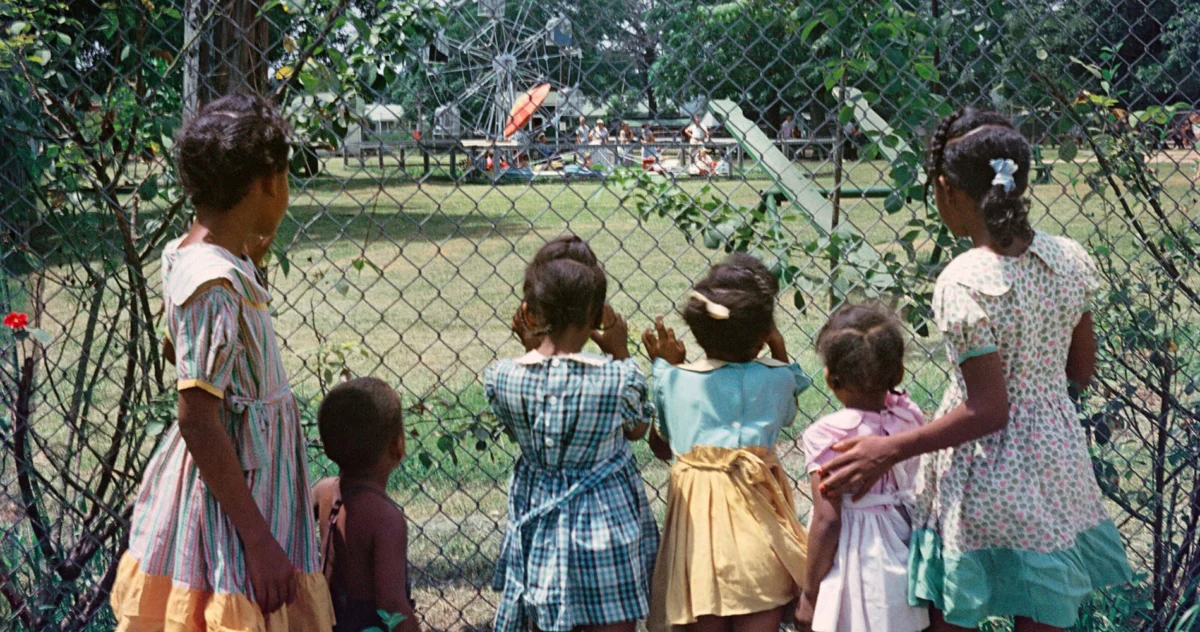
Crucially, the show also includes iconic works from Mr. Parks’s "Segregation Story" series, commissioned by Life Magazine in 1956 and published under the title "The Restraints: Open and Hidden." This series, which includes images like Outside Looking In, Department Store, and Mr. and Mrs. Albert Thornton, provides an intimate and humanizing glimpse into the daily lives of Black families navigating the oppressive realities of Jim Crow segregation in Alabama. Parks’s lens captured moments of resilience, joy, and everyday struggle, starkly contrasting with the often dehumanizing and sensationalized portrayals of Black Americans in much of the mainstream media at the time. By focusing on the dignity and complex humanity of his subjects, Parks effectively dismantled prevailing stereotypes and made the abstract concept of segregation tangible and relatable to a national audience. The series became a powerful tool in raising awareness and fostering empathy, contributing significantly to the growing momentum for civil rights reform.
The Gordon Parks Foundation: A Two-Decade Legacy
The "Gordon Parks: We Shall Not Be Moved" exhibition holds particular significance as it coincides with the 20th anniversary of The Gordon Parks Foundation. Established in 2006, the Foundation is dedicated to preserving the work of Gordon Parks, making it available to the public through exhibitions, books, and digital channels, and supporting the next generation of artists, photographers, and filmmakers. Over the past two decades, the Foundation has played a critical role in ensuring that Parks’s artistic legacy continues to inspire and educate. Through various programs, including scholarships, fellowships, and educational initiatives, it champions individuals who demonstrate exceptional promise in their respective fields, particularly those whose work aligns with Parks’s commitment to social justice. The partnership with Alison Jacques for this exhibition exemplifies the Foundation’s ongoing efforts to broaden the reach and impact of Parks’s oeuvre, ensuring its relevance for contemporary audiences.
Alison Jacques, a distinguished contemporary art gallery, has consistently demonstrated a commitment to showcasing artists whose work carries profound cultural and historical weight. Their collaboration with The Gordon Parks Foundation underscores the gallery’s dedication to presenting significant artistic voices that challenge conventions and provoke meaningful dialogue. By hosting "Gordon Parks: We Shall Not Be Moved," Alison Jacques provides a vital platform for Parks’s timeless imagery to engage new generations, reinforcing its power in the ongoing discourse surrounding equality and human rights.
"We Shall Not Be Moved": A Deeper Historical and Contemporary Context
Bryan Stevenson’s accompanying essay for the exhibition, also titled "We Shall Not Be Moved," provides an indispensable historical context for Parks’s work and elucidates its compelling relevance today. Stevenson begins by recounting the staggering historical trauma of slavery, noting that over 246 years, ten million Black people were enslaved in what would become the United States. Following the Civil War in 1865, four million formerly enslaved people were emancipated. Their remarkable decision, Stevenson emphasizes, was not to pursue retribution or revenge against their tormentors, but rather to commit to building a more just America. They chose citizenship, creating churches, schools, and families, and embracing freedom with extraordinary fortitude.
However, this profound commitment was tragically betrayed. Just over a decade after the war, protections for African Americans were systematically withdrawn during the Compromise of 1877, signaling the end of Reconstruction. Former enslavers, white supremacists, and those who espoused racial hierarchy quickly regained power, while Congress and the Supreme Court abandoned constitutional commitments to equal protection and voting rights for emancipated Black people. This period ushered in the brutal era of Jim Crow segregation, mob violence, lynching, and the systemic denial of basic rights.
Gordon Parks was born into this very landscape in the early 20th century, witnessing and enduring the stress and degradation of this racial hierarchy. Yet, crucially, he also understood and captured the strength, resilience, artistry, resolve, and beauty that animated Black life amidst the struggle. His camera became his weapon, not just to document the pain and humiliation of segregation, the despair of poverty, and the violence of abusive law enforcement, but also to expose the appalling hypocrisy of an America that preached democracy and equality abroad while mired in racial bigotry at home.
Parks was deeply energized by the resistance to oppression and the vibrant creativity within the Black community. He brilliantly brought to life the counter-narratives of the civil rights movement, the emergence of "Black power," and the triumphs of Black athletes, musicians, and even gang leaders. His art played a crucial role in challenging the legitimacy of racial caste, helping to inspire and enable a new generation of Black and white leaders to dismantle the architecture of Jim Crow laws. Gordon Parks, through his powerful artistic narrative, helped imagine a more hopeful future, one less burdened by racial bigotry and violence, aligning with the Black poet Langston Hughes’s poignant call for "America be America."
Contemporary Resonance and the Fight Against Erasure
Stevenson’s analysis extends beyond historical recounting, drawing urgent parallels to the present day. He asserts that Parks’s art and photography remain powerful precisely because they detail a reality and history of America that is currently being distorted and denied. In "a moment when there is an intense and active effort of erasure, retreat from civil rights and silencing of Black voices and history in the United States," Stevenson argues, Gordon Parks’s images "provide insight and relevance to our current discourse. His work absolutely suggests resistance to bigotry and oppression."
Today, many in the United States are indeed witnessing a retreat from a full commitment to equality and justice. Powerful factions are attempting to rewrite history, minimizing the harms of slavery, lynching, segregation, and racial bigotry. People of color are increasingly demonized and castigated based on race, ethnicity, or national origin. There is a renewed sense among many Black Americans that their struggle is still unfinished, with a reinforced presumption of dangerousness, guilt, or incompetence being assigned based simply on color. Furthermore, Black political power is being undermined through a multitude of schemes, some of which, Stevenson warns, the Supreme Court appears ready to legitimate.
As the gains of the civil rights movement face erosion, as censorship and the whitewashing of history are on the rise, and even artistic freedom comes under attack, it is understandable why many might feel compelled to escape, retreat, or become silent. Silence, for some, may seem safer.
However, Gordon Parks was an artist who unequivocally rejected silence or retreat. He understood too much about the persistence and strength of the human spirit to lay down his camera, even in the face of cruel and abusive power. His art acquires renewed significance in the contemporary moment, serving as a direct retort to those who seek to force Americans back to an earlier era of perceived greatness, an era defined by racial and gender hierarchy. This exhibition, therefore, is more than just an art show; it is history, education, and protest embodied in visual form.
The artistry of Gordon Parks makes it undeniably clear that society cannot afford to turn back, cannot remain silent, and cannot retreat from the relentless pursuit of true justice. His work articulates what many are prepared to say, and what must be said: "We shall not be moved." The exhibition stands as a powerful testament to the enduring legacy of a visionary artist whose work continues to illuminate the path forward in the ongoing struggle for civil rights and human dignity, urging all to engage, remember, and resist.