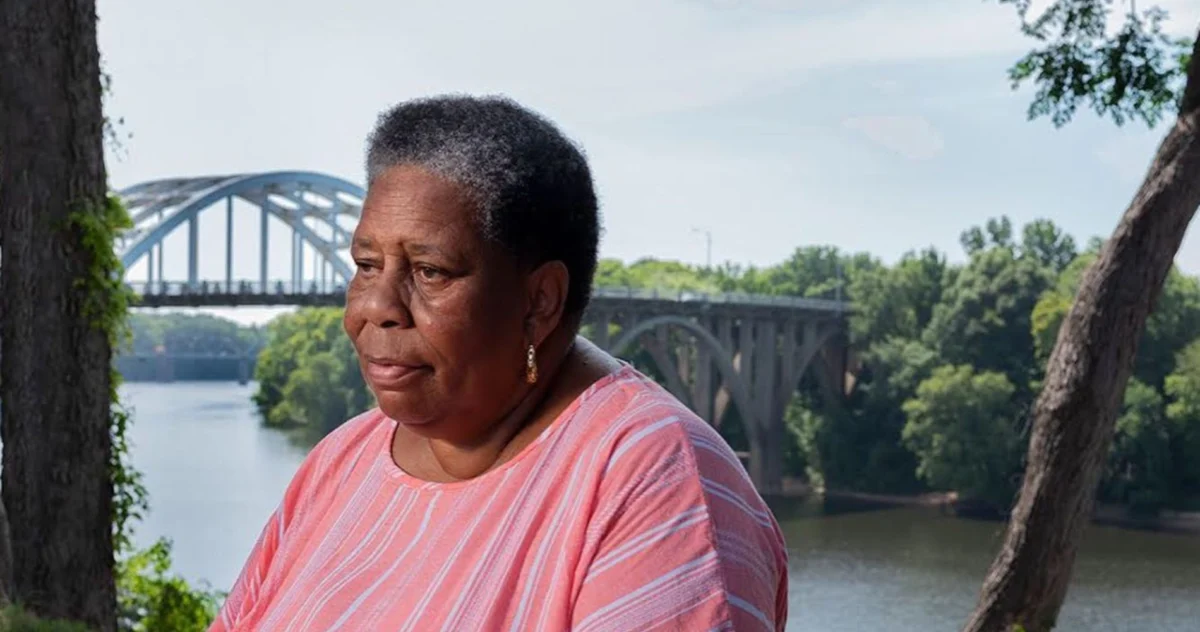
Selma, Alabama, mourns the passing of Jo Ann Bland, a revered civil rights activist whose unwavering dedication to justice left an indelible mark on American history. Bland, a native daughter of Selma and a pivotal figure in the 1960s voting rights movement, passed away yesterday at the age of 72. Her family announced her peaceful departure, stating she "departed this life surrounded by love, leaving behind a legacy of strength, grace, and unwavering dedication to her family and community." Bland’s life was a testament to the power of ordinary individuals to catalyze extraordinary change, from the brutal streets of segregated Selma to the halls of institutions she helped establish to preserve the sacred memory of the struggle.
The Early Crucible of Activism in Segregated Selma
Born and raised in Selma, Alabama, Jo Ann Bland’s childhood unfolded against the backdrop of systemic racial discrimination and voter suppression that characterized the Jim Crow South. Selma, a city with a majority Black population, was infamous for its aggressive tactics to deny African Americans the right to vote. In Dallas County, where Selma is located, only about 2% of eligible Black voters were registered in the early 1960s, a stark contrast to the near 100% registration rate for white citizens. This deliberate disenfranchisement was enforced through literacy tests, poll taxes, intimidation, and violence, effectively silencing the political voice of an entire community.
It was in this deeply unjust environment that Jo Ann Bland found her calling as an activist at an exceptionally young age. By 1965, at just 11 years old, she was already a "seasoned activist," a term that underscored the precocious bravery and commitment required of Black children who joined the movement. Her early involvement meant facing the same dangers and indignities as adult protestors. She once recounted, "By the time I was 11 years old, I had been arrested at least 13 documented times." These arrests, often for participating in peaceful demonstrations, highlighted the extreme measures authorities took to suppress the burgeoning civil rights movement and the courage of those, including children, who defied them. Bland’s formative years in Selma instilled in her a profound understanding of racial injustice and an unyielding resolve to fight for equality.
Bloody Sunday: A Personal Ordeal on the Edmund Pettus Bridge
Jo Ann Bland’s name is inextricably linked with one of the most pivotal and brutal moments in the American Civil Rights Movement: Bloody Sunday. On March 7, 1965, she and her older sister Linda joined approximately 600 peaceful civil rights marchers, led by Hosea Williams of the Southern Christian Leadership Conference (SCLC) and John Lewis of the Student Nonviolent Coordinating Committee (SNCC). Their objective was to march 54 miles from Selma to the state capital in Montgomery to demand voting rights.
As the demonstrators crossed the Edmund Pettus Bridge, named after a Confederate general and Ku Klux Klan grand dragon, they were met by a phalanx of Alabama state troopers and local law enforcement. Without provocation, the officers launched a vicious assault, using billy clubs, tear gas, and charging horses to disperse the unarmed protestors. The images of this brutality, broadcast globally, shocked the nation and galvanized public opinion in favor of the civil rights cause.
Ms. Bland’s personal recollection of Bloody Sunday is chilling and vivid, a testament to the trauma she endured and the enduring clarity of her memory. She detailed the horrific scene on the website of Foot Soldiers Park, an organization she later co-founded: "I walked across the Edmund Pettus Bridge on Bloody Sunday, marching alongside more than 600 peaceful activists who ended up being brutally beaten, tear-gassed, and hit or trampled by policemen on horses with billy clubs. At one point, I saw a horse near me, and then a woman fell. I can still hear the sound of her head hitting the pavement. I must have fainted after that, because the next thing I knew I was in a car with my head in my sister’s lap, and her blood was dripping from wounds on her head. Later, she needed 26 stitches." This deeply personal account underscores the physical and psychological toll exacted upon the foot soldiers, many of whom, like Bland, were still children. The violence was indiscriminate, a deliberate act of terror designed to break the spirit of the movement, but it ultimately served to strengthen its resolve.
The Triumph of the March to Montgomery and the Voting Rights Act
Despite the horrific violence of Bloody Sunday, the young Jo Ann Bland was not deterred. The events on the Edmund Pettus Bridge sparked national outrage, prompting President Lyndon B. Johnson to address Congress and propose comprehensive voting rights legislation. Two days after Bloody Sunday, Dr. Martin Luther King Jr. led a symbolic march to the bridge, but a federal injunction prevented the full march to Montgomery. However, after intense legal battles and under federal protection, the third attempt to march began on March 21, 1965.
This time, the marchers were protected by federalized Alabama National Guard troops and FBI agents, a stark contrast to the previous state-sponsored brutality. Thousands joined the procession, swelling to an estimated 25,000 by the time they reached the steps of the Alabama State Capitol in Montgomery on March 25, 1965. Jo Ann Bland, still only 11 years old, was among them, a testament to her extraordinary courage and commitment. Her presence at the culmination of this historic march signified not just her personal perseverance but the collective will of a generation determined to secure fundamental rights.
The Selma to Montgomery marches, particularly the events of Bloody Sunday, were instrumental in accelerating the passage of the Voting Rights Act of 1965. Signed into law by President Johnson on August 6, 1965, this landmark legislation outlawed discriminatory voting practices adopted in many Southern states, including literacy tests and poll taxes. It authorized federal oversight of voter registration and elections in areas with a history of discrimination. The impact was immediate and profound. Within a few years, Black voter registration rates in Southern states soared, fundamentally transforming the political landscape. For instance, in Mississippi, Black voter registration rose from 6.7% in 1964 to 59.8% in 1968. In Alabama, it jumped from 19.3% to 51.6% in the same period. The Voting Rights Act, a direct consequence of the bravery of foot soldiers like Jo Ann Bland, remains one of the most effective pieces of civil rights legislation in American history.
A Life Dedicated to Education and Preservation
Jo Ann Bland’s commitment to civil rights extended far beyond the Selma marches. Upon her return to Selma, she was among the first group of students to integrate A.G. Parish High School, another act of bravery in a town grappling with the dismantling of segregation. She later left Selma to pursue higher education at Staten Island College in New York and served her country in the U.S. Army, demonstrating a multifaceted life of purpose and service.
Her deep roots in Selma and her profound understanding of its historical significance called her back home in 1989. Upon her return, Bland co-founded the National Voting Rights Museum and Institute. Located at the foot of the Edmund Pettus Bridge, the museum serves as a vital repository of civil rights history, preserving artifacts, documents, and oral histories from the movement. Its establishment was a crucial step in ensuring that the sacrifices made by the foot soldiers would not be forgotten and that the lessons of Selma would continue to resonate.
Throughout her life, Ms. Bland was an "unflinching and unstoppable teacher," sharing her firsthand experiences with countless individuals. She spoke to student groups at various Legacy Sites across the South and attended significant events, including the dedication of the National Monument to Freedom. Her pedagogical approach was not merely academic; it was deeply personal and urgent. "We have to talk about the truth of what happened and what was evil and wrong—so that we don’t let the same things happen again," she frequently asserted, emphasizing the imperative of historical honesty in preventing future injustices. Bryan Stevenson, Executive Director of the Equal Justice Initiative (EJI), lauded her impact: "Jo Ann Bland raised her powerful voice for equality and racial justice, and she refused to be silenced. She inspired countless young people with her courage and championed the power of ordinary people to do extraordinary things to advance justice."
Founding Journeys for the Soul and Foot Soldiers Park
In her later years, Jo Ann Bland continued to innovate in her mission to educate the public about the Civil Rights Movement. In 2017, she established Journeys for the Soul, a tour company that brought visitors from across the country and around the world to Selma. Through these tours, Bland personally guided individuals through the historical sites, sharing her poignant memories and ensuring that guests understood the profound sacrifices made by the foot soldiers in their struggle for racial justice. This immersive educational experience allowed participants to connect with history on a deeply personal level, far beyond what textbooks could convey.
Building on her lifelong commitment to historical preservation and education, Ms. Bland, together with co-founder Kimberly Smitherman, created the Foot Soldiers Park and Education Center in 2021. This initiative was designed to permanently preserve the sacred ground where the Bloody Sunday march began, transforming it into a living monument and an ongoing educational resource for future generations. Her vision for the park was clear and inspiring: "My vision for preserving the hallowed ground where the Bloody Sunday march began and creating Foot Soldiers Park, is to show every visitor, and especially every child, that they have the power to make great change in their community." The park stands as a physical embodiment of her belief in the agency of individuals and the importance of remembering history to inspire future action.
A Legacy of Courage and Inspiration
The passing of Jo Ann Bland represents a profound loss, not just for Selma, but for the entire nation and the ongoing struggle for civil rights. Her life story is a powerful narrative of courage, resilience, and an unwavering commitment to justice. Tributes have poured in from across the country, recognizing her immense contributions. Representative Terri Sewell, a fellow Alabamian, expressed her sorrow: "I am heartbroken to learn of the passing of Ms. Jo Ann Bland — a freedom fighter and daughter of Selma, Alabama. It was Foot Soldiers like Jo Ann who put their lives and freedom on the line for the right of all Americans to vote."
Bland’s enduring impact lies not only in her direct participation in the Civil Rights Movement but also in her relentless efforts to ensure that its history is accurately remembered and continually taught. In an era where historical narratives can be challenged or distorted, her work with the National Voting Rights Museum, Journeys for the Soul, and Foot Soldiers Park stands as a bulwark against forgetting. She understood that memory is a powerful tool for justice and that by preserving the stories of the past, future generations could be empowered to confront contemporary challenges.
On the Foot Soldiers Park website, Jo Ann Bland expressed her fervent hope that these sacred spaces in Selma would be "treasured and honored long after all of us, the original foot soldiers, have passed." This statement underscores her understanding of her own mortality and her fierce dedication to ensuring that the legacy of the movement would endure. Her life was a living embodiment of her deeply held conviction: "My experience has taught me that the power of ordinary people cannot be overstated."
Jo Ann Bland’s departure leaves a void, but her legacy continues to resonate. Her voice, once raised in protest on the streets of Selma, now echoes through the institutions she helped build, inspiring new generations to understand their power, embrace their responsibilities, and continue the march toward a more just and equitable society. She was a true American hero, a foot soldier whose extraordinary courage ignited change and whose life’s work ensures that the flame of justice will continue to burn brightly.