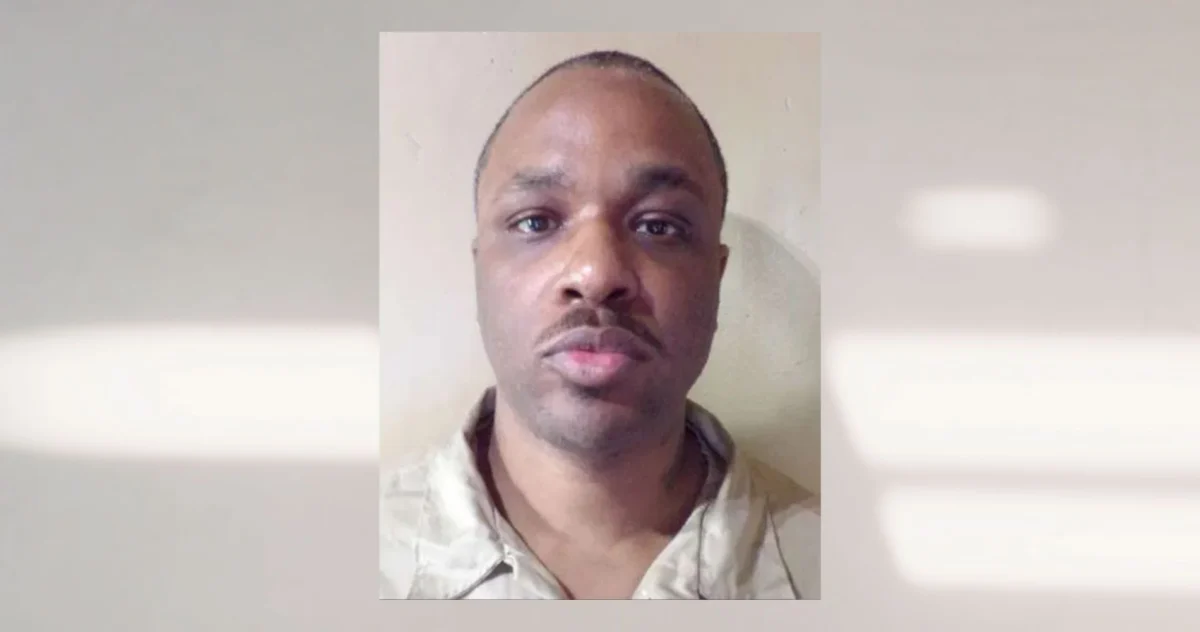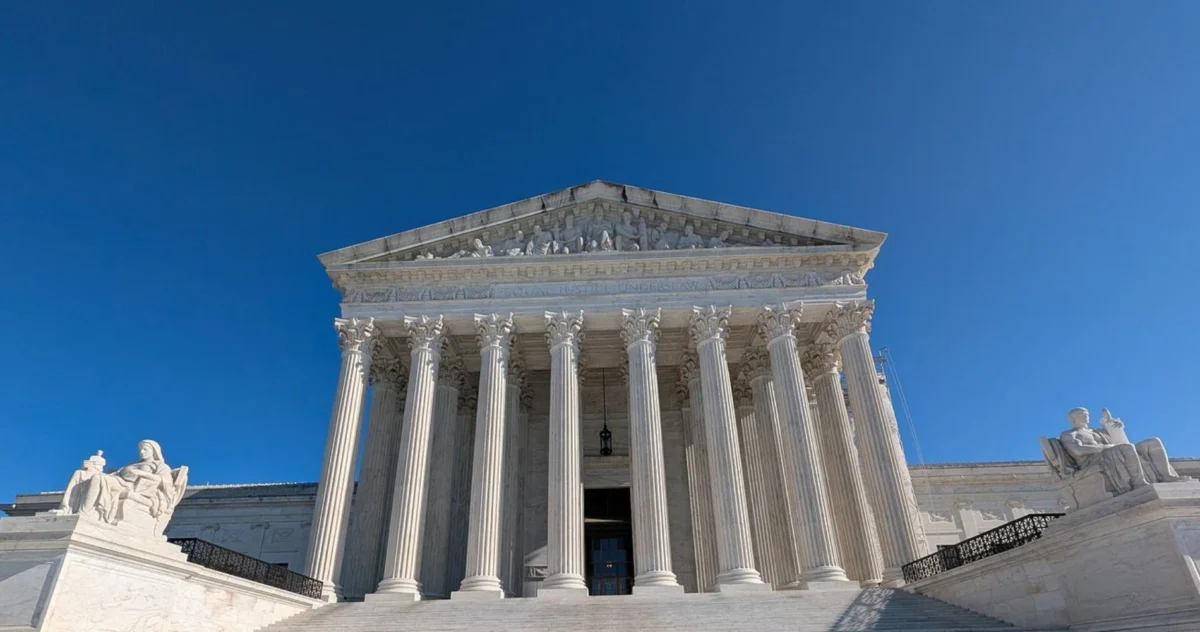
The high court’s 5-4 decision, authored by Justice Brett Kavanaugh, represents a critical affirmation of the principles established in Batson v. Kentucky, which prohibits striking prospective jurors on the basis of race. The ruling underscores the judiciary’s ongoing commitment to ensuring fairness and impartiality in the jury selection process, particularly in capital cases where the stakes are highest. Mr. Pitchford, now 40, had been on death row for nearly two decades, his conviction stemming from a 2004 robbery and murder in Grenada, Mississippi, when he was just 18 years old. The core of his appeal rested on the argument that the prosecution, led by District Attorney Doug Evans, systematically excluded Black jurors, leaving only one Black individual on the jury that ultimately sentenced him to death.
The Grenada Robbery and Its Aftermath
The tragic events that led to Terry Pitchford’s conviction unfolded on a day in 2004 near Grenada, Mississippi. Pitchford, then 18, and another Black teenager, Eric Bullins, 16, planned to rob a local grocery store. During the commission of the crime, the white store owner was fatally shot three times by Eric Bullins. While Pitchford also discharged a firearm, firing into the floor, he was charged as an accomplice with capital murder in Grenada County. The legal ramifications for the two teenagers diverged significantly. Eric Bullins, due to his age, was not eligible for the death penalty. He subsequently pleaded guilty to manslaughter and was sentenced to 20 years in prison. Terry Pitchford, however, faced the ultimate penalty.
Grenada County, Mississippi, where the crime occurred and the trial took place, had a significant Black population, approximately 40% at the time. This demographic context becomes crucial when examining the jury selection process that followed. The initial pool of prospective jurors reflected this diversity, with 40 Black residents reporting for jury service. However, this pool was systematically winnowed down. Five Black prospective jurors were excused for statutory cause, reasons such as having a felony conviction or not being a resident of the county. A more substantial reduction occurred when 30 Black prospective jurors were excused for cause, primarily due to their stated views on the death penalty, indicating they could not impartially apply the law in a capital case.
This left a critical number: five Black prospective jurors who were otherwise qualified. It was at this juncture that the prosecution utilized peremptory strikes, a mechanism allowing attorneys to remove potential jurors without stating a specific reason, save for unconstitutional motivations like race. The prosecution exercised these strikes to remove four of the remaining five Black prospective jurors. This left a jury with only one Black member to decide the fate of Terry Pitchford, a circumstance that immediately raised alarms regarding racial bias.
The Critical Batson Challenge and Its Misapplication
Defense counsel for Terry Pitchford promptly lodged an objection under Batson v. Kentucky, the landmark 1986 Supreme Court decision that established a three-step framework for evaluating claims of racial discrimination in jury selection. Batson was designed to prevent prosecutors from using peremptory challenges to exclude jurors solely on the basis of their race, a practice that undermines the integrity of the justice system and denies defendants their Sixth Amendment right to a jury drawn from a fair cross-section of the community, as well as their Fourteenth Amendment right to equal protection.
The Batson framework mandates:
- Step One: The defendant must make a prima facie showing that the prosecutor has exercised peremptory challenges on the basis of race. This requires showing that the defendant is a member of a cognizable racial group and that the prosecutor has used peremptory challenges to remove members of the defendant’s race from the jury panel, with circumstances raising an inference that the prosecutor used the strikes to exclude the prospective jurors on account of their race.
- Step Two: If a prima facie case is established, the burden shifts to the prosecutor to articulate a race-neutral explanation for the peremptory challenges. This explanation does not need to be persuasive or even plausible, but it must be clear and specific, providing a reason other than race.
- Step Three: The trial court must then determine whether the defendant has proven purposeful racial discrimination. At this stage, the court evaluates the prosecutor’s race-neutral explanations in light of all the circumstances, including the defendant’s initial prima facie case, the prosecutor’s explanation, and any evidence that the stated reasons are merely a pretext for discrimination. This is the crucial step where the defense is given the opportunity to demonstrate that the prosecutor’s stated reasons are not the actual reasons, and that racial discrimination was indeed the underlying motive.
In Terry Pitchford’s trial, the first two steps of the Batson inquiry were properly executed. The trial court found that the defense had indeed made a prima facie showing of racial discrimination, compelling the prosecutor to provide race-neutral reasons for striking the four Black jurors. However, the process critically broke down at Step Three. The trial court, for reasons that remain unclear but were described by Justice Kavanaugh as potentially "confusion, oversight, an overly hurried jury selection process, or some other cause," ended its Batson analysis at Step Two. Crucially, it denied the defense counsel the opportunity to argue that the prosecutor’s asserted race-neutral reasons were merely pretextual—that is, not the true, non-racial reasons for the strikes. This omission was the central violation that the Supreme Court later identified.
On February 8, 2006, the nearly all-white jury found Mr. Pitchford guilty of capital murder. The very next day, he was sentenced to death.
A Long Legal Journey: From State Appeals to Federal Habeas Relief
Following his conviction and death sentence, Terry Pitchford embarked on a protracted legal battle to overturn what he argued was an unconstitutionally tainted trial. His initial appeal to the Mississippi Supreme Court specifically raised the Batson claim, arguing that the state had illegally discriminated against Black prospective jurors. However, the state’s highest court rejected his claim, concluding that his lawyers had failed to rebut the prosecutor’s race-neutral reasons for the strikes. This conclusion, as later determined by federal courts, fundamentally misconstrued the trial record, as the defense had never been given the chance to offer such a rebuttal.
The case then moved into the federal courts through a petition for habeas corpus, a legal recourse for challenging the legality of a person’s detention. In 2023, the federal district court granted federal habeas relief to Mr. Pitchford. The district court meticulously reviewed the trial record and found clear evidence that defense counsel had indeed attempted to argue pretext but was "cut off" by the trial court, effectively denied any opportunity to rebut the State’s reasons. The federal court determined that because the trial court had "full-stop ended its Batson analysis" at Step Two, failing to proceed to the essential Step Three, Mr. Pitchford’s constitutional rights had been violated. Consequently, the district court vacated his conviction and death sentence and remanded the case for a new trial.
This decision was then challenged by the State, which appealed to the U.S. Court of Appeals for the Fifth Circuit. The Fifth Circuit reversed the district court’s ruling, reinstating Pitchford’s conviction and death sentence. It was this reversal that prompted Mr. Pitchford to seek review from the United States Supreme Court.
Supreme Court Intervenes: "Things Broke Down"
The Supreme Court, in its recent decision, sided with Terry Pitchford, reversing the Fifth Circuit and affirming the federal district court’s finding of a Batson violation. Justice Kavanaugh, writing for the majority, unequivocally stated that the Mississippi trial court had failed to conduct the essential third step of the Batson inquiry. He elaborated on the breakdown in the judicial process:
"In this case, whether due to confusion, oversight, an overly hurried jury selection process, or some other cause, things broke down, and the ordinary trial-court procedure for resolving Batson claims at step three never occurred—notwithstanding the repeated efforts of Pitchford’s counsel to pursue and preserve the Batson objection."
The Court’s ruling emphasized that the trial court’s failure to allow defense counsel a sufficient opportunity to rebut the prosecutor’s reasons for striking the four Black jurors was a fundamental error that warranted vacating the conviction and death sentence. The case will now be remanded for a new trial, offering Terry Pitchford a renewed opportunity for a constitutionally sound judicial process.
A Familiar Pattern: District Attorney Doug Evans and the Curtis Flowers Precedent
This is not the first time District Attorney Doug Evans’s jury selection practices have drawn the direct scrutiny and condemnation of the U.S. Supreme Court. The Pitchford case marks the second instance where the nation’s highest court has vacated a capital conviction based on a Batson claim against Evans. The precedent-setting case was Flowers v. Mississippi in 2019, where the Court reversed the conviction of Curtis Flowers, a Black man tried an astonishing six times for the same offense in Winona, Mississippi, dating back to 1996.
In the Flowers case, the statistics were stark and damning: across the six trials, Evans struck 41 of the 42 Black prospective jurors he could have struck. Justice Kavanaugh, also writing the 7-2 majority opinion in Flowers, made it clear that "The numbers speak loudly." He powerfully articulated the Court’s concern: "The State’s relentless, determined effort to rid the jury of Black individuals strongly suggests that the State wanted to try Flowers before a jury with as few Black jurors as possible, and ideally before an all-white jury." In Flowers’s sixth trial, Evans removed five of six Black prospective jurors, leading to a conviction and death sentence by a jury of 11 white people and one Black person – a composition eerily similar to Pitchford’s jury.
Justice Kavanaugh admonished the Mississippi Supreme Court in Flowers for failing to consider Evans’s extensive and documented record of racially biased jury selection. He wrote, "We cannot ignore that history. We cannot take that history out of the case." This sentiment reverberated in the Pitchford case. The federal district court, in granting Pitchford habeas relief, explicitly referenced this "troubling case history" by the "same district attorney in the same judicial district." The district court emphasized that this well-known pattern should have been meticulously examined by the state appellate court as part of the "totality of the circumstances" analysis required by Batson at Step Three. The Supreme Court’s consistent focus on Evans’s record sends a clear message about the unacceptability of systemic racial bias in the justice system.
Broader Implications and the Enduring Struggle for Fair Juries
The Supreme Court’s ruling in Pitchford carries significant implications, both for the specific case and for the broader landscape of criminal justice. For Terry Pitchford, it means a new trial, a fresh opportunity to present his case before a constitutionally selected jury, and an end to his nearly two-decade-long wait on death row. While he is not declared innocent, he is guaranteed a trial free from the taint of racial discrimination in jury selection. This outcome is a testament to the persistent efforts of his legal team and civil rights organizations dedicated to challenging systemic injustices.
More broadly, this decision reinforces the critical importance of Batson v. Kentucky and serves as a powerful reminder to trial courts and prosecutors across the nation that the Batson framework must be rigorously applied in its entirety. The failure to conduct Step Three—allowing the defense to argue pretext—is not a mere procedural oversight but a fundamental denial of a defendant’s constitutional rights. Legal experts and civil rights advocates have long pointed to the challenges in effectively enforcing Batson, often noting that prosecutors can easily conjure "race-neutral" reasons that are difficult to prove pretextual. However, when courts fail even to allow the defense to attempt to prove pretext, as in Pitchford’s case, the Batson safeguard becomes meaningless.
Organizations like the Equal Justice Initiative (EJI) and the American Civil Liberties Union (ACLU), which have historically fought against racial bias in the justice system, would likely welcome this decision. They would emphasize that the ruling underscores the persistent challenge of racial discrimination in jury selection, particularly in the South, where historical patterns of exclusion remain deeply entrenched. Data consistently shows racial disparities in jury selection, with Black prospective jurors disproportionately struck by prosecutors. A 2010 study by the EJI, for instance, found that prosecutors in Southern states struck Black prospective jurors at 3.4 times the rate they struck white prospective jurors in death penalty cases.
The Supreme Court’s repeated intervention in cases involving District Attorney Doug Evans also highlights a systemic issue beyond individual trials. It suggests that a pattern of problematic conduct by a prosecutor, especially one as well-documented as Evans’s, cannot be ignored by appellate courts. This could encourage lower courts to scrutinize Batson claims more closely, particularly when there is a history of similar allegations against the prosecuting office or individual prosecutor.
This ruling also reignites conversations about the death penalty itself, especially its disproportionate application to minority defendants and cases involving white victims. Mississippi, like many Southern states, has a complex history with capital punishment, and issues of race and class frequently intersect with its administration. While the Pitchford decision does not abolish the death penalty, it reinforces the stringent constitutional requirements that must be met before a state can impose it, particularly the absolute necessity of a fair and impartial jury selected free from racial bias.
In conclusion, the Supreme Court’s decision in Terry Pitchford v. Mississippi is a landmark reaffirmation of fundamental constitutional rights in the context of criminal justice. It sends a clear message to prosecutors and trial courts about the non-negotiable nature of the Batson framework and the imperative to eliminate racial discrimination from the jury box. For Terry Pitchford, it offers a path toward justice and a trial that adheres to the bedrock principles of fairness and equality under the law.