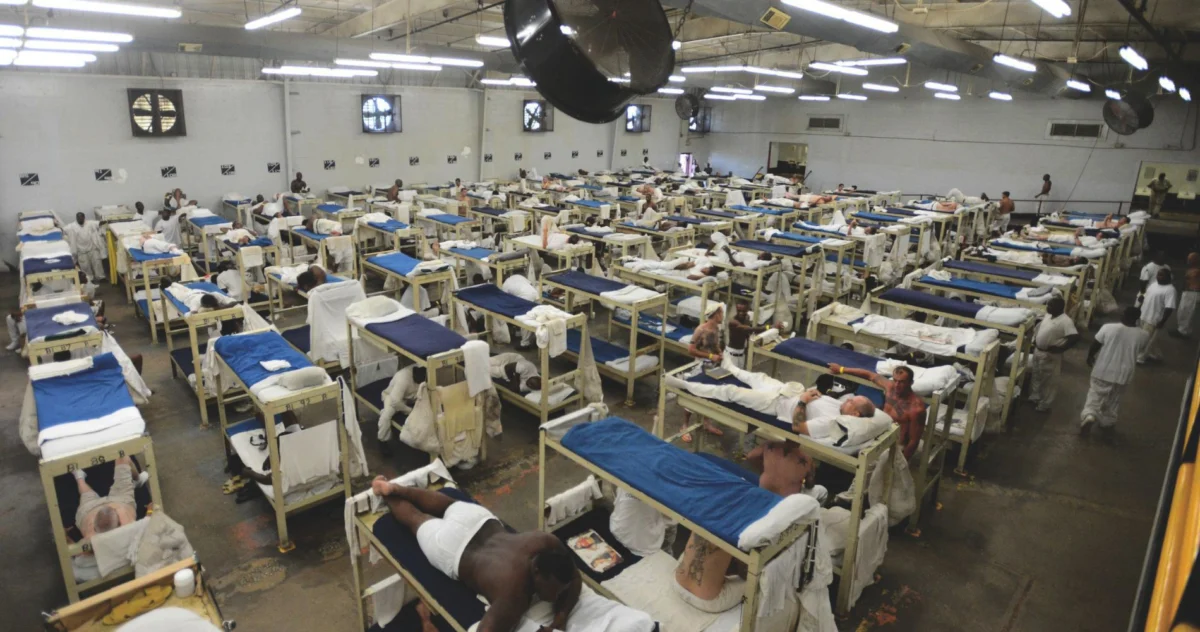
The United States continues to hold the unenviable distinction of incarcerating more people than any other country, maintaining the highest incarceration rate among all independent democracies on Earth. Latest data from the Prison Policy Initiative (PPI) reveals a carceral system of unprecedented scale, housing nearly two million individuals and imposing a profound financial and social burden on the nation. This expansive system not only dwarfs those of other major global powers but also embeds deep-seated societal implications, from economic drain to intergenerational trauma.
The Scale of Incarceration: A National Overview
According to the Prison Policy Initiative’s comprehensive 2026 report, a staggering 1,973,000 people are currently confined within the vast network of U.S. correctional facilities. This figure encompasses a complex array of institutions, including 1,566 state prisons, 98 federal prisons, and 3,116 local jails, which often serve as the initial points of entry into the justice system. Beyond these primary facilities, the carceral landscape extends to 1,277 juvenile correctional facilities, 220 immigration detention facilities, and 77 Indian country jails. Further adding to the total are individuals held in military prisons, civil commitment centers, state psychiatric hospitals, and correctional facilities across U.S. territories. This intricate web of detention centers underscores the multifaceted nature of incarceration in America, capturing individuals across various legal statuses and stages of judicial processing.
The financial ramifications of this extensive system are equally monumental. The report estimates that the annual cost to incarcerate nearly two million people across the nation amounts to at least $445 billion. This figure represents a dramatic escalation from previous expenditures, being more than five times the $87 billion spent on jails and prisons in 2015. This escalating cost highlights a significant allocation of public funds towards punitive measures, often at the expense of investments in education, healthcare, and community development, which are frequently cited by reform advocates as more effective long-term crime prevention strategies. The nearly half-trillion-dollar expenditure could otherwise fund numerous social programs, infrastructure projects, or educational initiatives, prompting critical questions about resource allocation and societal priorities.
Global Comparison: An Outlier Nation
The U.S.’s position as the world leader in total incarcerated population is stark when compared to other nations. Following the U.S. with its nearly two million prisoners, China reports 1.69 million prisoners, though this figure excludes an unknown number held in pre-trial detention and other forms of administrative detention, suggesting its true total could be higher. Brazil ranks third with 909,067 prisoners, followed by India with 511,542, and Turkey with 420,798, according to the World Prison Brief from the Institute for Crime & Justice Policy Research. These figures illustrate the significant disparity in the absolute number of individuals confined within the U.S. compared to countries with often much larger populations.
Beyond sheer numbers, the U.S. also leads independent democracies in its incarceration rate, with 580 people incarcerated per 100,000 residents, as reported by PPI. On a global scale, only a handful of nations—El Salvador, Cuba, and Turkmenistan—surpass the U.S. in locking up more people per capita. This per capita rate provides an even more striking illustration of the U.S.’s punitive approach, demonstrating that a larger proportion of its population is subject to incarceration than almost any other country worldwide.
Further disaggregating this data reveals an even more concerning trend: individual U.S. states often incarcerate more people per capita than most entire nations. In its 2024 analysis, PPI reported that if each U.S. state were considered an independent nation, the incarceration rates of 24 states, alongside three countries (El Salvador, Cuba, and Rwanda), would eclipse the U.S.’s nationwide rate. The report further highlights that after El Salvador, which holds the world’s highest incarceration rate, the next nine highest rates are found in U.S. states, with all but one located in the American South. Even Massachusetts, which boasts the lowest incarceration rate among U.S. states, would still rank 30th globally if it were a sovereign country, placing it higher than nations like Iran, Colombia, and all the founding NATO members. This granular perspective underscores the pervasive and deeply entrenched nature of high incarceration rates across the American landscape, challenging any notion that the national average obscures significantly lower rates in certain regions.
Historical Context and Policy Evolution: The Road to Mass Incarceration
The current state of mass incarceration in the U.S. is not an anomaly but the culmination of several decades of evolving criminal justice policies and societal shifts. Prior to the 1970s, incarceration rates in the U.S. were relatively stable for much of the 20th century. However, a significant paradigm shift began in the late 1970s and accelerated through the 1980s and 1990s, driven by a "tough on crime" political rhetoric and the "War on Drugs."
- 1970s-1980s: The Rise of "Tough on Crime": Fueled by rising crime rates and a public desire for increased safety, politicians across the spectrum began advocating for stricter sentencing laws. The focus shifted from rehabilitation, which had been a guiding principle in earlier decades, to retribution and incapacitation.
- The War on Drugs (Beginning in 1971, intensified in the 1980s): Initiated by President Nixon and significantly expanded by President Reagan, the War on Drugs introduced harsh penalties for drug offenses, including mandatory minimum sentences. These policies disproportionately impacted minority communities, leading to a dramatic increase in arrests and convictions for non-violent drug crimes. Racial disparities in sentencing for similar offenses became, and remain, a significant concern.
- Mandatory Minimums and Truth in Sentencing (1980s-1990s): The proliferation of mandatory minimum sentencing laws removed discretion from judges, requiring specific prison terms for certain crimes, regardless of individual circumstances. "Truth in sentencing" laws further curtailed parole eligibility, requiring offenders to serve a substantial portion of their sentences, leading to longer stays in prison.
- The 1994 Crime Bill: Signed into law by President Bill Clinton, the Violent Crime Control and Law Enforcement Act of 1994 provided billions of dollars for new prisons, more police officers, and expanded eligibility for the death penalty. It also introduced the "three strikes" rule, mandating life sentences for repeat violent offenders. While intended to reduce crime, critics argue it significantly contributed to the explosion of the incarcerated population.
- Growth of Private Prisons: Although the article doesn’t explicitly mention it, the era of mass incarceration also saw the rise of private correctional facilities, which operate for profit and have been criticized for incentivizing higher incarceration rates and potentially compromising inmate welfare.
This historical trajectory illustrates a systemic move towards a more punitive justice system, which has resulted in the current unprecedented levels of incarceration and the associated economic and social costs.
Profound Societal Implications: Beyond the Numbers
The far-reaching implications of mass incarceration extend well beyond the direct costs and the sheer number of people confined. Its effects ripple through families, communities, and the broader social and economic fabric of the nation.
-
Impact on Families and Children: The human cost is perhaps most acutely felt by families. Research from the Equal Justice Initiative (EJI) found that half of all Americans have had an immediate family member incarcerated. This statistic highlights the widespread nature of carceral impact, touching nearly every demographic. On any given day in America, 2.7 million children have a parent in prison or jail, according to The Sentencing Project. Over the course of their childhoods, more than 5.2 million children have experienced the trauma of parental incarceration. This separation can lead to significant emotional distress, academic struggles, financial instability, and an increased likelihood of involvement with the justice system themselves, perpetuating cycles of disadvantage. Children of incarcerated parents often face stigma, mental health challenges, and disrupted family structures, which can have lifelong consequences.
-
Racial and Ethnic Disparities: The impact of mass incarceration is not evenly distributed across the population. Black and Hispanic individuals are disproportionately represented in the incarcerated population compared to their share of the general population. This disparity is a critical concern for civil rights advocates and points to systemic issues within the justice system, including biased policing practices, unequal access to legal representation, and discriminatory sentencing. The War on Drugs, in particular, has been widely criticized for its role in exacerbating these racial disparities, leading to the decimation of communities of color.
-
Economic Consequences: Beyond the direct $445 billion annual expenditure, mass incarceration carries substantial indirect economic costs. It removes millions of working-age individuals from the labor force, reducing national productivity and tax revenues. Upon release, formerly incarcerated individuals often face significant barriers to employment, housing, and education, contributing to higher rates of unemployment and poverty. Businesses are often reluctant to hire individuals with criminal records, creating a perpetual cycle of economic marginalization. Furthermore, the cost of supporting the families of incarcerated individuals often falls on social welfare programs, adding another layer of public expenditure.
-
Public Health and Mental Health: Jails and prisons have become de facto mental health facilities, housing a significant proportion of individuals with mental illnesses and substance use disorders. These institutions are often ill-equipped to provide adequate care, leading to worsening conditions and a cycle of recidivism. The confined environment of correctional facilities also poses public health risks, facilitating the spread of infectious diseases. The stress and trauma of incarceration can exacerbate existing mental health issues or trigger new ones, creating a public health crisis both inside and outside prison walls.
-
Civic Disenfranchisement: In many states, a criminal conviction, particularly for a felony, results in the loss of voting rights, sometimes permanently. This disenfranchisement impacts millions of Americans, predominantly people of color, and undermines democratic participation. The ability to vote is a fundamental right, and its revocation due to a criminal record raises significant questions about restorative justice and reintegration into society.
Calls for Reform and the Path Forward
The sheer scale and profound implications of U.S. incarceration have spurred a growing movement for criminal justice reform. Advocates from across the political spectrum increasingly recognize the need for a more equitable, effective, and fiscally responsible approach to public safety.
Organizations like the Prison Policy Initiative, the Equal Justice Initiative, and The Sentencing Project consistently publish data and research to highlight the failings of the current system and propose alternative solutions. Their work underscores the importance of addressing root causes of crime, such as poverty, lack of educational opportunities, and inadequate mental health services, rather than solely relying on punitive measures.
Key areas of reform frequently discussed include:
- Reforming Sentencing Laws: Revisiting and repealing mandatory minimum sentences, particularly for non-violent drug offenses, and restoring judicial discretion.
- Addressing Cash Bail: Eliminating or significantly reforming cash bail systems that disproportionately affect low-income individuals, leading to pre-trial detention for those who cannot afford bail.
- Investing in Community-Based Alternatives: Shifting resources from incarceration to evidence-based programs that provide rehabilitation, job training, housing assistance, and mental health services in communities.
- Racial Justice in the System: Implementing policies and training to combat implicit bias in policing, prosecution, and sentencing to address systemic racial disparities.
- Re-entry Programs: Strengthening support systems for individuals returning to society after incarceration to reduce recidivism, including employment assistance, housing, and mental healthcare.
- Ending Private Prisons: Calls to abolish private prisons, arguing that profit motives should not be intertwined with the administration of justice.
The ongoing national dialogue around criminal justice reform reflects a growing consensus that the current model of mass incarceration is unsustainable and often counterproductive. While the U.S. continues to grapple with the legacy of its expansive carceral system, the detailed data and the tireless efforts of reform advocates provide a critical foundation for understanding the problem and charting a course toward a more just and effective approach to public safety. The challenge remains to translate this understanding into comprehensive policy changes that prioritize human dignity, community well-being, and fiscal responsibility over the punitive measures that have historically defined the nation’s approach to crime and punishment.