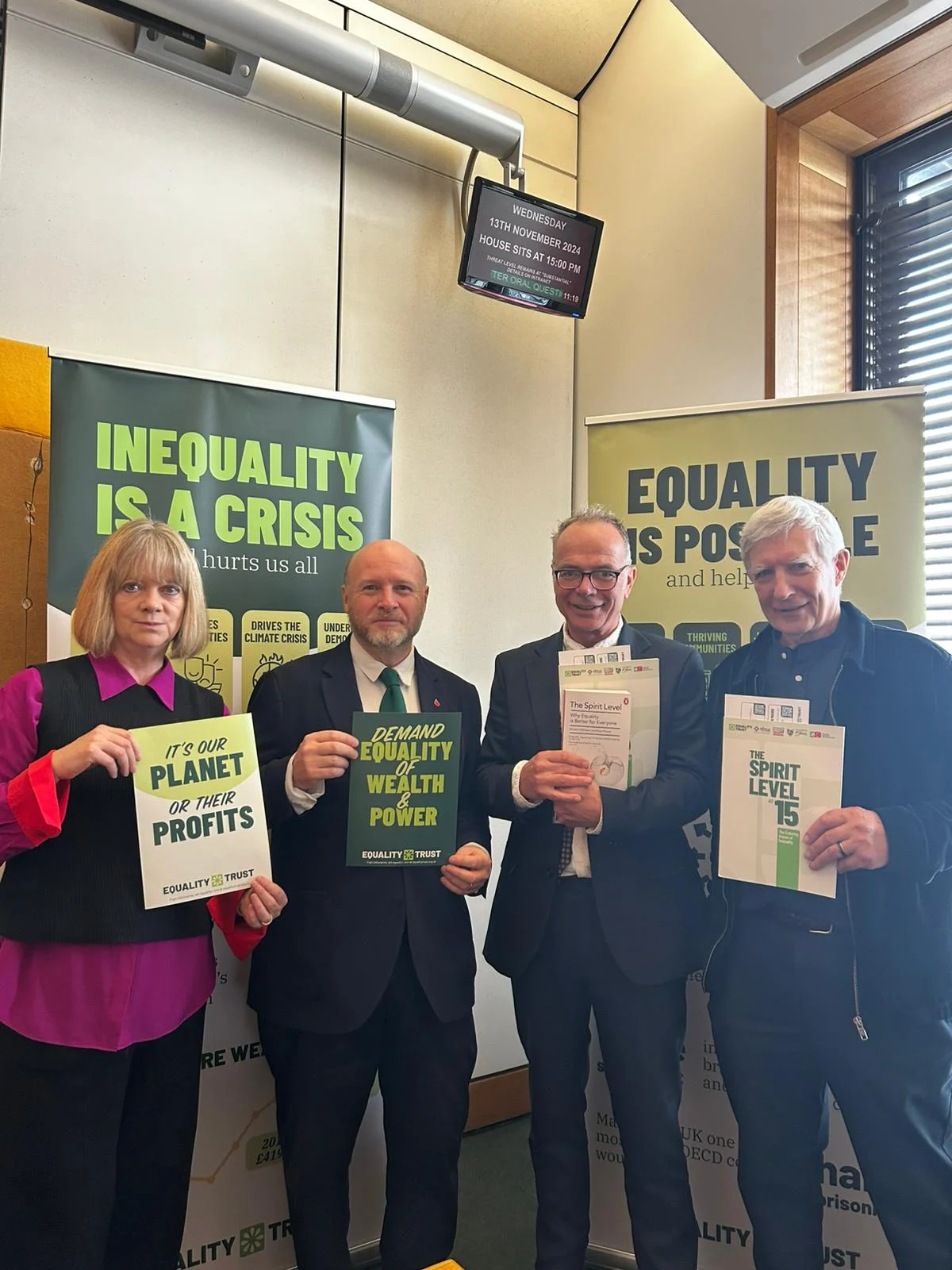
On January 13, 2026, the Public Policy Exchange convened a high-level summit to scrutinize the government’s newly unveiled Child Poverty Strategy, titled Tackling Child Poverty: Improving Welfare, Security and Future Prospects. Among the keynote contributors was Priya Sahni-Nicholas, Co-Executive Director of The Equality Trust, who presented a rigorous assessment of the government’s roadmap. While the strategy marks a definitive departure from the policy frameworks of the previous decade, Sahni-Nicholas argued that it remains constrained by a narrow focus on income redistribution, failing to address the deeper, more systemic drivers of wealth inequality and corporate power that continue to trap millions of families in a cycle of deprivation.
The Child Poverty Strategy represents the first comprehensive, UK-wide effort to address juvenile destitution since the early 2000s. It explicitly frames the current crisis as a "moral, economic, and public-services failure" inherited from over a decade of policy choices that prioritized fiscal consolidation over social security. With a stated goal to "end child poverty" in the long term and achieve significant reductions within the current parliamentary term, the strategy seeks to reverse a trend that has seen the United Kingdom become an outlier among advanced economies.
The State of Child Poverty: Data and Contextual Background
By the start of 2025, the scale of the crisis had reached historic levels. Approximately 4.5 million children—one in three across the United Kingdom—were living in relative poverty. Perhaps more alarming is the depth of this hardship: nearly 20% of UK children live in households experiencing food insecurity, where families cannot consistently afford or access nutritional sustenance.
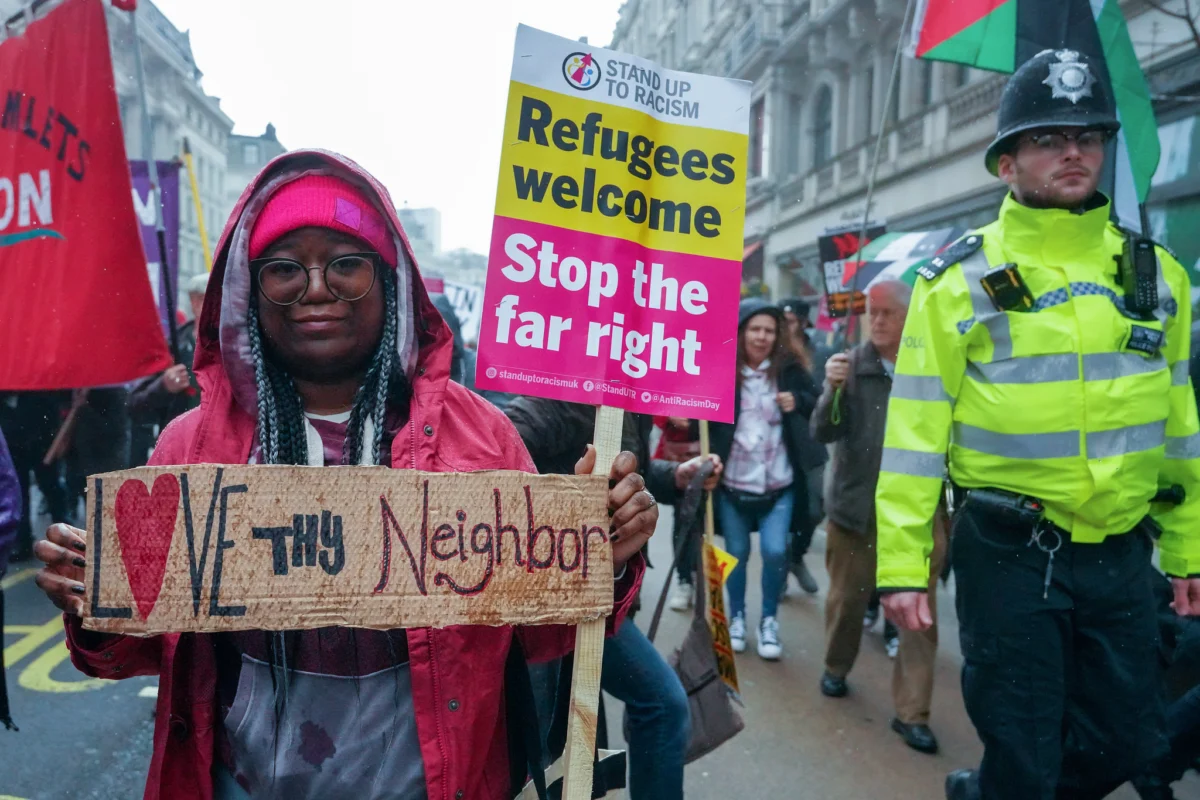
This trajectory stands in stark contrast to other European and OECD nations. While many peer economies have successfully implemented social safety nets that reduced child poverty rates over the last 15 years, the UK saw a consistent rise beginning in 2010. Analysts attribute this divergence to several factors, including the 2017 introduction of the two-child limit on benefit payments, the "benefit cap," and the decoupling of local housing allowances from actual market rents. The 2026 strategy is, therefore, positioned as a corrective measure to these specific legislative levers.
A Chronology of Policy Shifts (1997–2026)
To understand the significance of the 2026 strategy, it is essential to view it through a historical lens. Between 1997 and 2010, the UK saw a sustained period of investment in families. Through the introduction of tax credits, Sure Start centers, and real-terms increases in child benefits, child poverty fell by approximately 600,000. This period demonstrated that direct fiscal intervention and the redistribution of income can yield rapid, measurable improvements in child welfare.
However, the period between 2010 and 2024 saw a reversal of these gains. The era of "austerity" introduced radical changes to the welfare state, including the transition to Universal Credit and the freezing of benefit rates. By 2024, the "in-work poverty" phenomenon had become a structural feature of the UK economy, with the majority of children in poverty living in households where at least one parent was employed. The 2026 strategy acknowledges this history, framing child poverty not as an inevitable byproduct of economic cycles, but as a direct result of political and policy choices.
Analysis of the Strategy’s "Wins" and Immediate Impacts
The Equality Trust’s analysis highlights several areas where the strategy succeeds in reinstating child poverty as a core national priority. The most significant policy shift is the abolition of the two-child limit. Economic modeling suggests this single intervention will lift an estimated 450,000 children out of relative poverty almost immediately. This policy was widely criticized by human rights organizations and economists for disproportionately penalizing larger families and minority ethnic communities, where larger household sizes are more common.

Furthermore, the strategy broadens the scope of intervention beyond simple cash transfers. It includes:
- Expansion of Free School Meals and Breakfast Clubs: Recognizing that hunger is a barrier to education, the government has committed to universalizing access to nutrition within the school system.
- National Living Wage Increases: By raising the floor for wages, the government aims to tackle the "working poor" crisis.
- Childcare Expansion: Addressing the "participation gap" for parents, particularly mothers, by subsidizing early years care to allow for greater workforce engagement.
- The "Spatial Lens": The strategy acknowledges that poverty is not evenly distributed. It utilizes a place-based approach, granting local authorities more power to address specific regional disadvantages through devolution deals.
Perhaps most importantly, the government has moved away from the stigmatization of the poor. By consulting with groups like Changing Realities—an organization of parents with lived experience of poverty—the strategy incorporates the "mental load" and social stigma of poverty into its diagnosis, emphasizing the need for dignity in the welfare system.
The Missing Pillar: Wealth and Structural Inequality
Despite these advancements, The Equality Trust maintains that the strategy suffers from a critical blind spot: the total omission of wealth inequality. In her briefing, Sahni-Nicholas noted that the word "wealth" does not appear in the strategy’s core metrics or solutions. This is a significant oversight, as wealth is the primary predictor of long-term resilience and intergenerational mobility.
In the UK, wealth is increasingly concentrated at the top of the distribution. Families with identical incomes can experience vastly different standards of living based on their assets. A family with access to inherited property or savings can weather economic shocks—such as a job loss or a health crisis—that would plunge a family reliant solely on wages into destitution.
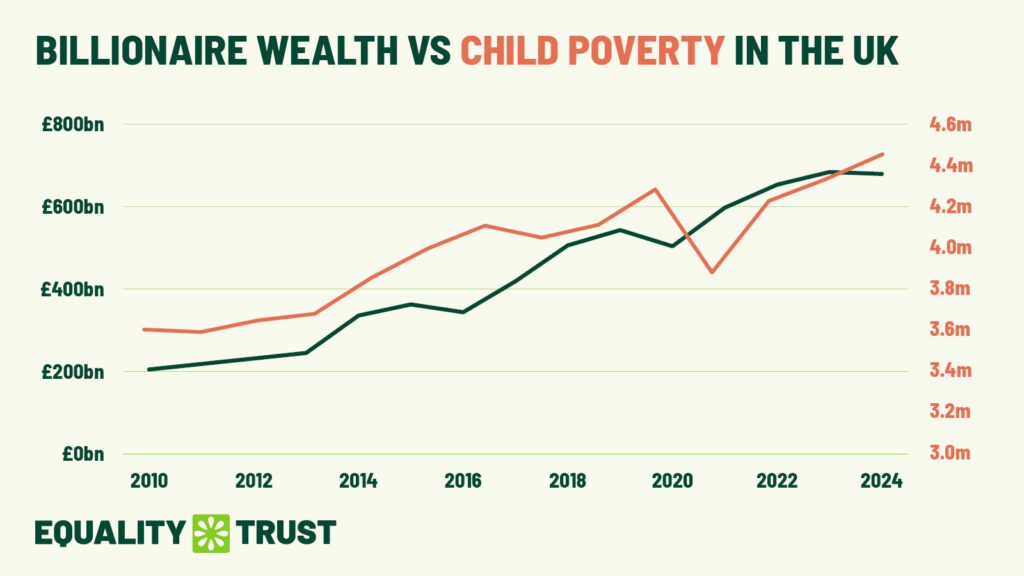
The Equality Trust points to the work of economist Thomas Piketty, specifically his thesis that the return on capital (r) often outpaces economic growth (g). When wealth grows faster than wages, the structural gap between the asset-owning class and the working class widens. A child poverty strategy that ignores this dynamic is essentially attempting to mitigate the symptoms of inequality without addressing the disease. Currently, the UK tax system favors wealth over work; returns on assets (such as capital gains) are often taxed at lower rates than income from labor. This creates a fiscal environment where the government’s ability to fund public services is tethered to a sluggish wage-growth model while massive pools of capital remain under-taxed.
Power Dynamics and Corporate Influence
The second major critique leveled by The Equality Trust concerns the unspoken dimension of power. The 2026 strategy discusses "opportunity" and "life chances" as if they exist in a vacuum, ignoring the role that corporate power and political influence play in shaping the economy.
Child poverty is not an accidental system failure; it is often the result of an economic model designed to maximize returns for shareholders and property owners at the expense of labor. The strategy remains silent on:
- The Housing Market: The deregulation of the private rental sector and the lack of social housing construction have allowed housing costs to consume an ever-increasing share of household income.
- Corporate Accountability: Low-wage business models and the proliferation of "gig economy" contracts contribute to the insecurity that keeps families on the brink of poverty.
- Tax Reform: Without a commitment to taxing wealth and closing loopholes for the ultra-wealthy, the funding for anti-poverty measures remains precarious and subject to the whims of future fiscal cycles.
Broader Impact and Implications for the Future
The implications of the 2026 Child Poverty Strategy are far-reaching. In the short term, the abolition of the two-child limit and the increase in the National Living Wage will undoubtedly provide relief to millions. However, the long-term success of the initiative depends on whether the government is willing to move from "poverty reduction" to "inequality reduction."

True alignment with a transformative economic framework would require the government to integrate wealth into the child poverty agenda. This could include policies such as a progressive wealth tax, the expansion of social housing to lower the cost of living permanently, and the strengthening of trade union power to ensure that a fair share of economic growth reaches workers.
Furthermore, the strategy’s success will be measured by its ability to close the gap between the richest and poorest communities. If the "floor" is raised but the "ceiling" continues to soar, the social cohesion of the UK will remain under threat. High levels of inequality are linked to a range of social ills, including lower life expectancy, higher rates of mental health issues, and decreased social mobility—all of which disproportionately affect children.
Official Responses and Stakeholder Reactions
While the government has hailed the strategy as a "new dawn" for social justice, reactions from across the political and social spectrum have been mixed. Advocacy groups such as the Child Poverty Action Group (CPAG) have welcomed the removal of the two-child limit but cautioned that the "benefit cap" still prevents thousands of families from receiving the full support they need.
Economic think tanks have pointed out that the strategy’s reliance on economic growth to fund future interventions is a gamble. Without structural changes to the tax base, a period of stagnation could lead to a return of the "austerity" logic that decimated the social safety net after 2010. Local government leaders have also expressed concern regarding the funding of the "place-based" approaches, noting that many councils remain on the verge of bankruptcy after years of budget cuts.

Conclusion: A Corrective, Not a Transformation
The 2026 Child Poverty Strategy is a necessary and welcome corrective to the policies of the last decade. It reinstates the state’s responsibility to protect its most vulnerable citizens and recognizes that poverty is a systemic, rather than an individual, failure. By raising incomes and reducing essential costs, the government will materially improve the lives of millions of children.
However, as The Equality Trust’s analysis concludes, the strategy treats child poverty as a marginal issue that can be solved within the confines of a deeply unequal system. History and evidence suggest that poverty cannot be truly ended until the UK confronts the concentration of wealth and the power structures that sustain it. Until the government is willing to tell a bolder story—one that acknowledges extreme inequality as incompatible with children’s rights and dignity—the fight against child poverty will remain an uphill battle. The strategy is a vital first step, but the journey toward a truly equitable society requires a much more radical restructuring of the British economy.