Measuring the true extent of Americans’ engagement in public life is an intricate endeavor, one that defies simplistic categorization or a single, universal metric. Public participation manifests in a kaleidoscope of forms: the deeply rooted community organizer, the religiously devout congregant, the avid news consumer who consistently debates current events with friends and family, the dedicated volunteer for political campaigns, and the generous philanthropist. Recognizing this inherent complexity, the Pew Research Center, through its Pew-Knight Initiative, embarked on a groundbreaking study designed to capture this multifaceted reality with unprecedented depth and nuance. This article delves into the sophisticated methodologies employed in this significant research, from the meticulous design of survey instruments to the advanced analytical strategies used to segment the American populace based on their engagement patterns.
The Pew-Knight Initiative’s study, launched to provide a comprehensive understanding of how Americans interact with news, politics, religion, and civic life, represented a departure from traditional survey research. The research team acknowledged that conventional approaches often lead to an overestimation of public engagement, primarily because individuals who are already more involved are inherently more inclined to participate in surveys. To counter this inherent bias, the study incorporated a rigorous, multi-stage process to ensure a more accurate and representative picture of the nation’s civic and political landscape.
The Genesis of a Comprehensive Engagement Framework
The research journey began with the acknowledgment that a singular question could not adequately capture the diverse spectrum of public engagement. The Pew Research Center’s team meticulously developed a broad array of potential survey questions, drawing inspiration from their extensive archive of previous surveys, established academic research, and innovative new questions conceived to probe various dimensions of engagement. This initial phase was crucial in laying the groundwork for a survey that could encompass the rich tapestry of public participation.
Rigorous Testing and Refinement of Survey Instruments
To validate these potential measures and assess their interrelationships, the research team conducted a large-scale test survey. This online opt-in survey, involving over 8,000 U.S. adults, served as a critical testing ground. While Pew Research Center does not utilize opt-in samples for its substantive reporting due to potential biases, this methodology proved invaluable for cost-effectively testing new questions and evaluating how well different measures correlated with each other. The insights gleaned from this pilot phase were instrumental in streamlining the questionnaire for the final, nationally representative survey.

A key finding from the test survey involved the exploration of participation in nine distinct types of groups. The data revealed a strong correlation between involvement in these specific groups and responses to a broader question adapted from the U.S. Census Bureau’s Civic Engagement and Volunteering (CEV) Supplement, which inquired about membership in "groups, organizations, or associations." The convergence of these two approaches provided empirical support for the validity of the simpler CEV question, which was subsequently integrated into the final survey instrument. This iterative process of question development, testing, and refinement ensured that the final survey captured engagement in a statistically robust and conceptually sound manner.
The refined survey design for the national multimode survey incorporated measures across four key domains: political activity (including campaign volunteering and public displays of support for candidates or causes), civic involvement (encompassing non-political volunteering and group affiliations), news consumption (tracking attention to news and discussions about it), and religious participation (covering attendance at religious services, both in-person and online). The complete questionnaire, detailing the specific questions asked, is available in the supplementary materials for this study.
Executing the National Survey: Reaching All Americans
The culmination of this methodological groundwork was the fielding of the final survey. Conducted between July 9 and December 5, 2025, the survey engaged 5,393 U.S. adults using an address-based sampling (ABS) methodology. This approach was specifically chosen to ensure the inclusion of hard-to-reach populations, including those individuals who are less likely to be engaged in public life and, consequently, less likely to participate in traditional surveys. To maximize participation rates and accommodate diverse preferences, respondents were offered the flexibility to complete the survey online, via paper, or by telephone. Multiple outreach efforts were undertaken to encourage participation from those who did not initially respond.
Unveiling Engagement Patterns: The Power of Cluster Analysis
With the extensive data collected, the next critical challenge was to determine the most effective analytical strategy for understanding the complex interplay of engagement behaviors. While reporting each behavioral measure separately, alongside demographic breakdowns, is a common practice and offers valuable insights into specific domains like online civic participation or local community engagement, it falls short of capturing the holistic nature of public involvement. Such an approach would make it difficult to identify overarching patterns and understand how different forms of engagement coalesce within individuals.
Another potential method, combining all engagement measures into a single scale by simply counting the number of activities each respondent reported, also presented significant limitations. This approach fails to acknowledge the inherent differences in the nature and effort required for various engagement activities. For instance, contacting elected officials or volunteering for a campaign demands a greater investment of time, resources, and institutional engagement compared to liking or sharing news on social media. A simple count would treat these disparate activities as equivalent, overlooking crucial nuances. Furthermore, establishing arbitrary thresholds to define "engagement" based on such a count could lead to subjective interpretations.
Cluster analysis emerged as the ideal statistical technique to overcome these limitations. This method is designed to group individuals who exhibit similar patterns across a range of variables, rather than predefining categories. The groups are identified based on common combinations of responses, allowing emergent typologies to reveal themselves from the data. Crucially, the specific type of cluster analysis employed by Pew Research Center is capable of handling questions with diverse response formats, from simple yes/no answers to more nuanced scaled responses. This sophisticated approach enables a more accurate and meaningful segmentation of the population based on their engagement profiles, moving beyond a single, undifferentiated scale.
The Iterative Process of Cluster Analysis
The development of a robust cluster model is an iterative and complex process. The final outcome can be influenced by a variety of factors, including the specific algorithm used for grouping, the coding of variables, the selection of measures included in the model, the predetermined number of clusters, and even the order in which respondents are processed.
To navigate this complexity, the research team systematically tested various analytical strategies, initially focusing solely on the engagement behavior variables. They ultimately adopted Gower’s distance, a statistical method adept at calculating the similarity or dissimilarity between individuals based on their survey responses. This approach is particularly valuable as it can accommodate and compare different types of questions, even when respondents have not answered every single question. The team explored numerous combinations of engagement measures and evaluated how the results shifted with different numbers of cluster groups.
The evaluation of these models went beyond mere statistical fit. The researchers assessed how well each model captured meaningful and coherent patterns. Models that performed well statistically but produced groups with overlapping behavioral patterns or demographics that lacked intuitive alignment were set aside. In such instances, prior research and substantive expertise played a vital role in judging the meaningfulness of the emerging groups. The consistency of results across many of these tested models provided a strong foundation of confidence in the final chosen model.
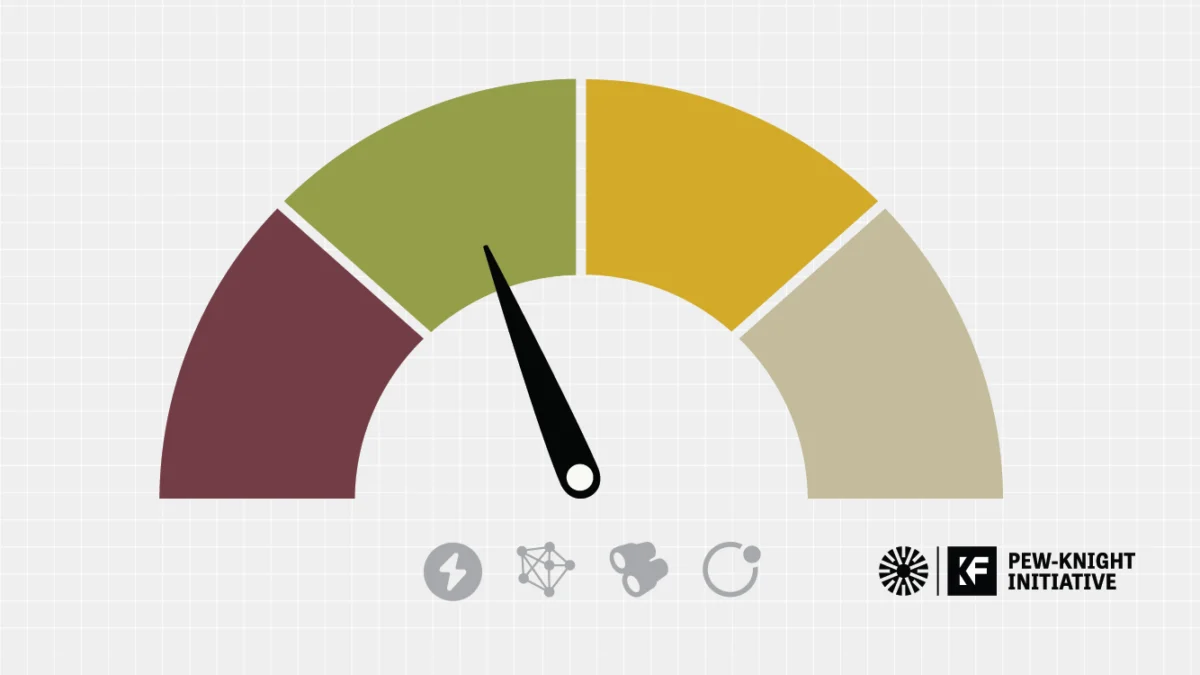
The selected cluster analysis model offers a refined way to understand how Americans engage in public life, categorizing them into four distinct groups:

-
Mobilizers: This group represents the smallest segment of the population but is characterized by the highest level of engagement across all examined domains: politics, civics, news consumption, and religion. They are the most active participants in public life.
-
Connectors: While highly involved in various civic activities, such as participating in groups and making charitable donations, Connectors are significantly less likely than Mobilizers to be deeply immersed in political activities. Their engagement is broad, but with a less pronounced political focus.
-
Spectators: This group primarily engages with public life through news consumption. They follow news at high rates but are considerably less likely than the more engaged groups to participate directly in other civic or political activities. They are informed observers.
-
Outsiders: This segment of the population is characterized by lower levels of engagement across most activities. They are less likely than other groups to report participating in activities such as voting, volunteering, or closely following the news. They represent the least involved segment of the population.
These four groups provide a dynamic snapshot of how individuals engage in public life at a particular time. It is important to note that these are not rigid, immutable categories; individuals can and do shift between these groups as their levels and forms of engagement evolve over time. A more in-depth exploration of these engagement groups and the broader study findings is available in the full report.

Analyzing Attitudes and Opinions Across Engagement Groups
The cluster analysis successfully identified distinct patterns of behavior, but a crucial next step was to determine if these behavioral differences correlated with variations in opinions and attitudes. To investigate this, the engagement groups identified in the main ABS survey were applied to a separate survey conducted in September 2025 with 5,195 U.S. adults, utilizing the Pew Research Center’s American Trends Panel (ATP). This panel survey included the same questions on engagement behaviors, allowing for the assignment of respondents to the previously defined ABS engagement groups, and also featured a more extensive range of questions on civic attitudes and knowledge.
Two primary approaches were considered for linking the engagement groups to the ATP data. One option involved re-running the cluster analysis using the ATP data alone. This would have yielded similar groups with comparable engagement and demographic profiles to the ABS survey, thus reinforcing the robustness of the findings. However, even minor discrepancies between the two analyses could introduce confusion when communicating the results.
Therefore, the research team opted for a more cohesive strategy: they applied the engagement groups derived from the ABS survey directly to the ATP respondents. Because the ATP participants had answered the identical engagement questions, they could be assigned to the ABS engagement group that best matched their responses. This approach allowed for the analysis of their attitudes and knowledge using the rich ATP dataset while maintaining the integrity and consistency of the engagement groups established from the representative ABS survey. The application of the ATP data to the existing cluster analysis confirmed that the resulting groups maintained similar engagement patterns and demographic characteristics as the original ABS survey groups.
The analysis revealed significant correlations between levels of public engagement and individuals’ political interest and knowledge. Americans who are more actively involved in public life demonstrate a greater interest in politics and possess more extensive knowledge about political matters compared to those with lower levels of engagement. Conversely, the "Outsiders" group, characterized by minimal involvement, showed a lower propensity to trust news organizations compared to the other groups. This finding underscores a potential disconnect between a significant portion of the population and the information landscape.
In essence, this research project leveraged the distinct strengths of both survey methodologies. The ABS survey provided a nationally representative sample across the full spectrum of public engagement, ensuring that all segments of the population were accounted for. The ATP survey, on the other hand, offered the capacity to explore a far broader array of attitudes, opinions, and knowledge. By integrating these complementary strengths, the Pew Research Center has delivered a more profound and nuanced understanding of how Americans participate in public life, offering valuable insights for researchers, policymakers, and the public alike. The implications of these findings extend to understanding democratic participation, media consumption habits, and the broader civic health of the nation.