Gerry Boyle, a prominent figure in the British third sector and a specialist in international development, has officially stepped down from the Board of Trustees at The Equality Trust after completing the maximum allowable tenure of six years. His departure, announced on March 23, 2026, marks the end of two consecutive three-year terms during which the organization navigated a period of significant economic volatility and shifting political priorities in the United Kingdom. Boyle’s tenure was characterized by a strategic focus on financial sustainability and the promotion of the Socio-Economic Duty, a legislative tool designed to compel public bodies to address the root causes of poverty and inequality.
The Equality Trust, established in 2009 by Professors Richard Wilkinson and Kate Pickett, serves as a central advocacy group focused on reducing social and economic inequality in the UK. Boyle joined the organization following a career that blended business acumen with a commitment to social justice, a combination that proved vital as the Trust faced a tightening fiscal environment for non-governmental organizations (NGOs). His departure follows the organization’s internal constitutional rules, which limit trustees to six years of service to ensure a regular infusion of new perspectives and expertise.
The Chronology of a Six-Year Tenure (2020–2026)
Boyle’s appointment in 2020 coincided with one of the most tumultuous periods in modern British history. Upon joining the board, he was tasked with applying his experience in international development and private sector project management to the governance of a high-profile campaigning body. His first term (2020–2023) was largely defined by the immediate social fallout of the global pandemic, which exacerbated existing wealth gaps and placed renewed pressure on the UK’s social safety net.
During his second term (2023–2026), Boyle’s role shifted toward long-term institutional stability. Serving on the board’s finance committee, he oversaw the organization’s transition through a period of "austerity 2.0," characterized by high inflation and reduced public sector spending. Throughout this time, the Trust’s leadership underwent several transitions, yet Boyle remained a constant, providing what colleagues have described as a bridge between the academic foundations of the Trust and the practical realities of non-profit governance.
In his final years on the board, Boyle was instrumental in championing the "Socio-Economic Duty," specifically Section 1 of the Equality Act 2010. While this section had remained largely dormant at the national level for over a decade, the Trust successfully campaigned for its voluntary adoption by various local authorities and regional governments, creating a framework for policy-making that prioritizes the reduction of inequality.
Theoretical Foundations: The Influence of The Spirit Level
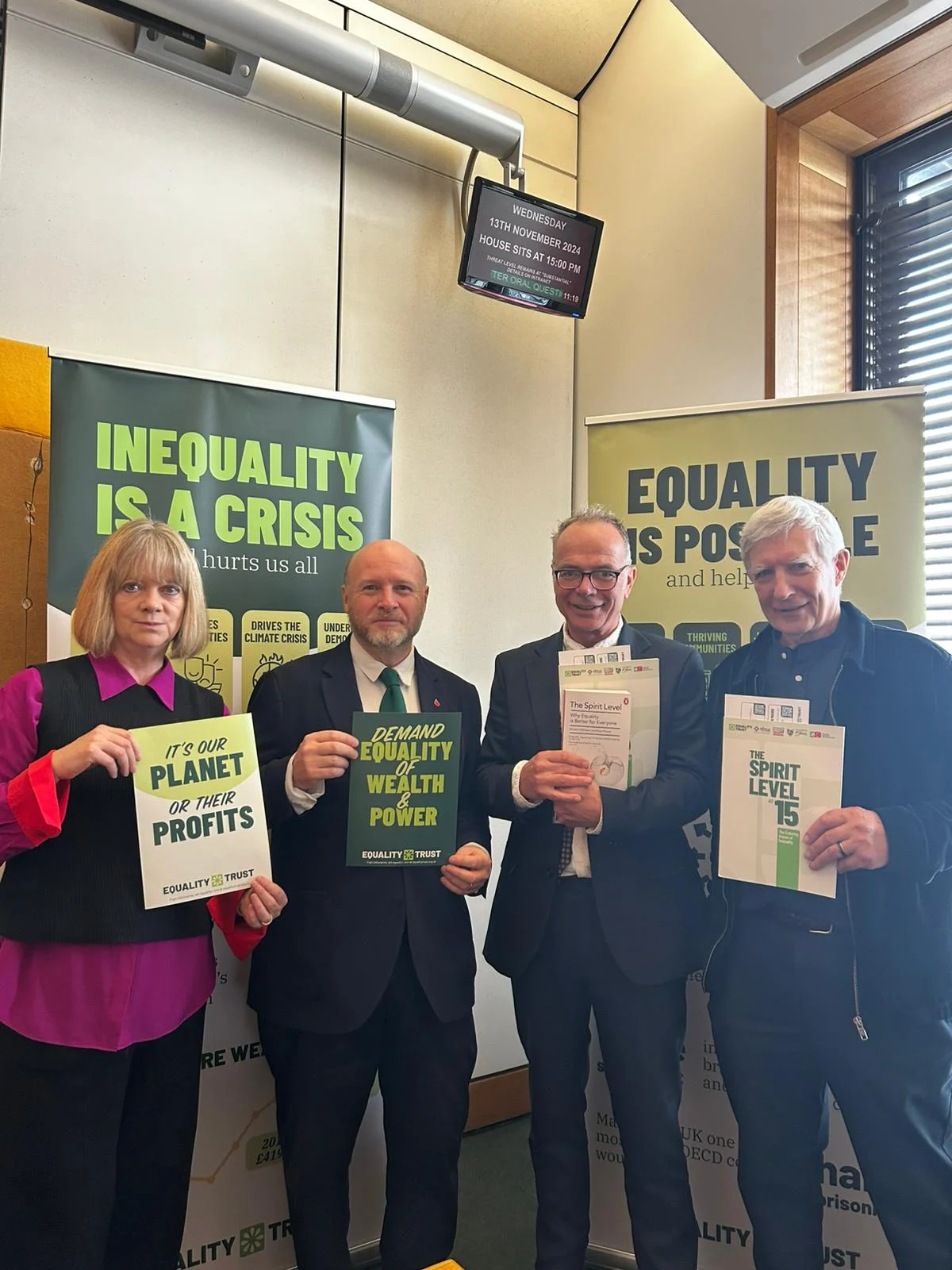
The ideological impetus for Boyle’s involvement with the Trust stems from the seminal work The Spirit Level: Why Greater Equality Makes Societies Stronger, authored by the Trust’s founders. This research remains the bedrock of the organization’s advocacy. The data presented in the text suggests that in societies with high levels of income inequality, social outcomes across a range of metrics—including life expectancy, mental health, literacy, and social mobility—are significantly poorer.
Boyle’s tenure saw the Trust continue to leverage this data to influence public discourse. By presenting inequality not merely as a matter of individual poverty but as a systemic issue affecting the entire population, the Trust has sought to build a broad-based coalition for reform. Analysis of the UK’s current standing indicates that the nation remains one of the most unequal among developed economies, with the top 10% of households holding nearly 43% of the nation’s wealth, while the bottom 50% hold less than 5%. Boyle’s work focused on translating these stark statistics into actionable campaign goals.
Navigating the "Lumpy Funding" Landscape
One of the most significant challenges identified during Boyle’s tenure was the precarious nature of charity financing. In his exit statements, Boyle highlighted the risks associated with "lumpy funding"—a reliance on a small number of large-scale grants that can create financial instability if a single funding stream is interrupted. This vulnerability was intensified by the UK government’s decision to reduce international aid spending from 0.7% to 0.5% of Gross National Income (GNI), a move that had ripple effects throughout the charity sector as domestic and international organizations began competing for a shrinking pool of resources.
Under Boyle’s guidance on the finance committee, The Equality Trust accelerated its efforts to diversify income streams. This strategy involved moving away from institutional grant dependency toward a "supporter-led" model. This transition, however, occurred against the backdrop of a severe cost-of-living crisis, which limited the capacity of individual donors to contribute. Despite these headwinds, the Trust reported a steady increase in small-scale, recurring donations, which Boyle argued provides the "maximum freedom to campaign effectively" without being beholden to the specific agendas of large foundations.
Key Achievements: The Socio-Economic Duty and Youth Advocacy
Boyle’s departure allows for a retrospective on several key initiatives that gained momentum during his time on the board:
- The Socio-Economic Duty: The Trust was a leading voice in demanding that public bodies be legally required to consider how their decisions increase or decrease socio-economic disadvantage. By 2026, several major metropolitan areas in the UK had formally adopted these principles, leading to more transparent decision-making processes regarding housing, transport, and education.
- Youth Engagement: Recognizing that the "sharp end" of inequality is often felt most acutely by the younger generation, the Trust developed programs to amplify the voices of young people. These initiatives aimed to move beyond tokenistic involvement, instead providing training in advocacy and data analysis to help young activists challenge structural barriers in their own communities.
- Public Awareness Campaigns: The Trust maintained a consistent presence in national media, highlighting the correlation between executive pay ratios and social cohesion. Boyle’s business background was particularly useful in framing these issues for a corporate audience, arguing that extreme inequality is not only socially damaging but also economically inefficient.
Institutional Responses and Future Outlook
While The Equality Trust has not yet announced a direct successor to Boyle’s specific seat on the board, the organization issued a statement acknowledging his "invaluable contribution to the governance and strategic direction of the Trust." Colleagues noted that his ability to merge business logic with a passion for international development helped the board navigate complex ethical and financial dilemmas.
Observers of the third sector suggest that Boyle’s departure comes at a critical juncture. The UK’s economic landscape in 2026 continues to be defined by high levels of debt and a struggling public sector. The "fragmentation" of society that Boyle noted in his reflections remains a primary concern for social scientists. As the Trust moves forward, it will likely continue to face the dual pressure of increasing demand for its advocacy and a highly competitive fundraising environment.
Fact-Based Analysis of Implications
The exit of a long-term trustee like Boyle highlights a broader trend in the governance of UK charities: the professionalization of boards. As the regulatory environment for charities becomes more complex, the need for trustees with diverse professional backgrounds—ranging from finance and law to lived experience of poverty—has become paramount. Boyle’s tenure exemplifies the successful integration of private sector project management skills into a social justice framework.
Furthermore, the funding challenges Boyle outlined reflect a systemic crisis in the UK’s "Third Sector." With the erosion of public funding, charities are increasingly forced to act as the primary advocates for marginalized groups while simultaneously fighting for their own survival. The transition toward individual donor models, while providing greater editorial and campaign independence, places a significant burden on organizations to maintain high levels of public engagement and brand visibility.
As Gerry Boyle returns to his other commitments, his legacy at The Equality Trust will be viewed through the lens of institutional resilience. He leaves behind an organization that has survived a decade of austerity and a global pandemic, emerging with a more diversified funding base and a sharpened focus on the legislative mechanisms of equality. However, the broader economic data suggests that the mission of the Trust is far from complete, as the gap between the UK’s wealthiest and poorest citizens continues to present a formidable challenge to national social cohesion.