The Trump administration’s systematic dismantling of refugee protection, asylum processes, and vital humanitarian aid systems has inflicted profound and far-reaching harm on individuals fleeing persecution and violence globally. In response to this aggressive agenda, HIAS, alongside a coalition of legal partners and affected communities, is actively engaged in a comprehensive legal defense of immigrant and refugee rights. As of March 24, 2026, HIAS is involved in eight significant legal challenges targeting the administration’s anti-immigrant policies, with five of these crucial lawsuits having been initiated in February 2026 alone. This sustained legal action underscores a commitment to upholding the safety and dignity of vulnerable populations, even as the U.S. government appears to abdicate its humanitarian responsibilities.
A Year of Escalating Legal Challenges
The legal fight against the Trump administration’s policies began shortly after its inauguration, with HIAS and its allies filing landmark cases designed to counteract immediate threats to refugee resettlement and humanitarian assistance. The year 2025 marked a critical juncture, with several high-profile lawsuits challenging the suspension of the U.S. Refugee Admissions Program (USRAP) and the drastic reduction of foreign assistance.
Pacito v. Trump: Reopening the Doors for Refugees
One of the most pivotal legal battles is Pacito v. Trump, initially filed in February 2025. This lawsuit directly challenged the executive order that suspended the U.S. Refugee Admissions Program (USRAP), a move that effectively stranded hundreds of thousands of individuals seeking safety worldwide. HIAS, as a plaintiff alongside other resettlement agencies and individuals directly impacted by the suspension, has been at the forefront of this legal effort for over a year.
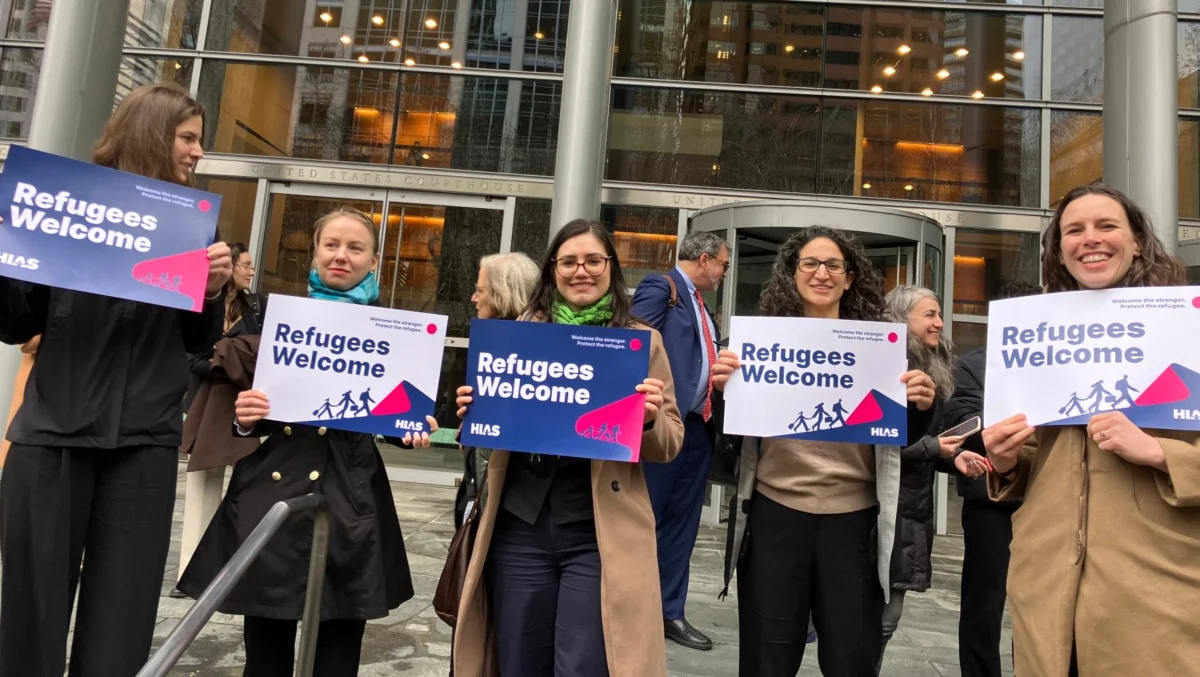
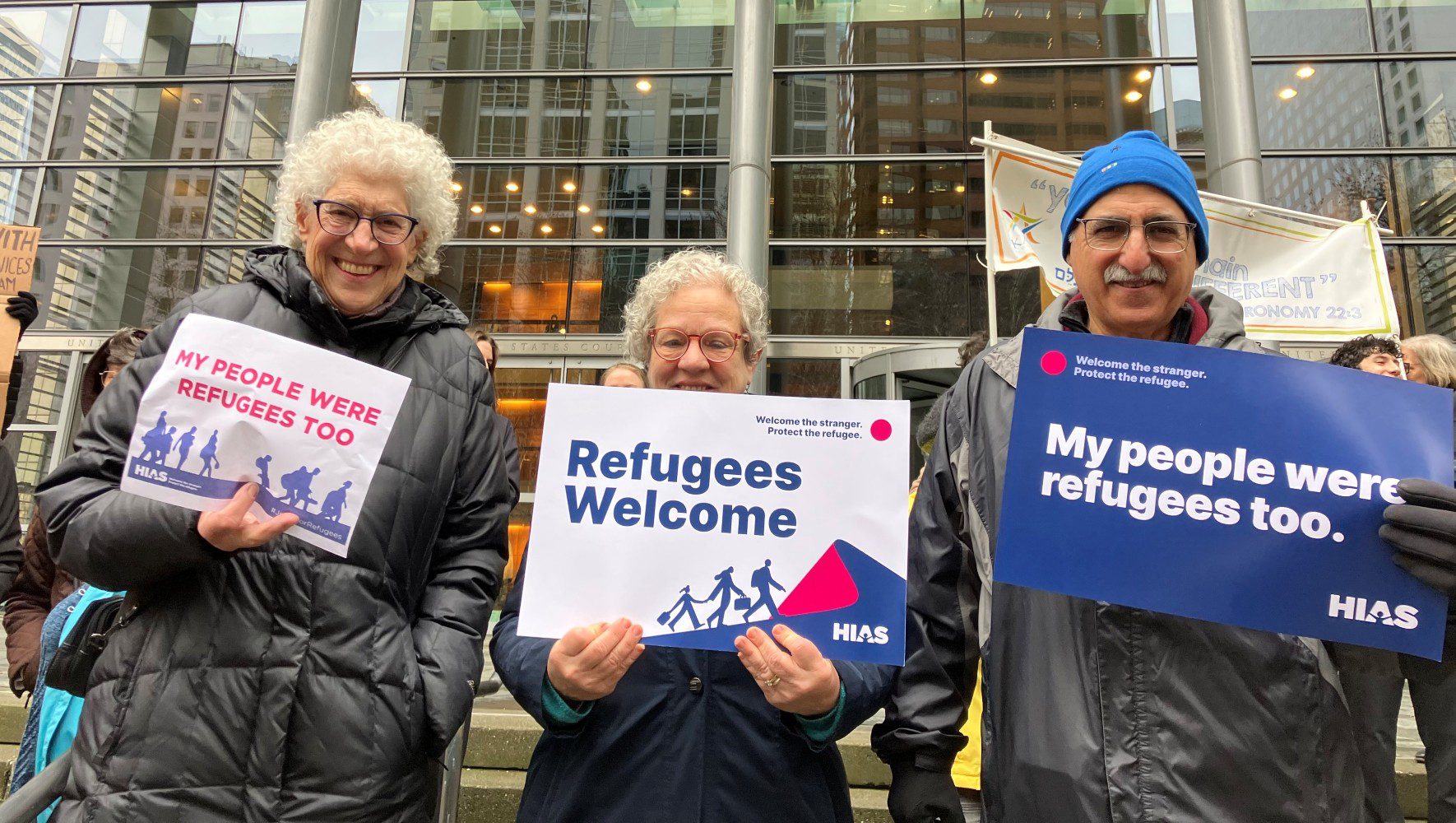
The impact of Pacito v. Trump has been tangible. In the summer of 2025, the legal pressure compelled the Trump administration to resettle a small cohort of particularly vulnerable refugees. Furthermore, the Ninth Circuit’s ruling in this case obligated the administration to continue funding essential resettlement support services for refugees already present within the United States, preventing a complete collapse of domestic support infrastructure. The image of HIAS supporters celebrating outside a Seattle courthouse on February 25, 2025, following a favorable ruling, encapsulates the hard-won victories in this ongoing struggle.
Global Health Council v. Trump: Restoring Lifesaving Aid
Concurrently, HIAS joined a broad coalition in the lawsuit Global Health Council v. Trump, also filed in February 2025. This case aimed to restore critical U.S. humanitarian and development assistance, which had been abruptly halted, cutting off vital resources such as food, water, medicine, and educational programs to millions globally. The lawsuit directly contributed to the disbursement of some humanitarian aid funds, offering a lifeline to communities in dire need.
The case has garnered significant media attention and has progressed through the judicial system, reaching the Supreme Court. While the legal battle to ensure the full release of humanitarian funds is ongoing, the initial successes demonstrate the power of collective action in challenging policies that endanger vulnerable populations. The implication of such aid suspensions is a global health and humanitarian crisis, disproportionately affecting women, children, and those in conflict zones.
Expanding the Legal Front in 2026
The year 2026 has seen an intensification of legal efforts, with HIAS and its partners filing an additional five lawsuits to counter new and evolving threats to immigrant and refugee rights. These new challenges address critical aspects of the immigration system, from asylum procedures to the fundamental rights of those seeking refuge.
Amica Center for Immigrant Rights v. EOIR: Safeguarding Immigration Appeals
In February 2026, HIAS became a plaintiff in Amica Center for Immigrant Rights v. EOIR. This lawsuit targets sweeping changes implemented at the Board of Immigration Appeals (BIA) that threaten to eliminate meaningful judicial review for individuals seeking to appeal adverse immigration decisions. Such changes could have devastating consequences for individuals fleeing persecution, potentially leading to their forced return to unsafe countries. The case has been instrumental in halting the implementation of most of these detrimental BIA rule changes, preserving a crucial avenue for justice for vulnerable immigrants.
HIAS v. USA: Challenging the Termination of Grant Agreements
March 2026 saw HIAS file a complaint in the Court of Federal Claims, HIAS v. USA. This action, brought in conjunction with partners like the American Bar Association, Mercy Corps, and Save the Children, challenges the mass suspension and termination of federal grants and cooperative agreements. These agreements are vital for the operation of numerous organizations providing essential services to refugees and vulnerable populations, and their abrupt cancellation threatens the stability and continuity of these critical programs.
Amicus Briefs: Broadening the Legal Defense
Beyond direct litigation, HIAS has strategically filed amicus briefs in several key cases, offering its extensive expertise and historical perspective to support legal arguments that uphold the rights of refugees and immigrants. These briefs often draw parallels to historical injustices, highlighting the enduring principles of humanitarianism and the rule of law.
Noem v. Al Otro Lado: Defending the Right to Seek Asylum
In February 2026, HIAS submitted an amicus brief in Noem v. Al Otro Lado, a case concerning "turnback" policies at the U.S.-Mexico border. The brief powerfully connects contemporary border policies to the historical tragedy of the M.S. St. Louis, a ship carrying 900 Jewish refugees who were denied entry into the United States in 1939. HIAS’s experience in both rescuing those turned away from the St. Louis and supporting individuals facing similar refusals at the border in recent years provides critical context for the legal arguments presented. This historical framing underscores the moral and legal imperative to uphold the right to seek asylum.
U.H.A. v Bondi: Opposing the Detention of Resettled Refugees
Also in February 2026, HIAS filed an amicus brief in U.H.A. v Bondi. This case challenges the practice of detaining resettled refugees for the purpose of re-screening them. HIAS’s brief argues that such detention is cruel, harmful, and unnecessary, highlighting the extensive security vetting refugees undergo prior to resettlement. It also emphasizes how detention can be retraumatizing for individuals who have already experienced violence and persecution.
Trump v. Barbara: Defending Birthright Citizenship
In a significant legal intervention in February 2026, HIAS joined 57 other faith-based organizations in filing an amicus brief in Trump v. Barbara. This case directly challenges the concept of birthright citizenship. The brief, representing a diverse array of religious communities including Catholic, Protestant, Muslim, Hindu, and Jewish faiths, underscores the profound moral and ethical implications of revoking birthright citizenship and its importance to the fabric of many faith and immigrant communities.
Jean A. et al v. Noem: Fighting Mandatory Refugee Detention
March 2026 saw HIAS file an amicus brief in Jean A. et al v. Noem. This lawsuit contests a new policy that permits the arrest and detention of resettled refugees. The legal challenge has thus far successfully halted the implementation of this potentially devastating policy. HIAS’s brief reiterates its position that detaining refugees for re-screening is inhumane and counterproductive, drawing on its extensive experience in refugee resettlement and support. The involvement of HIAS’s resettlement partner, Jewish Family Service of Western Massachusetts, as a plaintiff in this case further strengthens the coalition fighting against this policy.
Broader Implications and the Path Forward
The Trump administration’s comprehensive assault on refugee and asylum systems, coupled with the reduction of vital humanitarian aid, has created a climate of fear and uncertainty for millions. The legal actions undertaken by HIAS and its partners represent a critical bulwark against these policies, seeking to uphold international and domestic legal obligations to protect those fleeing persecution.
The implications of these legal battles extend far beyond individual cases. They shape the future of U.S. refugee policy, influence the availability of global humanitarian assistance, and set precedents for the treatment of vulnerable populations. The sustained legal engagement by organizations like HIAS highlights the enduring commitment to humanitarian values and the rule of law in the face of political challenges.
As the world’s oldest refugee agency, HIAS has a legacy of over 120 years of service, standing firm in its mission regardless of political administrations. The current wave of legal challenges is a testament to this unwavering dedication. The organization continues to advocate for a just and humane immigration system, providing essential legal support and services to clients, and rallying public support for those seeking safety and opportunity. The ongoing nature of these legal proceedings means that the landscape of refugee and immigrant rights in the United States remains a dynamic and fiercely contested arena.