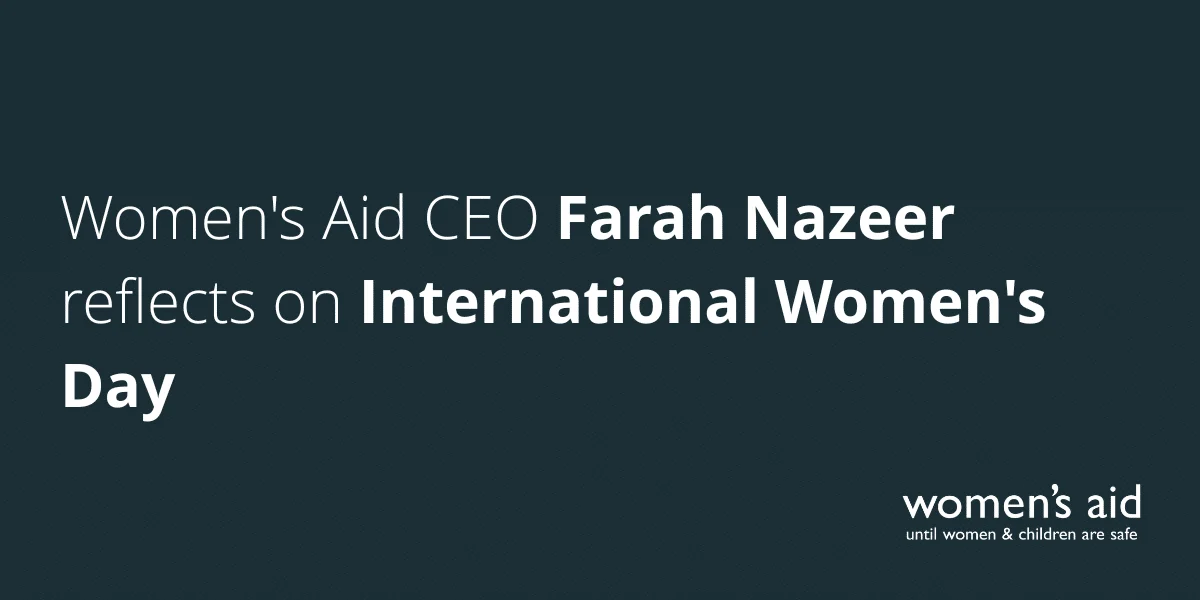
International Women’s Day, observed annually on March 8th, served as a crucial juncture for Women’s Aid to reflect on half a century of advocacy, celebrate resilience, and underscore the pressing need for concerted efforts to eradicate violence against women and girls. Amidst a backdrop of global instability, economic pressures, and evolving political landscapes, the organisation highlighted both significant achievements and the enduring, multifaceted challenges faced by survivors of domestic abuse across England and Wales. The overarching message from Women’s Aid resonated with a blend of hope and a unified call to action, urging society to confront systemic issues and bolster support for those escaping abuse.
The commemorative day, celebrated worldwide, holds particular significance for organisations like Women’s Aid, which traces its roots back to the feminist movement of the 1970s. Founded on the principle of providing safe havens and advocating for systemic change, Women’s Aid has grown into a formidable federation comprising over 180 organisations. These entities collectively deliver vital, often life-saving, support to women and children navigating the perilous journey of escaping abuse and rebuilding their lives. The ethos of a "sisterhood," forged through decades of shared struggle and mutual support, remains central to its operational philosophy, enabling a unified front against misogyny and violence.
The Enduring Challenge: A Devastating Scale of Abuse
Despite decades of activism and some legislative advancements, the scale of domestic abuse in England and Wales remains alarmingly high. According to the latest figures released by the Office for National Statistics (ONS), a staggering one-third of women aged 16 and over in England and Wales will experience domestic abuse in their lifetime. This statistic, while profoundly concerning, is widely acknowledged by experts, including Women’s Aid, to be an underestimate. Domestic abuse often occurs behind closed doors, a "crime that hides in plain sight," and historical patterns of underreporting mean the true prevalence is likely even higher. The implications of these figures are far-reaching, affecting public health, economic stability, and the overall social fabric of communities. The direct costs associated with domestic abuse, including healthcare, criminal justice, and lost economic output, are estimated to run into billions of pounds annually, underscoring the profound societal burden of this pervasive issue.
International Women’s Day: A Historical Perspective
International Women’s Day itself has a rich and complex history, evolving from early 20th-century labour movements into a global day of recognition for women’s achievements and a platform for advocating for gender equality. The first National Woman’s Day was observed in the United States on February 28, 1909, organised by the Socialist Party of America in honour of the 1908 garment workers’ strike in New York, where women protested against harsh working conditions. The idea for an international day was proposed by Clara Zetkin at the International Conference of Working Women in Copenhagen in 1910, leading to its first observance on March 19, 1911, in Austria, Denmark, Germany, and Switzerland. The date shifted to March 8th in 1913, following women’s peace rallies in Russia on that date, and was officially adopted by the United Nations in 1977. For organisations like Women’s Aid, IWD serves as an annual reminder of both the progress made and the considerable work that still lies ahead in the pursuit of a world free from violence and inequality. It is a day not just for celebration, but for renewed commitment to addressing systemic injustices.
The Funding Crisis and Its Direct Impact on Survivor Safety
One of the most critical challenges facing the sector is the "unsustainable funding environment." Specialist domestic abuse services, including refuges, helplines, and community-based support, are frequently underfunded, operating on precarious short-term grants that hinder long-term planning and stability. This financial instability has tangible, devastating consequences: services are increasingly forced to turn away women seeking help, not due to a lack of need, but because of a severe shortage of available space and resources.
The painful reality is that the capacity of the refuge system often falls far short of demand. Reports from various advocacy groups consistently highlight that a significant percentage of women referred to refuges cannot be accommodated. This shortfall directly impacts the safety and choices of survivors. The oft-asked question, "Why doesn’t she just leave?" finds its stark answer in this systemic failure: too often, when a woman attempts to leave an abusive situation, society fails to provide her with a safe alternative. Sustainable and adequate funding for these vital services is not merely an operational necessity; it is the fundamental backbone of any effective societal response to ending violence against women and children. Without it, the cycle of abuse often continues, with potentially fatal consequences.
Policy and Progress: A Time of Reckoning
Despite the grim statistics and funding challenges, there is a discernible shift in public discourse and policy direction. Women’s Aid notes that society appears to be living through a "time of reckoning," where public bodies are increasingly scrutinising their past failings regarding violence against women and girls (VAWG). This introspection is leading to commitments for learning and change, reflecting a growing societal intolerance for such abuses.
The UK government has also responded to public pressure and advocacy efforts by publishing a comprehensive strategy aimed at reducing VAWG. This strategy outlines various policy initiatives, from prevention and education to improved law enforcement responses and enhanced survivor support. While the implementation and effectiveness of such strategies are continuously monitored by organisations like Women’s Aid, their existence signifies a formal recognition of the problem at the highest levels of government. Concurrently, there is an observable rise in public awareness and a growing empowerment among women who are "unafraid" to call out bad behaviour, whether online or in their personal lives, contributing to a broader cultural shift. Key legislative milestones, such as the Domestic Abuse Act 2021, have also sought to strengthen legal protections and define domestic abuse more broadly, encompassing economic abuse and coercive control, thereby acknowledging the multifaceted nature of abuse beyond physical violence.
The Call for Collective Action: Beyond the Women’s Sector
Women’s Aid stresses that while momentum is gaining, the profound changes required cannot be achieved by the women’s sector alone. The eradication of domestic abuse demands a truly collective effort, transcending the boundaries of specialist services and extending into every facet of society. The organisation explicitly calls for "everyone else to stand with us," demanding that promises made are delivered upon and that the pace of change accelerates. The profound human cost of inaction is repeatedly highlighted: "Every woman who is killed by a predatory man is someone’s mother, daughter, sister, friend, colleague. They deserve better."
This imperative for collective action extends beyond government and public bodies to include allies from the public and private sectors. Ending domestic abuse necessitates a fundamental shift in societal attitudes, alongside a significant improvement in the accessibility and quality of support available to survivors, regardless of where they seek it. This involves challenging deeply entrenched misogynistic norms and fostering environments where violence is unequivocally condemned and not tolerated.
Corporate Partnerships: A New Frontier in Support and Awareness
In recent years, Women’s Aid has increasingly engaged with corporate partners, recognising the significant potential for impact through cross-sector collaboration. These partnerships are not merely about financial contributions; they represent innovative collaborations that leverage corporate resources, reach, and expertise to create tangible differences in the lives of survivors. Examples of such initiatives include the creation of dedicated pathways for women and children in need, facilitating access to crucial support services that might otherwise be out of reach.
Beyond direct support, corporate alliances have been instrumental in delivering large-scale awareness campaigns. These campaigns are designed to improve public understanding of the complex dynamics of abuse, challenge prevalent myths, and educate broader audiences on how to identify and respond to domestic abuse. By using a "collective voice," these partnerships have extended the reach of Women’s Aid’s advocacy, influencing public opinion and government policy. The hope is that 2026 and beyond will bring forth even more innovative collaborations between the women’s sector and corporate allies. These connections and partnerships are seen as essential sources of strength and power, critical for challenging the "deep-rooted misogyny and abuse" that persists within society.
Looking Ahead: Hope, Unity, and Unstoppable Momentum
The message from Women’s Aid on International Women’s Day 2024 was ultimately one of enduring hope and profound unity. Acknowledging the formidable challenges, the organisation drew strength from the historical resilience of the feminist movement, which has faced and overcome countless obstacles since its inception. The belief is that these contemporary pressures, while significant, can also be withstood through collective resolve.
The call to action is clear and multifaceted: individuals are urged to become proactive allies, to campaign for necessary systemic changes, to courageously call out dangerous behaviours in their communities and workplaces, and to support one another in the ongoing struggle. The concluding sentiment encapsulates this powerful vision: "Together, we are unstoppable." It is a testament to the enduring spirit of advocacy and the unwavering commitment to a future where every woman and child can live free from fear and violence. The journey is long and arduous, but with sustained unity and unwavering determination, the prospect of a society free from domestic abuse remains a tangible and achievable goal.