
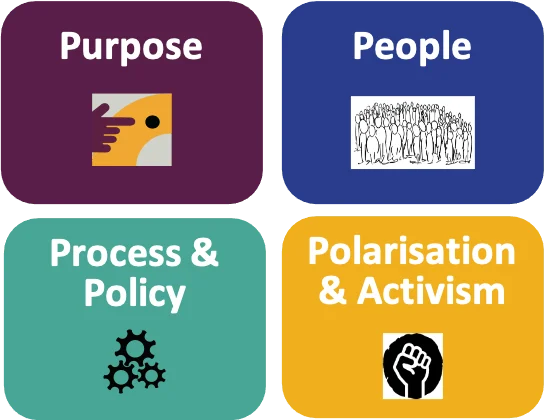
The past two years have functioned as a massive, rapid-paced laboratory for human labor, fundamentally upending the traditional social contract between employers and employees. As the world continues to navigate the lingering effects of the COVID-19 pandemic, the definition of work has shifted from a static, location-based necessity to a fluid, purpose-driven pursuit. This transformation has forced organizations to confront deep-seated systemic inequities, triggering a necessary re-evaluation of corporate culture, policy, and the very meaning of professional contribution.
A Chronology of Disruption: From Lockdown to the Great Resignation
The catalyst for this shift began in early 2020, as global lockdowns forced an overnight migration to remote work. By the summer of 2021, this forced experimentation had morphed into a period of mass introspection, now widely recognized as the "Great Resignation." As employees gained distance from the daily grind of commutes and rigid office structures, their priorities shifted.
By August 2021, labor market data in the United States reached historic milestones, with 4.3 million workers voluntarily resigning in a single month, even as 10.4 million job openings remained unfilled. Similar trends emerged in the United Kingdom, where record-high job vacancies exceeded one million. This was not merely a reaction to pay; it was a fundamental shift in values. Research from the 2021 Edelman Trust Barometer revealed that nearly 60% of employees were actively seeking or had already transitioned to roles that better aligned with their personal values and lifestyle requirements.
The Rise of Purpose-Driven Employment
The traditional model—characterized by long-term personal sacrifice in exchange for linear career growth—is increasingly viewed as obsolete. According to McKinsey research, nearly two-thirds of U.S. workers began questioning the role of purpose in their lives due to the pandemic. This existential re-evaluation has cut across demographics, but with distinct impacts.
In the United Kingdom, the number of employees over the age of 50 opting for early retirement has doubled since the onset of the pandemic. Meanwhile, younger generations, particularly Millennials, have proven three times more likely to leave their current positions in search of professional alignment with their personal beliefs. The implication for corporate leadership is clear: the intention-action gap—where 79% of leaders acknowledge the importance of purpose but only 34% integrate it into decision-making—is now a significant liability in talent retention.
Inequality and the Gendered Impact of Work
The pandemic exposed the fragility of workplaces that failed to account for the dual burdens of domestic and professional life. The crisis of caregiving, which disproportionately impacted women, resulted in a global decline in female employment by 54 million in the first year alone—a 4.2% drop compared to a 3% decline for men.
This stark reality has forced a conversation on "The Great Divergence," a term describing the unequal nature of the economic recovery. While some sectors thrived, others faced catastrophic losses. The International Labour Organization (ILO) reported that in 2021, global working hours remained 4.3% below pre-pandemic levels, effectively erasing 125 million full-time jobs. For many women, this was not a "resignation" but an unavoidable exit caused by the systemic failure of organizations to provide flexible, sustainable work models.
Policy Evolution: The Future of Hybrid Work
As organizations transition into permanent post-pandemic structures, the struggle to define the "new normal" for work location has become a primary driver of employee turnover. Current data suggests that remote work is no longer a perk but an expectation. In the U.S., projections indicate that remote work will remain a fixture for millions, with the strongest demand for flexibility coming from women, working parents, and employees of color—groups that reported improved workplace experience scores when given location autonomy.
However, a disconnect exists between executive strategy and employee reality. A Future Forum study found that 66% of executives are designing post-pandemic workforce policies without direct input from their staff. This lack of inclusion has led to a perception gap: 66% of leaders believe their communication regarding return-to-office policies is transparent, while only 42% of employees agree. When policies are designed in isolation, they risk perpetuating the biases of the pre-pandemic era, where remote work was often a privilege reserved for senior-level staff, while others faced stigma for requesting the same.
Polarisation, Activism, and the Demand for Accountability
Beyond policy and location, the workplace has become a theater for societal debates. Research covering 17 countries indicates that 60% of the population feels their society is more divided than it was prior to the pandemic. This division has seeped into the office, manifesting in conflicts over vaccination policies and broader social issues.
The murder of George Floyd in 2020 served as a pivotal turning point for corporate activism. Employees are no longer satisfied with neutral corporate stances; 76% of workers now expect their leaders to take a clear position on key social issues. The cost of silence is high: 33% of employees report having resigned from a job because their employer failed to address a societal or political issue the employee deemed essential.
The era of the "silent executive" has ended. Activism is now a core component of employee engagement, with 60% of workers feeling empowered to serve as change-makers within their organizations. This energy is increasingly channeled into collective action; in October 2021, the U.S. saw a surge in labor activity, with over 25,000 workers on strike compared to an average of 10,000 in previous months.
The Imperative for Inclusive Leadership
The data from the past two years provides a definitive mandate for organizational leaders: the standard for success has shifted from purely financial metrics to include the health, safety, and inclusivity of the workplace.
- Inclusive Recovery: Organizations must prioritize an inclusive approach to talent that acknowledges the disproportionate losses suffered by marginalized groups.
- Co-Creation: Policies regarding work location and culture must be developed through the direct engagement of the entire workforce, not just senior management.
- Action-Oriented Allyship: Leaders must move beyond performative statements. The current climate demands "allyship by action," where corporate values are integrated into every decision, from hiring and promotions to public policy engagement.
Looking Ahead: The Role of DEI in a Changing World
Diversity, Equity, and Inclusion (DEI) can no longer be treated as a peripheral HR initiative. It is a fundamental component of economic resilience. As the global economy continues to shift, the organizations that will thrive are those that successfully integrate the human need for purpose with the organizational need for agility.
The "Inclusion Nudges" framework suggests that the most effective way to navigate this transition is through experimentation and data-driven policy design. By utilizing methods such as "flipping" questions to challenge underlying perceptions and creating default systems that promote equity, leaders can bridge the gap between their stated intentions and the lived experience of their employees.
The pandemic-era experience was not merely a temporary disruption; it was a diagnostic event that revealed the unsustainable nature of traditional workplace norms. As we look toward the future, the challenge remains for leaders to embrace this ambiguity, listen to their workforce, and commit to the structural changes necessary to build a more equitable and productive world of work. The cost of inaction is not just the loss of top talent—it is the loss of the trust and credibility necessary to lead in the 21st century.




