
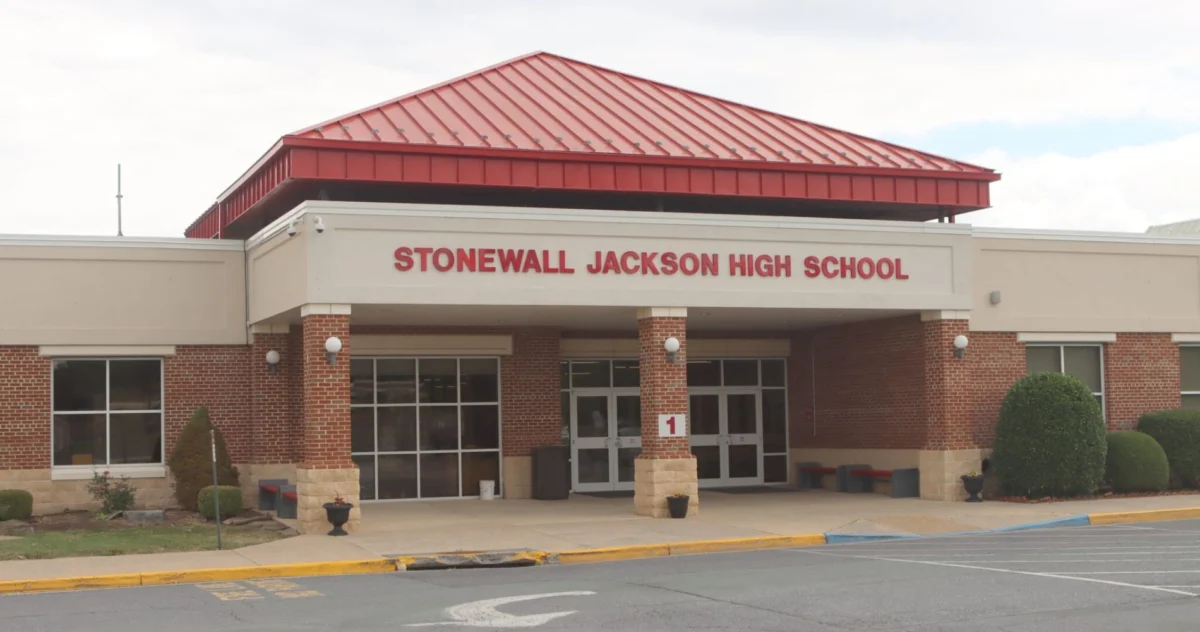
The U.S. District Court for the Western District of Virginia has issued a landmark ruling mandating that the Shenandoah County School Board remove the names of Confederate figures Stonewall Jackson, Robert E. Lee, and Turner Ashby from two of its public schools. In a comprehensive 141-page opinion released on August 6, 2026, the court determined that the school board’s 2024 decision to reinstate these names was not a procedural correction but a purposeful act of racial discrimination that violated the Fourteenth Amendment of the U.S. Constitution, Title VI of the Civil Rights Act, and the Equal Educational Opportunities Act (EEOA).
The court’s decision concludes a contentious multi-year legal battle initiated by a group of Black students and community members. The plaintiffs argued that the school board’s decision to re-adopt the Confederate titles—which were originally stripped in 2020—sent a clear message of exclusion and reinforced a legacy of white supremacy that has historically marginalized Black students in the Shenandoah County public school system.
A Chronology of Conflict: From Desegregation to Reinstatement
To understand the weight of the court’s decision, one must look at the historical trajectory of school naming conventions in Virginia. For much of the 20th century, Shenandoah County, a region that remains approximately 90% white, operated a dual school system. Until 1963, Black students were excluded from the county’s high schools entirely, often forced to commute to other districts to receive an education.
The naming of Stonewall Jackson High School in the late 1950s was not an isolated event; it occurred at the height of "Massive Resistance," a political movement characterized by state-level efforts to obstruct the U.S. Supreme Court’s 1954 mandate in Brown v. Board of Education. The court found that the Confederate battle flag was present at the construction site of the school, cementing the name as a symbol of defiance against federal integration orders.
The recent timeline of events is as follows:
- 2020: Prompted by a statewide push from then-Governor Ralph Northam and Secretary of Education Atif Qarni to address symbols of racial trauma, the school board unanimously condemned racism and voted to remove the Confederate names.
- 2021: Stonewall Jackson High School was rebranded as Mountain View High School, and Ashby-Lee Elementary became Honey Run Elementary.
- 2021–2023: A political shift occurred on the school board, with candidates campaigning on the platform of restoring the original names.
- May 2024: Despite vocal opposition during a lengthy public comment period, the board voted 5–1 to reinstate the Confederate names, citing "procedural concerns" regarding the 2020 removal.
- August 2026: Following a five-day evidentiary hearing, the U.S. District Court ruled the reinstatement illegal, citing evidence that the board’s stated justifications were pretextual and that the decision was driven by racial bias.
Legal Analysis and the "Massive Resistance" Precedent
The court’s ruling hinges on the concept of "discriminatory intent." While the defense argued that the board was merely correcting a flawed process, the presiding judge found that the board had "complete awareness" of the historical context. By reversing the 2020 decision, the board was not merely changing a sign; it was, in the court’s view, actively embracing the exclusionary ideology for which figures like Lee, Jackson, and Ashby fought.
Under the Fourteenth Amendment, public institutions are prohibited from creating environments that generate a sense of inferiority among students based on race. The court noted that by resurrecting names associated with the enslavement of Black people, the board effectively imposed a "disproportionate burden" on Black students, psychological and dignitary harms that their white peers do not encounter.
Furthermore, the ruling emphasizes that the school board failed its obligations under the EEOA. The law requires school districts to take affirmative steps to eliminate the vestiges of segregated systems. Instead of moving toward integration and inclusivity, the board’s 2024 vote was viewed as a regression that solidified the "dual school system" mentality.
Voices from the Community and Legal Counsel
The legal challenge was spearheaded by the Washington Lawyers’ Committee for Civil Rights and Urban Affairs. Kaitlin Banner, deputy legal director for the organization, emphasized the human cost of the naming debate. In a statement following the ruling, Banner highlighted the "heartfelt and unwavering" testimony of the student plaintiffs, who described the names as a daily reminder that their presence in the school system was not fully valued.
"The students described how these names make them feel unwelcome and inferior," Banner stated. "The court’s ruling acknowledges that public education is a space that must belong to all children, not just those whose ancestors were in power at the time these schools were named."
On the other side of the aisle, legal representation for the school board, led by attorney Jim Guynn, has signaled an intent to appeal. Proponents of the name reinstatement have previously argued that the names represent local history and heritage rather than a political statement. However, the court’s opinion systematically dismantled this argument, noting that "heritage" does not exist in a vacuum and that the specific choice of Confederate icons during the 1950s and 1960s was an explicit tool of state-sponsored segregation.
The Broader Implications for American Education
The Shenandoah County case is expected to have national ripple effects. Across the United States, hundreds of public schools still bear the names of Confederate leaders, many of which were designated during the mid-20th century to signal resistance to the Civil Rights Movement.
By defining the act of naming as a form of state-sanctioned speech that can violate the constitutional rights of students, the court has set a significant legal precedent. Educational institutions, which have long enjoyed broad autonomy in determining their mascots and monikers, may now face increased scrutiny if those choices can be linked to discriminatory intent or the perpetuation of historical racial hierarchies.
The court’s order is absolute: the school board must remove the names and replace them with titles that are chosen on a "racially nondiscriminatory basis." The speed with which this must occur—"with all deliberate speed"—places the board under a strict federal mandate to rectify the situation.
Institutional Consequences
The ruling serves as a cautionary tale for local governing bodies regarding the interplay between political optics and constitutional law. The court was particularly critical of the board’s inconsistency. Because the board had successfully, and without incident, navigated a democratic process in 2022 where a motion to rename the schools failed, the court found the claim of "procedural unfairness" in 2024 to be "not credible."
This finding suggests that in the eyes of the law, the "real issue" was never the process of renaming, but the fact that the names were changed at all. By attempting to force the community back into a state of symbolic historical alignment with the Confederacy, the board inadvertently provided the evidence needed to prove that their motivations were, at their core, discriminatory.
As the case heads to the appellate court, the Shenandoah County School Board faces a period of intense public and legal pressure. The outcome will likely serve as a defining moment for school board governance in the 21st century, reaffirming that the mandate of public education—to foster equality and inclusion—must supersede the desire to preserve symbols of an exclusionary past. Whether the decision stands or is overturned, it has already achieved a significant outcome: a rigorous, documented judicial analysis of how history is weaponized in the classroom, and the legal recognition that such weaponization has no place in the American public school system.




