
Israel currently serves as a host to approximately 60,000 displaced individuals, a diverse population comprised of roughly 30,000 asylum seekers from Sudan and Eritrea, and an additional 30,000 individuals from Ukraine and Russia seeking temporary protection or political asylum. Despite the fact that many of these residents have integrated into Israeli society, speak fluent Hebrew, and have established long-term roots within their communities, they remain in a state of profound legal precarity. Deprived of pathways to formal legal status, this population frequently faces systemic barriers to essential services, including public healthcare, formal education, and regulated employment.
A Historical Context of Displacement and Policy
To understand the current crisis, one must examine the intersection of international humanitarian law and domestic Israeli policy. Israel was among the inaugural signatories to the 1951 UN Refugee Convention, a landmark treaty established in the wake of the Holocaust and the mass displacement of World War II to protect those fleeing persecution. However, the application of this convention within Israel has been highly contested.
For decades, the Israeli government has maintained a policy framework designed to prioritize national security and demographic considerations, often at the expense of asylum claims. This strategy has resulted in an asylum approval rate of less than 1%, a figure that stands in stark contrast to European nations, where recognition rates for Eritrean and Sudanese applicants frequently exceed 70%. The policy, characterized by many human rights organizations as a "deterrence model," includes the use of temporary permits, limited detention, and the incentivization of voluntary departure for those seeking refuge.
Chronology of the Crisis and Legislative Hurdles
The influx of asylum seekers, primarily from the Horn of Africa, peaked in the late 2000s and early 2010s as individuals crossed the Sinai Peninsula to escape war, genocide, and extreme repression. In response, the Israeli government initiated a series of legislative and physical measures:
- 2012–2013: The government completed a massive, high-tech security fence along the border with Egypt, effectively halting the flow of irregular arrivals.
- 2013: The state began, albeit inconsistently, to process asylum claims. However, a significant majority of these applications have remained in a perpetual state of administrative limbo for over a decade.
- 2014–2018: The operation of the Holot Residential Facility marked a period of intensified detention, where asylum seekers were held in isolated conditions to encourage them to leave the country.
- 2022–Present: The onset of the war in Ukraine and the ongoing regional conflicts have added a new layer of complexity, as newer arrivals from Eastern Europe join the established communities of African asylum seekers, all of whom are grappling with the limitations of the Israeli social safety net.
The Mechanism of Conditional Protection
The Israeli Ministry of the Interior utilizes the "Conditional Release Permit" (often referred to as an "A/5" or similar temporary visa) to manage the population. While these permits prevent immediate deportation, they do not constitute legal residency. They are strictly temporary and must be renewed periodically—a process that has become increasingly bureaucratic and difficult.
The permit does not grant access to the national health insurance system or social welfare programs. While it is not a formal work visa, the state has largely adopted a "don’t ask, don’t tell" approach regarding the employment of these individuals, allowing them to participate in the labor market without providing them with the labor protections afforded to Israeli citizens. This leaves the population highly vulnerable to exploitation, wage theft, and workplace hazards.
The Impact of Regional Instability
The October 7th attack on Israel and the subsequent multi-front wars in Gaza, Lebanon, and across the regional landscape have fundamentally altered the stability of vulnerable populations within Israel. Refugees and asylum seekers, often living in lower-income urban centers, have been disproportionately affected by the fallout of these conflicts.
Many have lost their livelihoods due to the economic downturn, while others have been forced to relocate due to the security situation, often finding themselves ineligible for the government emergency stipends provided to displaced Israeli citizens. The psychological toll is equally severe; for many refugees, the experience of fleeing war in their home countries has been compounded by the experience of living under the constant threat of rocket fire and civil unrest in their host country.
The Role of HIAS in Humanitarian Advocacy
HIAS Israel has functioned as a critical bridge between vulnerable populations and the legal system since 1950. The organization’s work is multifaceted, focusing on both immediate relief and long-term legal advocacy.
Legal Representation and Strategic Litigation:
HIAS Israel provides direct legal representation to individuals struggling to renew their conditional permits or facing threats of deportation. Beyond individual cases, the organization engages in strategic litigation—partnering with pro bono legal firms and law students—to challenge policies that exclude asylum seekers from essential services. These legal interventions have been vital in forcing the state to honor basic protections, even when comprehensive asylum reform remains elusive.
Humanitarian Aid and Mental Health:
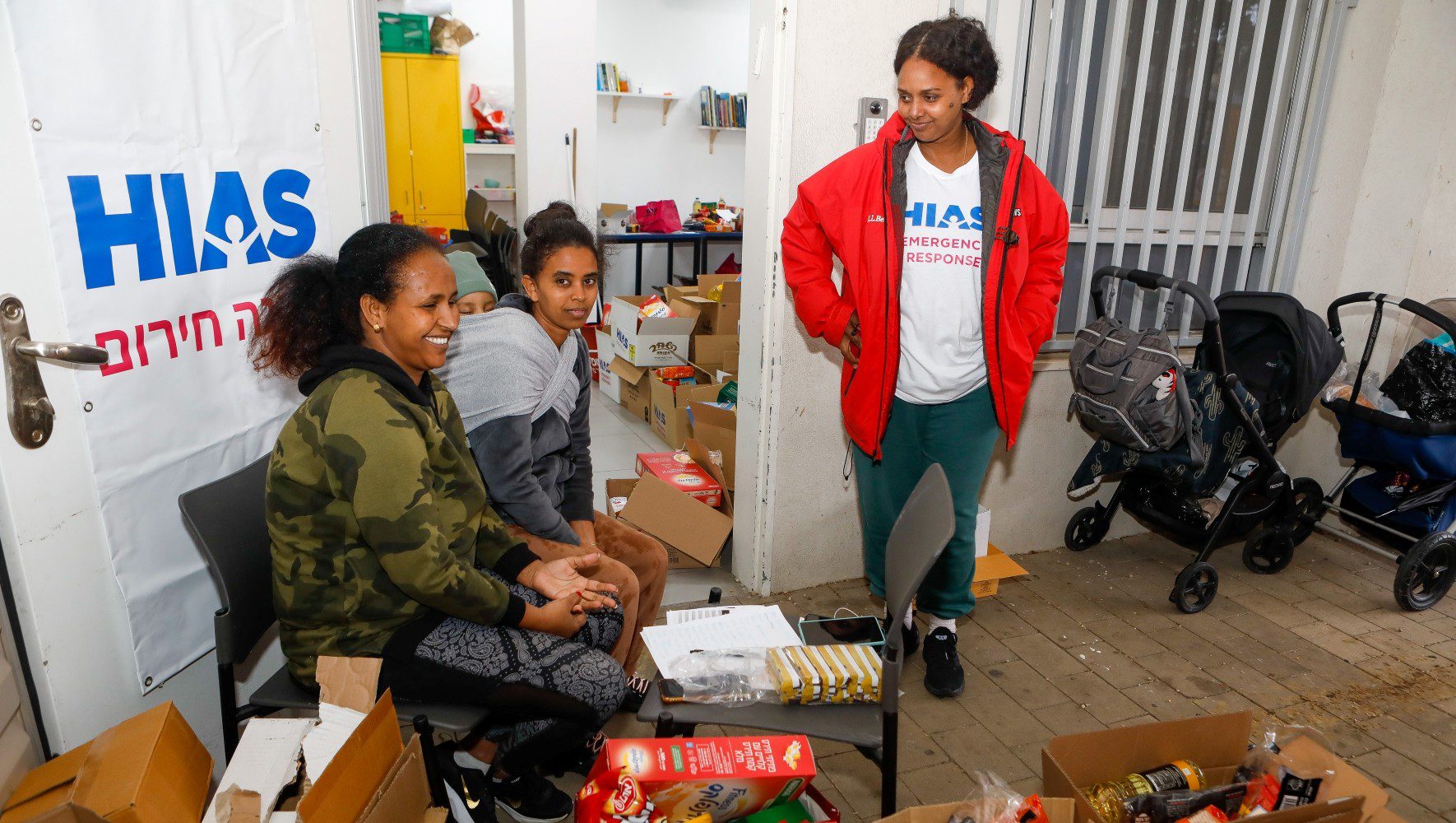
In response to the current wartime climate, HIAS has pivoted to provide emergency food security, shelter assistance, and cash disbursements to families pushed to the brink of poverty. Recognizing the deep trauma associated with multiple displacements, the organization has also launched targeted mental health initiatives, offering counseling services to those who have endured the trauma of war in their countries of origin and again in their current host environment.

Analysis: The Path Forward
The situation for refugees in Israel remains a subject of intense domestic and international debate. Critics of current government policies argue that the lack of a clear, functional asylum system creates a permanent underclass, which is detrimental to the social fabric and moral standing of the state. Conversely, government proponents often emphasize the unique security challenges of the region and the need for controlled migration.
However, the empirical evidence suggests that as long as the underlying conflicts in Sudan, Eritrea, and Ukraine remain unresolved, the refugee population in Israel will not be able to return home. The current "limbo" policy, while aimed at encouraging departure, has instead resulted in a static, marginalized population that is deeply integrated into the Israeli economy but excluded from its protections.
For international observers and humanitarian agencies, the focus remains on ensuring that the rights afforded under the 1951 Convention are respected. The work of HIAS and its partners highlights a critical reality: humanitarian aid is not merely a charitable endeavor but a necessary safeguard for human dignity in a region defined by instability.
Conclusion
As the geopolitical landscape of the Middle East continues to shift, the status of the 60,000 displaced people in Israel will continue to be a litmus test for the country’s commitment to its international obligations. Through rigorous advocacy, legal defense, and direct humanitarian intervention, HIAS continues to work toward a future where refugees are treated with the protections they are entitled to under international law, ensuring that those who have fled the most severe forms of persecution have the opportunity to rebuild their lives in safety. The ongoing support of the global community remains essential to sustaining these efforts in an increasingly difficult environment.




