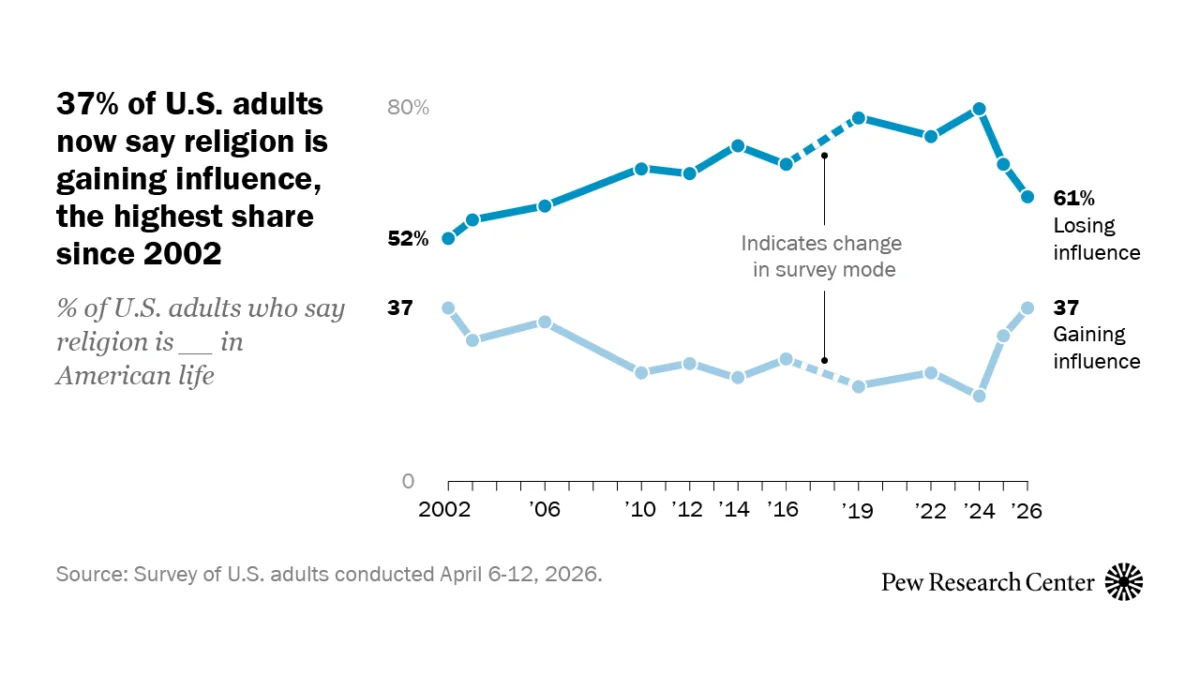
The Pew Research Center, a nonpartisan fact tank and a subsidiary of The Pew Charitable Trusts, has unveiled a significant and comprehensive report delving into the multifaceted landscape of religion. This extensive research effort, a testament to the organization’s commitment to providing data-driven insights, is the culmination of collaborative input and rigorous analysis from a dedicated team of researchers, methodologists, editors, and communication specialists. The full scope of this groundbreaking work can be explored further through related reports available at pewresearch.org/religion, offering a deep dive into the intricate dynamics of religious belief, practice, and societal impact across the globe.
Unveiling the Depth of Religious Inquiry
This latest publication from the Pew Research Center represents a substantial undertaking, building upon decades of meticulous research into religious trends. The Pew Charitable Trusts, as the primary funder, has consistently supported initiatives that illuminate complex societal issues. This report, in particular, underscores the Center’s dedication to understanding the evolving role of religion in contemporary life, from individual spiritual journeys to its influence on global politics and social structures. The report’s findings are the product of a collaborative endeavor, drawing upon the expertise of numerous individuals who have dedicated their skills to ensuring the accuracy, integrity, and accessibility of the presented data.
The Architects of Insight: Primary Researchers
At the forefront of this ambitious project were Chip Rotolo, a Research Associate, and Gregory A. Smith, Senior Associate Director, Research. Their leadership and direct contributions were instrumental in shaping the core research questions and guiding the analytical framework of the report. Their combined experience in social science research and deep understanding of religious demographics have provided a solid foundation for the comprehensive findings presented. Rotolo’s meticulous approach to data collection and analysis, coupled with Smith’s strategic direction in research design, have been critical in translating complex religious phenomena into digestible and impactful insights for a broad audience.
The Engine Room of Knowledge: The Research Team
The breadth and depth of the report are a direct reflection of the dedicated Research Team assembled for this endeavor. Alan Cooperman, Director of Religion Research, provided overarching supervision and strategic vision, ensuring the project aligned with the Pew Research Center’s mission to inform the public and policymakers. Besheer Mohamed, a Principal Researcher, brought his extensive knowledge of religious traditions and his keen analytical abilities to bear on the intricate details of the research. Becka A. Alper, a Senior Researcher, played a pivotal role in synthesizing findings and identifying key trends, contributing significantly to the narrative coherence of the report.
The team also benefited from the diligent work of Patricia Tevington, a Research Associate, whose contributions were essential in managing and processing vast amounts of qualitative and quantitative data. Supporting this core group were Asta Kallo and Meghan Rustemeyer, both Research Assistants, whose commitment to accuracy and detail ensured the smooth execution of various research tasks. Their collective efforts have been crucial in transforming raw data into a cohesive and insightful narrative that captures the nuanced realities of religious life.
Ensuring Rigor and Reliability: The Methods Team
The integrity of any research report hinges on the robustness of its methodologies, and the Pew Research Center’s Methods Team stands as a testament to this principle. Ashley Amaya, Associate Director, Survey Methods, provided critical expertise in designing and implementing the survey instruments that formed the backbone of much of the data collected. Andrew Mercer, a Principal Methodologist, played a key role in developing and refining the statistical models used for analysis, ensuring the reliability and validity of the findings.
Courtney Kennedy, Vice President of Methods and Innovation, oversaw the broader methodological approach, championing best practices and exploring new avenues for data collection and analysis. The team’s operational excellence was further bolstered by Dorene Asare-Marfo, Senior Panel Manager, and Dana Popky, Associate Panel Manager, who were responsible for the meticulous management of survey panels, ensuring representative samples and high-quality data collection. Anna Brown and Arnold Lau, Research Methodologists, provided invaluable technical support and analytical rigor, contributing to the overall methodological soundness of the report. Their collective expertise ensures that the findings presented are not only comprehensive but also statistically sound and defensible.
Shaping the Narrative: Editorial and Graphic Design
Communicating complex research findings effectively requires a skilled hand in both writing and visual presentation. The Editorial and Graphic Design team was instrumental in transforming raw data and analytical insights into a clear, engaging, and accessible report. Jeff Diamant, a Senior Writer/Editor, meticulously crafted the narrative, ensuring clarity, accuracy, and adherence to journalistic standards. Peter Bell, Associate Director, Design and UX, led the effort to create an intuitive and visually appealing layout, enhancing the user experience for readers.
Rebecca Leppert, a Writer/Editor, contributed significantly to the readability of the report, refining prose and ensuring a consistent tone. David Kent, Editorial Specialist, provided essential support in the editing process, ensuring grammatical precision and factual accuracy. The visual storytelling of the research was brought to life by Bill Webster, Senior Information Graphics Designer, whose innovative designs and infographics made complex data sets easily understandable and memorable. Their combined efforts ensure that the report is not only informative but also a pleasure to read and engage with.
Disseminating Knowledge: Communications and Web Publishing
The ultimate reach and impact of the Pew Research Center’s work depend on its effective dissemination. The Communications and Web Publishing team plays a crucial role in making the research accessible to a wide audience. Justine Coleman, Associate Digital Producer, was responsible for the technical execution of the online presentation of the report, ensuring a seamless digital experience for users. Hannah Taber, Communications Manager, strategically planned and executed the communication outreach, maximizing the report’s visibility and engagement.
Maya Pottiger, Communications Associate, provided vital support in disseminating the report’s findings through various channels, including social media and press outreach. This team’s efforts are critical in translating the rigorous research conducted into actionable knowledge for journalists, policymakers, educators, and the general public. Their dedication ensures that the valuable insights generated by the Pew Research Center reach those who can benefit from them most.
Background and Context of the Report
While the specific subject matter of this particular Pew Research Center report is not detailed in the provided text, the extensive list of contributors strongly suggests a major research initiative. Pew Research Center’s religion research, a long-standing area of focus, has historically provided invaluable data on the demographics of religious affiliation, the changing patterns of belief and non-belief, the role of religion in public life, and interreligious relations. Previous reports have examined topics such as the religious landscape of the United States, the global rise of religious non-affiliation, the impact of religion on political attitudes, and the experiences of religious minorities.
Given the depth of the research and methods teams involved, this report likely delves into nuanced aspects of religious behavior, such as the interplay between religious identity and social issues, the influence of religious institutions on community well-being, or the evolving nature of spiritual practices in an increasingly secularized world. The meticulous approach to survey design and data analysis indicates a potential focus on quantifying trends and understanding the underlying factors driving these changes. For instance, if the report were to focus on religious switching, it might explore the age at which individuals leave or join religious groups, the reasons cited for these changes (e.g., theological disagreements, life events, social influences), and the demographic characteristics of those who switch.
Supporting Data and Chronological Framework (Inferred)
Although specific data points are absent from the provided text, the structure of the Pew Research Center’s typical reporting suggests that the full article would be replete with statistical tables, charts, and detailed breakdowns of findings. These would likely include:
- Demographic Breakdowns: Data segmented by age, gender, race, ethnicity, education level, geographic region, and socioeconomic status to illustrate how religious trends vary across different population segments.
- Trends Over Time: Comparisons of current data with previous Pew Research Center surveys to highlight shifts in religious affiliation, belief, and practice over the past decade or more. This would establish a clear chronology of change. For example, a report on church attendance might show a steady decline over the last 20 years, with specific data points for 2005, 2010, 2015, and the present year.
- Attitudinal Data: Insights into people’s beliefs about religious tenets, their levels of religious observance (e.g., frequency of prayer, attendance at services), and their views on the role of religion in society.
- Global Comparisons: If the report is international in scope, it would likely include data from various countries, allowing for comparative analysis of religious trends across different cultural and political contexts.
A hypothetical chronology might illustrate the evolution of a particular religious trend. For instance, if the report examined the rise of "nones" (individuals who do not identify with a religion), a timeline might highlight key periods of growth, perhaps correlating with significant social or cultural shifts. It could also trace the increasing visibility and organization of non-religious communities.
Potential Statements and Reactions (Factually Inferred)
Based on the nature of Pew Research Center reports, it is highly probable that the full article would incorporate or allude to reactions and interpretations from various stakeholders. While direct quotes are not provided here, one can infer the types of perspectives that would be relevant:
- Religious Leaders: Comments from leaders of various faiths on how the findings reflect their experiences within their congregations and communities, or how they might inform their outreach and pastoral strategies. For example, a denominational leader might comment on findings related to declining membership in their tradition.
- Academics and Scholars: Analysis from sociologists of religion, theologians, and historians who can contextualize the findings within broader academic discourse and historical trends. They might offer interpretations of the underlying causes and potential long-term consequences of observed patterns.
- Policy Makers and Public Figures: Reactions from individuals in government or public service who might use the data to inform policy decisions related to religious freedom, education, or social welfare programs.
- Advocacy Groups: Statements from organizations representing religious or secular interests, who might use the report to support their advocacy efforts. For instance, secular advocacy groups might highlight findings on the growing number of non-religious individuals to argue for greater separation of church and state.
Fact-Based Analysis of Implications
The comprehensive nature of a Pew Research Center report invariably leads to an analysis of its broader implications. Such an analysis, grounded in the data presented, would likely explore:
- Societal Cohesion: How shifts in religious affiliation and practice might impact social trust, community engagement, and the formation of shared values. For example, a decline in religious affiliation might correlate with changes in civic participation or volunteerism.
- Political Landscape: The potential influence of evolving religious demographics on electoral outcomes, political discourse, and the alignment of religious groups with specific political ideologies. This could involve examining how different religious groups vote or how religious issues are debated in the public sphere.
- Cultural Norms: How changes in religious belief and practice might shape broader cultural attitudes towards issues such as family, morality, and individual identity. For instance, changing views on marriage or gender roles might be partly influenced by shifts in religious adherence.
- Intergroup Relations: The implications for relations between different religious and non-religious groups, including potential for increased understanding or heightened tensions. This could involve analyzing survey data on attitudes towards members of other faiths or the non-religious.
- Future Trends: Projections and educated estimations about how current trajectories might shape the religious landscape in the coming decades, considering factors such as generational change and ongoing societal transformations.
In conclusion, while the provided text focuses solely on the individuals behind a Pew Research Center report, it serves as a powerful indicator of the depth and rigor applied to their work. The extensive team, encompassing primary researchers, a dedicated research unit, methodological experts, and skilled communicators, underscores the commitment to producing high-quality, data-driven insights into complex societal issues, such as the ever-evolving world of religion. The full report, once accessed, would undoubtedly offer a wealth of data, context, and analysis, contributing significantly to public understanding of this fundamental aspect of human experience.