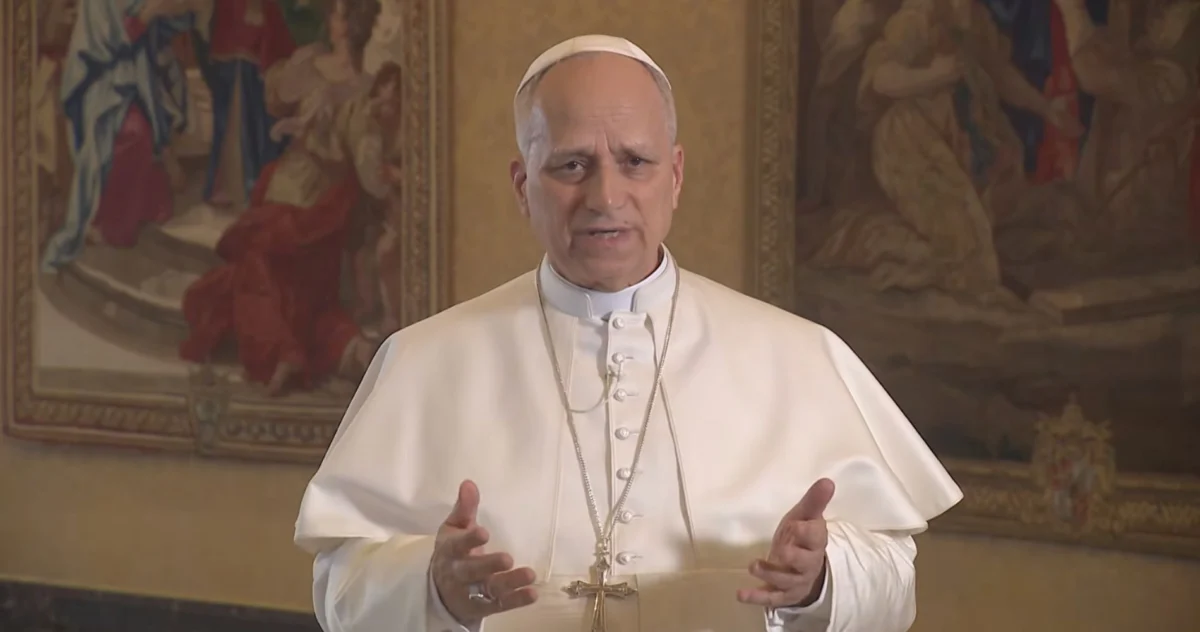
Vatican City — Pope Leo XIV, in a significant video message released on April 24, joined the celebration of the 15th anniversary of the abolition of the death penalty in Illinois, lending the full weight of the Holy See to advocates striving to end capital punishment across the United States and worldwide. The pontiff’s address underscored the Catholic Church’s consistent and increasingly firm teaching on the sanctity of human life and the inherent dignity of every individual, even those who have committed grave offenses. His powerful words serve as a renewed spiritual and moral impetus for the global abolitionist movement, highlighting the evolving theological and ethical arguments against state-sanctioned executions.
“I pray that your efforts will lead to a greater acknowledgment of the dignity of every person,” Pope Leo XIV stated in his message, which was disseminated to a global audience and widely reported by various news outlets, including the Mother of God Chicago parish. He continued, expressing hope that these endeavors “will inspire others to work for the same just cause.” This direct engagement by the head of the Catholic Church on such a pivotal anniversary signals a strategic reaffirmation of the Church’s commitment to a world free from capital punishment, aligning with the broader international trend toward abolition.
Theological Foundations of Papal Advocacy
Central to Pope Leo XIV’s message was a profound articulation of the Church’s theological position regarding human life. He reiterated that the Church has consistently taught the sacredness of human life from conception to natural death, a principle foundational to Catholic social teaching. “Only when a society safeguards the sanctity of human life will it flourish and prosper,” the Pope asserted, linking societal well-being directly to its respect for life. This statement resonates deeply with historical papal encyclicals and modern Catholic doctrine, which emphasize the intrinsic value of each person as created in the image and likeness of God.
The pontiff further elaborated on the crucial distinction between accountability for crimes and the forfeiture of human dignity. “The dignity of the person is not lost even after very serious crimes are committed,” Pope Leo affirmed. This teaching is a cornerstone of the Church’s argument against the death penalty, asserting that punishment should aim at rehabilitation and the protection of society, not the dehumanization or elimination of the offender. He highlighted the efficacy of modern penal systems, stating that “because we have effective systems of detention that protect citizens while preserving the possibility of redemption for those who are guilty,” capital punishment is rendered unnecessary.
This position directly references the Catechism of the Catholic Church, which, as the Pope noted, instructs that “the common good can be safeguarded and the requirements of justice can be met without recourse to capital punishment.” This reinterpretation, particularly under Pope Francis, marked a significant shift from earlier catechism formulations that allowed for the death penalty in extremely rare circumstances. Pope Leo XIV explicitly cited Pope Francis’s 2018 revision to paragraph 2267 of the Catechism, which unequivocally declares: “Consequently, the Church teaches that ‘the death penalty is inadmissible because it is an attack on the inviolability and dignity of the person.’” This definitive stance elevates the abolition of capital punishment from a prudential judgment to a matter of fundamental Catholic doctrine, binding on all faithful.
Illinois: A Landmark Case in Abolition
The choice of Illinois as the focal point for this papal message is particularly symbolic, given its arduous journey to abolition. On March 9, 2011, then-Governor Pat Quinn signed legislation making Illinois the 16th state to ban capital punishment, commuting the sentences of the 15 inmates remaining on death row. This decision followed a decade-long moratorium initiated in 2000 by Governor George Ryan, who famously declared Illinois’s death penalty system “fraught with error” after a series of wrongful convictions came to light.
The path to abolition in Illinois was a complex tapestry of legal challenges, investigative journalism, grassroots activism, and political courage. The seminal event often cited is the Northwestern University investigative journalism project, which, starting in the late 1990s, uncovered numerous cases of innocent individuals condemned to death. By 2000, 13 men had been exonerated from Illinois’s death row, a staggering number that exposed systemic flaws including coerced confessions, unreliable eyewitness testimony, prosecutorial misconduct, and inadequate legal representation.
Governor Ryan’s moratorium, and his subsequent decision in 2003 to commute the sentences of all 167 death row inmates to life imprisonment, set a powerful precedent. His actions were lauded by human rights organizations and became a rallying cry for abolitionists globally. For the next eight years, Illinois effectively functioned without capital punishment, allowing legislators and the public to observe that public safety was not compromised. The eventual legislative repeal in 2011, spearheaded by advocacy groups and supported by a broad coalition of legal, religious, and civic leaders, culminated in a bipartisan vote, solidifying Illinois’s place as a leader in the U.S. abolition movement. The 15th anniversary, therefore, represents not just a date but a testament to sustained efforts and the practical demonstration that justice can be served without resorting to the death penalty.
A Global Movement and the Church’s Enduring Influence
Pope Leo XIV’s message gains further resonance when viewed within the broader global context of the death penalty. As of 2024, over two-thirds of the world’s countries have abolished capital punishment in law or practice. This trend reflects an increasing international consensus that the death penalty violates fundamental human rights, is often applied discriminatorily, and carries the irreversible risk of executing innocent individuals. The United Nations General Assembly has repeatedly called for a moratorium on executions with a view to abolition, further highlighting this global shift.
The Catholic Church has been a significant moral voice in this global movement. While historically accepting capital punishment under certain conditions, its stance has progressively evolved, particularly since the Second Vatican Council. Pope John Paul II’s 1995 encyclical Evangelium Vitae (The Gospel of Life) urged a reevaluation of the death penalty, arguing that cases warranting execution were "very rare, if not practically non-existent," given modern detention capabilities. This paved the way for Pope Benedict XVI’s continued advocacy and ultimately, Pope Francis’s decisive revision of the Catechism in 2018, which declared the death penalty "inadmissible." This evolution reflects a deeper understanding of human dignity and the redemptive potential inherent in every person, consistent with the core tenets of Christian mercy and justice.
Recent Papal Engagements: Beyond the Message
The April 24 video message was not an isolated pronouncement but part of a consistent pattern of papal engagement on issues of justice and human dignity. Just two days prior, on April 22, Pope Leo XIV had personally addressed incarcerated individuals at Bata Prison in Equatorial Guinea. During his visit, conducted amidst a tropical rainstorm, the pontiff offered a message of hope and reaffirmation of dignity, directly engaging with those often marginalized and forgotten by society.
In his remarks at Bata Prison, the Pope emphasized that the administration of justice “must always promote the dignity and potential of every person,” even within the confines of a correctional facility. He challenged the notion that an individual’s life is solely defined by past mistakes, recognizing the complex circumstances that often lead to criminal behavior. “Life is not defined solely by one’s mistakes, which are often the result of difficult and complex circumstances,” the Pope stated, offering a profound message of rehabilitation and second chances. He added, with powerful conviction, “There is always the possibility to start over, learn and become a new person.” This direct interaction with prisoners underscores the Church’s practical commitment to the principles articulated in the Catechism – that even those who have committed serious crimes retain their inherent human dignity and the possibility of redemption. This personal outreach reinforces the broader message against capital punishment, as it highlights the value placed on every life and the potential for transformative change.
Reactions, Advocacy, and Future Implications
The Pope’s message has been met with widespread acclaim from human rights organizations, legal reform advocates, and faith-based groups committed to ending the death penalty. Organizations like Amnesty International, Human Rights Watch, and the American Civil Liberties Union, while secular in their approach, often find common ground with the Church’s ethical arguments against capital punishment. Their spokespersons are likely to highlight the convergence of moral and practical arguments – the risk of executing the innocent, the disproportionate application based on race and socioeconomic status, and the extensive costs associated with death penalty cases.
Sister Helen Prejean, a prominent Catholic nun and anti-death penalty activist, whose work was central to the movement in the United States, would likely laud the Pope’s unwavering stance, seeing it as a powerful reinforcement for her decades of advocacy. Legal experts and public policy scholars are expected to analyze the impact of such a high-profile endorsement on ongoing legislative efforts in the remaining U.S. states that still retain the death penalty. States like Ohio, Oklahoma, and Texas, which have high execution rates, may face renewed pressure from abolitionist groups, now fortified by the clear moral leadership emanating from the Vatican.
The Pope’s remarks also carry significant weight within the U.S. Catholic community, which constitutes a substantial portion of the American populace. Dioceses and Catholic organizations across the country are expected to intensify their advocacy efforts, using the Pope’s words as a mandate for action. This could translate into increased lobbying of state legislatures, educational campaigns, and pastoral initiatives aimed at fostering a culture of life that rejects all forms of capital punishment.
However, the path to complete abolition in the United States remains challenging. Public opinion, while gradually shifting, still shows significant support for the death penalty among certain segments of the population, particularly in states with deeply entrenched capital punishment systems. Proponents often cite arguments related to retribution, deterrence, and the need for justice for victims’ families. While the Church acknowledges the pain and suffering of victims, it consistently argues that true justice does not require the taking of another life and that alternative forms of punishment, such as life imprisonment without parole, can adequately protect society and uphold justice.
A Call to Conscience and a Vision for Justice
Pope Leo XIV’s video message is more than a commemorative statement; it is a profound call to conscience for leaders, legislators, and citizens alike. By drawing a direct link between the abolition of capital punishment and the flourishing of society, he articulates a vision of justice rooted in compassion, mercy, and an unshakeable belief in the inherent worth of every human being. The 15th anniversary of Illinois’s abolition serves not merely as a historical marker but as a beacon of possibility, demonstrating that an end to the death penalty is not only morally imperative but also practically achievable. As the global community continues its journey towards a more just and humane penal system, the voice from the Vatican remains a powerful and consistent force for the complete eradication of capital punishment, urging all to work for a world where every life is truly inviolable.