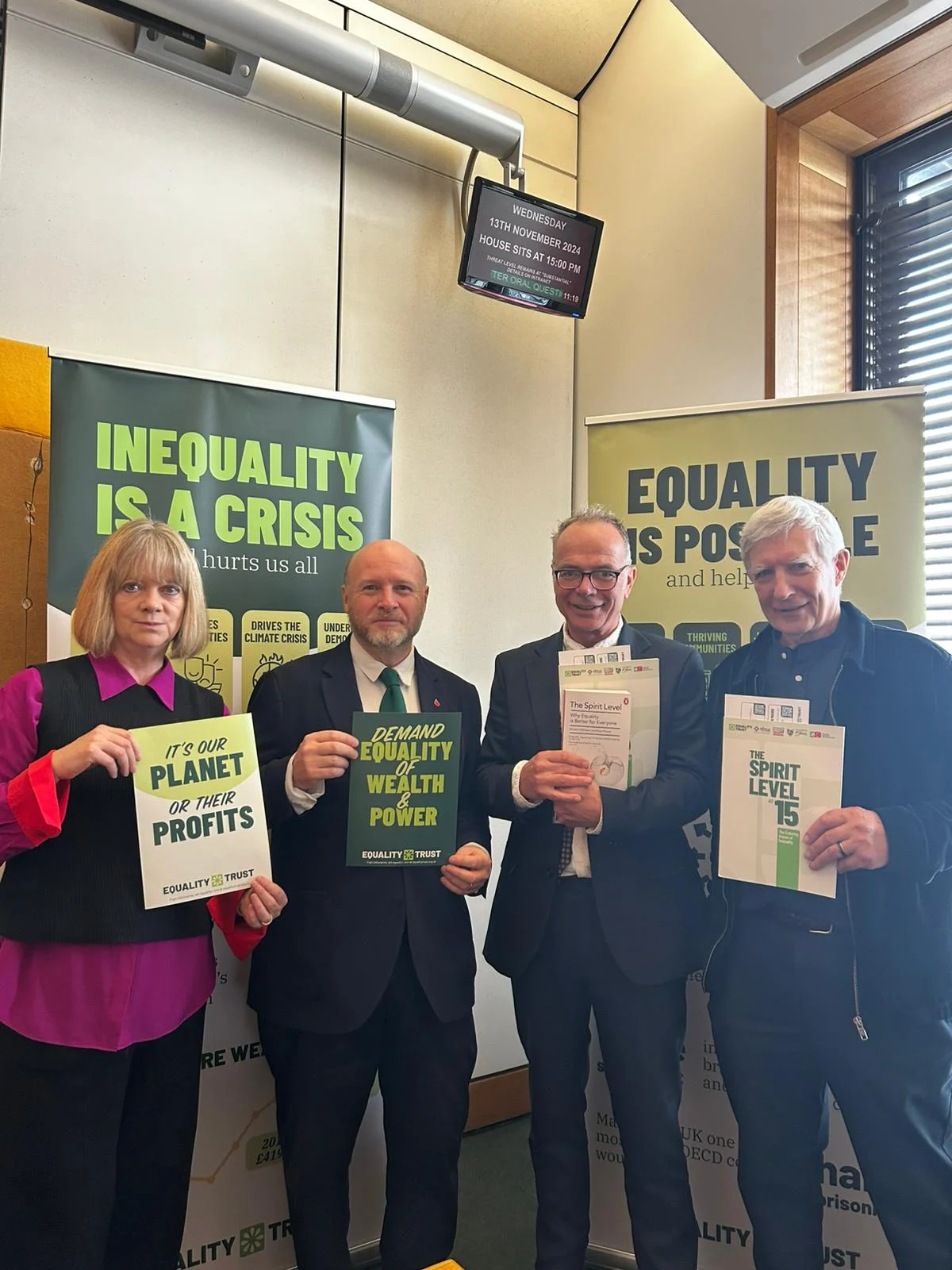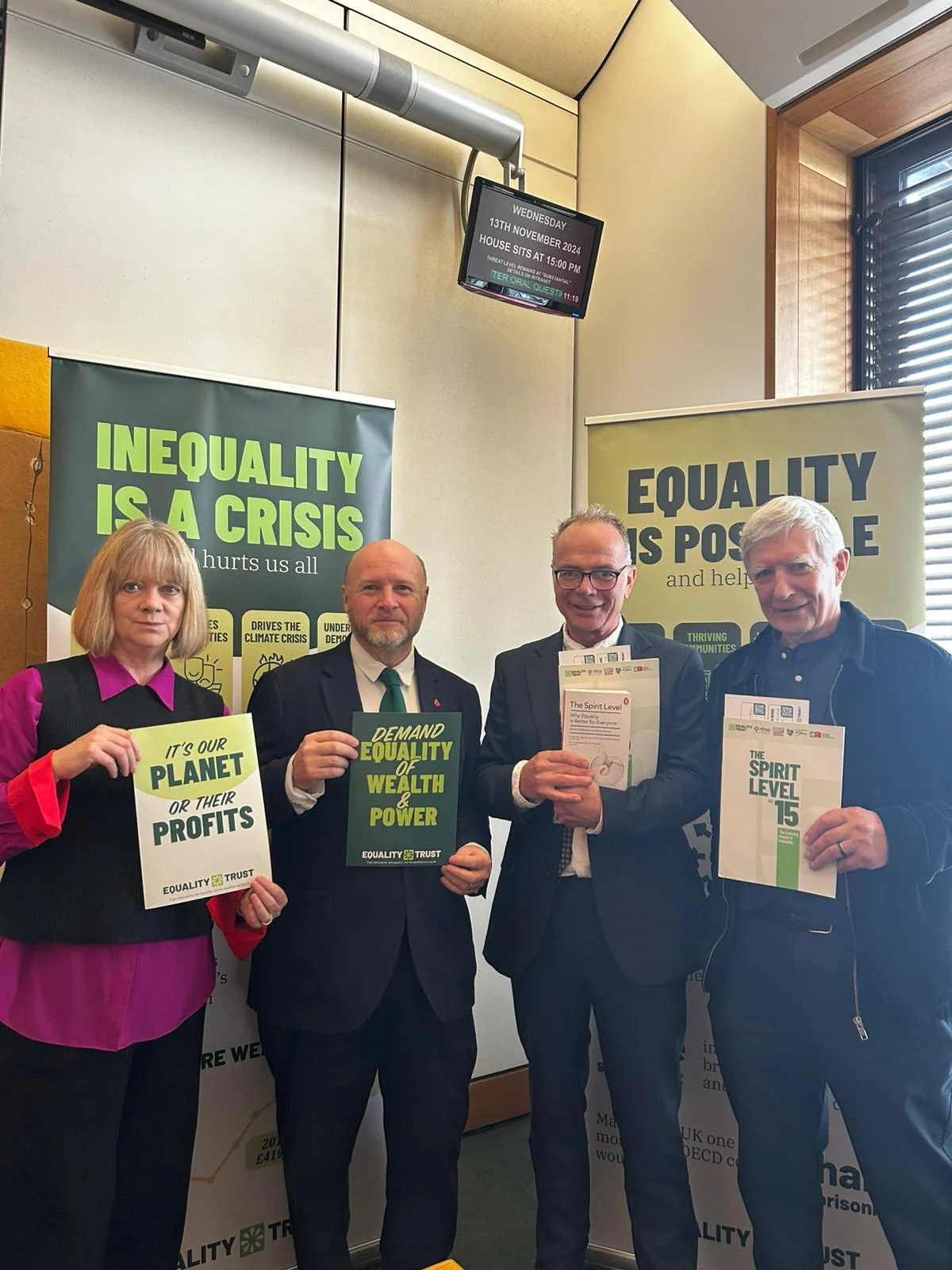
On February 4, 2026, Professor Kate Pickett, the renowned epidemiologist and social campaigner, officially launched her latest book, The Good Society, in a virtual event that drew more than 500 participants from across the globe. Hosted in collaboration with the political advocacy group Compass, the launch featured a panel of prominent intellectual and political figures, including Baroness Ruth Lister, environmental journalist George Monbiot, and Green Party Member of Parliament Caroline Lucas. The event served not only as a promotional platform for Pickett’s new publication but also as a critical forum for discussing the systemic reforms necessary to address the widening gap between the wealthy and the marginalized in modern society.
Professor Pickett, who holds a Chair in Epidemiology at the University of York, has spent decades investigating the social determinants of health and the corrosive effects of income inequality. Her previous work, most notably The Spirit Level, co-authored with Richard Wilkinson, transformed the international discourse on economics by providing empirical evidence that societies with narrower gaps between rich and poor perform better across almost every measure of social well-being. The Good Society represents a continuation and evolution of this research, offering a roadmap for institutional change and community resilience.
A Legacy of Evidence-Based Advocacy
The launch of The Good Society marks a significant milestone in a journey that began formally in 2009 with the establishment of the Equality Trust. Founded by Pickett, Wilkinson, and Bill Kerry, the trust was created to bridge the gap between academic research and public policy. Since its inception, the organization has campaigned for a more equal society by highlighting the link between high levels of inequality and a range of social problems, including decreased life expectancy, higher rates of infant mortality, and lower levels of social mobility.
The February 4 event reflected the enduring relevance of these themes. The participation of over 500 attendees underscores a growing public appetite for economic models that prioritize human welfare over raw industrial output. During the session, Professor Pickett detailed the motivations behind her new book, emphasizing that while the evidence for the harms of inequality is now widely accepted in academic circles, the political will to implement structural changes has often lagged behind. The Good Society aims to provide the practical framework required to translate these academic insights into tangible policy outcomes.
Profiles of the All-Star Panel
The event’s guest list brought together diverse perspectives from the fields of social policy, environmentalism, and legislative reform. Each panelist offered a unique lens through which to view Pickett’s thesis, reinforcing the idea that inequality is a cross-cutting issue that affects all sectors of public life.
Baroness Ruth Lister, a Peer in the House of Lords and a former Professor of Social Policy at Loughborough University, contributed her expertise on poverty and social justice. Throughout her career, Baroness Lister has been a vocal advocate for the rights of those living in poverty, arguing that inequality is not just a matter of financial disparity but a fundamental violation of human dignity and citizenship. Her presence at the launch highlighted the book’s focus on the ethical imperatives of social reform.
George Monbiot, a celebrated author and columnist for The Guardian, provided a critique of the neoliberal economic structures that have dominated the global stage for the last four decades. Monbiot has long argued that the pursuit of infinite growth on a finite planet is ecologically impossible and socially destructive. At the launch, he discussed how The Good Society aligns with the need for a "private sufficiency and public luxury" model, where collective resources are invested in high-quality public services rather than individual wealth accumulation.
Caroline Lucas, the United Kingdom’s first Green Party MP, brought a legislative perspective to the discussion. Lucas has been a consistent proponent of a "Green New Deal" and has campaigned for the adoption of well-being indicators to replace Gross Domestic Product (GDP) as the primary measure of national success. Her contribution emphasized the political feasibility of the ideas presented in Pickett’s book, suggesting that there is a growing movement within Parliament to rethink the foundational goals of the British economy.
Statistical Context: The State of Inequality in 2026
To understand the urgency behind the publication of The Good Society, it is necessary to examine the broader socioeconomic landscape. According to data from the Office for National Statistics (ONS) and the Organization for Economic Co-operation and Development (OECD), wealth concentration has remained a persistent challenge throughout the early 2020s. While some progress was made during the post-pandemic recovery era to bolster social safety nets, the structural drivers of inequality—such as regressive taxation, stagnating wages, and the rising cost of essential services—continue to exert pressure on the bottom 40% of the population.
Current data suggests that in highly unequal societies, the "social gradient" is steeper. This means that health and social problems are not just more common among the poor, but they increase at every step down the social ladder. Research cited by the Equality Trust indicates that if the United Kingdom were to reduce its level of income inequality to the average of the four most equal OECD nations (such as Norway or Denmark), the benefits would be substantial:
- Public Health: Life expectancy could increase by an average of one to two years across the population.
- Mental Well-being: Rates of mental illness could drop by as much as 25%, as the "status anxiety" associated with high-inequality environments is mitigated.
- Crime and Safety: Homicide rates and imprisonment levels typically correlate with inequality; more equal societies see significantly lower rates of violent crime.
- Education: Social mobility would improve, as the correlation between parental income and child educational attainment weakens.
The Role of Compass and Grassroots Movements
The partnership with Compass for the book launch highlights the importance of "pluralist" politics in achieving social change. Compass, an organization dedicated to building a more equal, democratic, and sustainable future, has been instrumental in fostering collaboration between different progressive factions. By hosting the event, Compass provided a platform where academic theory could meet activist energy.
The Good Society posits that top-down policy changes are insufficient on their own. Instead, Pickett argues for a "bottom-up" approach where communities are empowered to build local resilience. This involves the expansion of cooperatives, the protection of the commons, and the strengthening of local government. The event recording, which has been made available by the Equality Trust, serves as a resource for local organizers seeking to apply Pickett’s research to their own advocacy efforts.
Chronology of Development: 2009–2026
The trajectory of Professor Pickett’s influence can be traced through several key milestones that have shaped the contemporary understanding of social equity:
- 2009: Publication of The Spirit Level: Why More Equal Societies Almost Always Do Better. This book became a bestseller and was cited by politicians across the spectrum, from Barack Obama to David Cameron (during his "Big Society" phase).
- 2009: Founding of the Equality Trust. The organization began its mission to educate the public and lobby for policies that reduce the income gap.
- 2014: The launch of the "Pay Ratio" campaign, which encouraged companies to disclose and limit the disparity between CEO pay and the average worker’s salary.
- 2019: Publication of The Inner Level. This follow-up work focused on the psychological impact of inequality, exploring how social hierarchy affects individual mental health and self-esteem.
- 2020–2023: The COVID-19 pandemic highlighted and exacerbated existing inequalities. Pickett’s work was frequently cited in discussions regarding the disproportionate impact of the virus on low-income and minority communities.
- February 4, 2026: The launch of The Good Society. This latest work synthesizes years of research into a cohesive vision for a post-inequality world.
Analysis of Implications and Future Directions
The release of The Good Society comes at a pivotal moment for global governance. As nations grapple with the dual challenges of climate change and economic instability, the arguments presented by Pickett and her colleagues offer a compelling alternative to the status quo. The "all-star" nature of the launch panel suggests that the ideas within the book are gaining traction within the political establishment, moving from the fringes of radical thought to the center of policy debate.
One of the primary implications of Pickett’s work is the need for a fundamental shift in how governments define success. If the goal of a society is to maximize the well-being of its citizens, then economic growth cannot be the sole metric of progress. The Good Society advocates for a "Well-being Economy," where policy decisions are screened for their impact on social equity and environmental sustainability.
Furthermore, the book emphasizes the concept of "pre-distribution"—changing the way the market works so that it produces more equal outcomes in the first place, rather than relying solely on "redistribution" through taxes and benefits after the fact. This includes measures such as strengthening trade unions, promoting employee ownership, and implementing a living wage that reflects the actual cost of participation in society.
Conclusion and Public Access
The online launch of The Good Society on February 4 was a testament to the power of digital connectivity in mobilizing social movements. With over 500 participants engaging with the panel, the event demonstrated that the desire for a fairer society remains a potent force in 2026. Professor Pickett’s work continues to provide the intellectual scaffolding for a more just world, grounded in the rigorous analysis of data and a profound commitment to human dignity.
For those unable to attend the live session, the Equality Trust has published the full recording of the event, ensuring that the insights shared by Baroness Lister, George Monbiot, and Caroline Lucas remain accessible to the public. The book itself, published by Penguin, is now available globally, offering a comprehensive guide for anyone committed to the pursuit of the "good society." As the discourse around inequality continues to evolve, the framework provided by Professor Pickett will undoubtedly remain a cornerstone of the movement for systemic reform.