
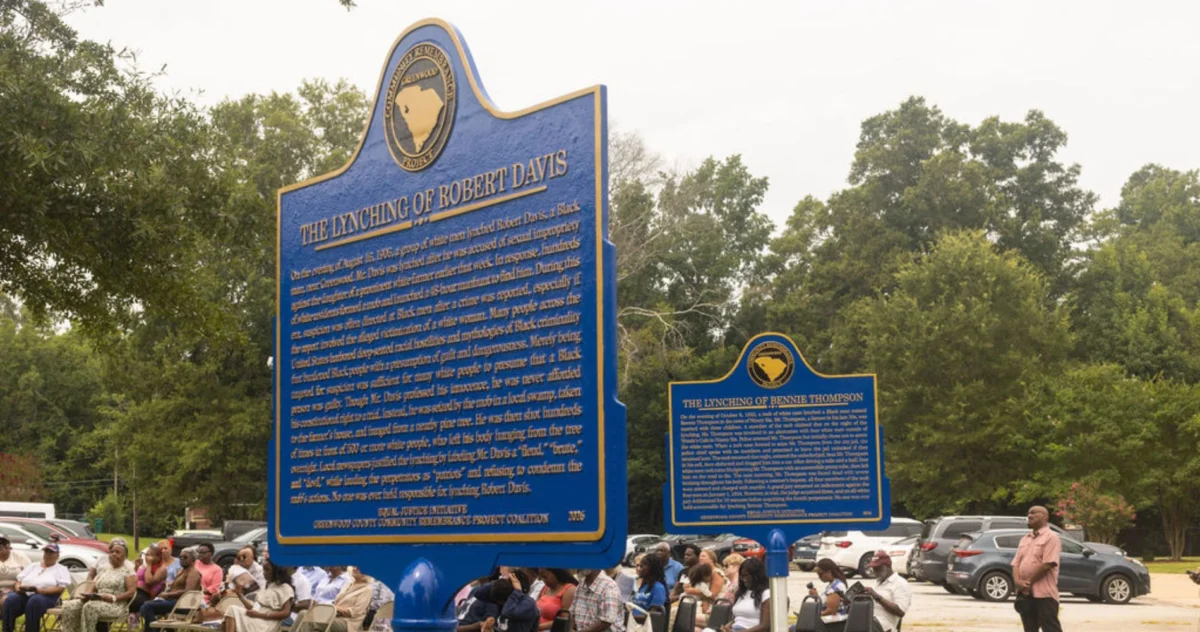
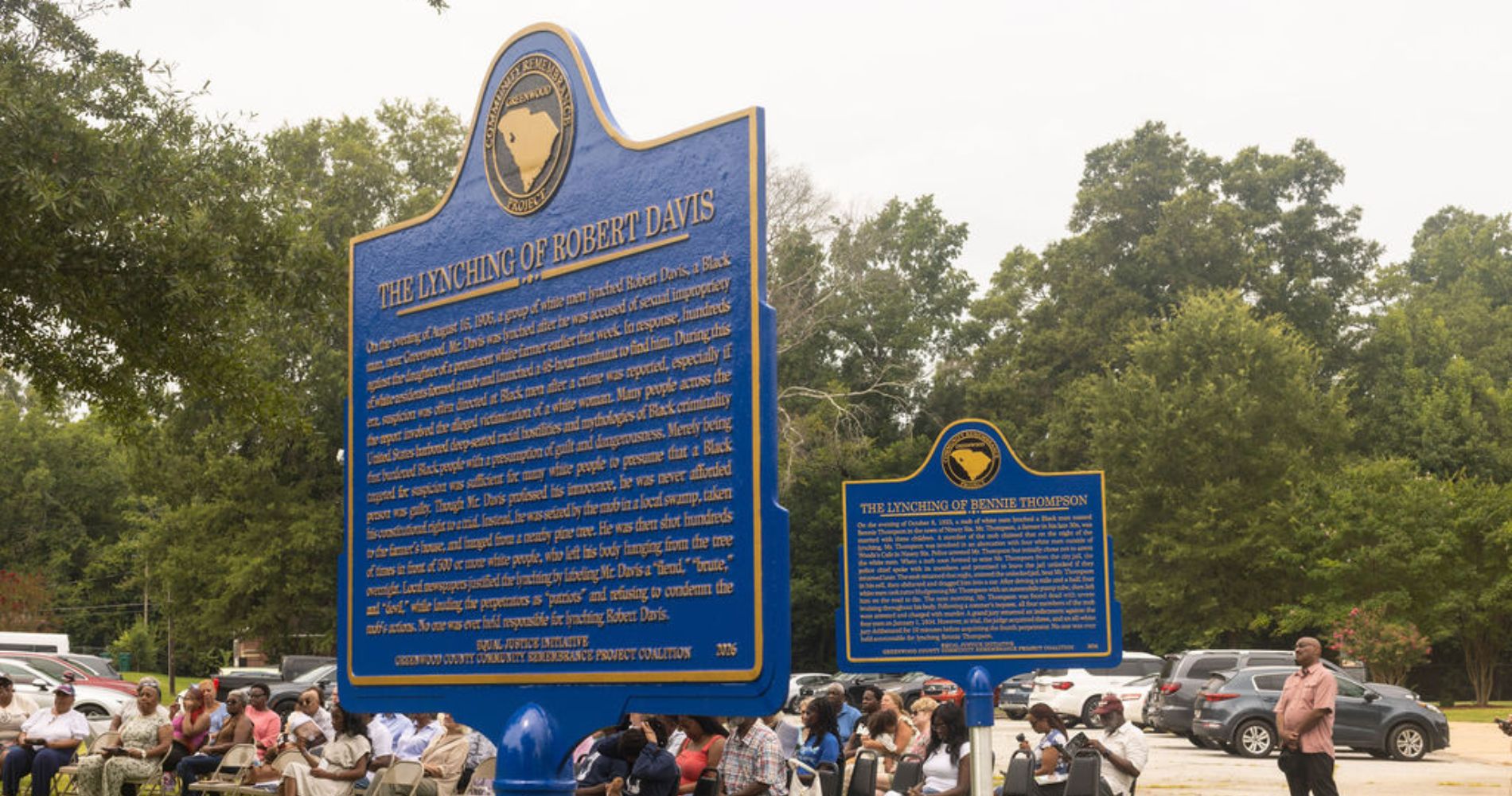
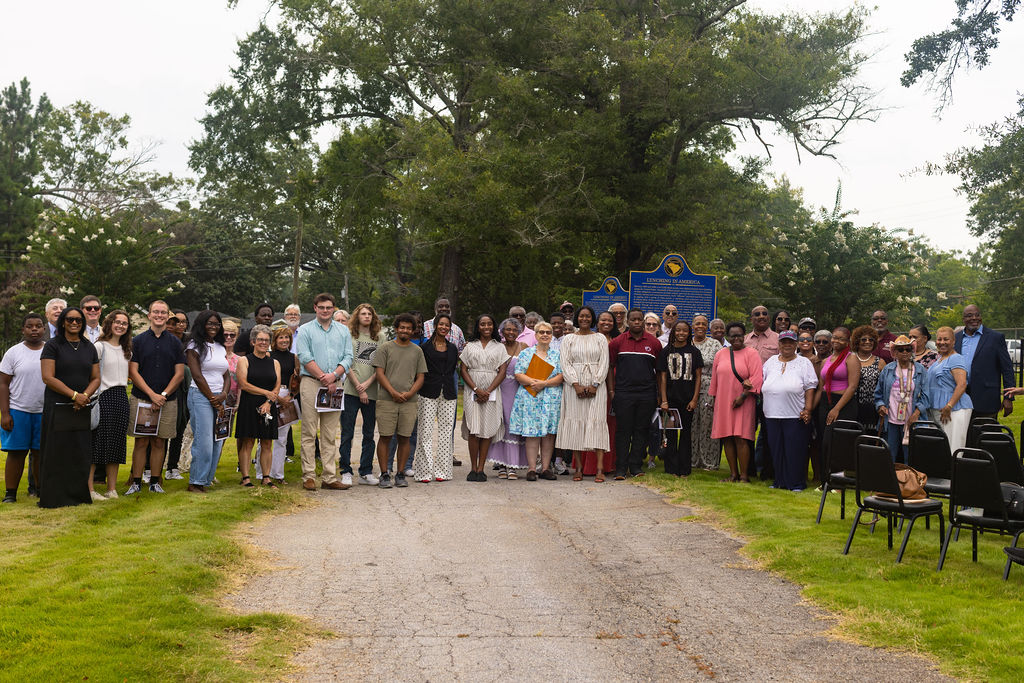
On August 1, a coalition of community leaders, local residents, and officials in Greenwood County, South Carolina, gathered at the GLEAMNS Dr. Benjamin E. Mays Historic Preservation Site to dedicate two historical markers. These markers serve as permanent public testaments to the lives of Robert Davis, lynched in 1906, and Bennie Thompson, lynched in 1933. The ceremony, held on the birthday of Dr. Benjamin Mays, brought together approximately 70 attendees, ranging from youth to elders, to engage in the necessary, if difficult, work of historical reckoning.
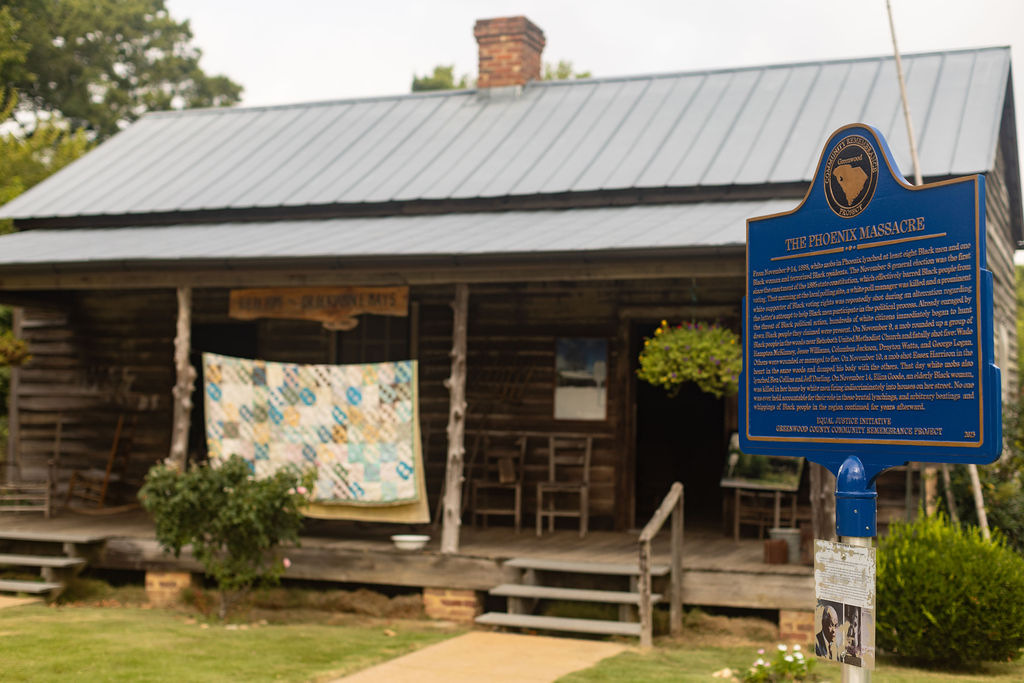
This initiative is a continuation of the Greenwood Community Remembrance Project, which has worked since 2019 to confront the local legacy of slavery, Reconstruction, and racial terrorism. The installation of these markers is part of a broader national effort facilitated by the Equal Justice Initiative (EJI) to ensure that the history of racial violence in the United States is acknowledged, documented, and preserved with the integrity and respect it demands.
A History of Racial Terror in Greenwood County
Greenwood County holds the grim distinction of having the highest number of documented racial terror lynchings in South Carolina. Between 1865 and 1950, at least 17 Black individuals were killed by white mobs in the county—part of a larger, systemic pattern of violence that claimed the lives of more than 240 people across the state.
The historical records of these events reveal a pattern of state complicity and a complete failure of the judicial system. Robert Davis, the first of the two men honored in this latest project, was seized on August 16, 1906, after being accused of sexual impropriety—an accusation that, in the era of Jim Crow, often served as a pretext for extrajudicial execution. Despite his protestations of innocence, Mr. Davis was denied his constitutional right to a trial. A mob of hundreds tracked him to a local swamp, hanged him from a pine tree, and subjected his body to hundreds of gunshots in a public display of brutality witnessed by an estimated 500 people. Local media at the time actively fueled this violence, using dehumanizing language to justify the mob’s actions and canonize the perpetrators as patriots.
Nearly three decades later, on October 8, 1933, Bennie Thompson was lynched in the town of Ninety Six. His death highlights the specific role of law enforcement in facilitating racial terror. After an altercation with white men at a local café, Thompson was arrested. When a mob formed to seize him, the police chief reportedly promised to leave the jailhouse unlocked. True to this arrangement, the mob entered the facility, abducted Thompson, and beat him to death with an automobile pump tube. Although four men were later indicted for his murder, they were acquitted by an all-white jury after minimal deliberation, reflecting a judicial landscape that rendered Black lives unprotected under the law.
Chronology of the Remembrance Project
The Greenwood Community Remembrance Project has systematically worked to bring this hidden history to light:
- 2019: The project is established to educate the public on the history of racial injustice in the region.
- 2023: On the 125th anniversary of the Phoenix Riot, the coalition dedicated a marker to the nine victims of that massacre.
- August 1, 2026: The dedication ceremony for the Robert Davis and Bennie Thompson markers takes place, coinciding with the birthday of Dr. Benjamin E. Mays.
- Future Plans: The Rev. Christopher B. Thomas, director of the Mays Site, has announced plans for a "pathway of remembrance" that will lead to historical markers documenting all identified lynchings in the county.
Official Responses and Community Impact
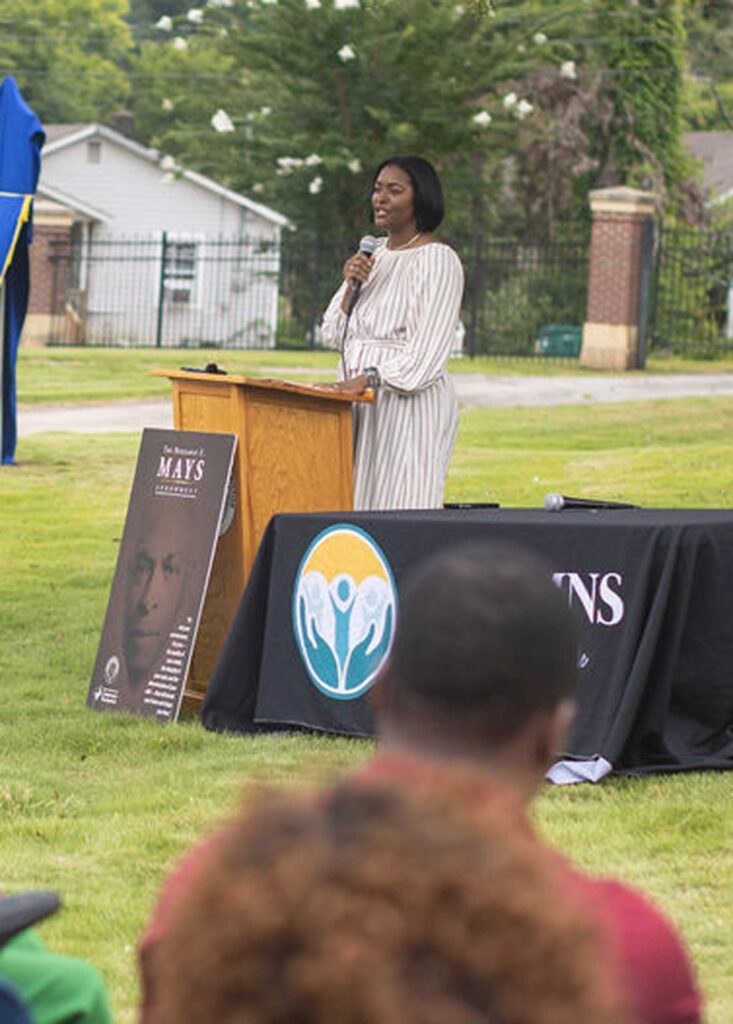
During the dedication, Dr. Anika Thomas, CEO of the GLEAMNS Human Resources Commission, emphasized that the act of preservation is a moral imperative. "We must reflect, recognize, and preserve our history with honesty, integrity, and respect," she stated. Her sentiments were echoed by Jennifer Harris, a senior project manager at EJI, who praised the Greenwood coalition for their "extraordinary work" in acknowledging the victims of racial injustice.
The project is notably youth-focused. The coalition sponsors a study program that has enabled over 100 students to visit the EJI Legacy Sites in Montgomery, Alabama. During the August 1 ceremony, five local students were awarded $1,000 college scholarships for their participation in the program. For these students, the trip to Montgomery and their subsequent work with the local markers provided a tangible connection to the past, moving the history of racial terror from textbooks to lived experience.
The Broader Context of Lynching in America
The stories of Robert Davis and Bennie Thompson are microcosms of a national crisis. Between 1865 and 1950, more than 6,500 Black men, women, and children were killed in racial terror lynchings. This violence was not random; it was a targeted campaign to enforce racial hierarchy and political subordination.
Data analysis by researchers shows that nearly 25% of documented lynchings were triggered by allegations of sexual impropriety. In an environment where the mere accusation against a Black man by a white person was treated as a verdict of guilt, the judicial system frequently abandoned its function. Police officers, who were sworn to protect those in custody, were often complicit, failing to resist mobs or, in some documented instances, actively participating in the abduction and murder of their prisoners.
The practice of lynching was designed to be performative. By allowing bodies to remain hanging for hours or days, perpetrators sought to terrorize the entire Black community and discourage resistance to the status quo of segregation. The refusal of local authorities to prosecute these crimes reinforced the message that Black life held no value in the eyes of the law.
Implications for Healing and Reconciliation
The work being done in Greenwood County is part of a growing movement across the United States to reckon with the "hard history" of the American South. The EJI’s Community Remembrance Project is built on the belief that meaningful societal healing cannot occur without an honest accounting of the past. By erecting markers, collecting soil from sites of violence, and engaging the next generation, communities are attempting to dismantle the silence that has surrounded these atrocities for over a century.
The implications of these efforts are significant. By validating the trauma of the past, the coalition provides a sense of justice for the descendants of victims—a justice that was denied in 1906 and 1933. Furthermore, the commitment to historical accuracy serves as a check against historical revisionism, ensuring that the legacy of racial terror is recognized as a defining, albeit dark, element of the American narrative.
As the Greenwood coalition continues its work, the focus remains on the "challenging work of truth-telling." The planned pathway at the Mays site will eventually serve as a permanent archive, ensuring that the names of Robert Davis, Bennie Thompson, and the victims of the Phoenix Riot are not forgotten. Through these initiatives, the community is shifting from a culture of denial to one of acknowledgment, establishing a foundation for a more equitable future based on the recognition of the inherent dignity of all people, regardless of the violence of the past.




