
A Chronology of Dispossession and Diaspora
The narrative arc of the collection is rooted in the history of the 1947 Partition, a cataclysmic event that resulted in the forced migration of approximately 15 million people and the deaths of up to two million others. This period of mass displacement remains the foundational trauma for many South Asian families, including Asghar’s, whose extended kin were forced into exile from Kashmir.
The collection draws a direct, documented parallel between this historical upheaval and modern crises. Asghar frames the current genocide in Gaza and the intensified operations of U.S. Immigration and Customs Enforcement (ICE) as symptoms of the same apparatus of colonial control. These "imaginary borders"—political lines drawn to exert power over bodies and land—are portrayed as the primary architects of modern grief. For the diaspora, this manifests as a profound, hereditary yearning for a homeland that has been obscured by time, censorship, and the loss of oral history.
The Form of Erasure: Redaction as Archival Practice
Asghar’s technical approach in this collection is a departure from traditional narrative poetry, employing what is known as "erasure poetry." By physically removing words from existing texts or using redactions, the poet fills in the gaps left by a lack of archival history. This is a critical engagement with the concept of the "missing archive." For many orphaned by history, state-sanctioned violence, or early parental death, official documentation is often incomplete, falsified, or nonexistent.
The use of brackets throughout the text functions as a vessel for the poet’s inner monologue, acting as a site for the information that was never passed down. In one notable section, the inclusion of footnotes serves to provide cultural context that the poet had to recover independently, effectively reclaiming a lineage that was severed by premature parental death. This methodology reflects a broader trend in post-colonial literature, where writers use fragmented forms to mirror the fragmented realities of their communities. The audiobook version of the collection further emphasizes this, with the repeated recitation of the phrase "daughter of redacted" serving as a rhythmic, almost ritualistic assertion of identity in the face of systemic erasure.
Global Conflicts and the Complicity of the Diaspora
The collection moves into the political sphere with an unflinching analysis of global complicity. In examining the genocide in Gaza, Asghar interrogates the position of the American citizen—specifically one with a history of family displacement. The work poses difficult questions regarding the ethics of silence and the impossibility of claiming neutrality. Asghar argues that the shared vocabulary of grief—the loss of home, the fear of military intervention, and the struggle for survival—creates an undeniable link between the Palestinian experience and the history of South Asian colonial trauma.
Statistically, the resonance of these themes is high. According to data from the United Nations High Commissioner for Refugees (UNHCR), the number of forcibly displaced people worldwide has reached an unprecedented 117 million as of 2024. Asghar’s work contextualizes these abstract figures within the intimate, internal experience of the individual. By juxtaposing the macro-level violence of state borders with the micro-level heartbreak of a romantic dissolution, the collection illustrates that personal trauma is rarely isolated from the political environment.
The Sociology of the Broken Home
A significant portion of the collection explores the intersection of romantic betrayal and familial loss. Asghar addresses a highly publicized personal event—a breach of trust within a non-monogamous relationship—and frames it through the lens of their identity as an orphan. The sociological implication here is the challenge of building a "chosen family" when one’s biological roots have been severed or erased.
The collection argues that the "polycrisis"—a term used by economic and environmental theorists to describe the convergence of multiple global threats—is not just a political reality but an emotional one. When an individual’s support system is compromised by the very people who were meant to sustain it, the grief mimics the broader, national grief of losing a homeland. The poet’s move from the specific (the betrayal of a partner) to the universal (the mourning of parents) underscores the thesis that the heart must be broken in order to be opened to the reality of the world.
The Resilience of Nature and the Memory of Dirt
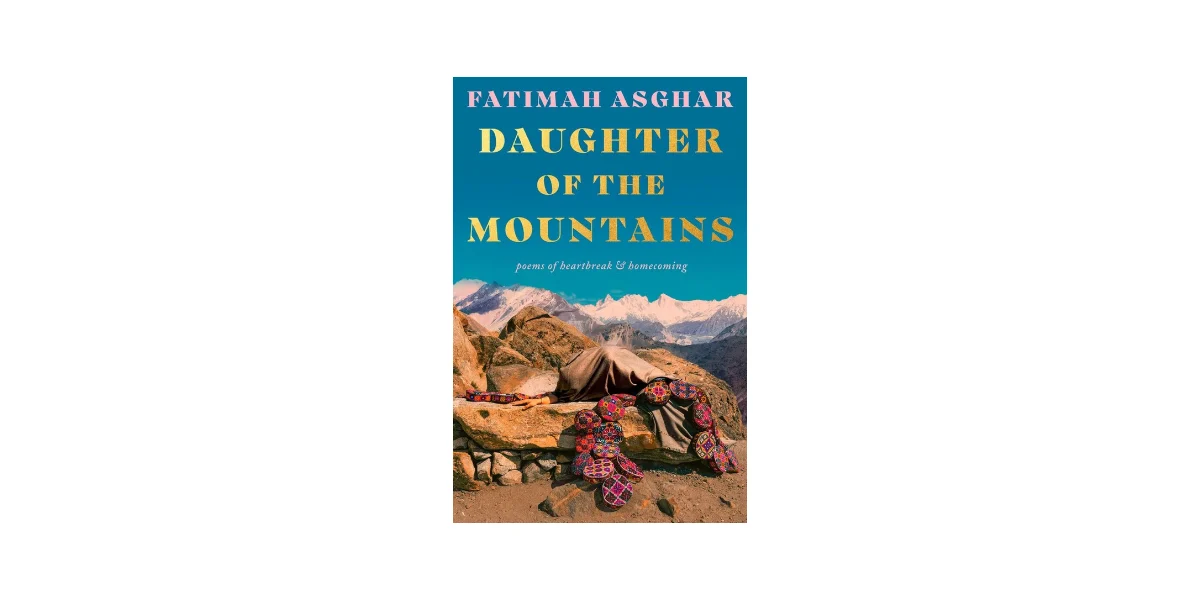
The final section of the collection, titled daughter of [dirt], offers a return to the natural world as a mechanism for healing. Throughout history, the land has served as the ultimate witness to both creation and destruction. By centering the mountain as a focal point, Asghar reclaims the physical territory that history tried to take away.
This theme is particularly salient for descendants of displaced families who often hold "conjecture" as their only historical record. Many families of the diaspora, particularly those from the Philippines or South Asia, possess oral histories of land loss during periods of military dictatorship or colonial rule. These stories, often passed down in whispers or guarded by surviving elders, are rarely found in textbooks. Asghar’s work serves as a reclamation of this dirt, rejecting the "golden touch" of wealth or status in favor of the tangible, grounded reality of the soil.
Critical Implications and Literary Significance
The publication of Daughter of the Mountains arrives at a pivotal moment in contemporary letters. There is a growing movement of poets and authors who are moving beyond the "immigrant narrative" of assimilation and toward an analysis of the "imperial narrative" of destruction. By choosing to frame their work as an act of resistance, Asghar contributes to a body of literature that demands accountability from the states that uphold these borders.
From a formal standpoint, the collection’s reliance on restraint and deliberate silence suggests that the most powerful way to address trauma is not always to state it explicitly, but to highlight its absence. The redactions, the flipped text, and the extensive use of whitespace force the reader to experience the frustration of the search—the literal act of reaching for something that has been hidden.
As the global community continues to grapple with the ethics of borders and the human cost of displacement, Daughter of the Mountains provides a necessary, albeit painful, framework for understanding our place within these systems. It is not merely a collection of poems; it is a document of witness. By linking the personal, the familial, and the global, Fatimah Asghar offers a roadmap for navigating the ruins of history. Ultimately, the collection suggests that while borders may be imaginary in their creation, their impact on the human spirit is profoundly, undeniably real—and the work of survival is to continue reaching for the dirt of the mountain, regardless of how many times the world tries to bury it.




