In 2024, the United States recorded 44,447 gun-related fatalities, a sobering figure that, despite representing a third consecutive year of decline, remains alarmingly high by historical standards. This data, compiled by the Centers for Disease Control and Prevention (CDC) and analyzed by the Pew Research Center, offers a stark look at the persistent challenge of gun violence in America. The comprehensive analysis, drawing from CDC mortality data, FBI crime statistics, and global health metrics, provides a detailed breakdown of gun deaths, their trends over time, and comparisons both domestically and internationally.
The grim total of 44,447 deaths encompasses a range of causes, including gun homicides, suicides, and less common categories such as deaths involving law enforcement, accidental shootings, and those with undetermined circumstances. It is crucial to note that these statistics are based on official death certificates, which identify a primary cause of death, and therefore exclude fatalities where a gunshot injury was a contributing factor but not the principal cause.
The trend of declining gun deaths, while statistically positive, must be viewed within the context of consistently high annual totals. For several years prior to this recent downturn, the U.S. experienced a significant surge in gun violence, pushing fatalities to unprecedented levels. The current figures, while reduced, still place 2024 among the most lethal years on record for gun-related injuries.
Understanding the Scope of Gun Deaths
The breakdown of gun deaths in 2024 reveals a deeply concerning pattern: suicides account for the majority of these tragic events. Out of the 44,447 total gun deaths, 27,593 were attributed to suicide, representing 62% of the total. This stark figure underscores the critical intersection of gun availability and mental health crises.

Gun homicides, though receiving significant public and media attention, accounted for 15,364 deaths, or 35% of the total. The remaining percentage, approximately 3%, comprises deaths involving law enforcement (636), accidental shootings (450), and those with undetermined circumstances (404). These "other" categories, while smaller in number, highlight the multifaceted nature of gun violence.
Firearms were overwhelmingly the weapon of choice in homicides. In 2024, a staggering 76% of all homicides in the U.S. involved a firearm, with 15,364 out of 20,162 total homicides committed with guns. While this percentage has slightly decreased from some recent years, it remains exceptionally high, dating back to 1968, the earliest year for which the CDC maintains accessible online records.
Similarly, firearms played a significant role in suicides. In 2024, 57% of all suicides, totaling 27,593 deaths, involved a gun. This figure, while lower than the peak of 61% seen in 1990 and 1993, remains a substantial proportion, indicating the lethal efficiency of firearms in suicide attempts.
Historical Trends in Gun Deaths
The Pew Research Center’s analysis traces the trajectory of gun deaths in the U.S. back to 1968. While the total number of gun deaths in 2024 was the fifth-highest on record, this figure is heavily influenced by recent increases. The period from 2015 to 2024 saw four years with higher totals than 2024, underscoring a concerning upward trend in the latter half of the previous decade.

Gun Suicides and Homicides Over Time:
- 1968: Suicide: 10,911; Homicide: 9,425
- 1990: Suicide: 18,885; Homicide: 16,218 (Peak Homicide Year)
- 1993: Suicide: 18,940; Homicide: 18,253 (Peak Homicide Year)
- 2010: Suicide: 19,392; Homicide: 11,078
- 2015: Suicide: 22,018; Homicide: 12,979
- 2020: Suicide: 24,292; Homicide: 19,384
- 2021: Suicide: 26,328; Homicide: 20,958
- 2023: Suicide: 27,300; Homicide: 17,927
- 2024: Suicide: 27,593; Homicide: 15,364
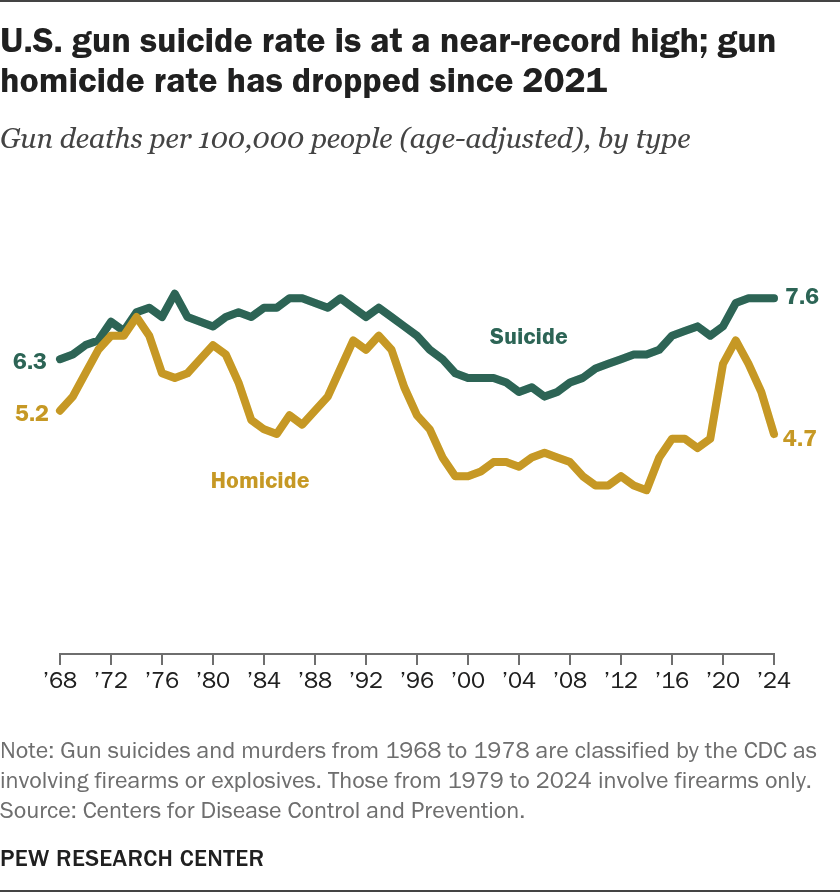
The data reveals a complex dynamic: gun suicides have shown a consistent upward trend in recent years, reaching near-record highs in terms of rate. Conversely, gun homicides, after peaking in the mid-1990s and again in 2021, have seen a notable decline in the most recent years, including 2024.
A critical nuance in historical data involves the classification of deaths. From 1968 to 1978, CDC data categorized gun deaths as involving "firearms or explosives." From 1979 onwards, the classification shifted to "firearms only." This change can affect year-to-year comparisons, particularly for the earlier period.
Gun Death Rates: A Population-Adjusted Perspective
While the absolute number of gun deaths in 2024 is high, it is essential to consider the U.S. population growth over the decades. When adjusted for population, the rate of gun deaths per 100,000 people provides a more nuanced picture of the trend. In 2024, the rate stood at 12.8 gun deaths per 100,000 people. This figure is lower than the peak rate of 16.3 per 100,000 recorded in 1974.

Age-Adjusted Gun Death Rates Per 100,000 People:
- 1974: 16.3
- 1990: 10.4
- 2000: 9.6
- 2010: 10.0
- 2015: 10.6
- 2020: 13.1
- 2021: 14.0
- 2022: 13.7
- 2023: 13.1
- 2024: 12.8
The rate of gun suicides has remained persistently high, hovering around 7.6 deaths per 100,000 people in recent years, including 2023 and 2024. This represents a near-record high for suicide rates involving firearms. In contrast, the gun homicide rate, after a significant surge during the COVID-19 pandemic, has declined considerably, reaching 4.7 deaths per 100,000 people in 2024. This decline from a high of 6.7 in 2021 is a significant development, though the rate remains higher than pre-pandemic levels.
State-Level Disparities in Gun Deaths
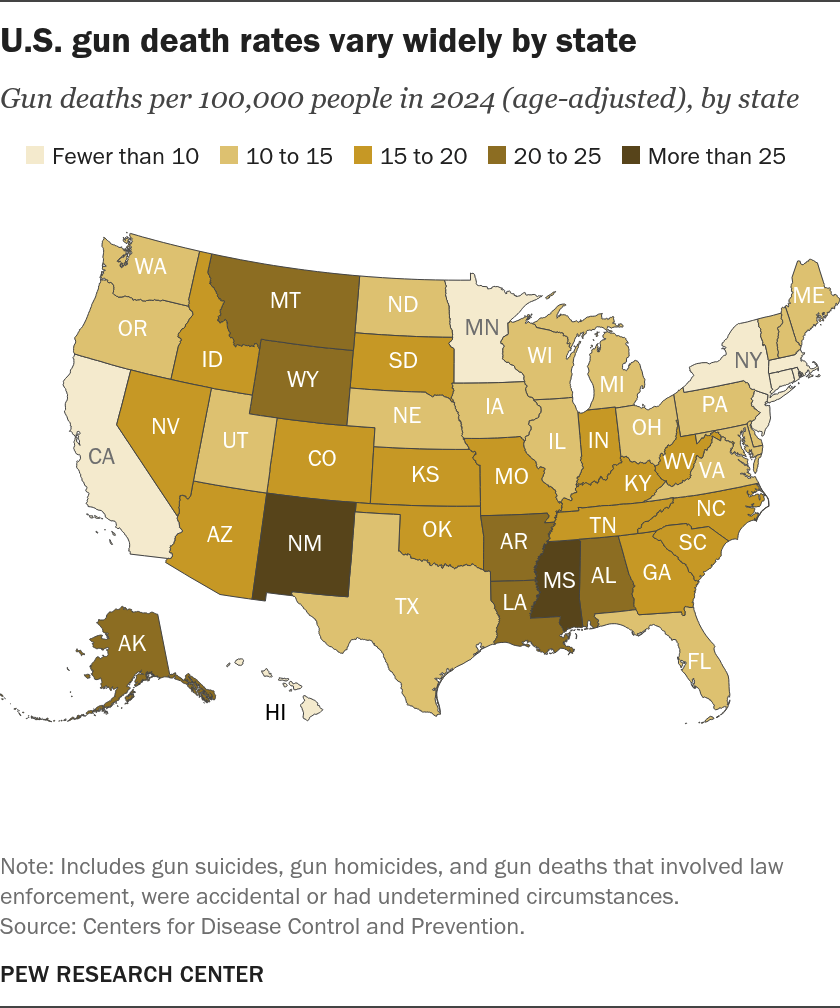
The impact of gun violence is not uniform across the United States; significant variations exist at the state level. In 2024, the age-adjusted gun death rates per 100,000 people painted a stark picture of these disparities.
States with Highest Gun Death Rates (2024):
- Mississippi: 28.0
- New Mexico: 26.6
- Alaska: 24.4
- Alabama: 23.7
- Wyoming: 23.4
These states, often characterized by a combination of socioeconomic factors, rurality, and potentially differing gun ownership rates and regulations, face a disproportionately high burden of gun violence.
States with Lowest Gun Death Rates (2024):
- Hawaii: 3.7
- Massachusetts: 3.8
- New Jersey: 4.0
- New York: 4.4
- Rhode Island: 4.6
Conversely, states with lower rates often have more stringent gun control laws, higher population density, and greater access to mental health services. It is important to note that these rates are age-adjusted to account for demographic differences between states, providing a more equitable comparison.
When examining homicides and suicides separately, the patterns shift slightly but remain significant. States with higher rates of gun homicide often face challenges related to community violence and poverty. Meanwhile, states with higher gun suicide rates may reflect a greater prevalence of mental health issues coupled with easier access to firearms.
International Comparisons: The U.S. in a Global Context
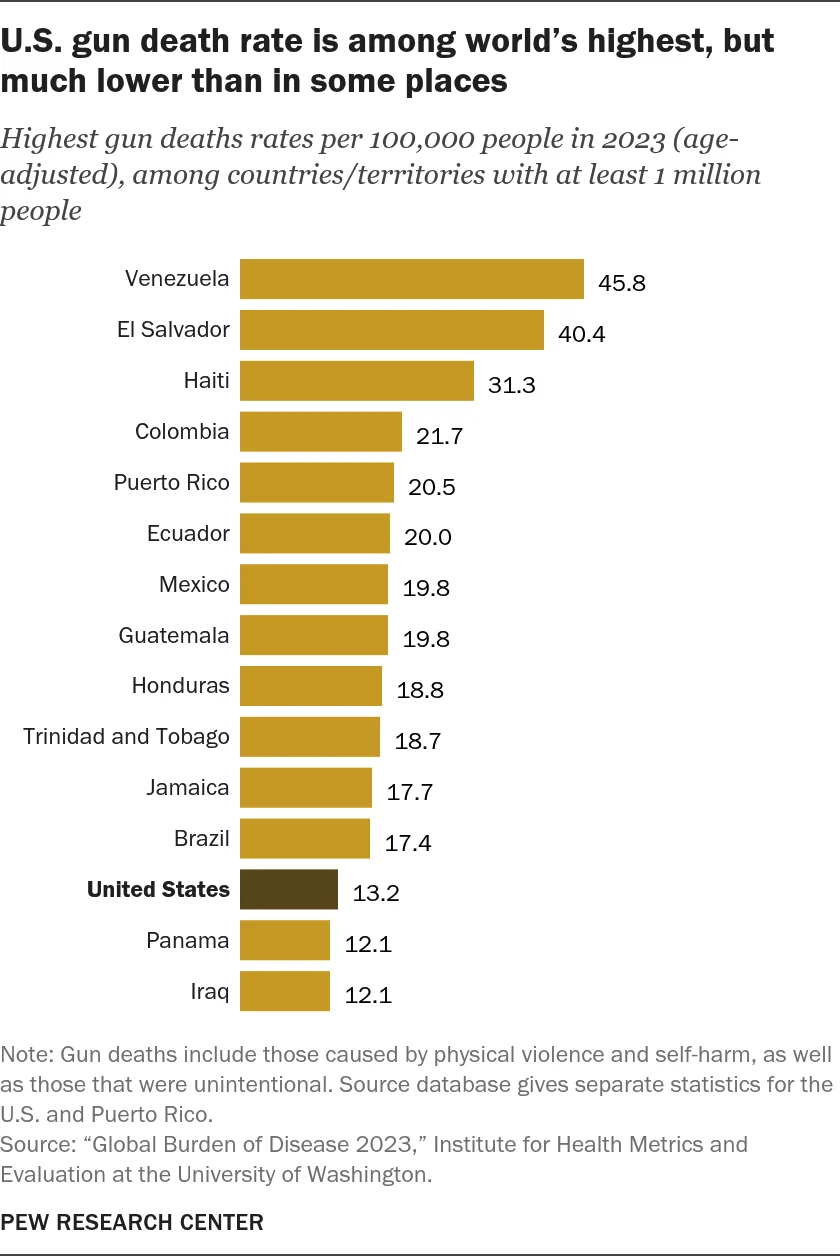
On a global scale, the United States experiences a significantly higher number of gun deaths than most other nations. According to data from the Institute for Health Metrics and Evaluation (IHME), which covers 204 countries and territories, the U.S. had approximately 10,000 more gun deaths than the country with the second-highest total in 2023, Brazil.
However, when adjusting for population size, the U.S. gun death rate per 100,000 people (13.2 in 2023) places it below several other countries, particularly in Latin America. Venezuela (45.8), El Salvador (40.4), and Haiti (31.3) reported substantially higher age-adjusted gun death rates. Other nations with concerningly high rates included Colombia (21.7), Ecuador (20.0), Mexico (19.8), Guatemala (19.8), Honduras (18.8), Trinidad and Tobago (18.7), Jamaica (17.7), and Brazil (17.4).
The U.S. rate is significantly lower than these countries but still notably higher than many developed nations in Europe and Asia. This suggests that while the U.S. faces a severe problem with gun violence, the issue is not unique globally, but the scale and nature of firearm availability and its role in societal violence are distinct.
The Complex Issue of Mass Shootings
Defining "mass shooting" remains a contentious issue, leading to varying statistics. The FBI defines an "active shooter incident" as one or more individuals actively engaged in killing or attempting to kill people in a populated area. Under this definition, 23 people (excluding shooters) died in 2024.

The Gun Violence Archive, which uses a broader definition of four or more people shot (regardless of fatality), reported 510 deaths in mass shootings in 2024. Regardless of the definition, these incidents, while horrific, constitute a small fraction of the total annual gun homicides in the U.S.
Trends in active shooter incidents, according to the FBI, show a peak in 2021 with 61 incidents, followed by a decline to 24 incidents in 2024. Similarly, the Gun Violence Archive reported a decrease in mass shootings in 2024 compared to previous years. This downward trend in reported incidents is a positive development, though the unpredictability and devastating impact of each event continue to be a national concern.
Firearms Used in Homicides
The FBI’s data for 2024 indicates that handguns were the most commonly used firearms in gun murders, though precise figures for all categories are not consistently reported by all law enforcement agencies. This underscores the prevalence of handguns in both criminal activity and personal defense scenarios. The FBI’s data collection relies on voluntary submissions, meaning the full picture of firearm use in homicides may be incomplete.
Broader Implications and Context
The persistent high numbers of gun deaths in the U.S., even with a recent downward trend, highlight a complex interplay of factors. These include gun ownership rates, the availability of firearms, mental health services, socioeconomic conditions, and the effectiveness of current gun violence prevention strategies. The Pew Research Center’s extensive analysis provides a critical foundation for understanding these trends and informing public discourse and policy decisions. As the nation grapples with this ongoing crisis, the data presented serves as a stark reminder of the human cost and the urgent need for comprehensive solutions. The long-term implications of this high rate of gun violence extend beyond immediate fatalities, impacting public health, community safety, and the collective sense of security across the country.