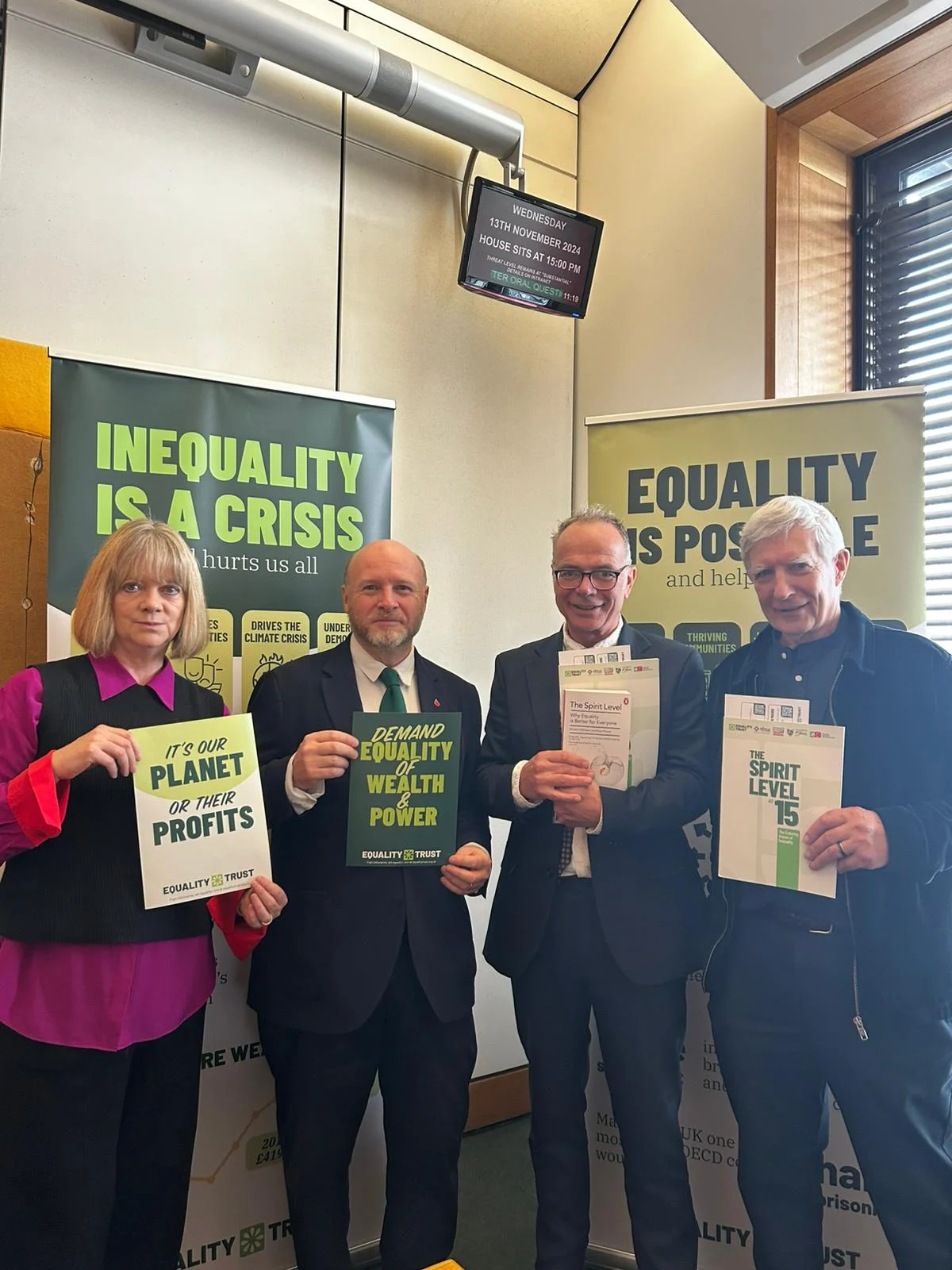
The Equality Trust has released a comprehensive analysis for 2026 revealing that Britain’s 157 billionaires now command wealth equivalent to 22 percent of the nation’s Gross Domestic Product (GDP). This figure represents a dramatic escalation from 1990, when the billionaire class held approximately 4 percent of the national economic output. The report, titled "Billionaire Britain 2026," suggests that while headline economic indicators may show growth, the underlying reality for the majority of the population is one of stagnation and diminishing returns, a phenomenon researchers are increasingly defining as the "hollow economy."
The findings coincide with the annual publication of the Sunday Times Rich List, a record that has tracked the UK’s wealthiest individuals since 1989. While political leaders frequently cite GDP growth as evidence of a robust economy, the Equality Trust argues that the disconnect between macroeconomic data and the lived experience of citizens has reached a breaking point. The report highlights that the richest 50 families in the United Kingdom now possess more wealth than the bottom 34 million people combined, signaling a concentration of capital unprecedented in the post-war era.
The Emergence of Ghost GDP and the Hollow Economy
A central theme of the 2026 analysis is the concept of "Ghost GDP." First articulated by Citrini Research in early 2026, the term describes an economy that appears to be expanding on paper—often driven by artificial intelligence, high-frequency financial trading, and multinational accounting—but fails to generate tangible benefits such as wage growth, infrastructure improvement, or community stability.
This "hollow economy" is characterized by the extraction of value rather than its creation. According to the Equality Trust, the nature of billionaire wealth has shifted fundamentally over the last three decades. In 1990, only three UK billionaires derived their primary wealth from sectors like property, inheritance, and finance. By 2025, that number had surged to 42. Currently, the finance sector alone accounts for 30 percent of all billionaire wealth in Britain, representing a fourfold increase in its share of the top-tier economy.
Financial analysts describe this as "rentier capitalism," a system where wealth is accumulated through the ownership of existing assets—such as land, housing, and financial instruments—rather than through the production of goods or services. This model relies on collecting rents, interest, and fees, which effectively transfers wealth from the broader population to a small group of asset owners.
Historical Chronology: From Social Equality to Extreme Accumulation
The trajectory toward the current state of inequality began in the late 1970s. Economists point to 1979 as a pivotal year, marking the beginning of a systematic dismantling of the social and economic policies that had brought the UK to its most equal point in history during the mid-1970s.
- 1989-1990: The Sunday Times publishes its first Rich List. At this time, 15 billionaires held a combined £27 billion, representing 4p of every pound in the national GDP.
- 2008: The global financial crisis leads to a massive taxpayer-funded bailout of the banking sector. Despite the economic shock, billionaire wealth begins to decouple from the economic reality of workers, who enter the longest pay squeeze in modern history.
- 2020-2022: The COVID-19 pandemic and subsequent global conflicts create market volatility. While the majority of the population faces a cost-of-living crisis, billionaire wealth grows at an accelerated rate due to surging asset prices and government stimulus measures.
- 2025: Ireland provides a cautionary example of "leprechaun economics." Despite a reported 12 percent GDP growth, the Irish government is forced to create a new metric—Modified Domestic Demand—to understand its actual economy, as the GDP figures were heavily distorted by multinational profit shifting.
- 2026: The UK billionaire count reaches 157, with total wealth nearing £670 billion, or 22 percent of GDP.
Structural Corruption and Elite Capture
The Equality Trust report argues that the maintenance of the hollow economy is not accidental but is protected by a system of "elite capture." As wealth has concentrated, so too has political and media influence. Data from the Electoral Commission shows that large political donations rose sixfold between 2002 and 2019, creating a environment where wealth buys access to policy-making circles.
This influence extends to the legislative and media landscapes. Three media conglomerates now control 90 percent of the UK’s national newspaper circulation, shaping public discourse around wealth and taxation. Furthermore, the House of Lords has expanded to over 750 members, making it the second-largest legislative body in the world after China’s National People’s Congress. Research cited in the report indicates a documented correlation between significant financial donations to political parties and appointments to the upper house.
Professor Kate Pickett, a patron of the Equality Trust and member of the consultative council to the International Panel on Inequality, suggests that this concentration of power creates a "two-tier" society where different rules apply to the ultra-wealthy. Even figures within the global financial elite have expressed concern. Larry Fink, Chief Executive of BlackRock, noted in his 2026 annual letter that the integration of AI could exacerbate inequality to the point of social breakdown if not managed through broader investment opportunities for the general public.
The Human and Environmental Cost of Disparity
The implications of a hollowed-out economy extend beyond financial statistics, impacting public health, social mobility, and environmental sustainability.
Public Health and Wellbeing
A 2026 report by the Health Foundation found that healthy life expectancy in Britain has declined by two years over the past decade, falling to just under 61 years. Despite being the world’s sixth-largest economy, the UK ranks second to last among comparable wealthy nations for healthy life expectancy, trailing only the United States—the most unequal nation in the developed world. The gap between the richest and poorest areas is stark, with residents in affluent neighborhoods expecting up to 20 more years of healthy life than those in deprived regions.
Child Welfare
UNICEF’s Report Card 20, released in early 2026, ranks the UK 24th for child wellbeing and 35th for income inequality among the world’s wealthiest nations. The report indicates that the "hollow economy" is failing the younger generation, with high rates of child poverty and declining mental health outcomes.
Environmental Impact
The environmental cost of extreme wealth is also under scrutiny. Oxfam’s "Carbon Inequality Kills" report reveals that the world’s billionaires produce more carbon through their investments and lifestyle choices in three hours than the average British citizen does in a lifetime. In the UK, the richest 0.1 percent are estimated to be 56 times more polluting than those on the lowest incomes. Since 1990, the carbon emissions of the ultra-wealthy have risen by 53 percent, while the bottom 90 percent of the population has successfully reduced their footprint by 26 percent.
Global Policy Shifts and the "Beyond GDP" Movement
The growing dissatisfaction with GDP as a measure of national success has reached the highest levels of international governance. In May 2026, the United Nations High-Level Expert Group on Beyond GDP launched its final report, proposing a framework of 31 indicators to replace GDP. These indicators focus on wellbeing, equity, and environmental sustainability.
Simultaneously, the outgoing UN Special Rapporteur on Extreme Poverty, Olivier De Schutter, published a roadmap for eradicating poverty that explicitly moves away from the pursuit of GDP growth. De Schutter argues that the traditional growth model has become a barrier to solving systemic poverty and environmental degradation.
In the UK, groups such as the Community Economists are advocating for structural reforms to address the concentration of wealth. Proposed measures include:
- A Progressive Wealth Tax: Implementing structural limits on the concentration of capital to prevent the "hollowing out" of the domestic economy.
- Democratic Reform: Capping political donations and breaking up media monopolies to reduce elite capture of public institutions.
- New Economic Metrics: Adopting success measures that prioritize social outcomes, such as the "Modified Domestic Demand" used in Ireland, to ensure that economic activity benefits the resident population.
Conclusion: A Call for Systemic Replacement
The Equality Trust concludes that the current economic system is not "broken" in the traditional sense, but is functioning exactly as designed to favor asset owners over workers. The shift from a 4 percent GDP share for billionaires in 1990 to 22 percent in 2026 is viewed by critics as a warning of impending systemic instability.
While historical concessions like the welfare state served as a "release valve" for social tension in the 20th century, contemporary analysts like Professor Luke Kemp of the Cambridge Centre for the Study of Existential Risk suggest that without fundamental change, extreme inequality and elite capture are reliable predictors of societal collapse.
As the 2026 local elections reflected a growing public frustration with the "hollow economy," the debate has moved from marginal reform to a discussion on the total replacement of the current economic framework. The Equality Trust maintains that the Sunday Times Rich List serves as a ledger of who has "won" in the current system, while the Ghost GDP figures represent what the rest of society has lost. The objective for policy-makers moving forward, the report suggests, must be to ensure an equitable society that operates within planetary limits and prioritizes the flourishing of all citizens over the accumulation of dynastic wealth.