
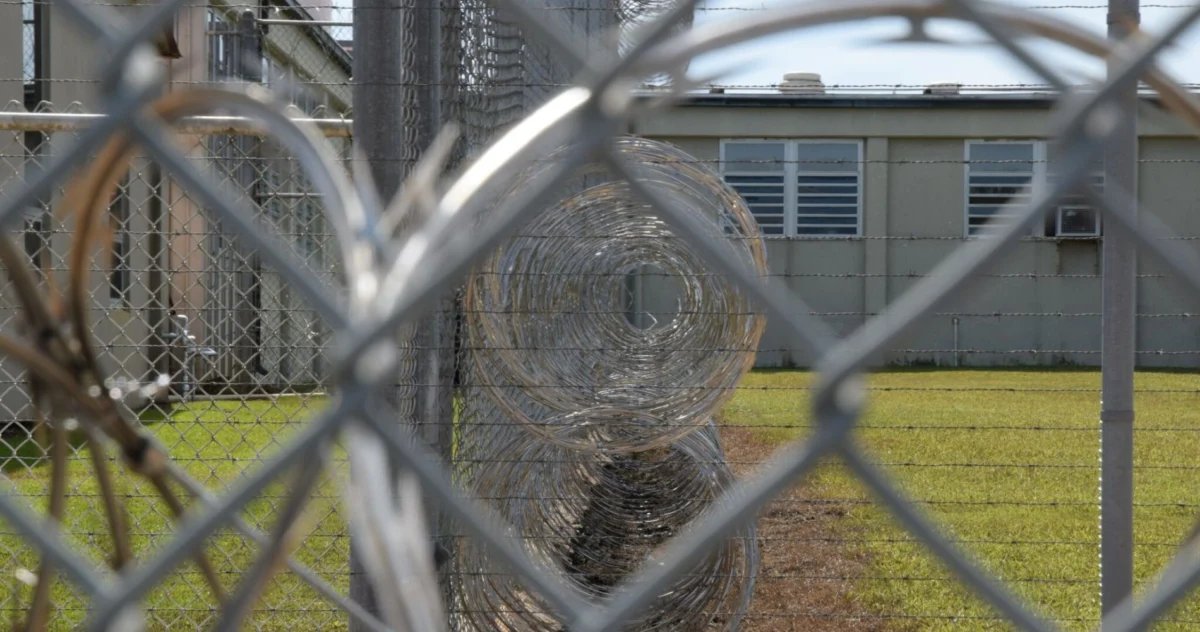
The death of 45-year-old Jeffery Brian Parker on July 14 at the Ventress Correctional Facility in Clayton, Alabama, marks another grim milestone in the state’s ongoing struggle to manage its incarcerated population. Parker, who was fatally beaten within the confines of a housing dormitory, had reportedly signaled his vulnerability to prison administration for weeks, having survived a previous violent assault on May 30. Despite his documented pleas for protection, his death has now become the 10th homicide recorded within the Alabama Department of Corrections (ADOC) system over the past 12 months.
The incident at Ventress serves as a harrowing microcosm of the broader systemic failures currently plaguing Alabama’s penal institutions. Parker’s death follows a string of fatal incidents at the same facility, raising urgent questions regarding the efficacy of security protocols, staffing levels, and the state’s capacity to maintain basic constitutional protections for those in its custody.
A Chronology of Crisis at Ventress
Ventress Correctional Facility has emerged as one of the most volatile environments within the Alabama prison system. The pattern of violence at the facility is not anecdotal; it is structural and recurring. Parker’s death is the third homicide at the facility in less than seven months.
On December 29, 2025, 32-year-old Marvin Taylor sustained catastrophic head trauma during a beating in a dormitory. Despite medical intervention, he succumbed to his injuries on January 4, 2026. Less than a week later, on January 10, 2026, 31-year-old Andre Dunlap was killed in a violent stabbing incident that targeted his head and face. These deaths, occurring in rapid succession, highlight an environment where the lack of adequate supervision allows violence to escalate with lethal consequences.
The institutional failure at Ventress is underscored by the facility’s own performance data. According to ADOC statistics, Ventress recorded 164 assaults against incarcerated individuals in 2025—a staggering figure that averages out to nearly one violent incident every 48 hours. In the first four months of 2026 alone, an additional 38 assaults were documented, suggesting that the frequency of violence remains unabated despite increased public and legal scrutiny.
Judicial Intervention and the Failure of Oversight
The state of affairs at Ventress is not unknown to the federal judiciary. In 2023, a federal judge issued a scathing ruling in a lawsuit filed by an incarcerated man who had been raped while housed at the facility. The court’s findings were damning, describing an environment characterized by “rampant, life-threatening inmate-on-inmate violence.”
The judge’s assessment painted a picture of a facility stripped of control, where “armed, unsupervised, and violent inmates can go wherever they want, whenever they want, and do whatever they want.” This judicial acknowledgement of a total collapse in security protocols led to a settlement with the ADOC in February 2025. However, the subsequent rise in homicides and the high frequency of assaults suggest that the remedial actions taken following the settlement have been insufficient to alter the daily reality of danger for those housed within the walls of Ventress.
The Federal Context: A System in Constitutional Jeopardy
The tragedy of Jeffery Brian Parker’s death occurs against the backdrop of a broader, years-long conflict between the state of Alabama and the United States Department of Justice (DOJ). In April 2019, the DOJ notified the state of Alabama that conditions within its prisons for men were in violation of the Eighth Amendment, which prohibits cruel and unusual punishment.
The federal investigation concluded that the Alabama prison system was permeated by a "high level of violence that is too common, cruel, of an unusual nature, and pervasive." Following the state’s failure to implement substantial reforms in response to these findings, the DOJ took the rare step of filing a federal lawsuit in December 2020.
The federal complaint explicitly alleged that the state’s systemic neglect created an environment where homicide, sexual assault, and severe physical trauma were the standard, rather than the exception. Since the filing of that lawsuit, 78 incarcerated people have been killed in Alabama state prisons. Parker’s death brings the total number of documented homicides in the state’s custody to 103 since the DOJ first raised its formal alarm in 2019.
Analyzing the Mechanics of Violence
Public policy experts and legal observers point to a confluence of factors that perpetuate the cycle of violence in Alabama. Primarily, the issue of severe understaffing has rendered the ADOC unable to maintain consistent oversight of housing units. When security personnel are unavailable or unable to safely navigate dormitory environments, control effectively shifts to the most violent elements within the incarcerated population.
Furthermore, the physical infrastructure of many Alabama prisons, including Ventress, complicates the implementation of modern security standards. Dormitory-style housing, which lacks the compartmentalization found in more modern correctional designs, makes it difficult to isolate high-risk individuals or protect those who have been identified as targets.
When an individual like Parker identifies himself as a target—as he did following the May 30 assault—the failure of the system to relocate him or provide meaningful protection constitutes a profound breach of the duty of care. The persistence of such failures indicates that the violence is not merely a byproduct of individual aggression but a failure of institutional policy and risk management.
The Road Ahead: Implications and Official Responses
As the federal lawsuit remains ongoing, the death of Jeffery Brian Parker serves as a somber reminder of the urgency required to address these constitutional deficiencies. The ADOC has yet to offer a comprehensive explanation for the security lapses that led to this latest death, nor has it provided a clear timeline for how it intends to reduce the frequency of assault and homicide within its facilities.
For the families of those lost—including the families of Parker, Taylor, and Dunlap—the administrative process remains slow and often opaque. Advocacy groups, such as the Equal Justice Initiative (EJI), have consistently called for immediate federal intervention to compel the state to prioritize the safety of those in its custody. Without a fundamental restructuring of how these facilities are operated, staffed, and monitored, the data suggests that the trend of violence will likely continue.
The implications for the state of Alabama are significant. Beyond the moral and humanitarian cost, the state faces mounting legal liability and the potential for a federal takeover of its prison system if it cannot demonstrate a capacity to govern its facilities in accordance with constitutional mandates. The death of Jeffery Brian Parker is not merely a singular tragedy; it is an indictment of a correctional system that has struggled, and largely failed, to ensure the basic survival of those sentenced to its care.
As the legal battle continues in federal court, the residents of Ventress and other Alabama prisons remain in a precarious state of uncertainty. The question facing the state leadership is whether the current trajectory can be reversed through existing reform efforts or if the depth of the systemic failure necessitates a more radical, court-mandated reorganization of the entire Alabama Department of Corrections. Until such measures are taken, the cycle of violence is expected to persist, leaving both prisoners and staff in an environment that remains, by all statistical accounts, among the most dangerous in the nation.




