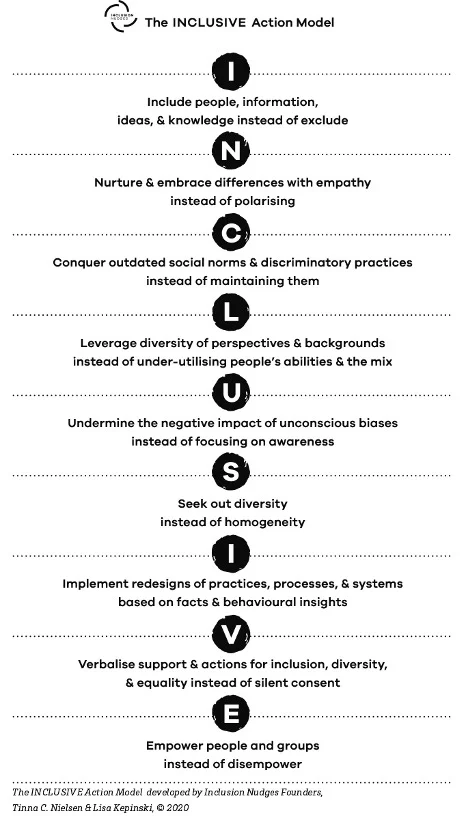
Organisations, communities, and societies worldwide are grappling with the persistent challenge of fostering genuine inclusion, equity, and diversity. Despite widespread recognition of its importance and substantial investments in traditional diversity and inclusion (D&I) initiatives, many efforts often yield slow, inconsistent, or even regressive results. This struggle points to a fundamental disconnect between intention and action, a gap that the innovative approach of Inclusion Nudges seeks to bridge by leveraging insights from behavioral and social sciences. This methodology aims to redesign systems and environments to make inclusive behaviors the default, rather than an arduous, conscious effort.
The Persistent Challenge of Inclusion: A Global Frustration
For decades, change-makers, human resources professionals, and leaders have dedicated themselves to advancing diversity, equality, gender parity, human rights, and anti-discrimination. Yet, a common sentiment echoes across global networks: progress is often incremental, marked by periods of advancement followed by frustrating setbacks. Many have experienced the disappointment of seeing initial enthusiasm for change wane, with individuals and groups reverting to default behaviors. This cyclical pattern underscores a critical question: how can collective action be steered towards deeply embedded inclusive behaviors, leadership, collaboration, decision-making, and culture, while simultaneously respecting individual autonomy and diverse pathways to engagement?
The frustration stems from the observation that traditional D&I programs, often reliant on awareness campaigns, training sessions, and top-down mandates, frequently fall short of their ambitious goals. While crucial for establishing foundational understanding and policy frameworks, these approaches often fail to address the underlying psychological mechanisms that perpetuate exclusion. The creators of Inclusion Nudges, drawing from their extensive experience as internal change agents within multinational corporations, recognized this systemic limitation. Their firsthand encounters with the slow pace and limited impact of conventional methods spurred a quest for a new, more effective solution, leading them to explore the nascent fields of behavioral economics and cognitive science.
The Intellectual Foundations: Behavioral Science and Nudge Theory
The development of Inclusion Nudges is rooted in a multidisciplinary synthesis of behavioral economics, nudge theory, psychology, anthropology, linguistics, neuroscience, and complex system and microeconomic theory. This interdisciplinary approach offers a profound understanding of human decision-making, particularly the significant influence of unconscious processes on behavior. The pioneering work of behavioral economists like Richard Thaler and Cass Sunstein, articulated in their seminal book "Nudge: Improving Decisions About Health, Wealth, and Happiness," demonstrated how subtle alterations in the "choice architecture" – the context in which people make decisions – can predictably steer individuals towards better outcomes without restricting their freedom of choice.
Applied to the realm of D&I, this perspective suggests that human behavior is not always rational or aligned with stated intentions. Instead, many decisions are driven by automatic, intuitive processes that can inadvertently lead to biased or exclusionary outcomes. By understanding these cognitive shortcuts and biases, it becomes possible to design interventions that gently guide individuals towards more inclusive actions. This shift from an emphasis on conscious persuasion to systemic design represents a paradigm change in how inclusion efforts are conceived and implemented.
The Absurd Reality: Unconscious Bias in Action
To illustrate the pervasive nature of unconscious bias, consider a hypothetical, yet disturbingly common, scenario in a corporate boardroom. A group of senior leaders, tasked with selecting a candidate for a critical leadership position, concludes their interviews. One leader confidently asserts, "The best qualified candidate is undoubtedly the tallest. Tall leaders excel at strategy execution, possess greater presence, and demonstrate superior resilience in challenging times. They are simply the best leaders." While such a statement might appear ludicrous to a rational mind – no conscious individual would rationally argue that height dictates leadership prowess – evidence suggests that this "absurd reality" plays out in subtle, unconscious ways.
Extensive research across various cultures and industries has consistently demonstrated that height exerts an undue influence on perceptions of leadership potential and competence. Studies reveal that a disproportionate percentage of top leaders, often exceeding 60%, are at or above 185 cm (6 ft 1 in) tall, despite this height representing only about 14% of the general population. This "height-leadership effect" correlates with greater high-status opportunities, more promotions, and higher incomes for taller individuals. This phenomenon is not a conscious, deliberate discrimination but rather a manifestation of the unconscious mind’s reliance on deeply ingrained associations. The automatic system links "tall" with traits like "strong," "presence," "powerful," and "capable," thereby creating an instinctive belief that taller individuals are inherently better leaders. Once this unconscious belief is activated, the rational mind often seeks confirmatory evidence, becoming blind to the merits of equally or better-qualified candidates who do not fit this physical archetype. This systemic blindness leads to flawed judgments and decisions, often without conscious awareness.
The Dual Mind: A Source of the Intention-Action Gap
At the core of this challenge lies the human mind’s dual processing system. We possess an automatic system, characterized by unconscious, fast, instinctive, effortless, associative, and uncontrolled thinking. This "autopilot" mode governs the vast majority (estimated 90-99%) of our thoughts, choices, and behaviors. It relies on mental shortcuts, such as associations and biases, to quickly process information and make decisions, conserving cognitive energy. While often efficient, these shortcuts can lead to errors in judgment, particularly in complex or ambiguous situations, or when time pressure is high. The unconscious brain, evolved for survival, can inadvertently perpetuate non-objective and non-inclusive outcomes.
In contrast, the reflective system is conscious, slow, effortful, rational, logical, self-aware, rule-following, and controlled. This is the system we typically associate with deliberate thought and reasoned decision-making. The crucial insight is that these two systems are interdependent, yet a significant gap often exists between our rational knowledge and our unconscious actions. For instance, an HR professional might consciously understand that height is irrelevant to leadership effectiveness, yet their automatic system could still be influenced by the "tall equals leader" association, subtly impacting their evaluation.
This intention-action gap is particularly salient in D&I. Individuals may genuinely value fairness and inclusivity, consciously believing themselves to be unbiased. However, their automatic cognitive processes can lead them to behave in ways that contradict these values and intentions, often without their knowledge. This explains why mere knowledge or willpower is often insufficient to instigate lasting behavioral change. The challenge, therefore, is not simply to inform or persuade, but to design environments and processes that align the automatic system with inclusive intentions. "Knowing is not enough. Designing for inclusion is a must."
Defining Inclusion: Beyond Buzzwords
Before delving into the practical applications of Inclusion Nudges, it is imperative to establish a clear understanding of the core concepts. Diversity refers to the presence of differences within a given setting, encompassing various dimensions such as race, ethnicity, gender, age, religion, disability, sexual orientation, socioeconomic status, and thought. Equity is about fairness, ensuring that everyone has access to the same opportunities, which may require providing different resources or support based on individual needs. Inclusion, the central focus of this approach, means ensuring that all individuals feel welcomed, respected, supported, and valued for who they are and what they bring to the table. Belonging is the emotional outcome of successful inclusion – the feeling of being an integral part of a group or community. Inclusion Nudges are designed to cultivate these interconnected elements by addressing the root causes of exclusion.
The Power of Nudging and Inclusion Nudges: A New Approach to D&I
The efficacy of behavioral economics and nudge theory lies in its ability to address the flawed assumption that humans consistently act in their own or their group’s best interest. By subtly designing the environment and processes of choice, nudges can steer people towards predictable, desirable behaviors. Inclusion Nudges apply this principle specifically to D&I challenges, aiming to combat discrimination, mitigate bias, alter stereotypes, reduce exclusion, and enhance feelings of belonging. This is achieved by increasing the experience of inclusion, amplifying diverse voices, engaging individuals in change processes, and fostering active allyship.
A significant body of contemporary research suggests that the influence of the unconscious mind is not diminishing but is, in fact, growing. Factors such as cognitive overload from increased complexity, the reinforcing homogeneity of social media echo chambers, and the pressures of increasingly busy and stressed lives intensify our reliance on mental shortcuts. This reliance, paradoxically, can lead to greater homogeneity and exclusion, undermining the collective need for diverse perspectives. Thus, the imperative to target the unconscious mind with inclusive behavioral design has never been greater.
An Inclusion Nudge is defined as a design based on insights from behavioral and social sciences, engineered to steer the unconscious mind towards inclusive behavior. It achieves this by targeting behavioral drivers, judgment and choice processes, and perceptions. Inclusion Nudges help the brain bridge the intention-action gap by addressing the implicit norms embedded within cultures and systems. The objective is to make inclusive behavior easy and automatic, without needing rational arguments, threats, punishments, or strenuous conscious effort.
Making It Happen: Three Pillars of Inclusion Nudge Designs
The Inclusion Nudges change approach is built upon three core purposes, each corresponding to a distinct type of intervention:

1. Show the Hidden Issue and Make People FEEL THE NEED to Engage in Change
Human behavior is profoundly influenced by what we see and feel, rather than simply what we know intellectually. To instigate change, it is crucial to show people the issue, thereby motivating the unconscious mind. Telling individuals they are biased, for instance, rarely mitigates bias effectively. However, showing them the tangible implications of bias, without explicitly naming it, can be transformative. These "Feel the Need" Inclusion Nudges make invisible patterns visible, creating an emotional impetus for change.
Example: Seeing Those Not Seen and Sponsoring Them
A multinational corporation faced a challenge: a significant gender imbalance in senior leadership, partly due to women being less visible in formal and informal networks. To address this, an Inclusion Nudge was designed for senior executives. Instead of presenting abstract diversity statistics or lecturing on unconscious bias, leaders were presented with two visuals. The first displayed a network map of men frequently mentioned in formal and informal mentorships and sponsorship discussions. The second, juxtaposed alongside it, showed a starkly sparser network for women, with only a few names appearing. The visual disparity was striking and immediately palpable. By seeing the overwhelming presence of men and the near absence of women in these crucial networks, leaders felt the reality of the hidden issue. This visual intervention bypassed rational resistance and motivated them to actively engage in a sponsorship program designed to increase the visibility of high-potential women. The goal was to reduce leaders’ resistance and increase buy-in by making them realize the limited gender equality in their own networks, thereby nudging everyone to be inclusive.
These FEEL THE NEED INCLUSION NUDGES leverage the brain’s unconscious system to generate an intrinsic motivation for change, moving individuals from passive awareness to active engagement.
2. PROCESS DESIGNS to Make Inclusion the Norm Without Explicitly Discussing Inclusion and Diversity
Sometimes, motivating people or revealing hidden issues is not sufficient. True transformation often requires designing processes that make inclusive behavior the automatic default, bypassing the need for conscious reflection or explicit discussion about D&I. This involves embedding inclusivity directly into the facilitation of collaboration, idea generation, decision-making processes, IT systems, or even physical environments. By designing these structures inclusively, individuals are enabled to act inclusively in their daily interactions, reducing the negative influence of bias and ensuring diverse perspectives are considered by default. These are known as "Process Design" Inclusion Nudges.
Example: Share with a Peer to Access Diversity in Groups
A common challenge in group settings is the suppression of diverse perspectives. Individuals may conform to the majority view, self-silence due to fear or hierarchy, or engage in power dynamics that stifle open dialogue. To foster psychological safety and ensure all voices are heard, a "Share with a Peer" Process Design Nudge can be implemented. Before a group discussion, individuals are instructed to pair up and share their initial thoughts, ideas, or perspectives with their peer. After this brief peer-to-peer exchange, the full group discussion commences.
Purpose: This intervention serves multiple purposes:
- Psychological Safety: It provides a safe space for individuals to articulate their thoughts before presenting them to the larger group, reducing anxiety and encouraging participation, especially from those who might otherwise hesitate.
- Reduced Conformity: By committing to an idea with a peer, individuals are less likely to conform to the majority view during the main discussion, ensuring a wider range of perspectives are shared.
- Enhanced Understanding: Peer-to-peer sharing allows for clarification of ideas and early identification of misunderstandings, enriching the quality of input.
- Automatic Inclusion: The process design itself encourages active listening and valuing of diverse viewpoints without explicitly mentioning "inclusion" or "diversity." It simply makes it easier and more natural for everyone to contribute.
This PROCESS DESIGN INCLUSION NUDGE empowers individuals to act inclusively automatically, mitigating bias and fostering better judgments and decisions as the default mode of operation.
3. FRAME PERCEPTIONS of Issues to Alter Understanding and Support Action
Perceptions, split-second judgments, and subsequent behaviors are heavily influenced by the language we use, how we communicate, how problems are presented, and even the setup of physical spaces. Often, ingrained perceptions, stereotypes, or dominant narratives hinder inclusive outcomes despite good intentions. By strategically framing perceptions – through linguistic choices, visual presentations, or appeals to identity – we can influence what people notice, how they interpret information, and consequently, how they behave. This "Framing Perceptions" approach aims to reorient understanding and support action towards greater inclusion.
Example: Show the Hidden People by Reversing the Numbers
Issues related to inclusion, diversity, gender parity, and human rights are often presented with statistics that, while factual, can feel abstract or overwhelming, leading to apathy or defensiveness. A "Reverse the Numbers" Framing Perceptions Nudge can transform this perception by highlighting the human cost of exclusion.
Purpose: Instead of stating, "Only 30% of our leadership are women," which might be perceived as a deficit or a problem to be solved, the narrative is reframed: "70% of our leadership positions are held by men." Or, instead of "20% of employees feel excluded," it becomes "80% of employees do not feel excluded." This seemingly simple reversal shifts focus. By emphasizing the dominant group or the majority experience, it makes the absence or marginalization of others more salient. For instance, stating "70% of leadership are men" draws attention to the significant number of women not in leadership, making their absence a more tangible issue. It prompts questions like, "Who are these missing people? What are the consequences of their absence?" This reframing helps the unconscious mind perceive the full picture, reveal the "hidden people" behind the numbers, and underscore the consequences of the status quo, thereby transforming the perception of D&I from a burden into a valuable opportunity.
This FRAMING PERCEPTIONS INCLUSION NUDGE is a powerful tool for changing narratives, challenging stereotypes, and influencing behaviors by altering the cognitive lens through which individuals view issues related to inclusion.
Global Impact and the Call to Action
The efficacy of Inclusion Nudges has been demonstrated across diverse communities, organizations, and leadership contexts worldwide. By applying behavioral insights and design principles, change agents find it significantly easier to achieve impactful, sustainable change. This co-creative approach, engaging "the people it’s about" in the design process, ensures greater buy-in and stickiness of interventions. The ability to design systems, processes, cultures, technologies, policies, environments, and even cities with behavioral insights to foster inclusive behavior is a powerful tool for societal transformation.
The urgency for fundamentally rethinking how we achieve inclusive outcomes has never been greater. While the aspiration to be inclusive is widespread, the practical execution remains challenging. This is precisely why the Inclusion Nudges global initiative is dedicated to empowering individuals to apply these designs, making inclusion the norm everywhere, for everyone. The beauty of this approach lies in its practicality; it enables everyday experimentation, integrating inclusive actions seamlessly into daily work, interactions, and decisions, transforming it from a burden into a natural part of operations. Further resources, such as the Inclusion Nudges Guidebook and Action Guides, offer detailed insights into the INCLUSIVE Action Model, drawing from decades of practical experience.
Inclusion Nudges: A Movement Built on Sharing, Reciprocity, and Open Source
Beyond a mere change methodology, Inclusion Nudges represents a vibrant global movement. Its core mission is the empowerment of individuals and the collective joining of forces to realize a truly inclusive world. A critical observation that spurred the creation of this initiative was the prevalent reluctance within social change circles to share how effective strategies are implemented. While many discuss what they do, the practical, step-by-step "how-to" often remains elusive. This lack of practical guidance leaves many inspired but disempowered.
The founders, Lisa and Tinna, were driven by a conviction that true progress necessitates open knowledge sharing. Consequently, they committed to documenting their effective change designs with meticulous, step-by-step descriptions, explaining the underlying behavioral insights. This commitment forms the bedrock of the Inclusion Nudges global initiative, founded on the principles of:
-
Sharing: This initiative thrives on collaboration and co-creation. Change-makers are invited to share their own successful inclusive culture, process, and behavior designs. These contributions, analyzed and elaborated with behavioral insights by the founders, are then shared through guidebooks, action guides, and other publications, and direct support. This collective knowledge accelerates progress and scales impactful change, underscoring that sharing knowledge and experience is a profoundly inclusive act.
-
Reciprocity: Social change is a collective endeavor. The movement encourages a reciprocal exchange of examples and mutual support. By both receiving and contributing practical examples, and by disseminating information about these resources, individuals become active participants in sustaining and expanding this transformative movement. Joining forces through the reciprocity of experience sharing is a vital inclusive action.
-
Open Source: The Inclusion Nudges global initiative is designed to be accessible to all – those who implement, those who design, those who learn, and those who are simply curious. Rejecting the notion of hoarding knowledge for a select few, the approach operates under a Creative Commons License. This commitment to open access ensures that ideas and how-to designs for effective change are freely available globally, recognizing that widespread access to knowledge is fundamental to social change. Open access to ideas and practical designs is, in itself, an inclusive action.
By embracing these principles, the Inclusion Nudges movement invites individuals and organizations worldwide to become active participants. Together, through shared knowledge and collective action, the vision of making inclusion the norm—everywhere, for everyone—can become a tangible reality.
NOTE: All sources and references in this article are derived from the foundational principles and insights detailed in The Inclusion Nudges Guidebook and Action Guides.