The United States continues to hold the unenviable distinction of having the highest incarceration rate among independent democracies worldwide, and it incarcerates more people than any other nation on Earth, according to the latest comprehensive data. This persistent reality comes with profound human and economic costs, casting a long shadow over American society and its justice system.
The Scale of Incarceration: A Deep Dive into the Numbers
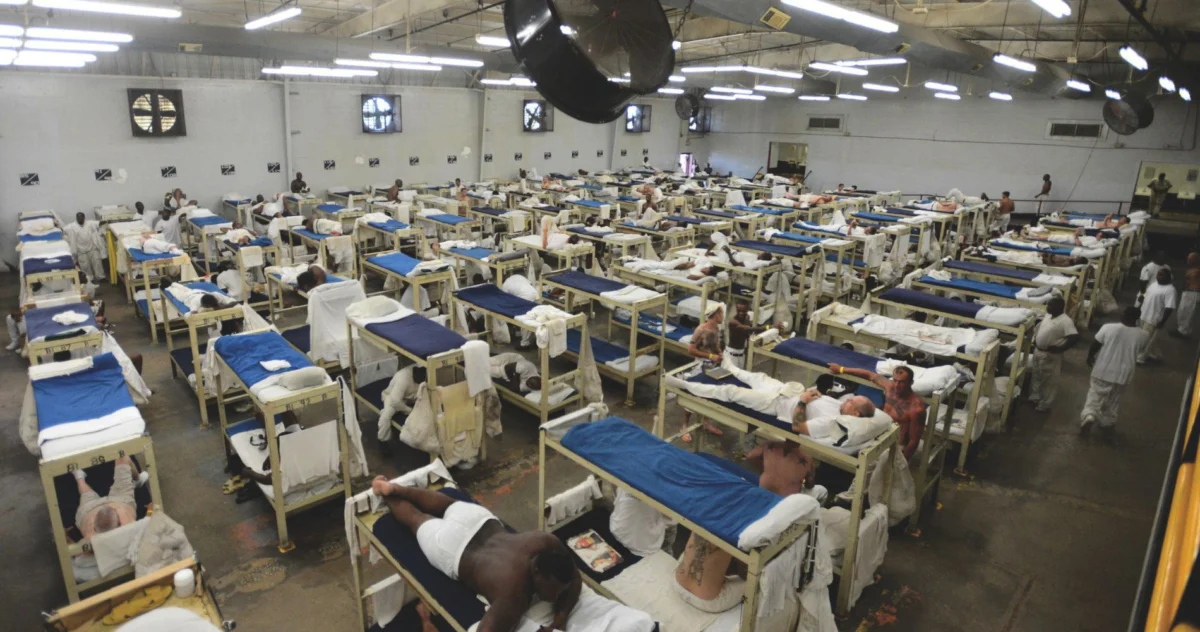
The most recent report from the Prison Policy Initiative (PPI), a leading research and advocacy organization, indicates that nearly two million individuals are currently locked up across the United States. Specifically, the 2026 report determined that 1,973,000 people are incarcerated nationwide. This staggering figure is distributed across an extensive and complex network of carceral facilities, including 1,566 state prisons, 98 federal prisons, 3,116 local jails, 1,277 juvenile correctional facilities, 220 immigration detention facilities, and 77 Indian country jails. Beyond these primary categories, the incarcerated population also resides in military prisons, civil commitment centers, state psychiatric hospitals, and prisons situated in U.S. territories, illustrating the vast scope of the country’s detention infrastructure.
This colossal carceral system exacts a monumental financial toll. The report found that the annual cost to incarcerate nearly two million people in America amounts to at least $445 billion. To put this into perspective, this expenditure is more than five times the $87 billion spent on jails and prisons in 2015, highlighting a dramatic escalation in resources allocated to detention rather than prevention or rehabilitation. This figure represents not just operational costs but also the broader societal expenses associated with the justice system, including law enforcement, court systems, and the long-term impact on families and communities.
Global Comparison: An Unrivaled Lead
The U.S.’s position as the world leader in total incarcerated population is undisputed. With its nearly two million prisoners, it significantly outpaces other populous nations. China follows with an estimated 1.69 million prisoners, though experts note this figure likely excludes unknown numbers in pre-trial detention and other forms of administrative detention, suggesting the true number could be higher but still below the U.S. Brazil ranks third globally with 909,067 prisoners, followed by India with 511,542, and Turkey with 420,798, according to the World Prison Brief from the Institute for Crime & Justice Policy Research. These comparisons underscore the unique scale of incarceration within the American context.
Beyond the raw numbers, the U.S. also maintains the highest incarceration rate among independent democracies, standing at an alarming 580 per 100,000 residents, as reported by PPI. Globally, only three countries – El Salvador, Cuba, and Turkmenistan – lock up more people per capita. This per capita rate is often considered a more accurate indicator of a nation’s reliance on incarceration as a societal response, and the U.S.’s standing is a stark outlier among its democratic peers.
The State-Level Crisis: A Nation of "Prison States"
The crisis of mass incarceration in the U.S. is not merely a federal or national issue; it is deeply embedded within individual states, many of which exhibit incarceration rates comparable to or even exceeding those of entire nations. PPI’s 2024 analysis, which treated each U.S. state as an independent nation, revealed a sobering truth: the incarceration rates of 24 states, alongside three countries (El Salvador, Cuba, and Rwanda), surpass the U.S. nationwide rate.
Even more striking is the concentration of high incarceration rates within specific regions. While El Salvador currently holds the world’s highest incarceration rate, the subsequent nine highest rates are all found within U.S. states, with all but one located in the American South. This regional disparity points to a complex interplay of historical factors, socioeconomic conditions, and specific state-level policies that contribute to higher rates of imprisonment.
Even states with comparatively lower incarceration rates within the U.S. context still stand out globally. Massachusetts, which boasts the lowest incarceration rate among U.S. states, would still rank 30th in the world if it were an independent country. This places it higher than nations such as Iran, Colombia, and all the founding members of NATO, illustrating that even the "least carceral" U.S. states maintain a far more punitive approach than many other developed nations. This pervasive reliance on incarceration across all U.S. states suggests a systemic issue rather than isolated anomalies.
A Historical Trajectory of Expansion
The current state of mass incarceration in the United States is not an overnight phenomenon but the culmination of several decades of policy shifts and societal trends. Prior to the early 1970s, the U.S. incarceration rate had remained relatively stable for much of the 20th century. However, a dramatic expansion began in the late 1970s and accelerated through the 1980s and 1990s, often attributed to the "War on Drugs" and a broader "tough on crime" political rhetoric.
Key policy changes during this period included the implementation of mandatory minimum sentencing laws, which limited judicial discretion and imposed lengthy sentences for various offenses, particularly drug-related crimes. The rise of "three-strikes" laws, which mandated life sentences for repeat offenders, and increased penalties for non-violent crimes further fueled prison population growth. Additionally, the proliferation of private prisons, driven by profit motives, contributed to the demand for more incarceration space. Federal funding incentives for states to build more prisons also played a role in this expansionary period. The result was an exponential increase in the number of people behind bars, transforming the U.S. into the world’s leading incarcerator.
Beyond the Walls: The Profound Social and Human Cost
The impact of mass incarceration extends far beyond the individuals directly confined within correctional facilities. It reverberates through families, communities, and the broader social fabric, creating cycles of disadvantage and hardship. Researchers have found that a staggering half of all Americans have had an immediate family member incarcerated, highlighting the pervasive reach of the justice system into everyday lives.
The consequences for children are particularly dire. On any given day in America, approximately 2.7 million children have a parent in prison or jail, according to The Sentencing Project. Furthermore, more than 5.2 million children have experienced the incarceration of a parent at some point during their childhoods. Parental incarceration is a significant adverse childhood experience (ACE) that can lead to profound psychological trauma, academic struggles, economic instability, and an increased likelihood of involvement with the justice system themselves, perpetuating intergenerational cycles of incarceration. Children of incarcerated parents often face stigma, shame, and the emotional burden of separation, contributing to mental health challenges and developmental setbacks.
Communities, especially those already marginalized by poverty and racial discrimination, bear a disproportionate burden of mass incarceration. The removal of large numbers of individuals, predominantly men of color, from these communities destabilizes family structures, depletes the workforce, and erodes social capital. The constant churn of people entering and exiting the justice system makes it difficult for communities to build stable institutions and foster economic growth. Furthermore, the financial resources diverted to incarceration could otherwise be invested in education, healthcare, infrastructure, and job creation within these very communities, offering alternative pathways to safety and well-being.
Calls for Reform and Broader Implications
The mounting evidence of the human and economic costs of mass incarceration has spurred increasing calls for comprehensive criminal justice reform from a diverse coalition of advocacy groups, policymakers, and even some law enforcement officials. Organizations like the Prison Policy Initiative, the Equal Justice Initiative (EJI), and The Sentencing Project consistently advocate for policy changes aimed at reducing the prison population, addressing systemic inequalities, and promoting more effective public safety strategies.
Key areas of reform often include:
- Sentencing Reform: Revisiting mandatory minimum sentences, expanding judicial discretion, and reducing penalties for non-violent offenses, particularly drug crimes.
- Bail Reform: Addressing the cash bail system, which disproportionately impacts low-income individuals and often leads to pre-trial detention for those who cannot afford release, regardless of guilt.
- Re-entry Programs: Investing in robust programs that support individuals transitioning from incarceration back into society, focusing on housing, employment, education, and mental health services to reduce recidivism.
- Alternatives to Incarceration: Expanding the use of diversion programs, community-based treatment for substance abuse and mental health issues, and restorative justice practices.
- Addressing Racial Disparities: Implementing policies to confront the racial biases evident at every stage of the criminal justice system, from policing to sentencing.
The implications of the U.S.’s continued reliance on mass incarceration extend beyond domestic policy. It raises fundamental questions about the nation’s commitment to justice, equality, and human rights on the global stage. While some argue that high incarceration rates are a necessary measure for public safety, a growing body of research suggests that the current scale of imprisonment has diminishing returns on crime reduction and instead exacerbates social problems.
The nearly two million people incarcerated in the U.S. today represent not just a statistic but a vast population of individuals whose lives are profoundly impacted, along with their families and communities. The annual expenditure of $445 billion on incarceration represents a significant opportunity cost, diverting resources that could otherwise be invested in foundational societal improvements. As the data consistently demonstrates, addressing mass incarceration is not merely a matter of policy adjustment but a fundamental challenge requiring a re-evaluation of how American society defines justice, ensures public safety, and supports the well-being of all its citizens.